El Niño intensifie-t-il les tempêtes et les crues soudaines dans le Sud-Ouest ?
November 3rd, 2026
El Niño intensifie-t-il les tempêtes et les crues soudaines dans le Sud-Ouest ?
🇫🇷 Français
A chaotic climatic phenomenon is exacerbating torrential rains and flooding across the Southwest, according to experts.
A natural warming cycle known as El Niño is heating Pacific Ocean waters to a sizzling degree, discharging moisture into the atmosphere with the capacity to fuel passing storms.
Such El Niño events can occur irregularly every couple of years, yet scientists say the latest iteration is particularly extreme — and it is only just getting started, with impacts expected to persist for several more months.
“We’ve had super El Niños in the past, but this is a super duper El Niño,” said meteorologist Jeff Masters of Yale Climate Connections.
The phenomenon was by no means the sole cause of the severe storms, nor is it easy to attribute any single event to it.
Nevertheless, scientists contend that this supercharged El Niño is rendering heavy rains more probable and more intense across the Southern U.S.
The effects of those storms are felt more acutely in desert regions, where the land does not absorb water as readily.
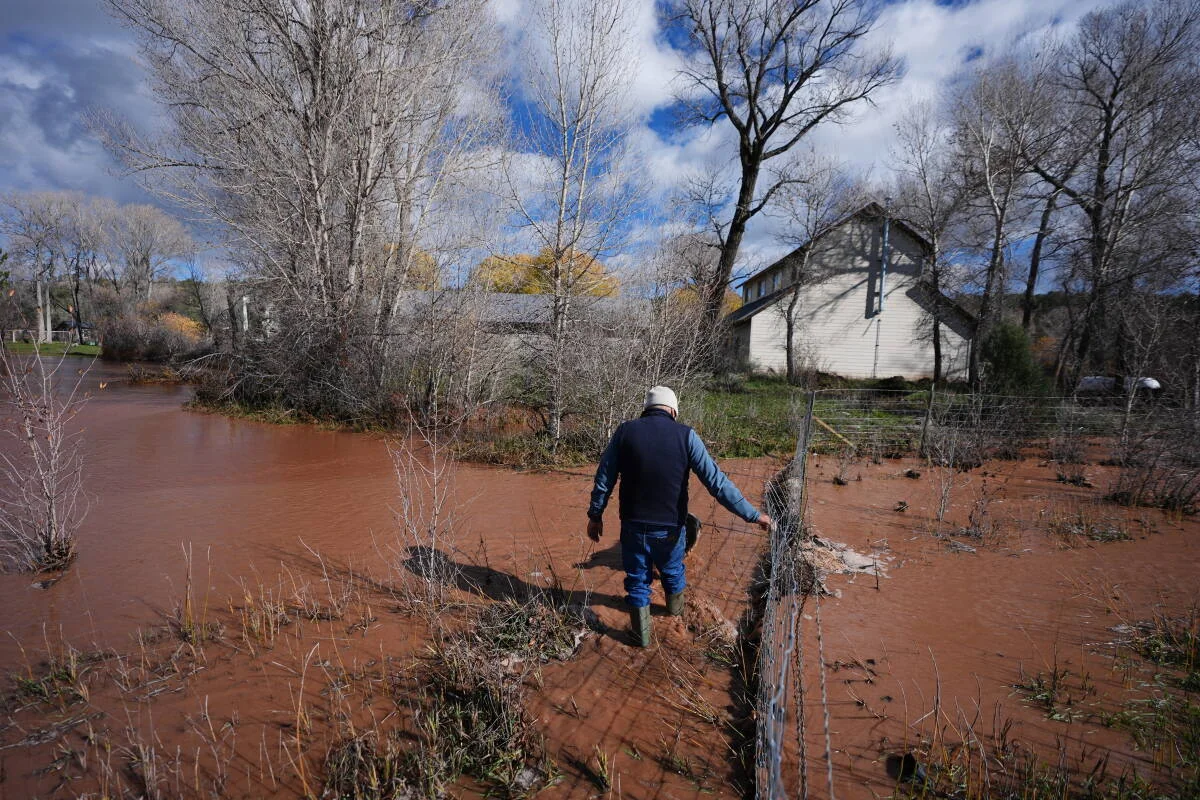
Flash floods on Sunday precipitated evacuations across northern New Mexico and central Arizona, while a Colorado ski town steeled itself for its principal river to swell to catastrophic levels.
And only the previous week, yet another torrential storm had subjected southwestern states to days of inundation.
In excess of 20 trillion gallons of water have precipitated upon the Four Corners states and Nevada over the preceding fortnight, as calculated by Ryan Maue, former chief scientist of the National Oceanic and Atmospheric Administration.
Experts contend that this year’s extreme El Niño is engendering increasingly optimal conditions for storms.
It is augmenting the moisture content of the air, which constitutes ideal fodder upon which downpours may draw.
Moreover, it is altering wind patterns across the globe, redirecting powerful air currents toward the Southwest that are capable of churning up that moisture.
“The likelihood of substantial precipitation in the Southwest interior does indeed rise at this time of year, but we’re witnessing it to a degree we actually haven’t seen before,” said climate scientist Daniel Swain with the University of California Agriculture and Natural Resources.
This El Niño is sloshing warmer waters into new places, yet the world's oceans are already hotter than they once were owing to human-caused climate change—which means even more sweltering extremes are possible.
“The circumstance that ocean temperatures are already warmer than they were, say, 100 years ago renders these El Niño situations all the more intense,” said meteorologist Randy Cerveny with Arizona State University.
The phenomenon is reconstituting weather patterns on a global scale: regions as far-flung as Peru and Ecuador are likewise enduring flooding of record-breaking proportions, Swain said.
Parts of Southeast Asia, Indonesia among them, are drier than is customary.
The El Niño event is anticipated to reach its zenith in December, at which juncture it may more forcefully exploit certain air currents known as jet streams, thereby engendering more extreme storms across the western United States.
Thereafter, experts say, its onslaught could persist for months.
“The dice are certainly loaded for more heavy storms this winter and spring,” said Park Williams with UC San Diego’s Scripps Institution of Oceanography in an email.
The ramifications of an El Niño are not entirely deleterious, Cerveny observed: it can confer rainfall and moisture upon drier regions such as the Southwest and replenish reservoirs.
Concurrently, storms and floods may imperil people and property.
To ensure their safety, experts recommended monitoring the forecast, planning ahead, and heeding evacuation warnings issued by local authorities.
“We have not yet reached the acme of heating in the Pacific Ocean.
Hence, yes, we will witness a greater number of these particular events,” Cerveny said.
Reporters’ climate and environmental coverage is financially underwritten by multiple private foundations.
AP bears sole responsibility for all content.
AP’s standards for collaborating with philanthropies, a roster of supporters and the coverage areas they fund are available at AP.org.
November 3rd, 2026
Trending Articles

Thomas Markle, le père de Meghan, jugé apte à faire face à l'affaire d'images de sévices sexuels sur enfants, selon un expert
Thomas Markle, Meghan’s father, deemed competent to face child sex abuse images case, expert says
Thomas Markle, le père de Meghan, jugé apte à faire face à l'affaire d'images de sévices sexuels sur enfants, selon un expert
Thomas Markle, Meghan’s father, deemed competent to face child sex abuse images case, expert says
Susan Smith s'est vu refuser une nouvelle fois la libération conditionnelle, 32 ans après avoir noyé ses fils dans un lac de Caroline du Sud
Susan Smith denied parole once more, 32 years after drowning her sons in a South Carolina lake
Susan Smith s'est vu refuser une nouvelle fois la libération conditionnelle, 32 ans après avoir noyé ses fils dans un lac de Caroline du Sud
Susan Smith denied parole once more, 32 years after drowning her sons in a South Carolina lake
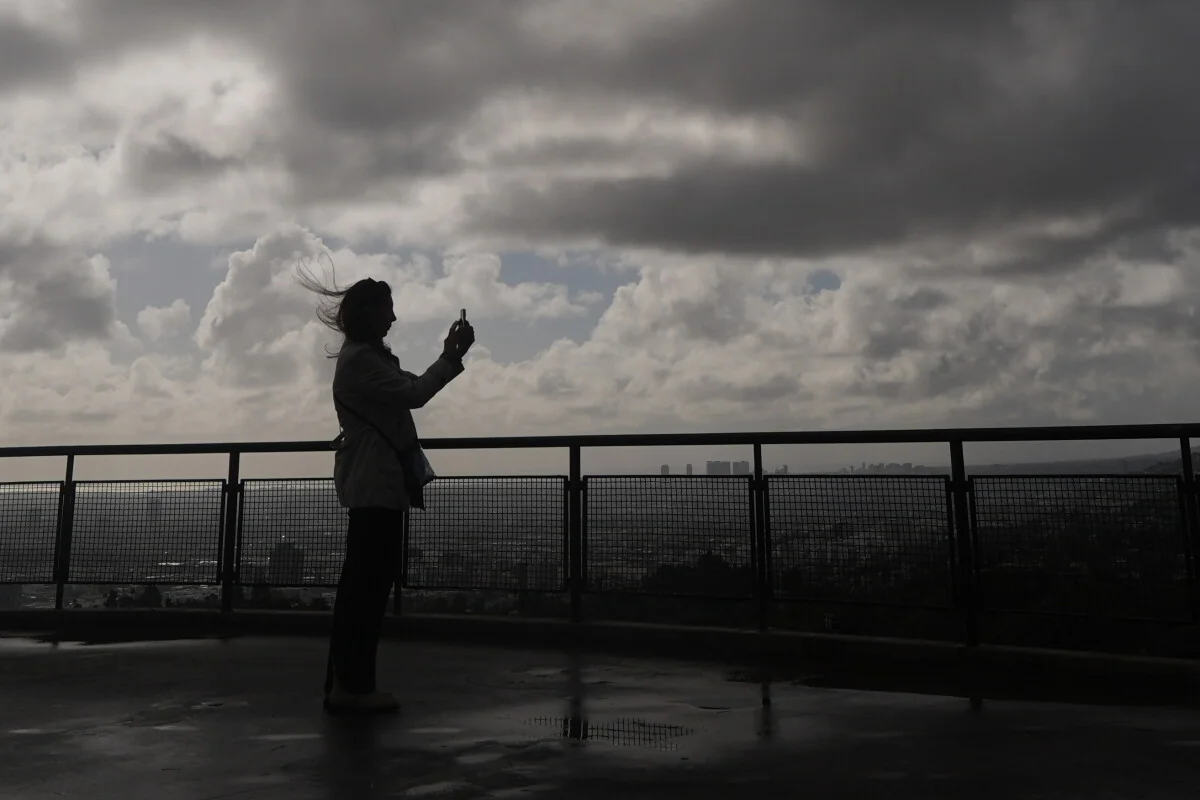
Des orages torrentiels progressent vers le nord jusqu'à la Space Coast de Floride, précipitant des sauvetages d'humains et de chevaux
Torrential storms track northward to Florida’s Space Coast, precipitating rescues of humans and horses
Des orages torrentiels progressent vers le nord jusqu'à la Space Coast de Floride, précipitant des sauvetages d'humains et de chevaux
Torrential storms track northward to Florida’s Space Coast, precipitating rescues of humans and horses

Le procureur refuse de poursuivre un policier de Madison, dans le Wisconsin, après la mort par balle d'un homme noir
Prosecutor Declines Charges Against Madison, Wisconsin Officer in Fatal Shooting of Black Man
Le procureur refuse de poursuivre un policier de Madison, dans le Wisconsin, après la mort par balle d'un homme noir
Prosecutor Declines Charges Against Madison, Wisconsin Officer in Fatal Shooting of Black Man
Les évêques catholiques américains se réunissent alors que les victoires écrasantes des démocrates reconfigurent les débats sur l'immigration et l'avortement
US Catholic Bishops Convene as Democratic Landslide Victories Reshape Immigration and Abortion Debates
Les évêques catholiques américains se réunissent alors que les victoires écrasantes des démocrates reconfigurent les débats sur l'immigration et l'avortement
US Catholic Bishops Convene as Democratic Landslide Victories Reshape Immigration and Abortion Debates

Trump demande aux tribunaux étatiques et fédéraux d’annuler sa condamnation dans l’affaire des paiements secrets
Trump petitions state and federal courts to vacate hush money conviction
Trump demande aux tribunaux étatiques et fédéraux d’annuler sa condamnation dans l’affaire des paiements secrets
Trump petitions state and federal courts to vacate hush money conviction

Mullin défend l'utilisation de l'avion gouvernemental pour le match LSU-Texas malgré l'immobilisation au sol
Mullin defends government plane use for LSU-Texas game despite ground stop
Mullin défend l'utilisation de l'avion gouvernemental pour le match LSU-Texas malgré l'immobilisation au sol
Mullin defends government plane use for LSU-Texas game despite ground stop

Les États-Unis et le Mexique perdent leur statut d’élimination de la rougeole
US and Mexico Lose Measles Elimination Status
Les États-Unis et le Mexique perdent leur statut d’élimination de la rougeole
US and Mexico Lose Measles Elimination Status
Un immense panache de gaz s’échappe d’une décharge californienne
Massive gas plume billows from California landfill
Un immense panache de gaz s’échappe d’une décharge californienne
Massive gas plume billows from California landfill
De colossales houles s’abattent sur le littoral californien, contraignant à la fermeture de ses emblématiques jetées
Colossal swells batter California’s coastline, compelling the closure of its iconic piers
De colossales houles s’abattent sur le littoral californien, contraignant à la fermeture de ses emblématiques jetées
Colossal swells batter California’s coastline, compelling the closure of its iconic piers