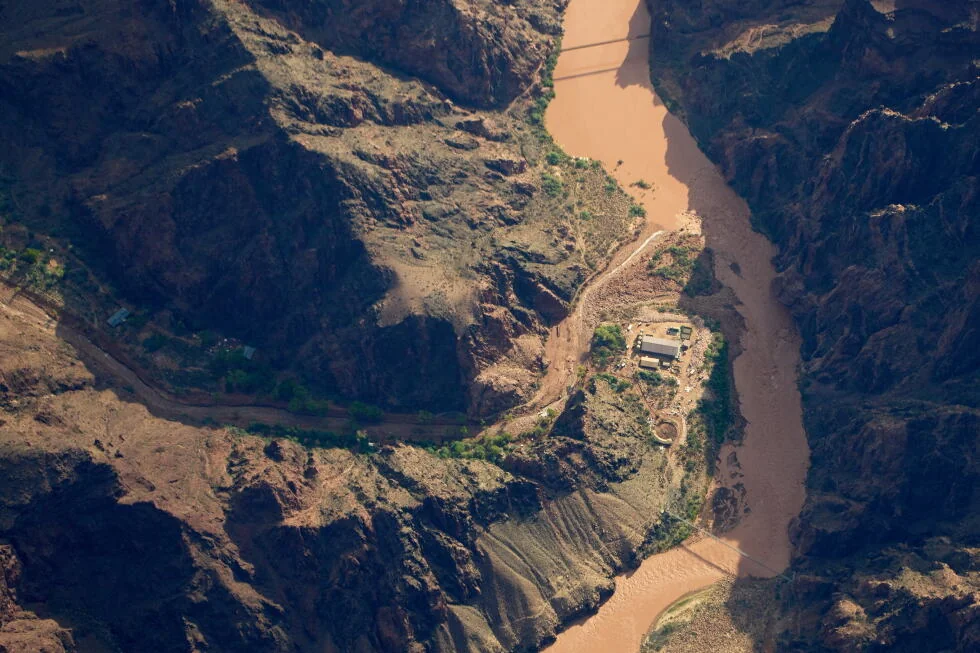
Rettungskräfte befreiten rund 80 Personen aus den katastrophalen Überschwemmungen im Grand Canyon, die zwei Menschenleben forderten und eine Person weiterhin vermissen ließen, wie die Behörden berichteten.
September 1st, 2026
Rettungskräfte befreiten rund 80 Personen aus den katastrophalen Überschwemmungen im Grand Canyon, die zwei Menschenleben forderten und eine Person weiterhin vermissen ließen, wie die Behörden berichteten.
🇩🇪 Deutsch
The remains of a Texas chiropractor and a lifelong martial artist have been recovered following a catastrophic flash flood that swept through the Grand Canyon, with one individual still unaccounted for after approximately eighty others were evacuated over the weekend, according to officials on Monday.
The torrential deluge that struck Saturday inflicted catastrophic damage upon the sole water conveyance pipeline servicing Grand Canyon National Park, compelling authorities to prohibit overnight accommodations within the park's lodges and hotels while simultaneously imposing stringent water-use restrictions upon its permanent inhabitants.
Successive waves of precipitation inundated the Bright Angel Creek catchment area of this renowned destination, which annually attracts approximately 4.4 million visitors.
Grand Canyon Deputy Superintendent Brian Drapeaux intimated that a comprehensive survey of the damage has yet to be undertaken, notwithstanding the park's assertion that roughly 40% of the pipeline has been compromised.
Incident Commander Dave Black reported that search teams utilized night-vision optics and ancillary apparatus to locate individuals requiring extraction during the deluge.
By nightfall on Saturday, 45 persons had been recovered, with an additional 37 evacuated the following day.
Rangers invoked the park's permit system and meticulously scrutinized vehicle license plates to ascertain the exact number of missing individuals.
At this juncture, they have no grounds to infer, based on the intelligence we have examined thus far, that anyone other than the individual in question is involved, Black stated during a press conference on Monday evening.
The inundation occurred deep within the canyon along Bright Angel Creek, which discharges into the Colorado River in the vicinity of Phantom Ranch.
This locale comprises a cluster of historic dormitories, a canteen, and a campground that serves as a favored waypoint for river rafters and for those traversing the Grand Canyon from one rim to the other.
A multitude of visitors required evacuation by helicopter, recounting a torrential deluge while rangers cautioned of impending rockslides; as they stood nearby awaiting rescue, they observed vast accumulations of timber and debris cascading down the river.
Hiker Daniel Evans recounted that precipitation fell intermittently on several occasions prior to the most severe deluge, a thirty-minute torrent that descended Saturday afternoon.
He had intended to seek respite from the sweltering heat throughout the day and bivouac overnight in the vicinity of the severely affected Bright Angel Campground area.
Earlier, rangers had assured him that the area appeared safe, yet as the deluge intensified, they insisted it was time to depart.
His thoughts drifted to Nepal, where torrential floods and landslides had cascaded down mountain valleys the previous week.
“Throughout the entire deluge — throughout the whole ordeal of packing and preparation — I remained fixated on the upstream, fervently beseeching that no wall of water would come surging toward us,” Evans recounted.
The families of chiropractor John Giusti and martial arts studio proprietor Brent Rosenkranz, 42, have identified them as the two individuals whose remains have been recovered, according to Hannah Barricks, who serves as a liaison for the families.
This photograph, supplied by Hannah Barricks, depicts Brent Rosenkranz during an August 2026 excursion to Grand Canyon National Park in northern Arizona, the location where his remains were subsequently recovered in the aftermath of a flash flood.
(Rosenkranz family via family liaison Hannah Barricks via AP)
This photograph, supplied by Hannah Barricks, depicts Timothy Smith, whose family reports him to be missing following a trip to the Grand Canyon in August 2026; the image was captured during an earlier family excursion to Zion National Park in Utah in July 2026.
(Smith family, via family liaison Hannah Barricks via AP)
This undated photograph, supplied by Hannah Barricks, depicts John Giusti during an August 2026 excursion to Grand Canyon National Park in northern Arizona, where his remains were subsequently recovered in the aftermath of a flash flood.
(Giusti family, via family liaison Hannah Barricks via AP)
A third companion — Timothy Smith, a 53-year-old aviator hailing from Wyoming — had joined them on the expedition and remained unaccounted for, as Barricks communicated via text message late Monday.
On Thursday, the men communicated with their families, and by Friday, they had located their campsite at the nadir of the Grand Canyon.
Since that juncture, no word has been received from them, as the three families jointly asserted in a statement released earlier Monday through Barricks.
All three individuals were connected to Granbury, Texas, and their respective families indicated that they had intended to embark upon "several days of hiking, camping, fishing and exploring together."
Park authorities have divulged that the corporeal remains of a 46-year-old male were retrieved on Sunday evening in the proximate environs of Crystal Rapids along the Colorado River, and subsequently, a second cadaver was likewise recovered; notwithstanding, no supplementary particulars were vouchsafed.
Venturing into the Grand Canyon during the summer months poses a particularly formidable peril, owing to the imminent threat of flash flooding attendant upon the monsoon, or rainy season.
Serene, cloudless skies can precipitously capitulate to violent thunderstorms and torrential downpours.
Precipitation also descended upon a portion of the Dragon Bravo Fire scar, the charred expanse left in the wake of a lightning-ignited wildfire that erupted in July 2025.
The blaze smoldered for days before escalating into a swiftly advancing inferno, precipitating mandatory evacuations and consuming the historic Grand Canyon Lodge, along with numerous cabins and ancillary structures on the North Rim.
The absence of vegetation on a denuded burn scar markedly accelerates the velocity of surface runoff.
The precipitous, rugged topography of the canyon itself serves to channel water with remarkable velocity.
What might constitute an unremarkable summer deluge elsewhere can rapidly metamorphose into a formidable, surging torrent within the canyon's confines.
This year’s monsoon is proving exceptionally intense, attributable to an elevated concentration of atmospheric water vapor, a phenomenon largely precipitated by a robust El Niño, according to A. Park Williams, a hydroclimatologist at the University of California, Los Angeles.
The natural warming of portions of the Pacific Ocean can induce profound perturbations in global weather patterns, he observed.
That surplus water vapor in the southwestern United States is precipitated out of the storm system as rainfall, he elaborated.
The nexus between anthropogenic climate change and the deluge that inundated Arizona is indubitably robust, as asserted by climate scientist Daniel Swain of the California Institute for Water Resources.
Several months ago, Swain and colleagues published a study in the journal *Weather and Climate Extremes* demonstrating that, during the summer months, short-duration intense downpours in the West—comparable to the one that struck the Grand Canyon—have intensified by 10% since the year 2000.
The inundation constituted a severe setback to the protracted endeavor aimed at modernizing the water conveyance system servicing both the visiting populace and the approximately 1,600 permanent residents of Grand Canyon Village.
Commencing in 2023, a $208 million rehabilitation of the pipeline, coupled with enhancements to the associated water delivery infrastructure, was undertaken—an initiative the park service characterized as a pivotal investment essential for ensuring the park's capacity to accommodate the exigencies of both residents and visitors.
Although the project was anticipated to reach completion by the following year, that projected timeline now remains fraught with uncertainty.
Notwithstanding the substantial potable-water reservoirs situated on the Grand Canyon's South Rim, their replenishment remains unfeasible, given that the conveyance pipeline is presently inoperative.
Stengle reported from Dallas.
Hannah Schoenbaum in Salt Lake City; Seth Borenstein in Kensington, Maryland; Mikella Schuettler in Phoenix; Julie Walker in New York City; Jeffrey Collins in Columbia, South Carolina; Kathy McCormack in Concord, New Hampshire; and Christopher Weber in Los Angeles contributed.
September 1st, 2026
Trending Articles
Trump-Administration beginnt mit dem Bau der Grenzmauer in der Big-Bend-Region in Texas
Trump Administration Commences Border Wall Construction in Texas’ Big Bend Region
Trump-Administration beginnt mit dem Bau der Grenzmauer in der Big-Bend-Region in Texas
Trump Administration Commences Border Wall Construction in Texas’ Big Bend Region
Ein ICE-Beamter plädiert auf nicht schuldig in Bezug auf die Anklage, das FBI über eine nichttödliche Schießerei in Minneapolis belogen zu haben.
ICE officer pleads not guilty to charges of lying to FBI about nonfatal Minneapolis shooting
Ein ICE-Beamter plädiert auf nicht schuldig in Bezug auf die Anklage, das FBI über eine nichttödliche Schießerei in Minneapolis belogen zu haben.
ICE officer pleads not guilty to charges of lying to FBI about nonfatal Minneapolis shooting
Clancy-Geschworene hegte keine „Zweifel“ an ihrer Schuld am Tod ihrer Kinder
Clancy Juror Held No "Any Doubts" Regarding Her Culpability in Her Children's Deaths
Clancy-Geschworene hegte keine „Zweifel“ an ihrer Schuld am Tod ihrer Kinder
Clancy Juror Held No "Any Doubts" Regarding Her Culpability in Her Children's Deaths
Die vorzeitige Stimmabgabe zu den US-Zwischenwahlen beginnt, die die Kontrolle über den Kongress kippen könnten
Early Voting Commences in US Midterms Poised to Flip Congressional Control
Die vorzeitige Stimmabgabe zu den US-Zwischenwahlen beginnt, die die Kontrolle über den Kongress kippen könnten
Early Voting Commences in US Midterms Poised to Flip Congressional Control
Hubschrauber eines LA-Nachrichtensenders stürzt am Geburtsort – und wohl auch Epizentrum – der „Auge-am-Himmel“-Berichterstattung ab
LA news helicopter crashes in birthplace—and arguable epicenter—of ‘eye-in-the-sky’ reporting
Hubschrauber eines LA-Nachrichtensenders stürzt am Geburtsort – und wohl auch Epizentrum – der „Auge-am-Himmel“-Berichterstattung ab
LA news helicopter crashes in birthplace—and arguable epicenter—of ‘eye-in-the-sky’ reporting
Erhängungen von Schwarzen im Süden der USA: Eine unmissverständliche Mahnung an die Lynchgeschichte der Nation
Hangings of Black People in the US South: A Stark Reminder of the Nation’s Lynching History
Erhängungen von Schwarzen im Süden der USA: Eine unmissverständliche Mahnung an die Lynchgeschichte der Nation
Hangings of Black People in the US South: A Stark Reminder of the Nation’s Lynching History
Kaution für ICE-Beamten bewilligt, der im Fall einer nichttödlichen Schießerei in Minneapolis des Meineids und der Körperverletzung beschuldigt wird
Bail Granted for ICE Officer Accused of Perjury and Assault in Minneapolis Non-Fatal Shooting
Kaution für ICE-Beamten bewilligt, der im Fall einer nichttödlichen Schießerei in Minneapolis des Meineids und der Körperverletzung beschuldigt wird
Bail Granted for ICE Officer Accused of Perjury and Assault in Minneapolis Non-Fatal Shooting
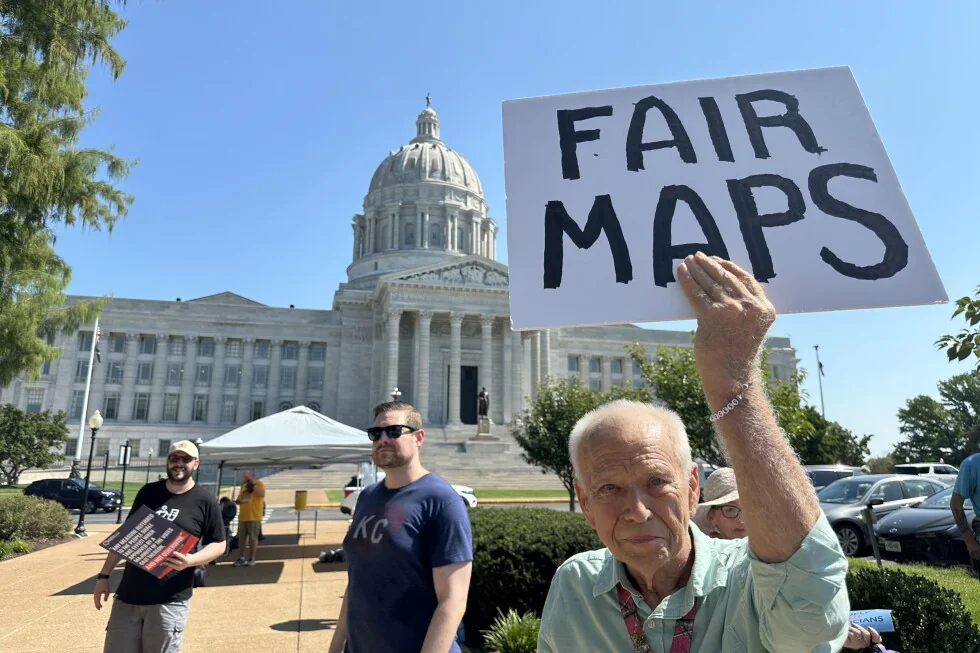
Berufungsgericht prüft Trumps unterstützte Kongresswahlkarte in Missouri trotz Blockade durch den Obersten Gerichtshof
Appeals court weighs Trump-backed Missouri congressional map despite Supreme Court block
Berufungsgericht prüft Trumps unterstützte Kongresswahlkarte in Missouri trotz Blockade durch den Obersten Gerichtshof
Appeals court weighs Trump-backed Missouri congressional map despite Supreme Court block
Die rasche Verbreitung von Desinformation in den sozialen Medien hat eine besorgniserregende Erosion des öffentlichen Vertrauens in institutionelle Autoritäten bewirkt, ein Phänomen, das, so argumentieren viele Wissenschaftler, durch die algorithmische Verstärkung polarisierender Inhalte noch verschärft wird.
Die rasche Verbreitung von Desinformation in den sozialen Medien hat eine besorgniserregende Erosion des öffentlichen Vertrauens in institutionelle Autoritäten bewirkt, ein Phänomen, das, so argumentieren viele Wissenschaftler, durch die algorithmische Verstärkung polarisierender Inhalte noch verschärft wird.
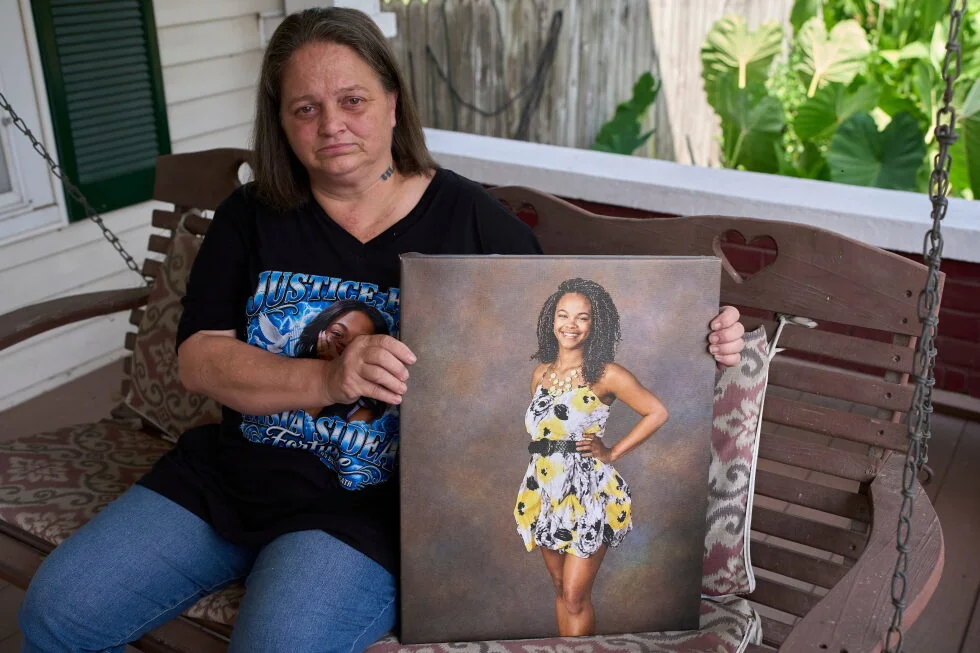
Mann legt Unschuldsplädoyer im Fall des Erhängungstodes einer Frau aus Mississippi ein
Man enters not-guilty plea in Mississippi woman's hanging death
Mann legt Unschuldsplädoyer im Fall des Erhängungstodes einer Frau aus Mississippi ein
Man enters not-guilty plea in Mississippi woman's hanging death