Die vorzeitige Stimmabgabe zu den US-Zwischenwahlen beginnt, die die Kontrolle über den Kongress kippen könnten
September 18th, 2026
Die vorzeitige Stimmabgabe zu den US-Zwischenwahlen beginnt, die die Kontrolle über den Kongress kippen könnten
🇩🇪 Deutsch
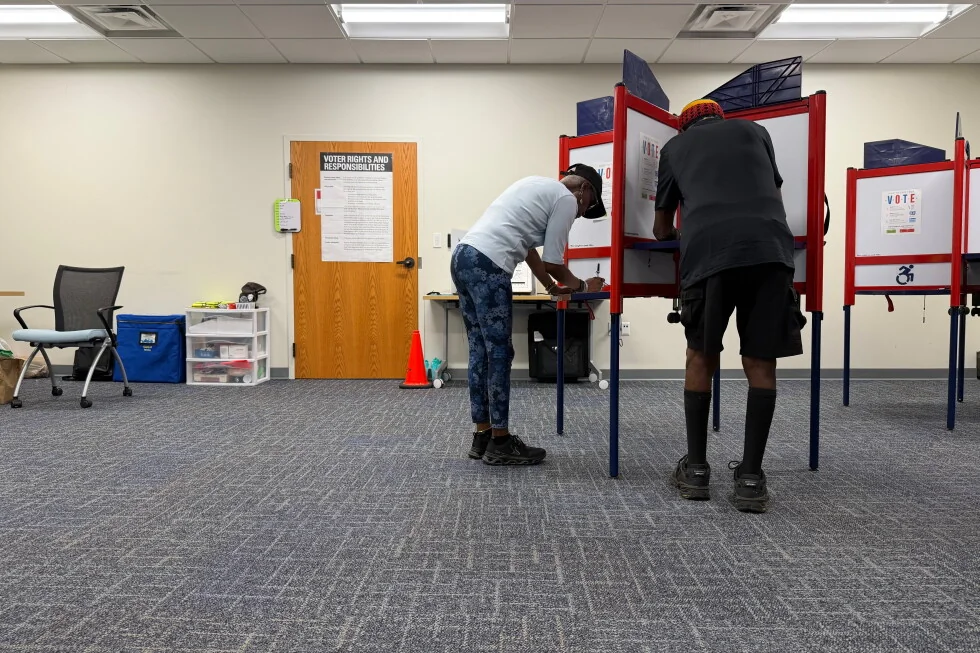
In-person balloting for this year’s midterm elections commenced on Friday, inaugurating the final six-week window during which Americans must determine which party they entrust with steering Congress through a cost-of-living crisis, a protracted war in Iran and sundry other pressing matters.
Election administrators profess themselves prepared and confident that the vote will prove both accurate and secure.
Nevertheless, President Donald Trump has persisted in efforts to denigrate certain voting methods and to reshape how elections are conducted, through court challenges, a federal hunt for noncitizen voters and a pressure campaign to compel election officials to share sensitive voter data.
Friday marked the commencement of early voting in Virginia.
Voters in a handful of other states, Minnesota and South Dakota among them, may cast absentee ballots in person, characteristically at a local election office or voting center.
More expansive early voting is slated to commence in those and other states in the weeks ahead.
At a polling station in Fairfax, Virginia, Sanya Singhal, an 18-year-old college student, numbered among the earliest to cast her ballot in person on Friday morning, having arrived well in advance of the site's opening in order to secure a place in line.
"Why not simply indulge in a modicum of levity in life—endeavour, as it were, to be the inaugural early voter?" she asked.
"I genuinely wish to partake in my democracy."
At a polling station in suburban Richmond, a poll worker rang a bell as the building opened, whereupon a dozen or so voters queued in line commenced filing in.
Stephen Gura was thrilled to be the first.
“This election is of paramount consequence.
We must arrest the Trump agenda,” averred Gura, who further noted that he had cast his ballot for U.S. Sen. Mark Warner, a Democrat, and Shannon Taylor, the Democratic nominee challenging Republican incumbent Rob Wittman in the 1st Congressional District.
The Nov. 3 election encompasses votes for governor and state legislature in most states and will prove decisive as to whether Republicans retain control of the U.S. House and Senate.
Should Democrats recapture Congress, it would alter the trajectory of the final two years of Trump’s term, most likely culminating in investigations and other oversight efforts.
At the suburban Richmond polling station, a ceaseless procession of electors streamed in and out.
William Curry, a 74-year-old retiree who characterised himself as a libertarian-leaning independent conservative, cast his ballot for Warner's Republican challenger, Bert Mizusawa, and for Wittman.
Curry remarked that he broadly endorses the job Trump has done, barring the war with Iran.
This website is safeguarded by reCAPTCHA, and Google's Privacy Policy and Terms of Service are applicable.
"He is embroiled in an inextricable predicament," Curry said of the conflict.
On a rain-soaked day in Sioux Falls, South Dakota, Bill Goehring, 67, recounted that he had cast his ballot early at the county office, anticipating forthcoming travels.
His vote encompassed a mélange of Democrats and independents, and he averred that Trump’s “dictatorial tendencies are bad for America.”
John Thomas, a conservative retired police officer stationed at the Sioux Falls office, averred that his foremost preoccupations were public safety and electoral integrity.
He articulated an aversion to witnessing votes cast in federal elections by immigrants residing in the country unlawfully.
Such fraudulent voting has been demonstrated to be exceedingly rare.
Trump’s immigration agenda was “spot on,” the 77-year-old averred.
"Were it to have remained unchanged for another four years, we would cease to be a country much longer," he said.
The commencement of early voting coincides with a period of profound angst and schism among many Americans concerning such issues as escalating gasoline and grocery prices, the war in Iran, the impending perils of artificial intelligence, and Trump's aggressive immigration enforcement campaign.
It likewise follows an unprecedented spate of mid-decade redistricting for the House, inaugurated when Trump exhorted the Republican-controlled legislature in Texas to redraw its congressional map to the party's advantage.
California and other states followed suit.
The ramifications extend to millions of individuals: research indicates that one in ten Americans this autumn resides in a congressional district distinct from that of 2024.
Such partisan machinations are anticipated to persist in the run-up to the 2028 elections, following a watershed ruling this year by the U.S. Supreme Court that attenuated the federal Voting Rights Act's safeguards against racially discriminatory redistricting.
As the commencement of early voting drew nigh, Trump remained intent upon endeavours to assert federal dominion over the administration of elections, notwithstanding that the Constitution vests the authority to conduct elections in the states and, in certain instances, Congress.
The nation's highest court this week rebuffed Trump's bid to restrict mail ballots, yet sundry other exertions by his administration to sway the voting process and scrutinise state voter rolls persist.
Virginia’s Democratic attorney general cautioned on Thursday that the Trump administration may have contravened the Commonwealth’s statutes, following a whistleblower’s allegation that federal employees had misrepresented themselves on voter lookup tools in order to scour for noncitizen voters.
For years, Trump has conjured the specter of pervasive noncitizen voting in U.S. elections, and this year proves no exception.
Yet research persistently demonstrates that noncitizen voting is exceedingly rare.
David Becker, executive director and founder of the Center for Election Innovation and Research, remarked that he would not be taken aback should the Republican president persist in “his disinformation campaign and his attack on election officials.”
Nevertheless, he expressed his conviction that “the process will hold as it has in past years.”
Not an inconsiderable number of Friday voters were impelled to cast their ballots early, owing at least in part to Trump's actions.
In Minneapolis, Dragan Colakovic, a 47-year-old business processing engineer, averred that he was loath to bide his time until Election Day, apprehensive lest he be intercepted by immigration agents.
He recounted that Trump’s deployment of agents to Minnesota in an immigration crackdown earlier this year had filled him with dread.
A naturalized U.S. citizen who emigrated from Bosnia in 1997, he had witnessed firsthand the horrors of war in the former Yugoslavia.
"This echoed what I had witnessed in Bosnia," he remarked, alluding to the heavily armed immigration agents who repeatedly swept through his neighborhood, which is home to a substantial immigrant population.
“These were my neighbours, my friends,” he remarked, with reference to those being apprehended.
Laura Bland, a sixty-three-year-old Democratic voter in Virginia’s Henrico County, said she had cast her ballot early in order to send “a signal that we’re still here,” notwithstanding Trump’s endeavours to curtail mail voting.
“Irrespective of whether one casts one’s ballot for a Democrat or a Republican, the populace shall not be deterred or cowed from partaking in our elections,” Bland said, all but reduced to tears.
Voting rights advocates have this year exhorted electors to cast mail ballots betimes, owing in part to apprehensions regarding recent alterations in U.S. Postal Service operations that could protract the application of postmarks to ballots.
“It affords voters options, alleviates congestion on Election Day and may even conduce to expedited results,” remarked Hannah Fried, co-founder and CEO of the voting rights organisation All Voting Is Local.
The U.S. Postal Service's chief executive further exhorted voters casting ballots by mail to ensure their submissions were dispatched a week prior to the deadline.
"Everything is resolved, provided that people cast their ballots early," Postmaster General David Steiner remarked in an interview.
During a news briefing on Thursday, Minnesota Secretary of State Steve Simon exhorted the public not to be unduly influenced by accounts they may have encountered that impugn the integrity of election operations.
They would be able to cast their ballots “just like they always have,” he asserted.
"I merely wish to reaffirm that Minnesota's elections are fundamentally free, fair, accurate, honest and secure," he said.
September 18th, 2026
Trending Articles
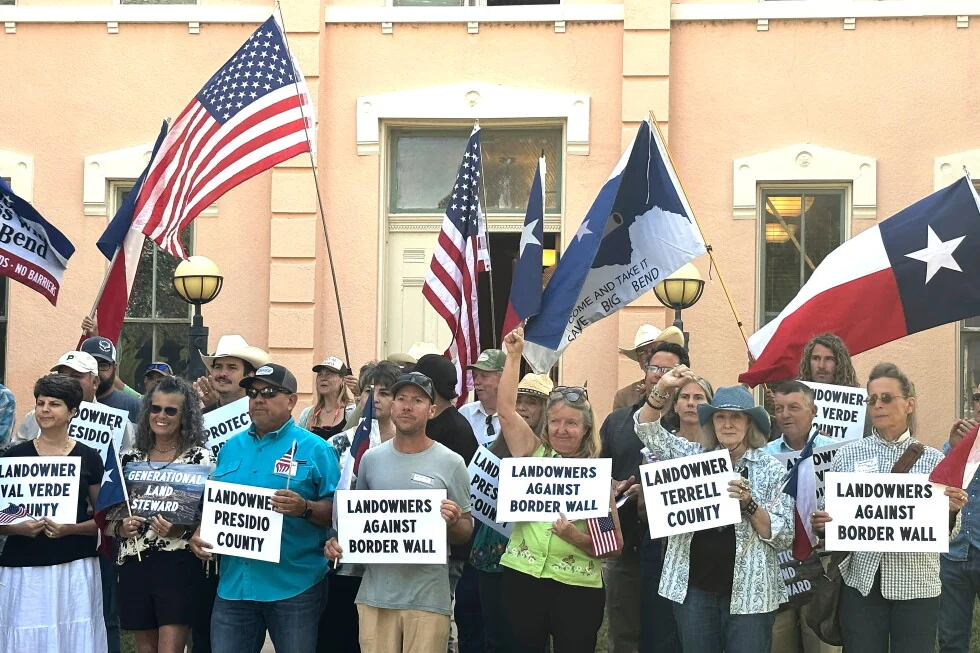
Trump-Administration beginnt mit dem Bau der Grenzmauer in der Big-Bend-Region in Texas
Trump Administration Commences Border Wall Construction in Texas’ Big Bend Region
Trump-Administration beginnt mit dem Bau der Grenzmauer in der Big-Bend-Region in Texas
Trump Administration Commences Border Wall Construction in Texas’ Big Bend Region
Ein ICE-Beamter plädiert auf nicht schuldig in Bezug auf die Anklage, das FBI über eine nichttödliche Schießerei in Minneapolis belogen zu haben.
ICE officer pleads not guilty to charges of lying to FBI about nonfatal Minneapolis shooting
Ein ICE-Beamter plädiert auf nicht schuldig in Bezug auf die Anklage, das FBI über eine nichttödliche Schießerei in Minneapolis belogen zu haben.
ICE officer pleads not guilty to charges of lying to FBI about nonfatal Minneapolis shooting
Clancy-Geschworene hegte keine „Zweifel“ an ihrer Schuld am Tod ihrer Kinder
Clancy Juror Held No "Any Doubts" Regarding Her Culpability in Her Children's Deaths
Clancy-Geschworene hegte keine „Zweifel“ an ihrer Schuld am Tod ihrer Kinder
Clancy Juror Held No "Any Doubts" Regarding Her Culpability in Her Children's Deaths
Hubschrauber eines LA-Nachrichtensenders stürzt am Geburtsort – und wohl auch Epizentrum – der „Auge-am-Himmel“-Berichterstattung ab
LA news helicopter crashes in birthplace—and arguable epicenter—of ‘eye-in-the-sky’ reporting
Hubschrauber eines LA-Nachrichtensenders stürzt am Geburtsort – und wohl auch Epizentrum – der „Auge-am-Himmel“-Berichterstattung ab
LA news helicopter crashes in birthplace—and arguable epicenter—of ‘eye-in-the-sky’ reporting
Erhängungen von Schwarzen im Süden der USA: Eine unmissverständliche Mahnung an die Lynchgeschichte der Nation
Hangings of Black People in the US South: A Stark Reminder of the Nation’s Lynching History
Erhängungen von Schwarzen im Süden der USA: Eine unmissverständliche Mahnung an die Lynchgeschichte der Nation
Hangings of Black People in the US South: A Stark Reminder of the Nation’s Lynching History
Kaution für ICE-Beamten bewilligt, der im Fall einer nichttödlichen Schießerei in Minneapolis des Meineids und der Körperverletzung beschuldigt wird
Bail Granted for ICE Officer Accused of Perjury and Assault in Minneapolis Non-Fatal Shooting
Kaution für ICE-Beamten bewilligt, der im Fall einer nichttödlichen Schießerei in Minneapolis des Meineids und der Körperverletzung beschuldigt wird
Bail Granted for ICE Officer Accused of Perjury and Assault in Minneapolis Non-Fatal Shooting
Berufungsgericht prüft Trumps unterstützte Kongresswahlkarte in Missouri trotz Blockade durch den Obersten Gerichtshof
Appeals court weighs Trump-backed Missouri congressional map despite Supreme Court block
Berufungsgericht prüft Trumps unterstützte Kongresswahlkarte in Missouri trotz Blockade durch den Obersten Gerichtshof
Appeals court weighs Trump-backed Missouri congressional map despite Supreme Court block
Die rasche Verbreitung von Desinformation in den sozialen Medien hat eine besorgniserregende Erosion des öffentlichen Vertrauens in institutionelle Autoritäten bewirkt, ein Phänomen, das, so argumentieren viele Wissenschaftler, durch die algorithmische Verstärkung polarisierender Inhalte noch verschärft wird.
Die rasche Verbreitung von Desinformation in den sozialen Medien hat eine besorgniserregende Erosion des öffentlichen Vertrauens in institutionelle Autoritäten bewirkt, ein Phänomen, das, so argumentieren viele Wissenschaftler, durch die algorithmische Verstärkung polarisierender Inhalte noch verschärft wird.
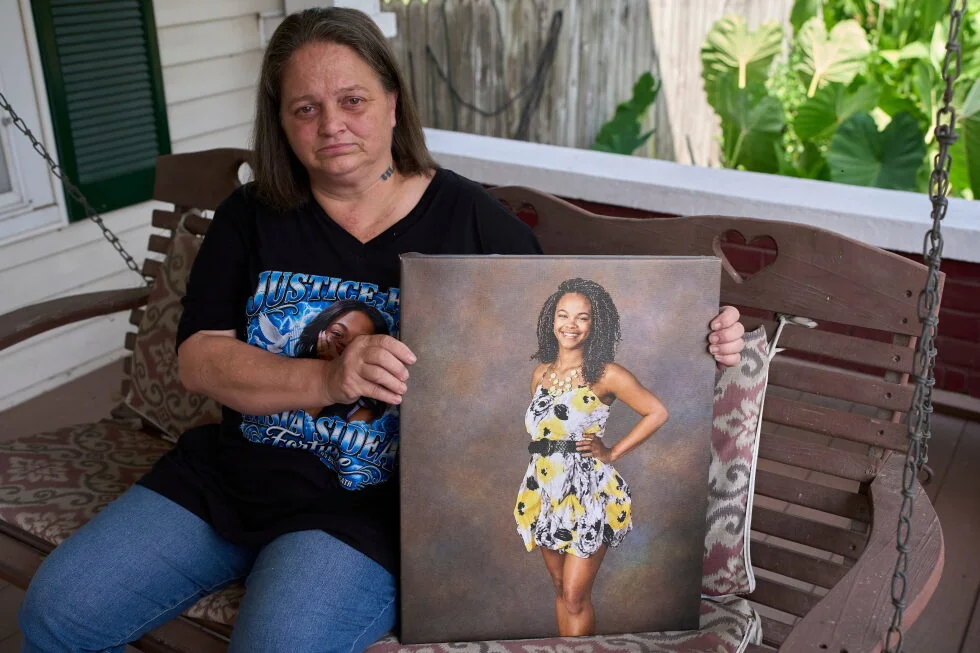
Mann legt Unschuldsplädoyer im Fall des Erhängungstodes einer Frau aus Mississippi ein
Man enters not-guilty plea in Mississippi woman's hanging death
Mann legt Unschuldsplädoyer im Fall des Erhängungstodes einer Frau aus Mississippi ein
Man enters not-guilty plea in Mississippi woman's hanging death