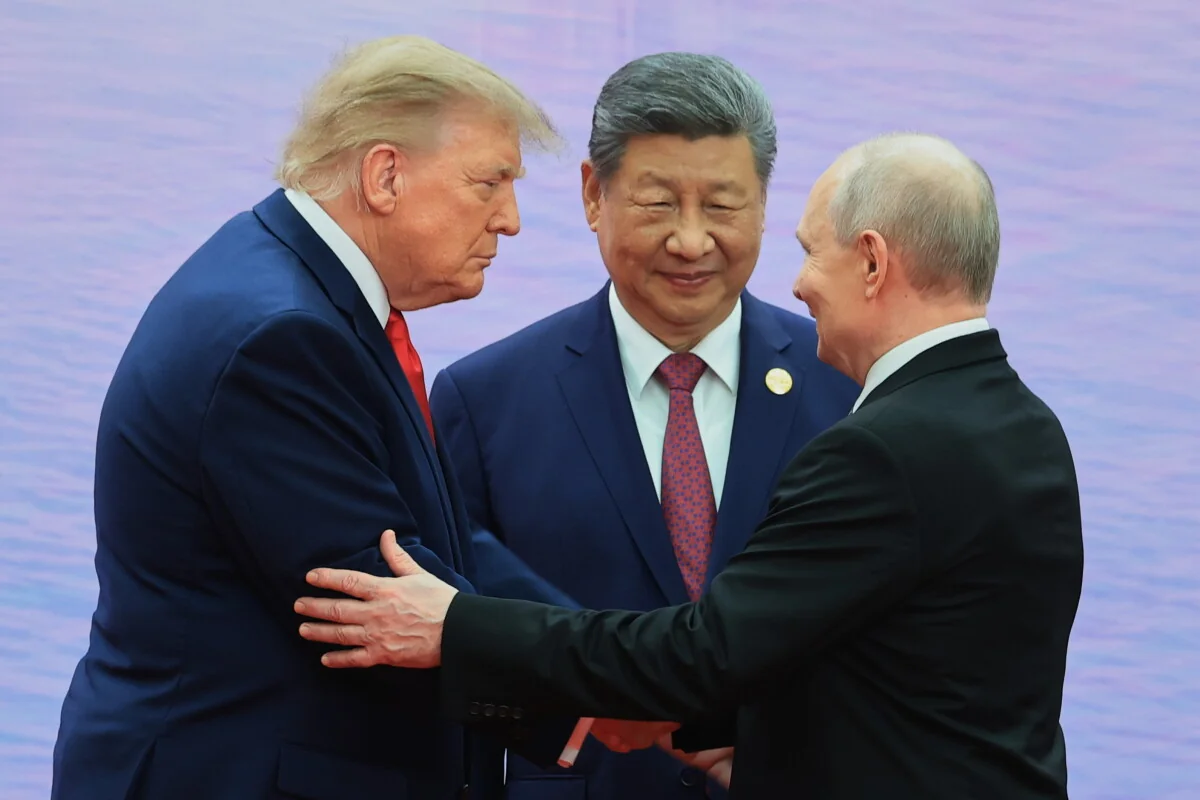
トランプ氏、習近平氏、プーチン氏が核リスクをめぐり異例の三者協議、突破口なし
November 20th, 2026
トランプ氏、習近平氏、プーチン氏が核リスクをめぐり異例の三者協議、突破口なし
🇯🇵 日本語
For U.S. President Donald Trump, the meeting with the leaders of two other nuclear powers -- China’s Xi Jinping and Russia’s Vladimir Putin -- was meant to be a diplomatic triumph: it would prove that Trump could negotiate with two of America’s toughest rivals.
Before the trio met on Thursday at a villa in Shenzhen, China's tech hub, the U.S. president tried to flatter both Xi and Putin by calling them his friends.
The wars in Ukraine and Iran were on the agenda, along with the goal of reducing the dangers posed by their nuclear arsenals.
Yet after about 70 minutes behind closed doors, they agreed on a much narrower agenda: they wanted to reform the United Nations, refine more fossil fuels and curb the reach of the International Criminal Court.
What had been billed as a historic trilateral meeting ultimately looked like little more than a fleeting photo op.
Trump left the villa promptly and boarded Air Force One without saying a word to reporters about his time with Xi and Putin.
Nevertheless, he hailed the visit as “Highly Consequential” on social media as he made his way back to Washington, and announced that he would hold a press conference on Friday at the White House.
After the Shenzhen talks, Trump joined a Berlin meeting by phone, connecting with U.S. envoys Jared Kushner and Steve Witkoff, Ukrainian President Volodymyr Zelenskyy, and more than 40 European leaders who were supporting Ukraine's war effort.
According to Witkoff, Trump told the Berlin gathering that he had spoken with Xi and Putin about finding a peaceful end to the Ukraine war.
The agreements that emerged from the trilateral meeting were modest, but the rhetoric at its outset was not.
“We are truly making history,” Trump said.
“The United States, Russia and China are uniquely positioned to discuss how to reduce the number of nuclear weapons on Earth and also to lessen the risk of those weapons being used.”
After the meeting, Xi described it as positive, constructive and fruitful, while Putin called the trilateral talks open and candid, describing the format as “useful and substantive.”
“It is a serious collaborative work,” he said in response to a question about whether the image of the meeting itself mattered more than the substance.
The last nuclear arms pact between Russia and the United States, known as New START, expired in February, and Trump has said he wants "a new, improved and modernized" deal that includes China.
However, China has less incentive to accept limits, given that its arsenal of more than 600 warheads is far smaller than the more than 5,000 warheads believed to be in each of the U.S. and Russian stockpiles.
Daryl Kimball, executive director of the Arms Control Association, said the meeting could at best initiate a process that would eventually lead to sustained talks on reducing nuclear arsenals.
“We need more than diplomatic theater and photo opportunities between Xi, Putin and Trump,” Kimball said.
“And one meeting is unlikely to produce dramatic breakthroughs.”
Earlier, the U.S. president had held a separate one-on-one meeting with Xi — their third substantive encounter this year.
Trump remarked that they shared an interest in ensuring the flow of oil through the Strait of Hormuz, a vital waterway for oil shipments from the Middle East that had been repeatedly closed as a result of attacks during the Iran war.
Trump indicated that he would urge Xi to purchase more agricultural products from America.
Xi stated that relations between the U.S. and China had been “generally stable and improved” over the course of Trump’s presidency.
The official Chinese news agency Xinhua reported that Xi discussed Taiwan with Trump and asserted that the two countries needed to enhance communication on economic and trade issues.
Trump also scheduled a separate meeting with Putin, marking the first time the two leaders have held talks since their discussions in Alaska last year, which failed to secure a deal on Russia's war in Ukraine.
Remarkable outcomes could emerge from this — or at the very least, it could mark a beginning, Trump remarked, describing Putin as "my friend."
Trump has frequently boasted of his rapport with Putin, even as relations between the U.S. and Ukraine appear to have cratered of late.
Trump rejected new Russia sanctions, while Kyiv was undermined by disruptions in satellite support for its drones during the war.
After their trilateral meeting, the three leaders criticised the International Criminal Court for overstepping its jurisdiction, arguing that government officials should be immune from its prosecutions.
Putin is wanted by the court, and Trump's administration has imposed sanctions on ICC officials and on the institution itself as part of a campaign to dismantle the tribunal over investigations into the United States and its allies, including Israel.
The U.S. president’s ambitions going into the meeting brought to mind an era of great power politics, when wealthier countries felt entitled to decide the fate of seemingly lesser nations.
Trump was negotiating with China and Russia without Ukraine taking part — or allies such as Germany, France, the United Kingdom, Japan and South Korea, which also have a stake in the outcome of any talks.
Trump has long been convinced that his capacity to forge personal connections affords him a diplomatic advantage.
Xi extended a symbolic gesture of friendship on Wednesday by taking the unusual step of greeting Air Force One on the tarmac, and the two leaders transformed their handshake into a one-armed embrace.
Yet despite all the compliments the U.S. president has lavished on the two autocrats, he did not always seem to share the same deep relationship grounded in common interests that Xi and Putin have.
On Wednesday, at the Asia-Pacific Economic Cooperation summit, Xi greeted Putin by calling him “my old friend.”
The Russian leader responded by declaring Xi to be his “dear friend.”
China has helped to support Russia economically since its 2022 invasion of Ukraine, giving Putin a financial lifeline after the U.S. and its allies imposed new sanctions.
By contrast, when Xi made a state visit to the White House in September, he was considerably more restrained with Trump, stating that they had established a “personal rapport and stayed in touch.”
Trump and Xi have one further meeting scheduled this year, at the G20 summit in Florida in December.
Despite Trump's commendation of Xi, Thursday nonetheless witnessed indications of strain within the U.S.-China relationship.
Chinese officials barred a Bloomberg reporter from the trilateral meeting after she had posed a question during the earlier Trump-Xi session.
Meanwhile, Chinese television broadcast footage of Trump appearing drowsy, whereas the White House posted a clip of Trump assisting Xi up an escalator.
November 20th, 2026
Trending Articles
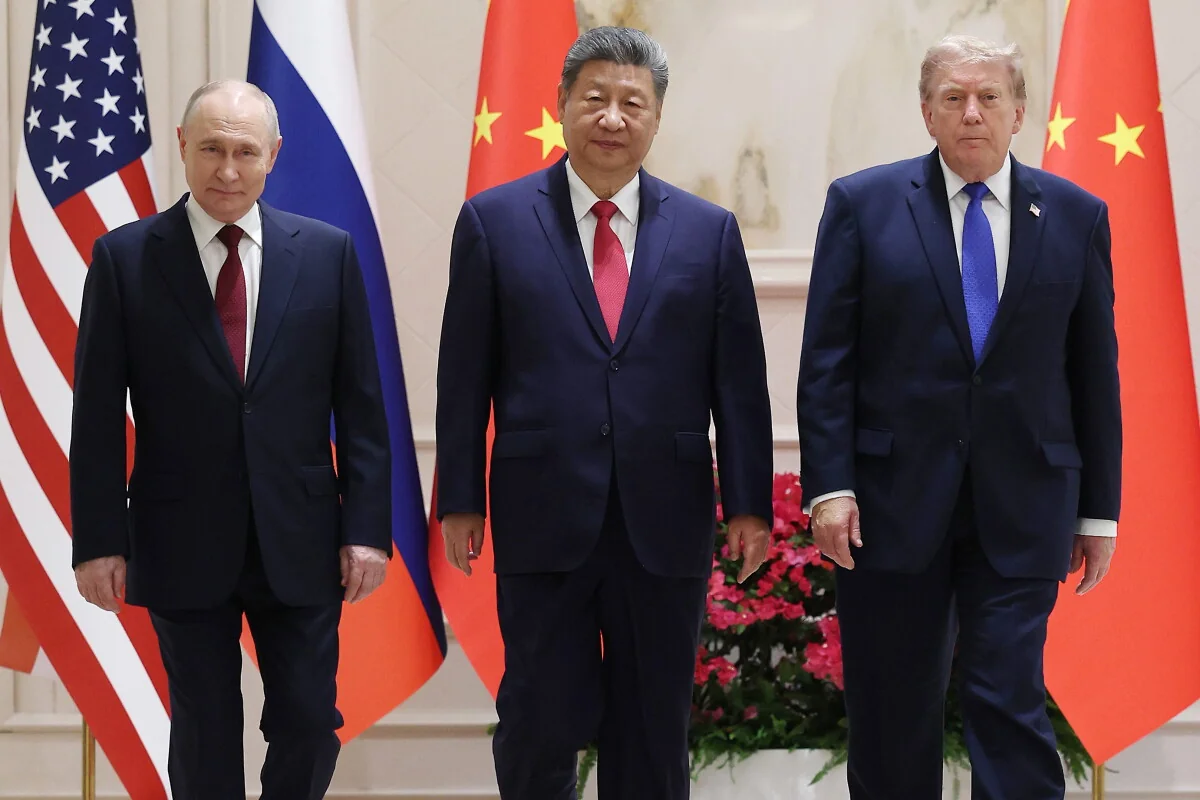
歴史的なトランプ・習近平・プーチン首脳会談の主なポイント
Key Takeaways from the Historic Trump–Xi–Putin Summit
歴史的なトランプ・習近平・プーチン首脳会談の主なポイント
Key Takeaways from the Historic Trump–Xi–Putin Summit
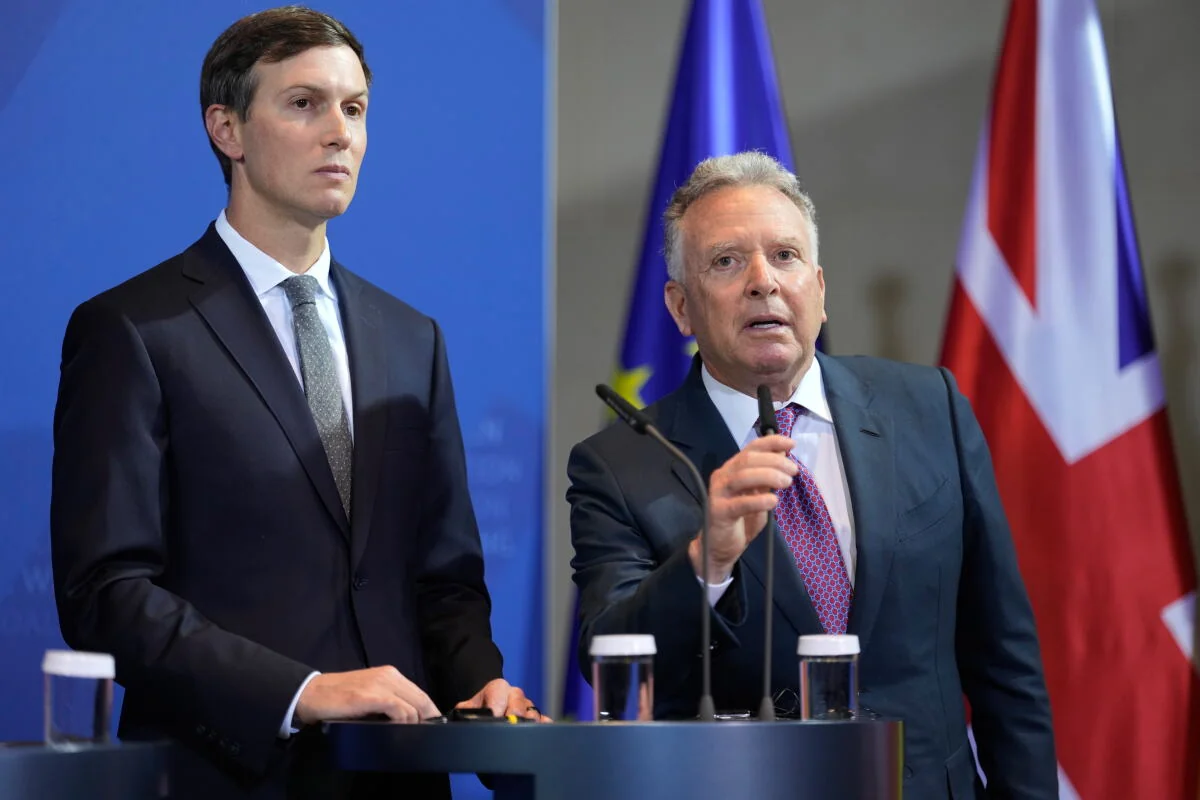
クシュナー氏:ロシアはウクライナに対するNATO型の安全保障保証に「前向き」
Kushner: Russia "comfortable" with NATO-style security guarantees for Ukraine
クシュナー氏:ロシアはウクライナに対するNATO型の安全保障保証に「前向き」
Kushner: Russia "comfortable" with NATO-style security guarantees for Ukraine
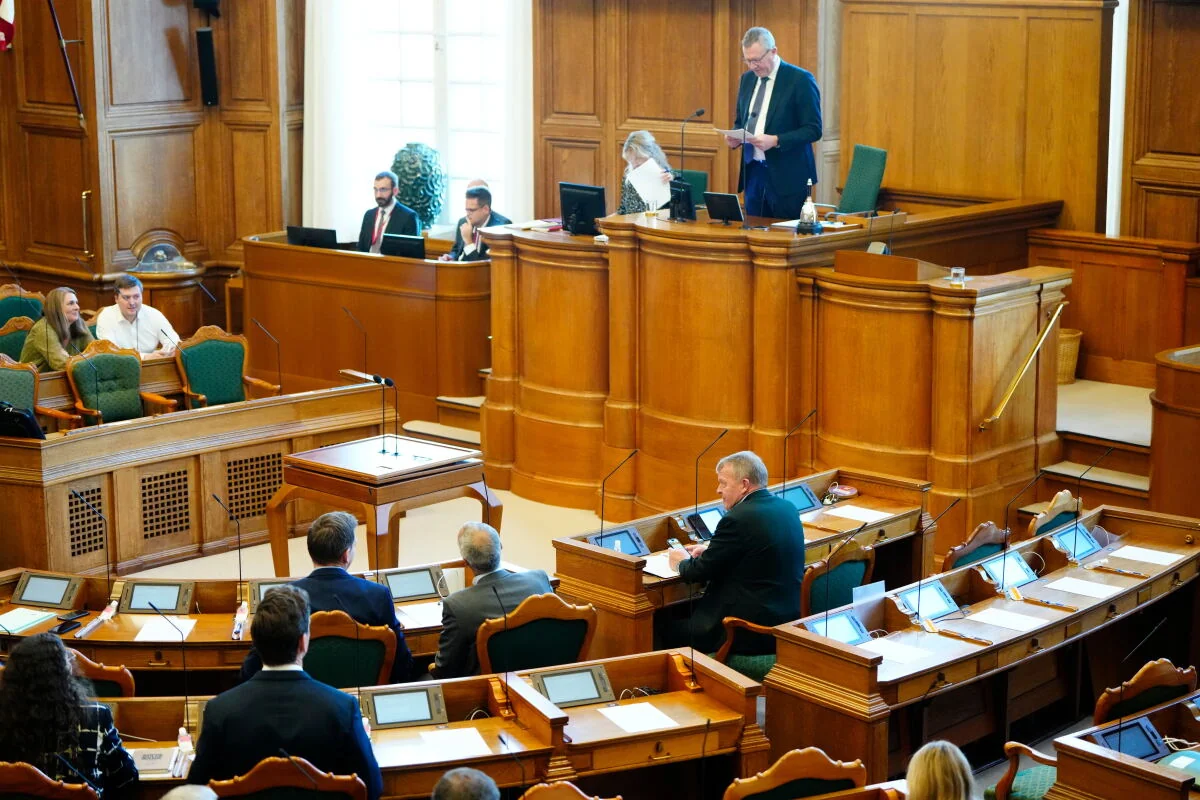
デンマーク、トランプとの緊張緩和を目指しアメリカ合衆国およびグリーンランドとの安全保障協定を承認
Denmark approves security deal with US and Greenland in bid to ease tensions with Trump
デンマーク、トランプとの緊張緩和を目指しアメリカ合衆国およびグリーンランドとの安全保障協定を承認
Denmark approves security deal with US and Greenland in bid to ease tensions with Trump
ウクライナのドローンとミサイルがロシアとクリミアを結ぶケルチ橋を攻撃
Ukrainian drones and missiles strike Kerch Bridge linking Russia to Crimea
ウクライナのドローンとミサイルがロシアとクリミアを結ぶケルチ橋を攻撃
Ukrainian drones and missiles strike Kerch Bridge linking Russia to Crimea
トランプ大統領、経済協定と同盟協議を伴うアジア歴訪を開始すべくフィリピンに到着
Trump lands in the Philippines to launch Asia tour with economic deals and allied talks
トランプ大統領、経済協定と同盟協議を伴うアジア歴訪を開始すべくフィリピンに到着
Trump lands in the Philippines to launch Asia tour with economic deals and allied talks
北マケドニア、ギリシャでのテロ計画阻止に関連し5人を逮捕、FBI手配のイラン人と関連
North Macedonia Arrests 5 Over Foiled Greece Terror Plot Tied to FBI-Wanted Iranian
北マケドニア、ギリシャでのテロ計画阻止に関連し5人を逮捕、FBI手配のイラン人と関連
North Macedonia Arrests 5 Over Foiled Greece Terror Plot Tied to FBI-Wanted Iranian
スペイン、2日間で約2,200人の移民がカナリア諸島に到着したと報告
Spain reports nearly 2,200 migrants arriving in Canary Islands within 2 days
スペイン、2日間で約2,200人の移民がカナリア諸島に到着したと報告
Spain reports nearly 2,200 migrants arriving in Canary Islands within 2 days
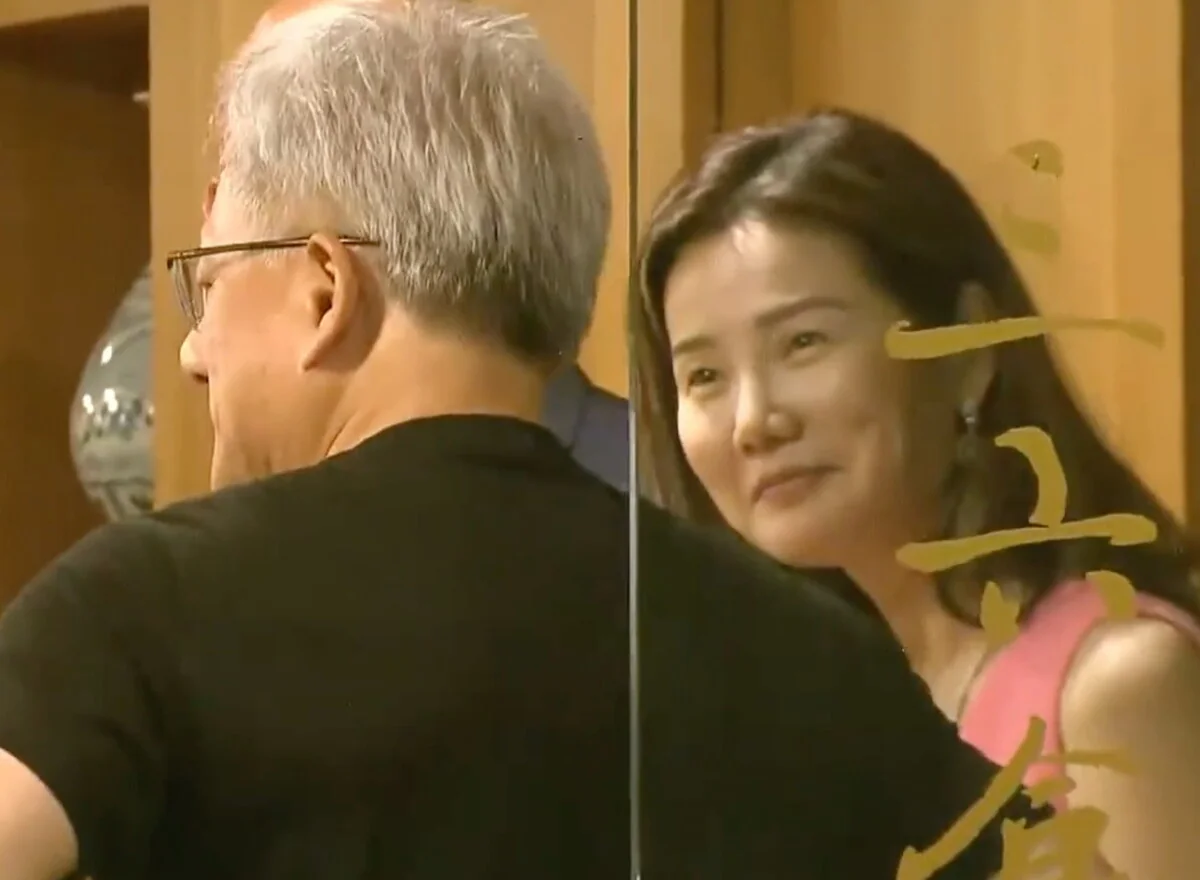
メガスピードは、NVIDIAの余波に関する社内調査のさなか、アリス・ファンが2025年に退社したと述べている。
Megaspeed says Alice Huang departed in 2025 amid internal probe into Nvidia fallout
メガスピードは、NVIDIAの余波に関する社内調査のさなか、アリス・ファンが2025年に退社したと述べている。
Megaspeed says Alice Huang departed in 2025 amid internal probe into Nvidia fallout
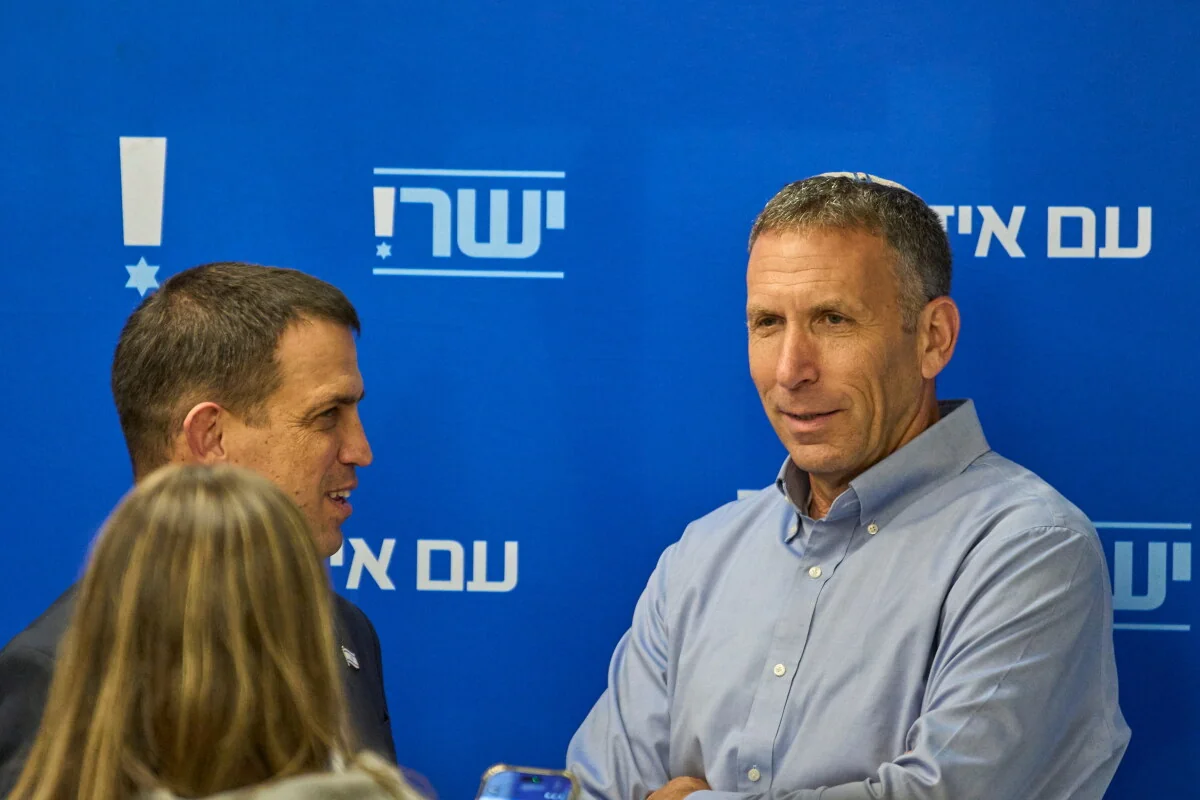
イスラエル議会、ネタニヤフの反対派が支持する新たなクネセト議長を選出
Israeli parliament elects new Knesset speaker backed by Netanyahu's opponents
イスラエル議会、ネタニヤフの反対派が支持する新たなクネセト議長を選出
Israeli parliament elects new Knesset speaker backed by Netanyahu's opponents