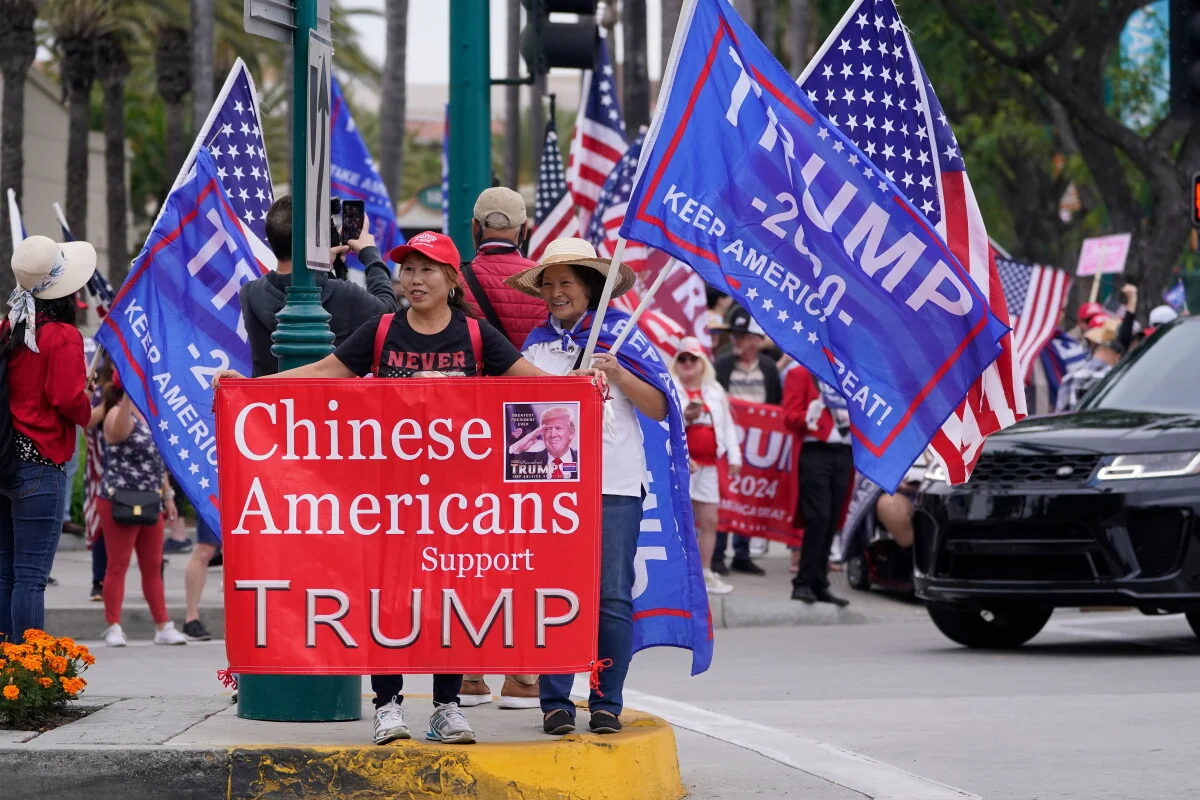
AP-NORC/AAPI Data民調發現,隨著共和黨信任度消退,民主黨在AAPI成人族群中聲勢看漲
October 19th, 2026
AP-NORC/AAPI Data民調發現,隨著共和黨信任度消退,民主黨在AAPI成人族群中聲勢看漲
🇹🇼 中文
According to a new AP-NORC/AAPI Data poll, as the Nov. 3 midterm elections approach, Asian Americans, Native Hawaiians and Pacific Islander adults have grown increasingly disillusioned with President Donald Trump and Republicans, giving Democrats a substantial edge on major issues such as the economy and health care.
The survey, conducted from Sept. 8-15 by AAPI Data and the NORC Center for Public Affairs Research, reveals that Trump's standing on the economy has declined among AAPI adults over the course of his second term.
Roughly one-quarter of AAPI adults approve of the way Trump is handling his job as president overall.
Only about 2 in 10 approve of his performance on the economy, which the vast majority of AAPI adults regard as one of the most important issues for the upcoming election.
Yet while AAPI adults trust Democrats more than Republicans on a wide range of issues, their views of the Democratic Party itself remain split.
Rebecca Larocco, a 45-year-old Korean American residing in Corning, Iowa, cast her vote for Trump in 2016 and is inclined toward the Republican Party in the midterm elections.
She endorses his immigration policies yet remains uncertain about Trump's management of the economy as the Iran war continues to drive up gas prices.
“Where I’m at, it’s went up almost $1.50 (a gallon),” she said.
“I didn’t expect to go into war at all; that has been decidedly unexpected, and I’m not sure...
I’m simply hoping they’ll do what they’re saying and get our economy back on track, get immigration and crime lowered.”
For an overwhelming majority of the AAPI adult population, the economy remains foremost in their minds when they contemplate the midterms.
With the ongoing Iran war driving up gas prices and other costs remaining elevated, Americans as a whole are profoundly pessimistic about the state of the economy and regard it as a high priority for the midterms.
This includes AAPI adults — according to the poll, roughly 9 in 10 rank the economy among the most important issues for the upcoming election, and approximately 8 in 10 say the same of the cost of living.
For AAPI adults, the economy, the cost of living and healthcare eclipse all other issues.
Roughly 7 in 10 AAPI adults identify healthcare as one of the most important issues in the election, whereas only about half say the same of foreign policy, crime, immigration, election fairness or climate change.
Simultaneously, Trump’s economic approval among AAPI adults has declined by approximately 10 percentage points over the course of the year, and there are further indications that his popularity has diminished within this group.
In late 2024, shortly after the election, roughly 4 in 10 AAPI adults held a “somewhat” or “very” favorable view of Trump.
That figure has now fallen to approximately 3 in 10.
“The data show that any gains he made — including during the 2024 election, when Trump enjoyed a brief honeymoon period after the election and before Inauguration Day — have now largely disappeared,” said Karthick Ramakrishnan, founder and executive director of AAPI Data.
Len Takahashi, 57, of Universal City, Texas, characterizes himself as conservative, yet he voted for Democrats in the last three presidential elections and for Republicans in midterm elections.
For this midterm election, he is simply receptive to candidates who prioritize the economy.
“I would like policies that are designed to serve the best interests of the American public,” said Takahashi, who is Japanese American.
“That could entail reducing spending, achieving a balanced U.S. budget, bringing down inflation, working towards a more stable economy and, lastly, simply fostering a better atmosphere between the far left and the far right.”
Since Trump's return to the White House, Democrats have gained ground at Republicans' expense regarding AAPI adults' trust in their handling of many key issues.
In a March 2025 poll, AAPI adults were evenly split over which political party would be better equipped to handle the economy and immigration.
Democrats now hold an advantage of roughly 20 percentage points on both issues.
Meanwhile, roughly two-thirds of AAPI adults hold a “somewhat” or “very” unfavorable opinion of the GOP, while only about one-quarter hold a “somewhat” or “very” favorable view.
Yet although confidence in the Democrats on specific issues has grown, AAPI adults remain ambivalent about the party as a whole.
Roughly half, 48%, of AAPI adults hold a “somewhat” or “very” unfavorable impression of the Democratic Party, whereas 44% hold a “somewhat” or “very” favorable impression.
A separate AP-NORC survey of registered voters conducted in September similarly found that, although voters in general are deeply dissatisfied with Trump and the GOP, few believe either party is capable of solving important problems.
Louise Rider, 40, is a Democrat residing in Chicago.
She maintains that Democrats are superior to Republicans on every issue, yet she concedes that she is dissatisfied with the manner in which the party has governed.
“I don’t believe the Democrats are performing particularly well; I think they require substantial change as a party,” she said.
“It’s a rather helpless feeling, that nothing will get accomplished with both parties unless there are major changes.”
Certain Republicans continue to stand behind Trump.
James Finley, 74, of Lenox, Massachusetts, remarked that Trump merits a degree of understanding, given that he cannot bring down high prices overnight.
When it comes to Republicans in general, however, Finley is somewhat more critical.
“They’ve held the majority for a couple of years,” said Finley, whose ancestry includes Japanese heritage.
“I think they could have done a little bit more—or perhaps a great deal more—when it comes to passing certain things that I wanted to pass.”
Still, he adheres to the party line, and, as Finley said, because “all I ever hear from Democrats is to get Trump.”
With the election drawing near, many AAPI adults harbour concerns about misinformation, legal challenges to the results, and voter suppression.
Roughly half of AAPI adults consider it a “major problem” in U.S. elections that eligible individuals are not permitted to vote, while approximately two-thirds regard attempts by foreign governments to influence results as a “major” problem.
As the November election approaches, around half of AAPI adults say they are “extremely” or “very” concerned about fake or false information about the candidates, and roughly the same share feel similarly about legal challenges to the election results.
Finley is uncertain whether the voting process can be sufficiently tightly monitored to prevent undocumented or unregistered individuals from attempting to vote.
However, Takahashi, the conservative from Texas, is concerned that Trump may attempt to manipulate the election.
He expressed concern, he said, that Trump would amplify claims of “fraud in the election system” should the midterms not go in his favor.
“(He’ll) make that a point to distract the American public,” he said.
The survey of 1,023 U.S. adults of Asian American, Native Hawaiian and Pacific Islander descent was conducted from Sept. 8–15, drawing on a sample from NORC's probability-based Amplify AAPI Panel, which is designed to represent the Asian American, Native Hawaiian and Pacific Islander population.
The margin of sampling error for all respondents is ±4.7 percentage points.
This poll forms part of an ongoing project examining the views of Asian Americans, Native Hawaiians and Pacific Islanders—views that other surveys tend not to highlight, given small sample sizes and a lack of linguistic representation.
October 19th, 2026
Trending Articles

研究人員因川普削減經費與科學政治化而離開美國
Researchers leaving the US over Trump’s funding cuts and politicization of science
研究人員因川普削減經費與科學政治化而離開美國
Researchers leaving the US over Trump’s funding cuts and politicization of science

司法部在加州針對涉嫌非公民選民的行動中起訴二十多人
Justice Department charges over two dozen in California operation targeting alleged noncitizen voters
司法部在加州針對涉嫌非公民選民的行動中起訴二十多人
Justice Department charges over two dozen in California operation targeting alleged noncitizen voters

佛羅里達州對古巴前總統勞爾·卡斯楚提出額外指控
Florida files additional charges against former Cuban president Raul Castro
佛羅里達州對古巴前總統勞爾·卡斯楚提出額外指控
Florida files additional charges against former Cuban president Raul Castro

什麼是原住民族日?一場慶祝、抗議與歷史的重新 reclaim
What is Indigenous Peoples Day? A celebration, protest and reclaiming history
什麼是原住民族日?一場慶祝、抗議與歷史的重新 reclaim
What is Indigenous Peoples Day? A celebration, protest and reclaiming history

運動員的原住民族自豪感:希亞茲·皮特於原住民族日獲表揚
Athlete's Indigenous Pride: Shiyazh Pete Honored on Indigenous Peoples Day
運動員的原住民族自豪感:希亞茲·皮特於原住民族日獲表揚
Athlete's Indigenous Pride: Shiyazh Pete Honored on Indigenous Peoples Day

馬斯克悄然成為期中選舉已知最大金主,力圖拯救共和黨
Musk quietly emerges as midterms' largest known donor in bid to rescue Republicans
馬斯克悄然成為期中選舉已知最大金主,力圖拯救共和黨
Musk quietly emerges as midterms' largest known donor in bid to rescue Republicans

美軍總主教:天主教士兵不應在行刑隊服役
U.S. Military Archbishop: Catholic Soldiers Should Not Serve on Firing Squads
美軍總主教:天主教士兵不應在行刑隊服役
U.S. Military Archbishop: Catholic Soldiers Should Not Serve on Firing Squads

霍楚爾敦促徹查康乃爾大學對2024年輪姦指控的處理方式
Hochul Urges Inquiry into Cornell’s Handling of 2024 Gang Rape Allegation
霍楚爾敦促徹查康乃爾大學對2024年輪姦指控的處理方式
Hochul Urges Inquiry into Cornell’s Handling of 2024 Gang Rape Allegation
颶風瑞秋在太平洋生成,預報員表示不會對陸地構成威脅
Hurricane Rachel emerges in Pacific, no land threat, forecasters say
颶風瑞秋在太平洋生成,預報員表示不會對陸地構成威脅
Hurricane Rachel emerges in Pacific, no land threat, forecasters say