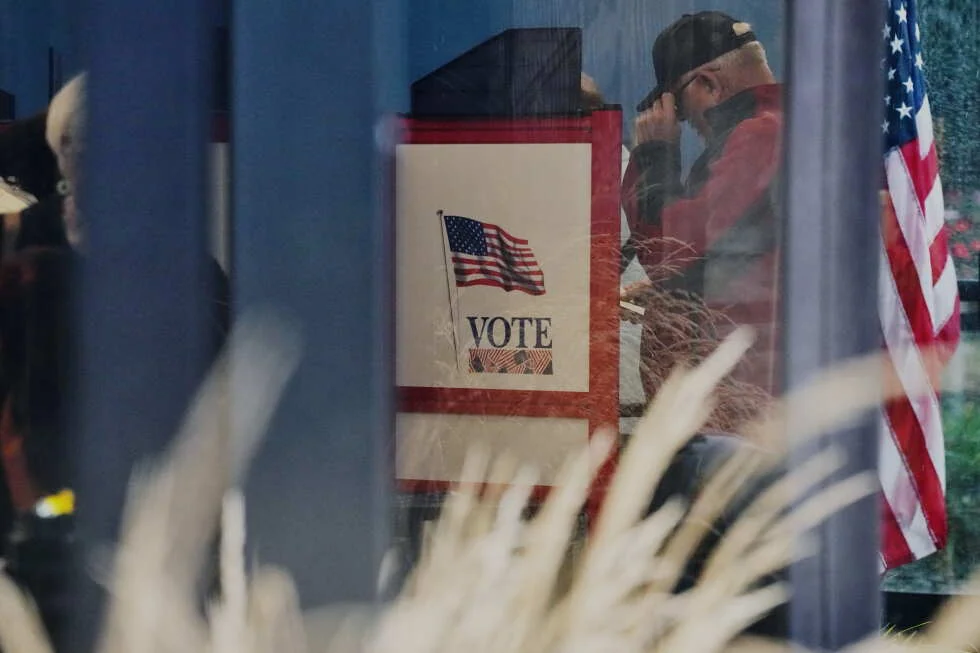
La agencia de ciberseguridad de EE. UU. presenta su plan para la infraestructura electoral 40 días antes de los comicios de mitad de mandato
September 24th, 2026
La agencia de ciberseguridad de EE. UU. presenta su plan para la infraestructura electoral 40 días antes de los comicios de mitad de mandato
🇪🇸 Español
On Thursday, a mere 40 days ahead of November’s midterms, the nation’s cybersecurity agency unveiled an election infrastructure security plan, enumerating potential threats to election systems and cataloguing the services it would proffer to election officials in safeguarding the vote.
The plan—which Homeland Security Secretary Markwayne Mullin had initially pledged to unveil by mid-August—emerges as the Trump administration has been endeavoring to galvanize efforts aimed at assisting states in safeguarding their voting systems.
Election officials have contended that such endeavors are too little, too late, given that the administration had eviscerated the agency's election security work the previous year, thereby impelling the officials to procure private services to ensure their preparedness for the forthcoming elections.
“Election security is national security,” Mullin said in a statement Thursday.
“This plan, the full implementation of which is assured, is indispensable to the security, freeness, and fairness of choosing the leaders of our country.”
The document sounds a cautionary note regarding multifarious threats to election security, encompassing software vulnerabilities, breaches of voter registration databases, insider threats and physical security incidents, such as the bomb threats directed at several polling locations during the 2024 elections.
Yet it affirms that numerous entrenched electoral practices are capable of countering such threats, and states that the agency’s objective is “to ensure the American people can trust voting systems and know that physical safety measures will be in place when they go to their assigned polling locations to cast their votes.”
Its release comes on the heels of Mullin’s exertions in recent months to propagate unsubstantiated claims concerning hundreds of thousands of noncitizens appearing on voting rolls across various states.
In July, Mullin threatened election officials with fines, penalties or imprisonment should they decline to participate in a now-blocked federal voter database intended to ferret out noncitizens on the rolls.
Even as President Donald Trump persists in asserting that noncitizen voting constitutes a widespread problem, research demonstrates that it is exceedingly rare.
The U.S. Cybersecurity and Infrastructure Security Agency, an entity housed within the Department of Homeland Security, has, since its inception in 2018, served to apprise state and local election officials of prospective threats emanating from foreign governments.
This website is safeguarded by reCAPTCHA, and Google's Privacy Policy and Terms of Service are applicable.
Yet CISA, as it is commonly designated, was conspicuously relegated to the periphery of that function during the previous year's electoral cycle, following the Trump administration's systematic dismemberment of much of its mandate concerning election security.
The administration excised approximately 1,000 personnel from CISA and curtailed $10 million from two cybersecurity undertakings, one of which was expressly devoted to assisting state and local election officials.
CISA has likewise traversed the entirety of Trump’s second term bereft of a Senate-confirmed director, resorting instead to a succession of acting leaders.
The 13-page document disseminated on Thursday asserts that DHS has “consistently supported CISA’s delivery of cybersecurity and physical security services to election officials,” further stipulating that such services are rendered gratis to state and local election officials upon their request.
A plethora of state election officials across the nation have averred to the contrary, observing that services historically proffered by CISA—such as live tabletop exercises and penetration tests designed to appraise the security of their systems—were conspicuously unavailable in the run-up to this year's midterm elections.
Minnesota Secretary of State Scott Simon, a Democrat, stated in August that his office anticipates allocating approximately $250,000 to private vendors for the purpose of conducting penetration testing—an undertaking capable of exposing security vulnerabilities and proffering actionable remediation measures.
Shenna Bellows, Maine's Democratic secretary of state, remarked that same month that her office's communications with CISA had been "sporadic and irregular, to say the least."
She remarked that it would be salutary were the Trump administration to reinstate the intelligence briefings formerly vouchsafed to election officials concerning threats emanating from foreign adversaries, whilst observing that trust with federal officials had been irrevocably sundered by the agency's retrenchments.
Thursday’s blueprint makes no provision for any particular 2026 threats emanating from adversaries such as Russia, Iran or China — each of which has endeavoured to meddle in U.S. elections, whether directly by way of hacking or indirectly through influence campaigns.
Kris Warner, West Virginia’s Republican secretary of state, stated on Thursday that certain facets of CISA’s assistance to his state had persisted uninterruptedly throughout the Trump administration, encompassing no-cost assessments of its public-facing websites for cybersecurity vulnerabilities.
Warner acknowledged that CISA had been curtailed under the Trump administration, yet he maintained that he regards the agency “as a resource and not as a service provider,” adding that his office had, the previous year, recruited a departing CISA election security adviser who has since helped to remedy whatever deficiencies may persist.
Cisco Aguilar, Nevada's Democratic secretary of state, remarked on Thursday that he had not yet been afforded an opportunity to scrutinize the report, but contended that its tardiness betokened a "complete, absolute failure of leadership."
"To arrive a mere five weeks antecedent to the election—yes, a commendable endeavour," Aguilar remarked, adding that he would have preferred the federal government to allocate greater funding for cybersecurity, rather than leaving Nevada taxpayers to bear the burden.
The agency’s new document sets forth that CISA’s support to election officials is spearheaded by 10 “regional directors,” an arrangement that deviates from how CISA had operated hitherto, said David Becker, executive director of the Center for Election Innovation and Research.
Formerly, there existed state and regional advisers, he said.
Becker characterized the new report as a positive step, albeit one of perhaps merely performative significance, in light of the fact that states have already turned to other resources.
“The stark reality is that not a single state, whether red or blue, is presently reliant upon the federal government for this assistance,” he said.
In early August, two CISA officials – acting director Nick Anderson and assistant director for integrated operations Jim Harrell – participated in a National Association of Secretaries of State call, which was attended by a bipartisan contingent of secretaries of state, as reported by several election administrators.
Simon remarked that the officials had evinced a palpable interest in rekindling relationships and in offering a glimpse of their forthcoming designs, a disposition he regarded with approbation.
He nonetheless observed that this overture of goodwill had materialised at a juncture later than election officials had required.
"One might contend that the threshold for prevailing in the expectations battle is decidedly low, given that secretaries of state have already moved on and sought alternative partners and resources for the services from which CISA has retreated over the past year and a half," Simon said.
At a certain juncture during the call, Arizona’s Democratic Secretary of State Adrian Fontes articulated apprehensions regarding the retraction of federal resources.
Fontes recounted that he had apprised the CISA officials, at the time, of his mistrust of them.
It appeared to him, he said, that the officials were present “to cover their butts.”
"They conceded, moreover, during the call that it was by then too late for them to effect any remedy for 2026," he said.
Nevertheless, he added, he remains confident that November's elections will be secure.
“We shall conduct a creditable election irrespective of whether we possess a partner in CISA or the Department of Homeland Security,” he said.
September 24th, 2026
Trending Articles
El teléfono del rector serbio, infectado con software espía en medio de las protestas estudiantiles, según un grupo
Serbian rector’s phone infected with spyware amid student protests, group says
El teléfono del rector serbio, infectado con software espía en medio de las protestas estudiantiles, según un grupo
Serbian rector’s phone infected with spyware amid student protests, group says
La inquietud de los consumidores va en aumento a medida que los minoristas estadounidenses adoptan herramientas de fijación de precios asistidas por IA
Consumer disquiet mounts as US retailers embrace AI-assisted pricing tools
La inquietud de los consumidores va en aumento a medida que los minoristas estadounidenses adoptan herramientas de fijación de precios asistidas por IA
Consumer disquiet mounts as US retailers embrace AI-assisted pricing tools

China restringe las exportaciones tecnológicas, incluida la IA, alegando seguridad nacional
China Restricts Tech Exports, AI Included, Citing National Security
China restringe las exportaciones tecnológicas, incluida la IA, alegando seguridad nacional
China Restricts Tech Exports, AI Included, Citing National Security
Los agentes de IA son tan buenos como la información personal que compartes, lo que suscita preocupaciones sobre la privacidad
AI Agents Are Only as Good as the Personal Information You Share—Raising Privacy Concerns
Los agentes de IA son tan buenos como la información personal que compartes, lo que suscita preocupaciones sobre la privacidad
AI Agents Are Only as Good as the Personal Information You Share—Raising Privacy Concerns

Trump afirma un «alto el fuego energético» entre Rusia y Ucrania mientras Kyiv informa de ataques en curso
Trump claims Russia-Ukraine ‘energy ceasefire’ as Kyiv reports ongoing attacks
Trump afirma un «alto el fuego energético» entre Rusia y Ucrania mientras Kyiv informa de ataques en curso
Trump claims Russia-Ukraine ‘energy ceasefire’ as Kyiv reports ongoing attacks
Los fundadores de IA de Silicon Valley aplauden el llamado de Trump a la autorregulación del sector en materia de seguridad
Silicon Valley AI Founders Applaud Trump’s Call for Industry Self-Policing on Safety
Los fundadores de IA de Silicon Valley aplauden el llamado de Trump a la autorregulación del sector en materia de seguridad
Silicon Valley AI Founders Applaud Trump’s Call for Industry Self-Policing on Safety
El Claude AI de Anthropic presenta un dato falso en un caso de homicidio sin resolver de Filadelfia
Anthropic's Claude AI Submits Fabricated Tip in Philadelphia Unsolved Homicide Case
El Claude AI de Anthropic presenta un dato falso en un caso de homicidio sin resolver de Filadelfia
Anthropic's Claude AI Submits Fabricated Tip in Philadelphia Unsolved Homicide Case

Seguridad de la IA tras el ataque a Hugging Face: una cronología de los acontecimientos
AI Safety Post-Hugging Face Attack: A Chronology of Developments
Seguridad de la IA tras el ataque a Hugging Face: una cronología de los acontecimientos
AI Safety Post-Hugging Face Attack: A Chronology of Developments
El respaldo de RFK Jr. a la IA desconcierta a algunos aliados de MAHA y a expertos médicos
RFK Jr.'s AI Embrace Baffles Some MAHA Allies and Medical Experts
El respaldo de RFK Jr. a la IA desconcierta a algunos aliados de MAHA y a expertos médicos
RFK Jr.'s AI Embrace Baffles Some MAHA Allies and Medical Experts

McDonald’s enfrenta una demanda por una herramienta de precios con IA para franquiciados en EE. UU.
McDonald’s Faces Lawsuit Over AI Pricing Tool for US Franchisees
McDonald’s enfrenta una demanda por una herramienta de precios con IA para franquiciados en EE. UU.
McDonald’s Faces Lawsuit Over AI Pricing Tool for US Franchisees