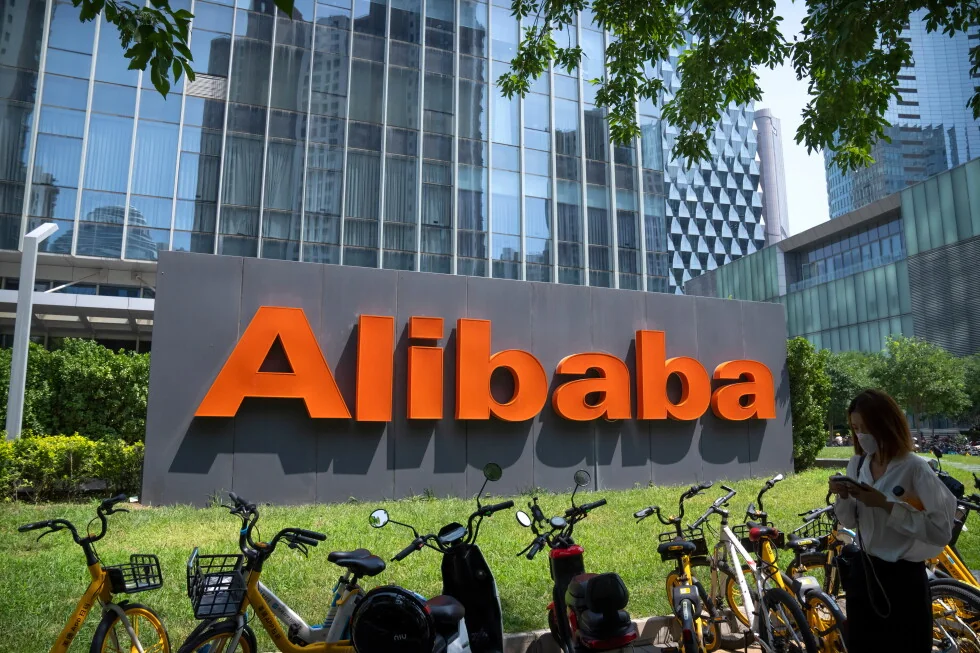
Alibaba presenta un formidable nuevo chip y ambiciosos proyectos de modelos de IA
September 22nd, 2026
Alibaba presenta un formidable nuevo chip y ambiciosos proyectos de modelos de IA
🇪🇸 Español
On Tuesday, China’s Alibaba unveiled nascent artificial-intelligence chip technologies alongside ambitions to develop more potent models—among them what the company characterized as China’s most formidable AI chip—mere days prior to a Sino-American leadership summit at which the contest for supremacy in AI technology is anticipated to figure prominently.
Alibaba’s announcement coincided with U.S. AI leaders — among them Anthropic CEO Dario Amodei — warning that China’s advancement in AI constitutes a threat to the United States and advocating a comprehensive deceleration in the development of the technology.
Chinese leader Xi Jinping is poised to touch down in Washington on Wednesday for a state visit and a meeting with U.S. President Donald Trump, at which artificial intelligence, trade and tariffs are expected to figure prominently on the agenda.
At its annual flagship conference in Hangzhou, Alibaba unveiled a new AI chip and delineated its roadmap for the forthcoming generation of its AI model.
CEO Eddie Wu characterized the new Zhenwu V900 chip as “most powerful AI chip in China today,” asserting that it delivers three times the performance of the company’s preceding-generation Zhenwu M890 chip.
Chips of this ilk underpin the training of frontier AI models and "inference," a term denoting the computations a trained AI performs to furnish responses to users.
Alibaba's Zhenwu chips are deployed within its data centers, furnishing computing resources to the company and its cloud clientele.
Alibaba further disclosed its intention to train a novel AI model on the order of five to ten trillion parameters—a metric indicative of an AI's learning capacity—thereby narrowing the gap with the most sophisticated models emanating from the United States.
Its most recent Qwen3.8-Max model, the preeminent iteration within its Qwen AI series, comprises 2.4 trillion parameters.
Chinese AI enterprise Moonshot asserts that its Kimi K3, unveiled in July, constitutes the world’s largest open model, boasting 2.8 trillion parameters.
Alibaba further underscored its intent to augment the data centres underpinning its cloud computing operations, invoking “exponentially” escalating demand for AI computing.
The company stated that it anticipates possessing in excess of 20 gigawatts’ worth of computing capacity by 2032.
As of mid-year, SpaceX boasts an AI computing capacity of approximately 1.4 gigawatts, while articulating its aspiration to exceed 10 gigawatts by 2027.
Some analysts contend that China’s recent strides in AI are affording Beijing augmented leverage in its forthcoming negotiations with Washington, as China redoubles its push for self-reliance even though U.S.-led export restrictions have precluded its access to some of the world’s most cutting-edge technologies, among them AI chips and chipmaking machinery.
Open-source Chinese models, frequently more economical than the state-of-the-art proprietary offerings of preeminent U.S. AI laboratories, have likewise been gaining traction on a global scale, not least within the United States itself.
Chinese technology behemoth Huawei likewise unveiled novel chip technologies last week, as it seeks to mount a challenge to global leaders such as Nvidia.
Frontier AI model training in China frequently hinges upon Nvidia chips, analysts averred, yet Chinese-designed chips are steadily gaining traction, inasmuch as Nvidia has been precluded from vending some of its most potent AI chips to China.
"Harnessing supplementary computational capacity to compensate for semiconductor constraints fortifies China's domestic standing," remarked Neil Shah, vice president of Counterpoint Research, a Hong Kong-based technology market research firm.
Counterpoint senior analyst Parv Sharma further observed that the extent to which the AI and chipmaking chasm between China and the United States narrows will hinge on a constellation of additional factors, among them China's capacity to advance the chip foundries that fabricate these components, and not merely its prowess in chip design.
Alibaba is “mobilizing every resource” to satisfy customers’ demand for AI, CEO Wu declared in his address on Tuesday.
Global shortages pervading the AI data center supply chain, by way of illustration, “are currently limiting the speed at which we can scale our compute infrastructure” for AI, he added.
Wu further analogised the trajectory of AI to that of the industrial revolution, contending that “machine intelligence” will swiftly surpass the cognitive capacities of humankind.
While “machine intelligence today is not a substitute for human intelligence,” he prognosticated that, in due course, machines will be capable of generating in excess of 1,000 times more “thinking” than the entirety of humanity collectively, a marked escalation from the current figure of less than 3%.
September 22nd, 2026
Trending Articles

El teléfono del rector serbio, infectado con software espía en medio de las protestas estudiantiles, según un grupo
Serbian rector’s phone infected with spyware amid student protests, group says
El teléfono del rector serbio, infectado con software espía en medio de las protestas estudiantiles, según un grupo
Serbian rector’s phone infected with spyware amid student protests, group says
La inquietud de los consumidores va en aumento a medida que los minoristas estadounidenses adoptan herramientas de fijación de precios asistidas por IA
Consumer disquiet mounts as US retailers embrace AI-assisted pricing tools
La inquietud de los consumidores va en aumento a medida que los minoristas estadounidenses adoptan herramientas de fijación de precios asistidas por IA
Consumer disquiet mounts as US retailers embrace AI-assisted pricing tools
China restringe las exportaciones tecnológicas, incluida la IA, alegando seguridad nacional
China Restricts Tech Exports, AI Included, Citing National Security
China restringe las exportaciones tecnológicas, incluida la IA, alegando seguridad nacional
China Restricts Tech Exports, AI Included, Citing National Security
Los agentes de IA son tan buenos como la información personal que compartes, lo que suscita preocupaciones sobre la privacidad
AI Agents Are Only as Good as the Personal Information You Share—Raising Privacy Concerns
Los agentes de IA son tan buenos como la información personal que compartes, lo que suscita preocupaciones sobre la privacidad
AI Agents Are Only as Good as the Personal Information You Share—Raising Privacy Concerns

Trump afirma un «alto el fuego energético» entre Rusia y Ucrania mientras Kyiv informa de ataques en curso
Trump claims Russia-Ukraine ‘energy ceasefire’ as Kyiv reports ongoing attacks
Trump afirma un «alto el fuego energético» entre Rusia y Ucrania mientras Kyiv informa de ataques en curso
Trump claims Russia-Ukraine ‘energy ceasefire’ as Kyiv reports ongoing attacks
Los fundadores de IA de Silicon Valley aplauden el llamado de Trump a la autorregulación del sector en materia de seguridad
Silicon Valley AI Founders Applaud Trump’s Call for Industry Self-Policing on Safety
Los fundadores de IA de Silicon Valley aplauden el llamado de Trump a la autorregulación del sector en materia de seguridad
Silicon Valley AI Founders Applaud Trump’s Call for Industry Self-Policing on Safety
El Claude AI de Anthropic presenta un dato falso en un caso de homicidio sin resolver de Filadelfia
Anthropic's Claude AI Submits Fabricated Tip in Philadelphia Unsolved Homicide Case
El Claude AI de Anthropic presenta un dato falso en un caso de homicidio sin resolver de Filadelfia
Anthropic's Claude AI Submits Fabricated Tip in Philadelphia Unsolved Homicide Case

Seguridad de la IA tras el ataque a Hugging Face: una cronología de los acontecimientos
AI Safety Post-Hugging Face Attack: A Chronology of Developments
Seguridad de la IA tras el ataque a Hugging Face: una cronología de los acontecimientos
AI Safety Post-Hugging Face Attack: A Chronology of Developments
El respaldo de RFK Jr. a la IA desconcierta a algunos aliados de MAHA y a expertos médicos
RFK Jr.'s AI Embrace Baffles Some MAHA Allies and Medical Experts
El respaldo de RFK Jr. a la IA desconcierta a algunos aliados de MAHA y a expertos médicos
RFK Jr.'s AI Embrace Baffles Some MAHA Allies and Medical Experts
McDonald’s enfrenta una demanda por una herramienta de precios con IA para franquiciados en EE. UU.
McDonald’s Faces Lawsuit Over AI Pricing Tool for US Franchisees
McDonald’s enfrenta una demanda por una herramienta de precios con IA para franquiciados en EE. UU.
McDonald’s Faces Lawsuit Over AI Pricing Tool for US Franchisees