Un curso intensivo poco común sobre la preservación de manuscritos de papiro antiguos
August 20th, 2026
Un curso intensivo poco común sobre la preservación de manuscritos de papiro antiguos
🇪🇸 Español
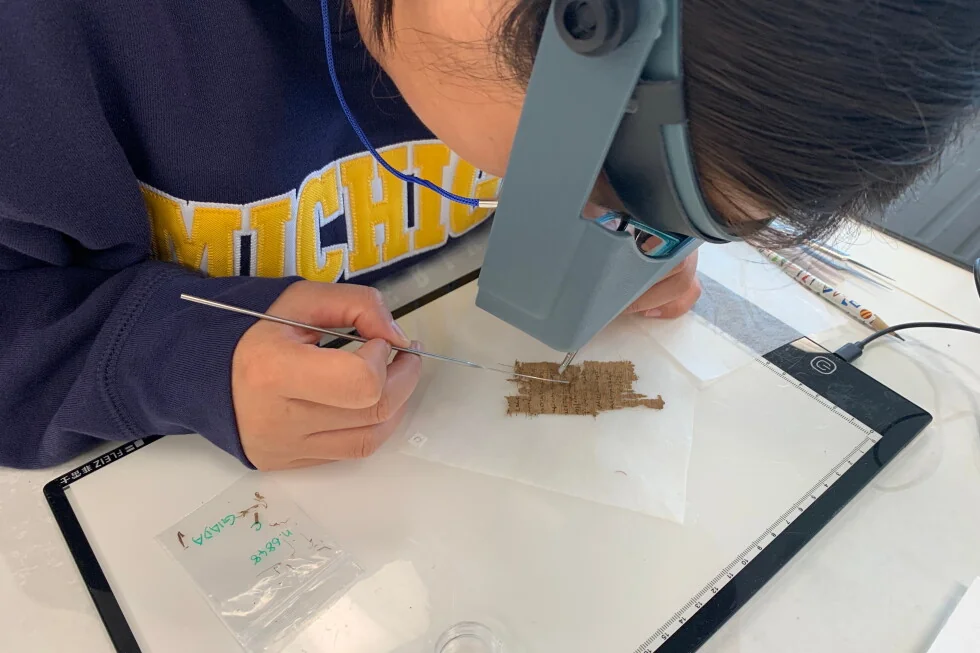
Shijin Jiang fitted the precision binocular headband magnifier over her eyes and bent low, bringing herself within inches of the ancient text resting on the light board.
Using a pair of hand tools, Shijin carefully inspected the sheet made from the papyrus plant, proceeding with the utmost care.
After all, it most likely hadn't been handled in a century — nor read for thousands of years.
The Papyrus Conservation Summer Seminar at the University of Michigan is the only program of its kind in the Americas, according to the university, and one of the few worldwide designed to teach best practices for preserving papyrus manuscripts—ancient texts written on rolls or sheets made from the papyrus plant.
"If you touch this papyrus, you can feel the history," said Shijin, a native of China who was among nine scholars from across the globe, including Ireland, Italy and the U.S., who took the 10-day course.
Michigan's Papyrology Collection encompasses texts and documents from 1000 B.C.E. to 1000 C.E., and the Ann Arbor institution asserts that no establishment on this side of the world holds a greater number of them, thereby granting researchers access to an extensive trove of ancient papyri.
Among the holdings are fragments of the Homeric epics, "The Odyssey" and "The Iliad," philosophical writings by Epicurus, and the earliest known copy of the Epistles of Paul.
"Carrying on this tradition is a huge responsibility, but it's also very fun and rewarding, because there's nothing I enjoy more than bringing people together from around the world to share ideas and learn from each other," said Marieka Kaye, who manages library preservation services for physical collections at the University of Michigan Library.
Kaye said she aimed to make “things comfortable and not scary, because a lot of people just feel terrified working on these ancient things.”
The seminar introduced the papyrologists and conservators to techniques for treating, storing, and caring for ancient texts, as well as documentation practices.
Since papyrus and its ink can crumble, smear, or break, Kaye encouraged the students to carefully remove dirt, sand, salt, and debris; use controlled moisture to soften folds and realign fibers; and dry the papyrus slowly under light weight to prevent curling.
The inaugural seminar took place in 2012 and has since been convened biennially, with the sole exception of 2020 due to the pandemic.
In total, approximately 50 students have participated.
“If we fail to train the coming generations of conservators, this is a craft destined for extinction,” remarked Giuliano Sidro, curator of Michigan’s Papyrology Collection.
Michigan holds such an extensive collection of papyrus manuscripts that its researchers have yet to examine them all.
Some of these items were acquired, while others were unearthed during university expeditions to the ancient site of Karanis, Egypt, between 1924 and 1935.
Francis Willey Kelsey, a Latin professor who passed away in 1927, was the principal impetus behind the founding of the Papyrology Collection.
He maintained that Michigan students of the ancient world required access not merely to books, but also to the tangible remnants of antiquity.
Today, the Kelsey Museum of Archaeology stands as a permanent landmark on the Michigan campus.
Its holdings constitute one of the most distinguished assemblages of everyday artifacts from Greco-Roman Egypt to be found outside of Cairo.
“This is a place where you make discoveries, potentially every day, if you just go into the vault, pick out a box and open something up, and you start reading,” Sidro said.
Naturally, understanding such texts requires proficiency in Arabic, ancient Greek, or Latin, as well as Egyptian—one of the earliest known written languages, now extinct.
Among the seminar attendees, a select few could decipher the papyri, notably Arzak Mohamed, who is versed in Arabic, and Mauro Castiello, a doctoral candidate in papyrology in Milan, capable of translating ancient Greek and Latin.
Kaye stated that she consistently endeavors to ensure the inclusion of a student from Egypt among the seminar participants.
Mohamed, a postdoctoral fellow at Macquarie University in Sydney, had long been aware of the papyrus seminar and had harbored a persistent desire to attend it.
The 42-year-old mother of three hails from Fayoum, Egypt, situated not far from Karanis.
"Now, I can transfer this information from Michigan to Egypt and even in Australia," she said.
"I will be like the chain, connecting between the three countries."
"By safeguarding this information, we can transmit the knowledge to future generations," she added.
August 20th, 2026
Trending Articles
Una constante de 250 años: la duradera disposición de los estadounidenses a dejarse engañar
A 250-Year Constant: Americans’ Enduring Willingness to Be Duped
Una constante de 250 años: la duradera disposición de los estadounidenses a dejarse engañar
A 250-Year Constant: Americans’ Enduring Willingness to Be Duped
Camionero construye una maqueta de Nueva York de 800.000 estructuras por diversión—ahora es una exposición de museo
Truck driver builds 800,000-structure NYC model for fun—now a museum exhibit
Camionero construye una maqueta de Nueva York de 800.000 estructuras por diversión—ahora es una exposición de museo
Truck driver builds 800,000-structure NYC model for fun—now a museum exhibit

DoorDash y Uber Eats comenzarán a entregar desde las tiendas Costco en todo Estados Unidos
DoorDash and Uber Eats to Begin Delivering from Costco Stores Across the US
DoorDash y Uber Eats comenzarán a entregar desde las tiendas Costco en todo Estados Unidos
DoorDash and Uber Eats to Begin Delivering from Costco Stores Across the US
El chef David Chang recorre Estados Unidos en una nueva serie de viajes de CNN centrada en la comida
Chef David Chang traverses the US in new CNN travel series centred on food
El chef David Chang recorre Estados Unidos en una nueva serie de viajes de CNN centrada en la comida
Chef David Chang traverses the US in new CNN travel series centred on food
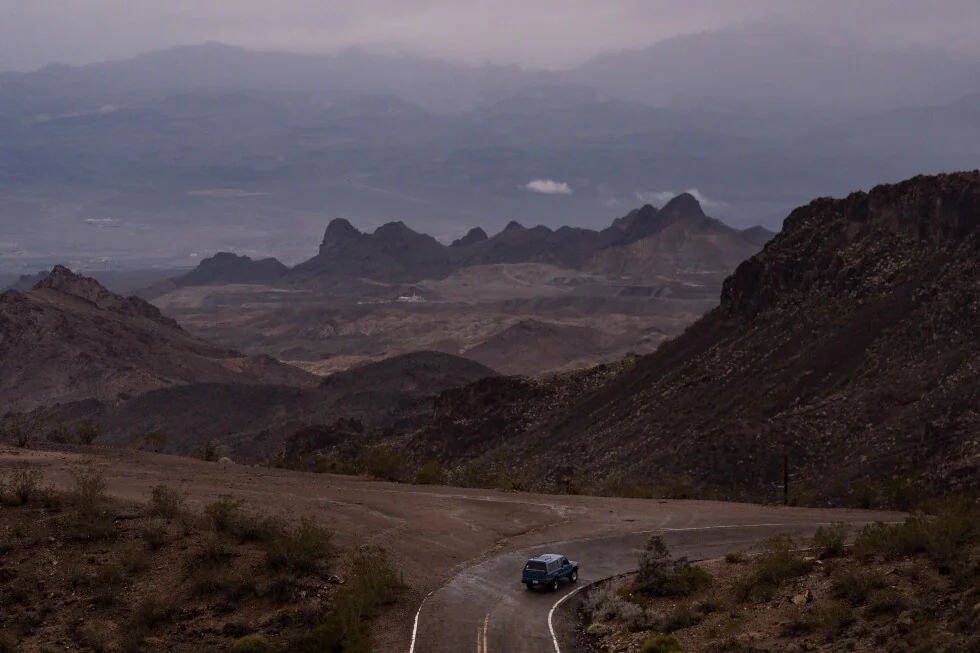
El gran viaje por carretera estadounidense, impulsado y socavado por el automóvil que lo engendró
The great American road trip, powered and undermined by the automobile that spawned it
El gran viaje por carretera estadounidense, impulsado y socavado por el automóvil que lo engendró
The great American road trip, powered and undermined by the automobile that spawned it
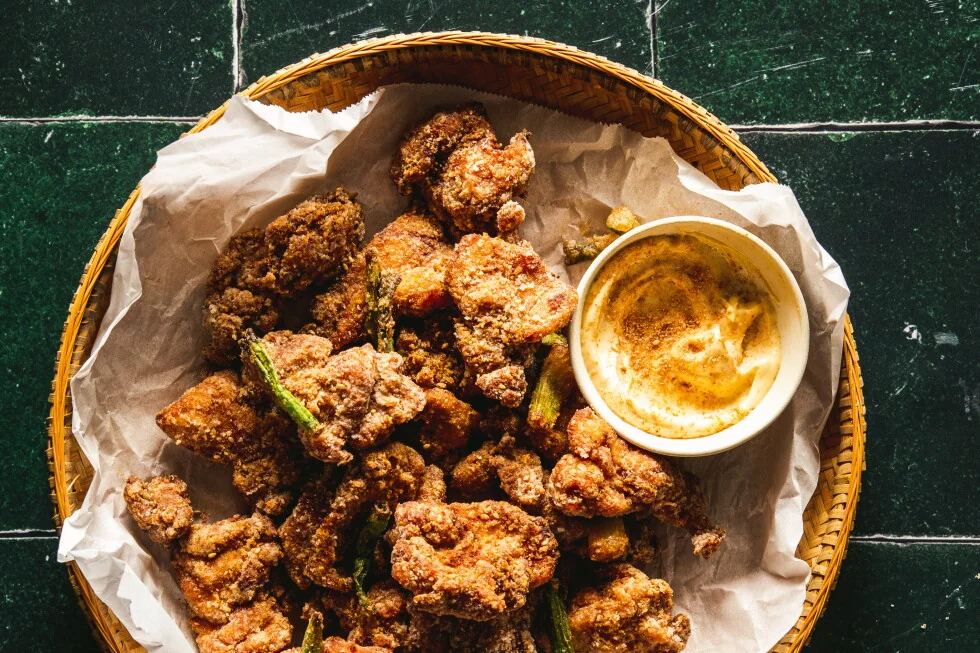
El pollo con sésamo y comino de Betty Liu: doble fritura para lograr sabor y crujiente
Betty Liu’s Sesame-Cumin Chicken: Double-Fried for Flavor and Crispiness
El pollo con sésamo y comino de Betty Liu: doble fritura para lograr sabor y crujiente
Betty Liu’s Sesame-Cumin Chicken: Double-Fried for Flavor and Crispiness

Una pelota de golf hallada entre los escombros del World Trade Center se convirtió en símbolo de una pérdida incomprensible
Golf ball found in World Trade Center rubble became a symbol of incomprehensible loss
Una pelota de golf hallada entre los escombros del World Trade Center se convirtió en símbolo de una pérdida incomprensible
Golf ball found in World Trade Center rubble became a symbol of incomprehensible loss
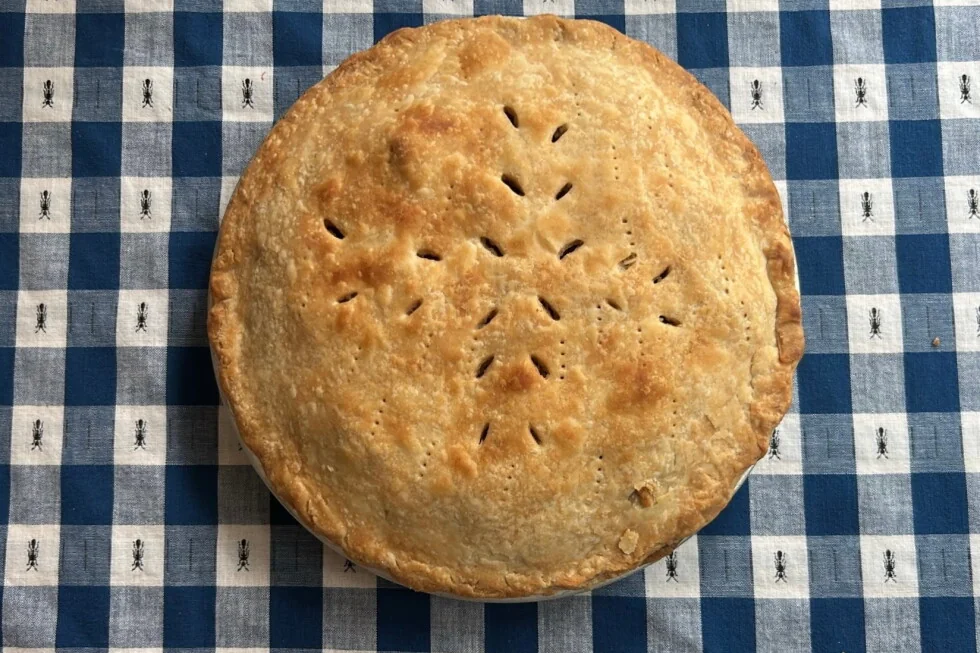
La tarta de manzana, junto con mamá, se convirtió en el plato icónico de la nación.
The apple pie, alongside mom, became the nation's iconic dish.
La tarta de manzana, junto con mamá, se convirtió en el plato icónico de la nación.
The apple pie, alongside mom, became the nation's iconic dish.

La encuesta de Gallup revela que la satisfacción de los estadounidenses con las escuelas ha alcanzado un mínimo histórico.
Gallup poll reveals Americans' satisfaction with schools has hit a historic low.
La encuesta de Gallup revela que la satisfacción de los estadounidenses con las escuelas ha alcanzado un mínimo histórico.
Gallup poll reveals Americans' satisfaction with schools has hit a historic low.
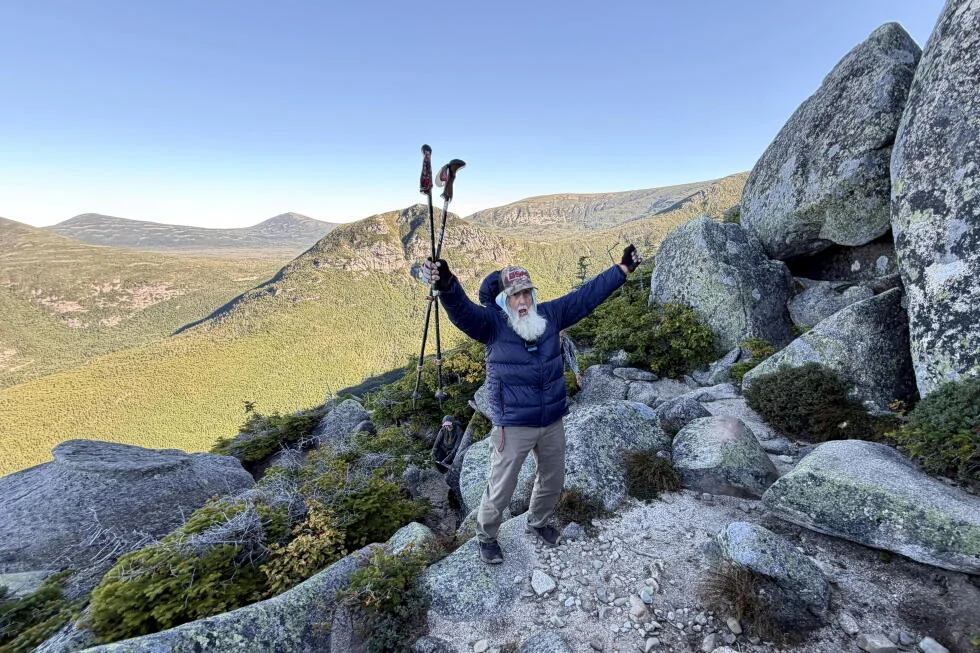
A los 91 años, Dale ‘Barba Gris’ Sanders recupera el récord como el excursionista de mayor edad en completar el Sendero de los Apalaches
At 91, Dale ‘Grey Beard’ Sanders reclaims record as oldest hiker to finish the Appalachian Trail
A los 91 años, Dale ‘Barba Gris’ Sanders recupera el récord como el excursionista de mayor edad en completar el Sendero de los Apalaches
At 91, Dale ‘Grey Beard’ Sanders reclaims record as oldest hiker to finish the Appalachian Trail