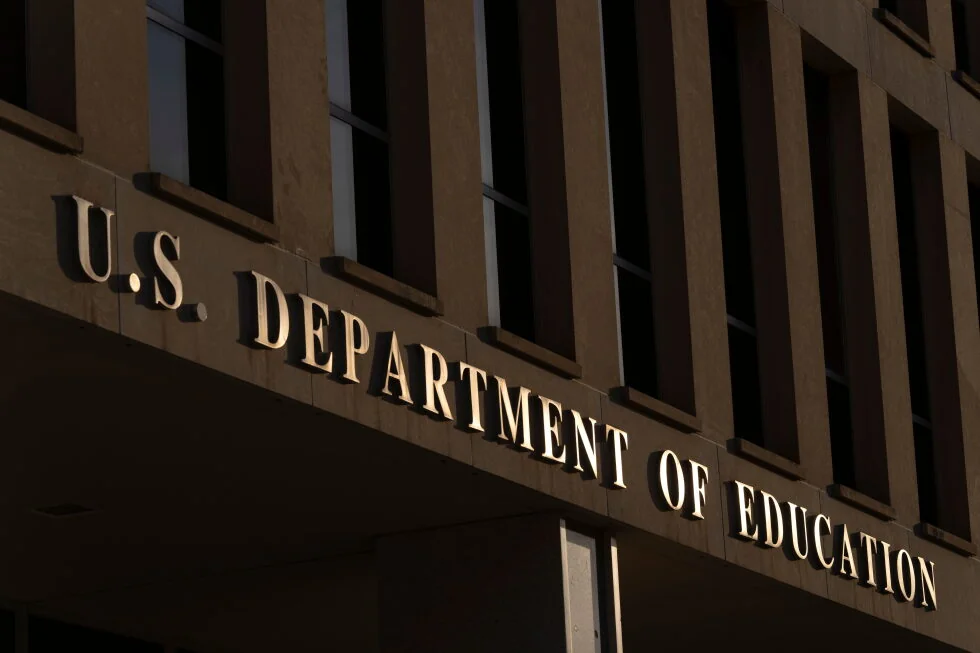
La encuesta de Gallup revela que la satisfacción de los estadounidenses con las escuelas ha alcanzado un mínimo histórico.
September 9th, 2026
La encuesta de Gallup revela que la satisfacción de los estadounidenses con las escuelas ha alcanzado un mínimo histórico.
🇪🇸 Español
Americans' satisfaction with the quality of K-12 education nationwide has hit a record low, fueled by a growing political divide and worries that schools are not adequately preparing children for college and future employment.
According to an August poll released Tuesday by Gallup and the Walton Family Foundation, and shared exclusively with Reporters, only 32% of American adults say they are “completely” or “somewhat” satisfied with the U.S. school system.
This marks an 11-point drop over the past two years and the lowest level since Gallup began polling on this topic 27 years ago.
Concurrently, discontent has escalated to an unprecedented peak of 67%.
Education and school policy experts contend that these findings are profoundly alarming, yet hardly unexpected.
The recent downturn is being driven primarily by Democrats, whose satisfaction has plummeted by roughly 19 points since President Donald Trump commenced his second term in 2025.
Independents have likewise witnessed a decline in their satisfaction, falling approximately 10 points relative to 2024, whereas Republicans have experienced a more modest decrease of around 6 points.
Jack Schneider, director of the Center for Education Policy at the University of Massachusetts Amherst, stated that the Trump administration has weakened public trust by framing schools as political arenas, limiting what teachers may say in class, and pursuing the elimination of diversity programs and the dismantling of the Education Department.
"It is deeply alarming.
We stand on the brink of the dismantlement of the public education system as we have long recognized it," Schneider stated.
He added that Democrats harbor particular apprehension regarding Trump's flagship school choice initiative, which would allocate taxpayer-funded scholarships to cover private school tuition for children.
However, political factors alone fail to account for this discontent.
According to Gallup polling, public trust in educational institutions has steadily eroded since the COVID-19 pandemic forced school closures, which in turn intensified learning setbacks, psychological distress, and a host of related challenges.
Headlines have consistently depicted a nationwide decline in test scores, particularly in reading, conveying the impression that schools have struggled to recover from the pandemic-era lows.
“We’ve had a steady stream of bad news about test scores and other social trends that could be driving this,” said Sarah Reckhow, a political science professor at Michigan State University who specializes in public policy.
“There’s a great deal of debate, discussion, and noise about technology and AI in education,” she said.
And recently, kids’ screentime at school has dominated education headlines locally and nationally.
Nevertheless, parents' views on their own children's education differ considerably.
Around two-thirds of parents with school-age children express satisfaction with their child's schooling—a figure that, although marking a low point in the trend, with dissatisfaction not having been this high since 2013—still represents double the 32% satisfaction rate with U.S. education among the general adult population.
This reflects a consistent pattern of parents feeling more confident about their own schools than about the narrative they hear from politicians and media reports on the national situation.
"When people weigh in about the nation's schools, what they are commenting on are 98,999 schools that they haven't set foot in," Schneider said.
A separate survey, also conducted in August by Gallup and Walton, asked Americans how well they believed schools were equipping children for the future.
Merely 2 in 10 respondents rated schools as doing a “good” or “excellent” job of fostering critical thinking or readying students for the contemporary labor market.
Schools received their highest accolades for preparing students to adapt to emerging technologies, with 44% awarding them a top rating in this domain.
Gallup senior education researcher Zach Hrynowski contends that the findings underscore a pervasive disillusionment with institutions at large.
“There is a prevailing sense of disillusionment across the nation at present,” Hrynowski remarked.
“The public is disheartened and perceives that no institution is functioning with any real efficacy.”
The initial Gallup survey was carried out by phone from August 3 to 24, 2026, using a random sample of U.S. adults aged 18 and older.
The sampling error margin for all U.S. adults is plus or minus 4.0 percentage points, while for parents of K-12 students it is plus or minus 8.3 percentage points.
The second survey, involving 2,143 U.S. adults aged 18 and older, was conducted from August 3 to 17, 2026, using a sample from Gallup's probability-based panel, which is designed to represent the U.S. population.
For all U.S. adults, the margin of sampling error is plus or minus 3.0 percentage points.
Reporters’ education coverage receives financial backing from multiple private foundations.
AP bears sole responsibility for all content.
Find AP’s standards for working with philanthropies, a list of supporters, and funded coverage areas at AP.org.
September 9th, 2026
Trending Articles

Una constante de 250 años: la duradera disposición de los estadounidenses a dejarse engañar
A 250-Year Constant: Americans’ Enduring Willingness to Be Duped
Una constante de 250 años: la duradera disposición de los estadounidenses a dejarse engañar
A 250-Year Constant: Americans’ Enduring Willingness to Be Duped

Camionero construye una maqueta de Nueva York de 800.000 estructuras por diversión—ahora es una exposición de museo
Truck driver builds 800,000-structure NYC model for fun—now a museum exhibit
Camionero construye una maqueta de Nueva York de 800.000 estructuras por diversión—ahora es una exposición de museo
Truck driver builds 800,000-structure NYC model for fun—now a museum exhibit
DoorDash y Uber Eats comenzarán a entregar desde las tiendas Costco en todo Estados Unidos
DoorDash and Uber Eats to Begin Delivering from Costco Stores Across the US
DoorDash y Uber Eats comenzarán a entregar desde las tiendas Costco en todo Estados Unidos
DoorDash and Uber Eats to Begin Delivering from Costco Stores Across the US

El chef David Chang recorre Estados Unidos en una nueva serie de viajes de CNN centrada en la comida
Chef David Chang traverses the US in new CNN travel series centred on food
El chef David Chang recorre Estados Unidos en una nueva serie de viajes de CNN centrada en la comida
Chef David Chang traverses the US in new CNN travel series centred on food
El gran viaje por carretera estadounidense, impulsado y socavado por el automóvil que lo engendró
The great American road trip, powered and undermined by the automobile that spawned it
El gran viaje por carretera estadounidense, impulsado y socavado por el automóvil que lo engendró
The great American road trip, powered and undermined by the automobile that spawned it

El pollo con sésamo y comino de Betty Liu: doble fritura para lograr sabor y crujiente
Betty Liu’s Sesame-Cumin Chicken: Double-Fried for Flavor and Crispiness
El pollo con sésamo y comino de Betty Liu: doble fritura para lograr sabor y crujiente
Betty Liu’s Sesame-Cumin Chicken: Double-Fried for Flavor and Crispiness

Una pelota de golf hallada entre los escombros del World Trade Center se convirtió en símbolo de una pérdida incomprensible
Golf ball found in World Trade Center rubble became a symbol of incomprehensible loss
Una pelota de golf hallada entre los escombros del World Trade Center se convirtió en símbolo de una pérdida incomprensible
Golf ball found in World Trade Center rubble became a symbol of incomprehensible loss
La tarta de manzana, junto con mamá, se convirtió en el plato icónico de la nación.
The apple pie, alongside mom, became the nation's iconic dish.
La tarta de manzana, junto con mamá, se convirtió en el plato icónico de la nación.
The apple pie, alongside mom, became the nation's iconic dish.
A los 91 años, Dale ‘Barba Gris’ Sanders recupera el récord como el excursionista de mayor edad en completar el Sendero de los Apalaches
At 91, Dale ‘Grey Beard’ Sanders reclaims record as oldest hiker to finish the Appalachian Trail
A los 91 años, Dale ‘Barba Gris’ Sanders recupera el récord como el excursionista de mayor edad en completar el Sendero de los Apalaches
At 91, Dale ‘Grey Beard’ Sanders reclaims record as oldest hiker to finish the Appalachian Trail