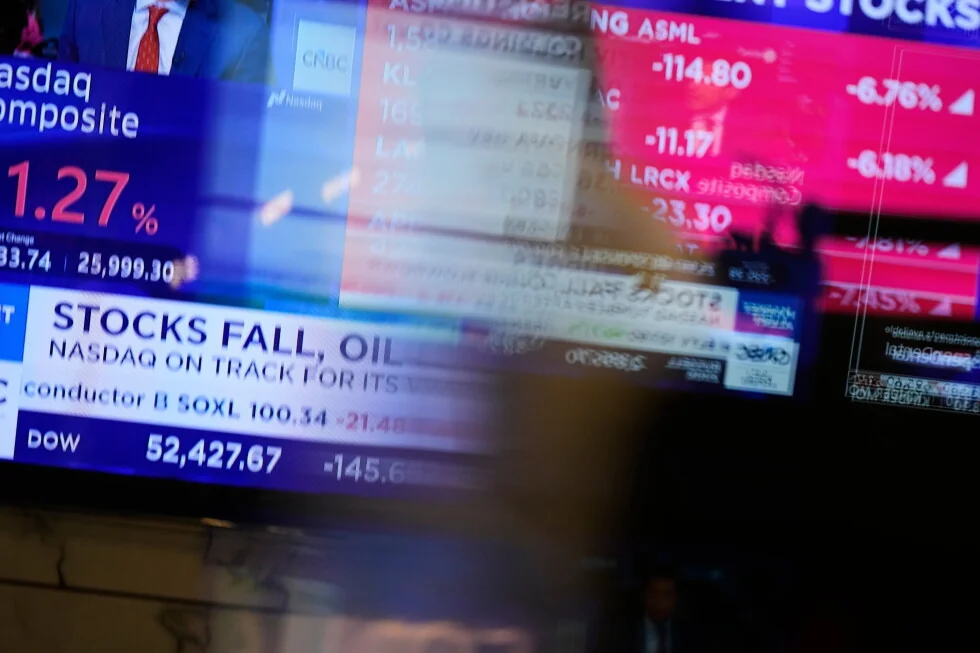
Les actions liées à l’IA chutent tandis que le pétrole recule, mais l’ensemble de Wall Street tient bon
September 14th, 2026
Les actions liées à l’IA chutent tandis que le pétrole recule, mais l’ensemble de Wall Street tient bon
🇫🇷 Français
Artificial-intelligence equities retreated across global markets on Monday after the industry’s figureheads cautioned that a deceleration is imperative for the sake of humanity’s safety.
Concurrently, a further surge in crude-oil prices momentarily propelled the yield on the 10-year Treasury note to 5%, marking the bond market’s latest threshold of mounting strain.
Notwithstanding the litany of adversities besetting Wall Street, appreciable advances among a multitude of equities beyond the AI sector served to attenuate the market’s aggregate declines.
A midday abatement in oil prices proved similarly instrumental, and the S&P 500 consequently registered a comparatively modest contraction of 0.5%.
Within the index, advancers outnumbered decliners.
The Dow Jones Industrial Average relinquished 152 points, tantamount to 0.3%, whilst the Nasdaq composite subsided 0.6%, having recuperated the preponderance of an earlier 1.3% descent.
AI equities have laboured under sustained downward pressure for some time, owing to apprehensions that their valuations were propelled to excessive heights amid the fervour surrounding the technology.
Those misgivings were catapulted to an altogether different magnitude over the weekend when one of the sector's pre-eminent figures, Anthropic CEO Dario Amodei, issued a call for a measured and globally coordinated deceleration in the advancement of AI.
He adduced safety concerns, among them the peril that AI might attain the capacity to marshal a swarm of agents capable of commandeering the entirety of the internet within a span of six to 12 months.
AI equities are tumbling amid mounting exhortations for a global economic deceleration.
Nvidia, whose profits have soared on the strength of its chips' role in training AI models, sank 3.4% and, by dint of its sheer magnitude, constituted the heaviest drag on the market.
SpaceX, which derives a substantial portion of its business from AI, declined 2% after Elon Musk indicated over the weekend that he concurs with Amodei.
Softbank Group, the Japanese conglomerate that ranks among OpenAI’s foremost investors, shed 10.7% in Tokyo after OpenAI’s Sam Altman similarly endorsed the notion of a slowdown.
Altman further disclosed, in an interview with Fortune published Saturday, that the company behind ChatGPT would in all likelihood defer until the following year any sale of its stock on Wall Street — a postponement that would delay a potential gusher of cash for Softbank and other early investors in OpenAI.
In South Korea, the Kospi index sustained a 3.3% decline, precipitated by losses incurred by its two most influential stocks, Samsung Electronics and SK Hynix.
President Donald Trump minimized the imperative for his administration to scrutinize the trajectory of AI development, expressing apprehension about forfeiting his nation’s ascendancy over China in a global rivalry and asserting that prevailing would facilitate mitigating the perils posed by the advancing technology.
Even as a multiplicity of voices, both within and beyond the AI industry, clamour for a slowdown to safeguard humanity, Trump asserted on his social media network Monday that the sole safeguard it requires “is a STRONG AND SMART (High IQ!) PRESIDENT, and the U.S.A. has that, in spades!”
Instrumental in mitigating Wall Street’s losses on Monday were several software companies whose shares had plummeted earlier amid apprehensions that AI-driven rivals would erode their market positions.
Intuit, the enterprise underpinning TurboTax and QuickBooks, appreciated 5.5%.
Autodesk, whose software furnishes assistance to designers, ascended 7.8%, whilst Adobe accrued 5.3%.
In aggregate, the S&P 500 receded by 37.00 points, settling at 7,619.98.
The Dow Jones Industrial Average declined by 152.09, closing at 54,421.20, while the Nasdaq composite contracted by 146.62, ending at 26,186.41.
Oil prices, in the interim, persisted in their ascent, as hostilities in the Middle East continued to constrict the global flow of crude.
The price of a barrel of Brent crude advanced 1% to $105.68, having approached $110 earlier in the day.
A Saudi oil pipeline of considerable strategic import will remain largely inoperative for weeks in the wake of an attack last week, according to two regional officials.
The pipeline afforded Saudi Arabia a means of redirecting exports toward the Red Sea, thereby circumventing the Persian Gulf’s Strait of Hormuz, where Iranian attacks have severely curtailed the movement of oil tankers.
Brent has surged from below $72 in early July amid mounting apprehensions that the United States and Iran may fail to reach an accord permitting oil tankers once more to transit the Strait of Hormuz unimpeded out of the Persian Gulf.
While the prospect of a de-escalation of war in Iran may have dimmed, ING commodities strategists Warren Patterson and Ewa Manthey wrote in a commentary on Monday that the situation remains fluid and that “sizable” volumes of oil have continued to transit the strait.
To date, the escalation in oil prices has propelled the national average cost of a gallon of regular gasoline to nearly $4.32, a substantial increase from $4.08 a month prior and $3.18 a year ago, according to AAA.
Such upward pressure on inflation has much of Wall Street anticipating that the Federal Reserve will raise its benchmark interest rate on Wednesday, at the conclusion of its next meeting.
Besides elevated inflation, apprehensions regarding escalating indebtedness on the part of the U.S. and other governments, along with a host of additional concerns, have driven longer-term Treasury yields to their loftiest levels in years.
The yield on the 10-year Treasury momentarily surpassed the 5.00% threshold during morning trading—a first in nearly three years—having climbed from 4.96% late Friday and a mere 3.97% prior to the outbreak of war with Iran in February.
Yet the 10-year yield subsequently retrenched to 4.98% once oil prices retreated from their intraday peaks.
Since the dawn of the millennium, the 10-year yield has yet to sustain itself durably above 5%, and its recent surge has already rendered borrowing more costly for U.S. households and companies alike—culminating in the highest average long-term mortgage rate witnessed in over 14 months.
September 14th, 2026
Trending Articles
Warren Buffett cède la présidence de Berkshire Hathaway, avançant son plan de succession
Warren Buffett relinquishes Berkshire Hathaway chairmanship, advancing his succession plan
Warren Buffett cède la présidence de Berkshire Hathaway, avançant son plan de succession
Warren Buffett relinquishes Berkshire Hathaway chairmanship, advancing his succession plan
Trump intensifie son offensive contre les médias, promettant d’interdire l’accès de CNN, MS NOW et Politico à la Maison-Blanche
Trump escalates media offensive, vowing to bar CNN, MS NOW and Politico from the White House
Trump intensifie son offensive contre les médias, promettant d’interdire l’accès de CNN, MS NOW et Politico à la Maison-Blanche
Trump escalates media offensive, vowing to bar CNN, MS NOW and Politico from the White House
La Banque du Japon relève son taux directeur à 1,25 %, un sommet en 31 ans
Bank of Japan Lifts Benchmark Rate to 1.25%, a 31-Year Peak
La Banque du Japon relève son taux directeur à 1,25 %, un sommet en 31 ans
Bank of Japan Lifts Benchmark Rate to 1.25%, a 31-Year Peak

Anthropic affirme que Claude joue un rôle déterminant dans le développement de son propre successeur
Anthropic claims Claude is instrumental in developing its own successor
Anthropic affirme que Claude joue un rôle déterminant dans le développement de son propre successeur
Anthropic claims Claude is instrumental in developing its own successor
Pourquoi la Réserve fédérale relève ses taux maintenant — et ce que cela laisse présager
Why the Federal Reserve is raising rates now — and what it portends
Pourquoi la Réserve fédérale relève ses taux maintenant — et ce que cela laisse présager
Why the Federal Reserve is raising rates now — and what it portends
Les actions américaines bondissent à leur plus haut niveau en six semaines, le pétrole et les rendements obligataires reculant
US equities surge to six-week peak as oil and bond yields retreat
Les actions américaines bondissent à leur plus haut niveau en six semaines, le pétrole et les rendements obligataires reculant
US equities surge to six-week peak as oil and bond yields retreat
La Fed relève son taux directeur pour la première fois en trois ans, ignorant les exigences de baisse de Trump
Fed hikes key rate for 1st time in 3 years, flouting Trump's cut demands
La Fed relève son taux directeur pour la première fois en trois ans, ignorant les exigences de baisse de Trump
Fed hikes key rate for 1st time in 3 years, flouting Trump's cut demands
Les demandes d'allocations chômage chutent à 196 000, un plus bas depuis la mi-juillet dans un contexte de licenciements durablement faibles
Unemployment Claims Plummet to 196,000, Lowest Since Mid-July Amid Sustained Layoff Lows
Les demandes d'allocations chômage chutent à 196 000, un plus bas depuis la mi-juillet dans un contexte de licenciements durablement faibles
Unemployment Claims Plummet to 196,000, Lowest Since Mid-July Amid Sustained Layoff Lows
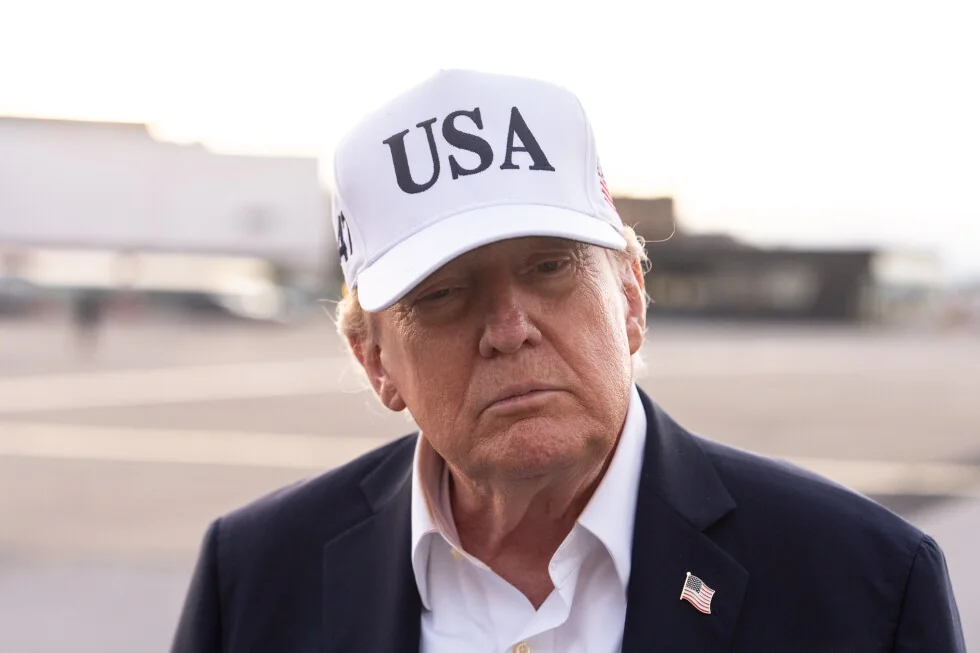
Trump dénonce les risques liés à l’IA comme une « fumisterie », alléguant une « MALADIEuse conspiration » contre l’IA et les centres de données
Trump denounces AI risks as ‘hoax,’ alleges ‘SICK conspiracy’ against AI and data centers
Trump dénonce les risques liés à l’IA comme une « fumisterie », alléguant une « MALADIEuse conspiration » contre l’IA et les centres de données
Trump denounces AI risks as ‘hoax,’ alleges ‘SICK conspiracy’ against AI and data centers

La Cour suprême va décider si elle examinera le recours d’un pêcheur de homards du Maine contre l’obligation d’installer un traceur GPS sur son bateau
Supreme Court to Determine Whether to Hear Maine Lobsterman’s Challenge to GPS Boat Tracker Mandate
La Cour suprême va décider si elle examinera le recours d’un pêcheur de homards du Maine contre l’obligation d’installer un traceur GPS sur son bateau
Supreme Court to Determine Whether to Hear Maine Lobsterman’s Challenge to GPS Boat Tracker Mandate