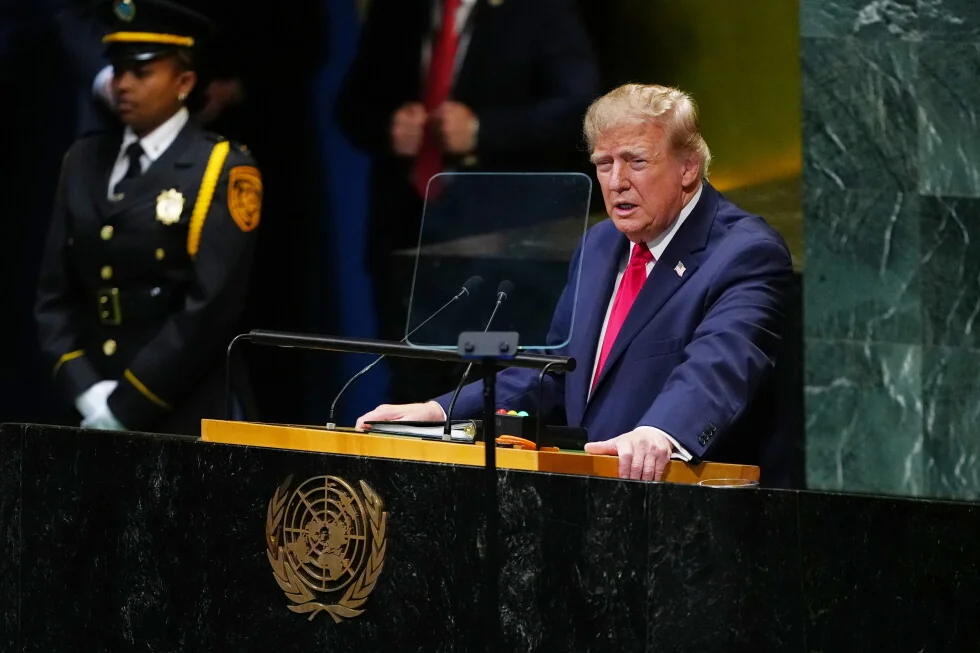
En la ONU, Trump defiende ante los líderes mundiales la guerra contra Irán
September 22nd, 2026
En la ONU, Trump defiende ante los líderes mundiales la guerra contra Irán
🇪🇸 Español
On Tuesday, President Donald Trump returned to the U.N. General Assembly at a tumultuous juncture both for the world and for his own presidency, and contended that he had evinced fortitude whilst other leaders had equivocated.
The president commenced his address by enumerating sundry strides — among them the augmentation of private-sector employment, the stemming of illegal migration and the curbing of crime — before pivoting to a fulsome vindication of his decision to commence hostilities with Iran.
"The terrorist regime is comporting itself egregiously, not out of a position of strength and confidence, but rather out of weakness and desperation," Trump said.
"If we stand united, we will soon witness a world liberated from the last 51 year menace of Iranian terror."
Trump further levelled against Iran the accusation that it was temporising—dragging its feet on a deal to fully reopen the Strait of Hormuz and to negotiate an endgame to the war—until after the United States' midterm elections had concluded.
He maintained that such a stratagem would in no way influence his conduct of the conflict.
“I accorded absolutely no credence—nor shall I ever accord any—to the election with respect to Iran,” Trump said.
“It does not even enter my mind.”
The preponderance of Iran’s delegation absented itself from the chamber as Trump inveighed against the Islamic Republic.
Upon his arrival at the U.N., Trump briefly addressed reporters, avowing that it was an honor to address the world body, before his attention abruptly pivoted to his grievances with the news media.
Over the weekend, Trump announced a White House ban on CNN, MS NOW and Politico, alleging that their coverage of his presidency had been biased.
The news outlets have filed a lawsuit seeking to restore their access to White House grounds.
Trump snapped at a CNN reporter during the U.N. scrum.
"I confess myself astonished that CNN has deigned to grace this occasion with its presence," Trump said.
"Your being here is altogether unwarranted."
This website is afforded protection by reCAPTCHA, and Google's Privacy Policy and Terms of Service are thereby applicable.
Following his address to the annual convocation of world leaders, Trump is anticipated to engage in deliberations with the newly installed British Prime Minister, Andy Burnham, Japanese Prime Minister Sanae Takaichi, and Ukrainian President Volodymyr Zelenskyy, in addition to a rather more informal parley with Venezuela’s acting President, Delcy Rodríguez, according to the White House.
He is likewise poised to convene with leaders and senior officials hailing from Gulf Cooperation Council nations — Bahrain, Kuwait, Oman, Qatar, Saudi Arabia, and the United Arab Emirates — in order to deliberate upon the trajectory of the war in Iran and the mounting apprehension surrounding recent Iran-backed rebel offensives against Saudi Arabia.
Trump furthermore intends to participate in an event pertaining to the Shield of the Americas, an initiative he inaugurated alongside Latin American countries earlier this year, oriented toward combatting violent cartels.
The visit to the United Nations coincides with a juncture at which Trump’s conduct of foreign policy — most notably his decision to initiate hostilities with Iran — has become a liability imperilling his fellow Republicans’ prospects of retaining control of both chambers of Congress in the forthcoming midterm elections.
Nonetheless, Trump is asserting in his address that the world is the better for his leadership.
“As president of the most extraordinary nation in history,” Trump said.
“I have no interest in leaving dangers to grow for another day.
I do not believe in letting problems fester.”
In his address before the United Nations the previous year, Trump asserted that the United States had “demolished” Iran’s nuclear capabilities, this following his order of the June 2025 bombardment of three key facilities.
He returned to the General Assembly as the new war against Iran approached its seven-month mark—a conflict he maintains is imperative to counter the nuclear threat posed by that nation.
The war has grown more labyrinthine even though strikes by the United States and Israel have decimated much of Iran’s top leadership and laid waste to its air force and navy, while a U.S. blockade of Iranian oil has left Tehran’s economy in tatters.
The energy market remains in the grip of war-induced trepidation, with oil prices persisting at elevated levels.
Earlier this month, Saudi Arabia shuttered a pivotal pipeline that had served as a relief valve for oil stranded in the Gulf.
The kingdom undertook this measure after the pipeline fell prey to an assault by Iran-backed militants in Iraq.
Concurrently, territorial incursions by the Yemen-based Houthi rebels—another Iranian-backed faction—in the vicinity of the Bab al-Mandab Strait have rendered passage through that Red Sea shipping lane perilous for oil carriers.
Yet Trump reiterated with renewed insistence that the inflated oil prices constitute a transient predicament destined to abate once the conflict concludes.
“Oil prices will come plummeting down even lower than they were at the start of the conflict,” Trump said.
“And they were very low in the United States. They were really low.”
Majed al-Ansari, chief spokesman for the Qatari Foreign Ministry, said Monday that Qatar and other mediators are endeavouring to bridge a “deep deficit of trust” between the U.S. and Iran and to shepherd the sides back to negotiations.
“Either we sign a deal now or sign a deal 10 months away,” said al-Ansari, speaking at the Concordia Annual Summit, a global affairs forum taking place during the U.N.’s high-level week.
“The only difference is the number of dead and destruction that we see.”
On Tuesday, Secretary of State Marco Rubio intimated that Trump would entertain a meeting with Iran’s president, Masoud Pezeshkian, during the latter’s presence in New York for the General Assembly.
"This is a president who will, in the main, convene with anyone, on the grounds that he deems engagement with people indispensable if one is to resolve problems," Rubio said on NBC's "Today" show.
"That is not to say you will ultimately see eye to eye with them, but it is of consequence."
At the previous year's General Assembly, Trump extolled his own record as a peacemaker, asserting that "everyone says that I should get the Nobel Peace Prize" owing to his administration's endeavours in mediating sundry conflicts across the globe.
This year, Trump is poised to affix his signature to an agreement, concluded on the margins of the General Assembly with Danish and Greenlandic leaders, whose purport is to chart the trajectory for an expansion of the U.S. military's footprint upon Greenland.
The accord, unveiled last week, materialized only after Trump had repeatedly threatened to “take over” Greenland—a territory belonging to NATO-ally Denmark—by military force should circumstances necessitate such action.
Trump stated Tuesday that the U.S. would forthwith initiate the process of establishing a more substantial military footprint in Greenland, encompassing “building two very major military bases.”
Pursuant to the agreement, Greenland remains a territory under Danish sovereignty.
The president might likewise broach the subject of Russia’s protracted war against Ukraine over the course of the address — a conflict that, throughout his 2024 campaign, he foretold would be settled on Day One of his second term.
The president has routinely voiced exasperation regarding the conflict.
He has not concealed that his forbearance is being sorely tested by Ukraine's targeting of Russia's diesel refineries — a matter that has compounded volatility in oil markets — and by Russia's targeting of Ukraine's energy grid.
Trump asserted last week that he had prevailed upon the two sides to agree not to target each other’s energy infrastructure.
Zelenskyy, who is scheduled to meet with Trump on Tuesday afternoon, said he was willing to go along with Trump’s plan if Russia abided by it.
Russia said it could only go along with Trump’s energy truce proposal if Western energy sanctions on Moscow were lifted first.
Both sides have persisted in conducting strikes against refineries and other energy infrastructure.
Diplomatic correspondent Matthew Lee contributed to this report.
September 22nd, 2026
Trending Articles
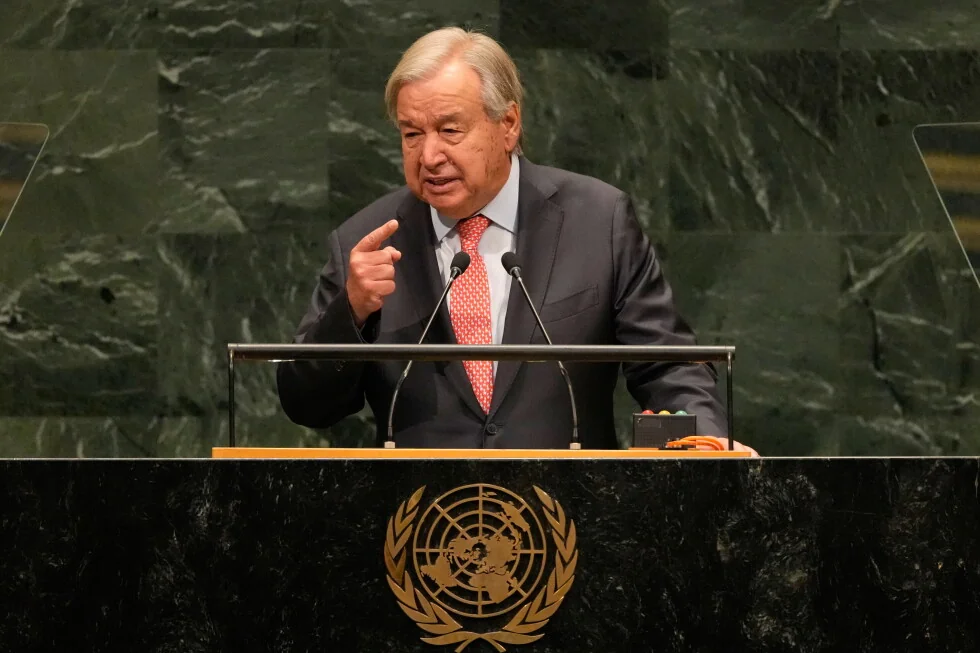
Los líderes de la ONU se reúnen mientras el secretario general aboga por un «mundo construido sobre la interdependencia»
UN leaders convene as secretary-general advocates a ‘world built on interdependence’
Los líderes de la ONU se reúnen mientras el secretario general aboga por un «mundo construido sobre la interdependencia»
UN leaders convene as secretary-general advocates a ‘world built on interdependence’
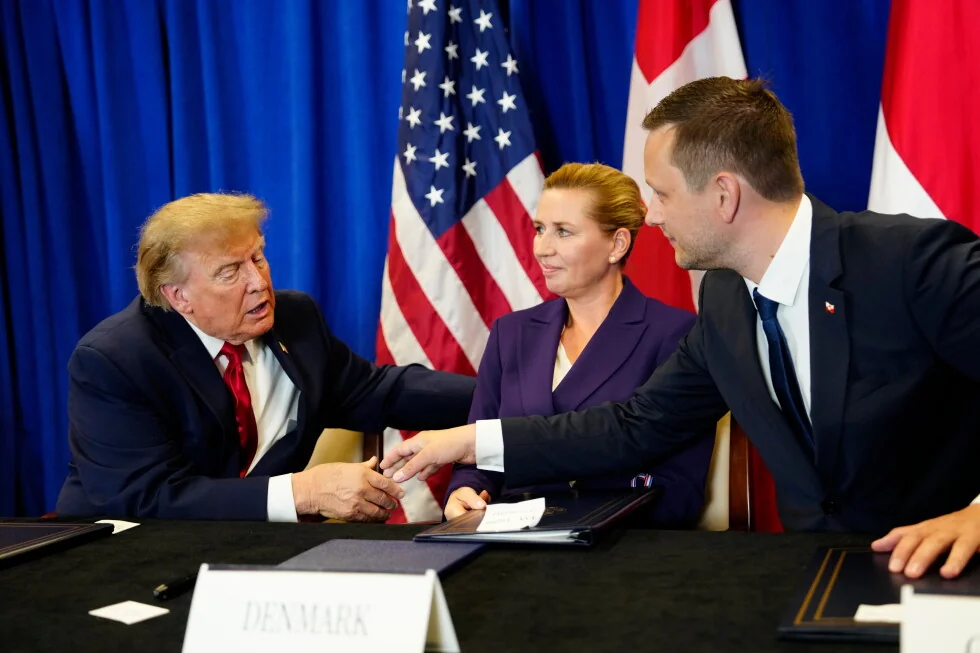
Trump firma un pacto entre EE. UU., Dinamarca y Groenlandia para reforzar la seguridad en el Ártico
Trump Inks US-Denmark-Greenland Pact to Fortify Arctic Security
Trump firma un pacto entre EE. UU., Dinamarca y Groenlandia para reforzar la seguridad en el Ártico
Trump Inks US-Denmark-Greenland Pact to Fortify Arctic Security
Los diplomáticos describen un mundo en convulsión mientras se inaugura la reunión anual de la ONU: caótico, problemático, impredecible
Diplomats depict a world in turmoil as UN annual meeting convenes: messy, troubled, unpredictable
Los diplomáticos describen un mundo en convulsión mientras se inaugura la reunión anual de la ONU: caótico, problemático, impredecible
Diplomats depict a world in turmoil as UN annual meeting convenes: messy, troubled, unpredictable
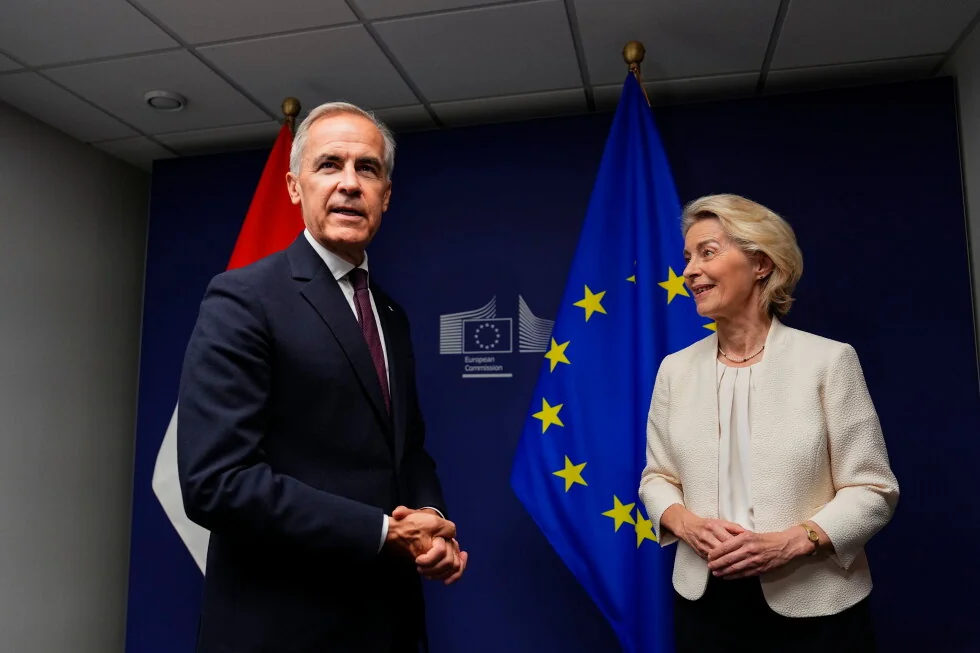
La propuesta de la UE de un «miembro asociado» para Canadá: posibles implicaciones
The EU’s “associate member” overture to Canada: potential implications
La propuesta de la UE de un «miembro asociado» para Canadá: posibles implicaciones
The EU’s “associate member” overture to Canada: potential implications
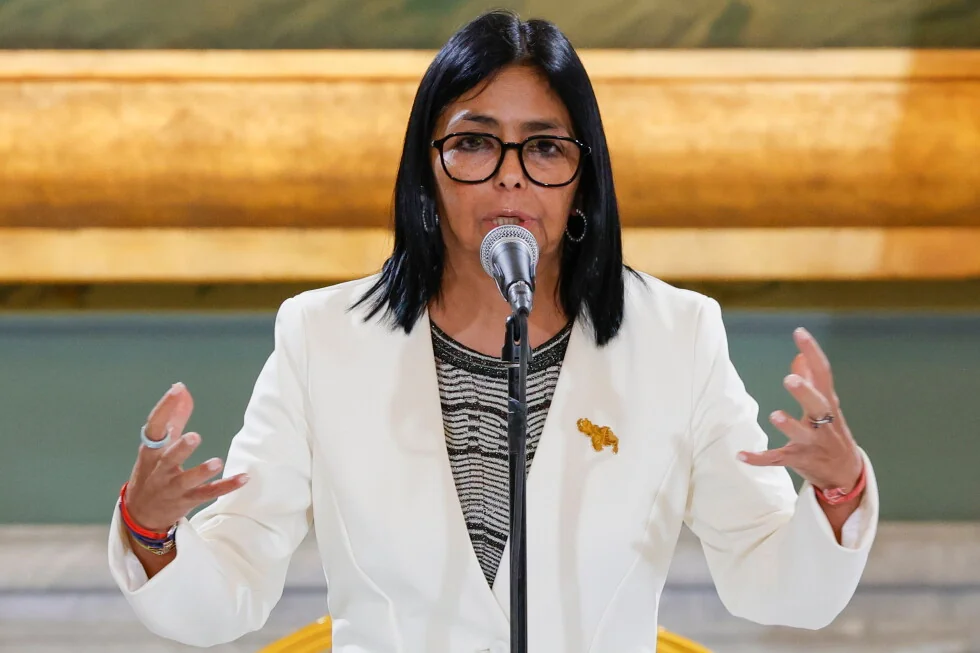
La Casa Blanca anuncia que Trump se reunirá con la presidenta interina de Venezuela, Delcy Rodríguez, en Nueva York la próxima semana
Trump to convene with Venezuelan acting President Delcy Rodríguez in New York next week, White House announces
La Casa Blanca anuncia que Trump se reunirá con la presidenta interina de Venezuela, Delcy Rodríguez, en Nueva York la próxima semana
Trump to convene with Venezuelan acting President Delcy Rodríguez in New York next week, White House announces
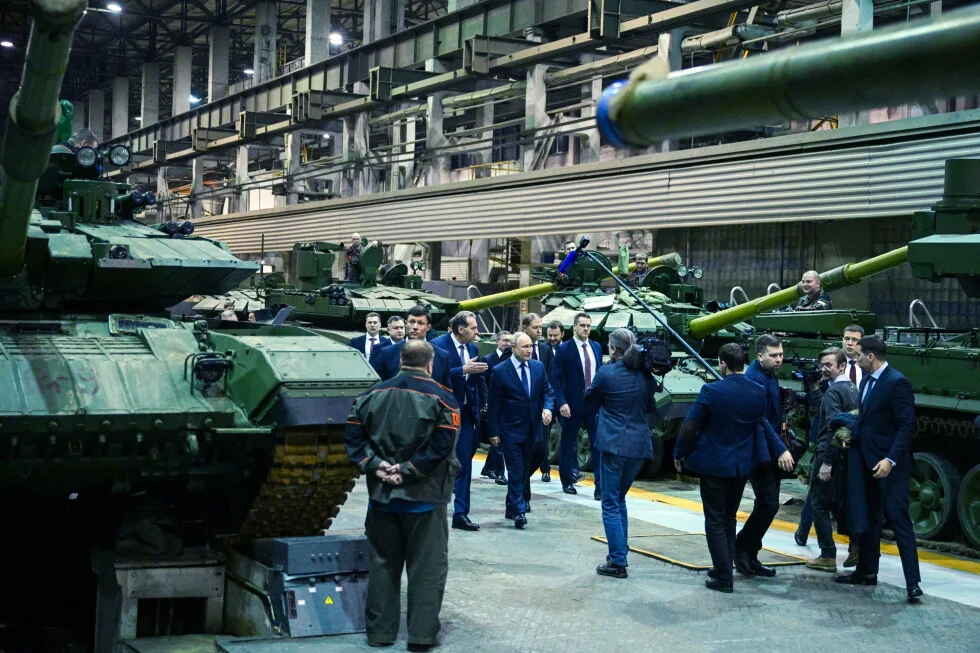
La economía rusa en tiempos de guerra afronta una erosión a largo plazo por la deuda y el gasto militar
Russia’s Wartime Economy Faces Long-Term Erosion from Debt and Military Spending
La economía rusa en tiempos de guerra afronta una erosión a largo plazo por la deuda y el gasto militar
Russia’s Wartime Economy Faces Long-Term Erosion from Debt and Military Spending
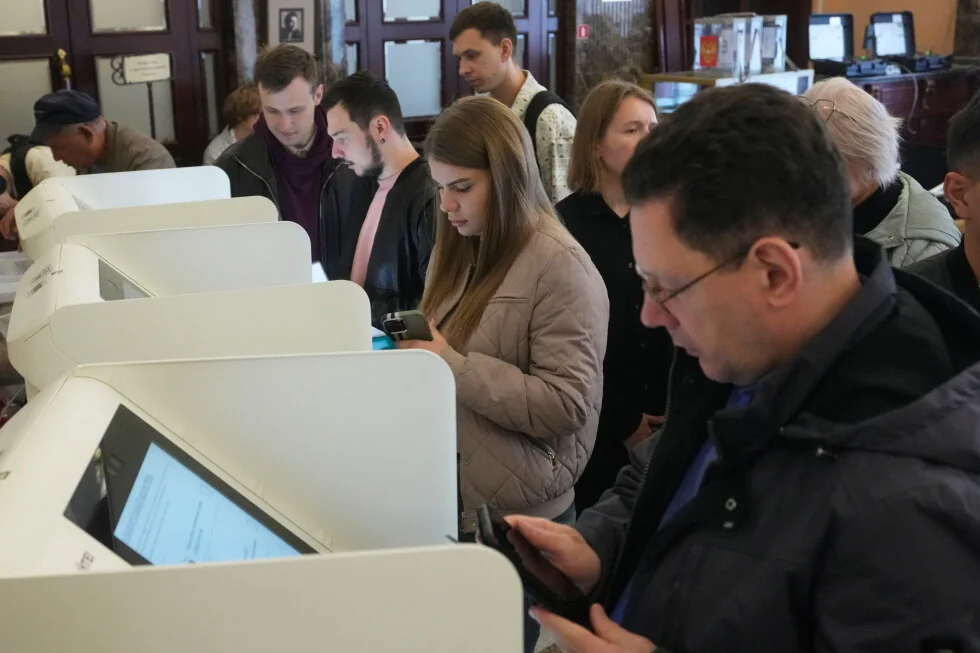
Rusia emprende tres días de votación en unas elecciones parlamentarias dispuestas a afianzar el poder del Kremlin
Russia Embarks on Three Days of Voting in Parliamentary Election Poised to Entrench Kremlin’s Power
Rusia emprende tres días de votación en unas elecciones parlamentarias dispuestas a afianzar el poder del Kremlin
Russia Embarks on Three Days of Voting in Parliamentary Election Poised to Entrench Kremlin’s Power
EE. UU. concede visados a altos líderes iraníes para la reunión de alto nivel de la ONU pese a las hostilidades en tiempo de guerra
US grants visas to top Iranian leaders for UN high-level meeting despite wartime hostilities
EE. UU. concede visados a altos líderes iraníes para la reunión de alto nivel de la ONU pese a las hostilidades en tiempo de guerra
US grants visas to top Iranian leaders for UN high-level meeting despite wartime hostilities
Expertos respaldados por la ONU alegan posibles crímenes de guerra de EE. UU. en ataques contra Irán
UN-backed experts allege potential US war crimes in Iran strikes
Expertos respaldados por la ONU alegan posibles crímenes de guerra de EE. UU. en ataques contra Irán
UN-backed experts allege potential US war crimes in Iran strikes