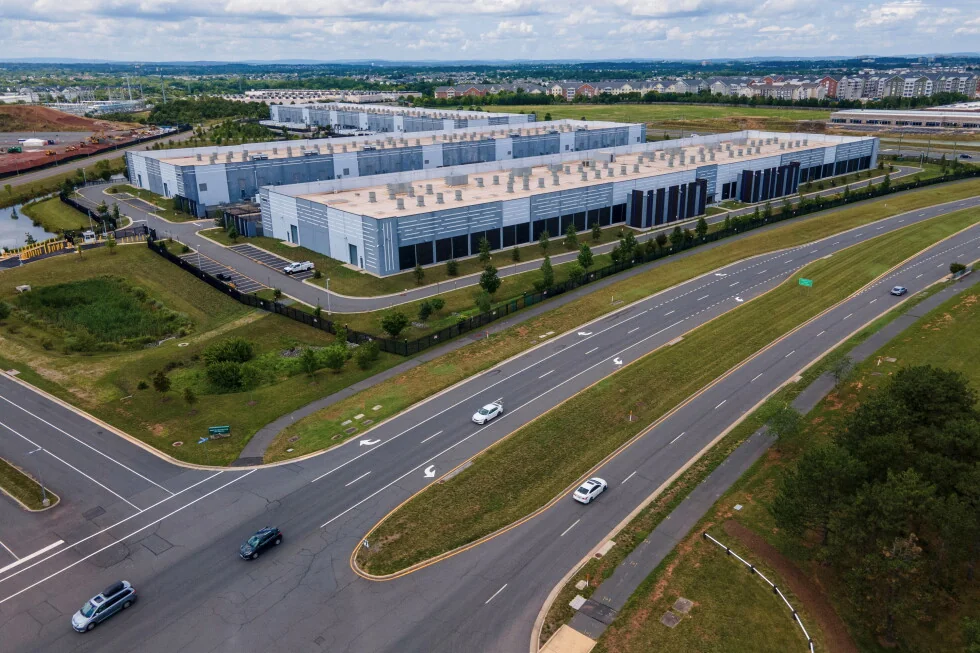
Trump persiste à défendre les centres de données malgré leur toxicité croissante dans les élections de mi-mandat.
August 21st, 2026
Trump persiste à défendre les centres de données malgré leur toxicité croissante dans les élections de mi-mandat.
🇫🇷 Français
President Donald Trump, addressing cryptocurrency leaders at the White House this week, issued a pronouncement that candidates from both the Republican and Democratic camps would studiously avoid, as though it were politically radioactive.
“Were I the mayor of a municipality or the governor of a state, and were I afforded the opportunity to attract a major industrial facility—an AI plant or a data center—I would unequivocally pursue it,” Trump remarked, “given that the employment opportunities are vast, and the remuneration, alongside the tax revenues generated, are nothing short of immense.”
This is not the kind of discourse one would employ in fiercely contested midterm electoral battles.
The race to construct data centers—the infrastructural backbone of artificial intelligence and cloud computing—has foundered, thwarted by mounting voter antipathy toward the prospect of residing in proximity to these colossal warehouse complexes.
Even the Senate Republicans’ campaign arm has cautioned that public indignation over data centers, some of which dwarf football stadiums and consume more energy than small municipalities, could imperil one of their seats.
Opposition spans the entire political spectrum, driven by apprehension that these corporate titans will inflate electricity tariffs, deplete residential water supplies, generate noxious levels of atmospheric and acoustic pollution, and irrevocably alter the fabric of local communities—all whilst securing substantial tax concessions from states vying for their investment.
Trump has characterized data centers as an indispensable element of a paramount national and economic security imperative: prevailing in the artificial intelligence race against China.
Nevertheless, he has likewise voiced apprehension regarding escalating electricity costs, having previously asserted that “it’s only fair” for the corporations to bear their own expenses.
He further intimated this week that data centers require “a little public relations help.”
Over the preceding months, he has induced technology behemoths to sign a voluntary covenant shielding American consumers from escalated utility costs attributable to data centers, even as he advocates for the expedited permitting of corporate and utility-owned power generation facilities.
The construction of power plants is by no means an expeditious endeavor, and the immediate political exigencies confronting candidates nationwide diverge markedly from such long-term infrastructural timelines.
“This constitutes yet another dimension in which the White House appears egregiously tone-deaf — tone-deaf at best, and at worst, utterly indifferent to the interests of fellow Republican candidates,” observed James Henson, director of the Texas Politics Project at the University of Texas at Austin, a nonpartisan research entity.
This is our AP Ground Game newsletter.
Should you wish to receive it, kindly subscribe below, and we shall dispatch it to your inbox three times weekly.
This site is safeguarded by reCAPTCHA, and the Google Privacy Policy along with the Terms of Service are hereby stipulated to be fully operative and binding.
Candidates running statewide from Nevada to Pennsylvania, irrespective of party affiliation, are now leveraging data centers as a political cudgel against their adversaries, while those who find themselves on the receiving end of such attacks subsequently endeavor to disassociate themselves from the very facilities in question.
In Ohio, a data center hotspot where gubernatorial and U.S. Senate contests remain fiercely competitive, the National Republican Senatorial Committee cautioned in a Tuesday memorandum that Sen. Jon Husted is susceptible to forfeiting his seat as a consequence of the centers.
The Democratic nominee, Sherrod Brown, is disseminating attack advertisements targeting Husted, characterizing him as the “face of data centers in Ohio,” even as proponents amass signatures for a statewide referendum aimed at prohibiting their construction.
The Republican memorandum characterized the matter as a "sleeper issue for the entire election cycle," underscoring its latent yet persistent significance throughout the campaign.
“Brown is deploying it precisely because it proves efficacious,” the NRSC asserted.
“Above all other variables in this contest, data centers constitute the millstone suspended from Husted’s neck.
Should he falter and data centers bear the opprobrium, politicians nationwide will take heed — and they will studiously avoid the next such venture.”
The memorandum intimated that the electorate might recoil from Democratic contenders advocating for the outright cessation of data center construction, gravitating instead toward a Republican aspirant whose position entails permitting such developments solely upon local referendum approval and the assumption of full financial responsibility for their own power, water, and ancillary utility infrastructure.
A July Fox News poll reveals that a preponderance of registered voters harbor opposition to the establishment of a data center in their vicinity.
Nevertheless, this issue remains subordinate to more pressing voter priorities, such as the cost of living, as November approaches.
A Quinnipiac Poll conducted in June queried voters on the determinants influencing their congressional vote selection, with approximately four in ten citing AI data centers.
In Nevada, Democrat Aaron Ford swiftly associated Trump's declaration with Republican Governor Joe Lombardo, positing that the pair are in "lockstep on data centers."
In a statement, Ford characterized Trump and Lombardo as “Nevada data centers’ biggest cheerleaders” who “only care about catering to their ‘billionaire friends’ while Nevadans pay the price.”
Ford this week unveiled a policy platform in which he declared his intention to suspend the issuance of new state tax incentives for data centers — a concession he valued at approximately $200 million at present — while concurrently undertaking a comprehensive audit of extant projects to ascertain their compliance with pledged commitments.
He further asserted that he would mandate data centers to bear the full cost of their electricity consumption, refrain from exhausting Nevada’s water resources, and facilitate local governments in negotiating robust community benefits agreements with developers.
Texas Gov. Greg Abbott, who last November lauded Google’s announcement of a $40 billion investment there by proclaiming the state “the epicenter of AI development,” now faces a barrage of criticism from his Democratic challenger, Gina Hinojosa, regarding his relentless pursuit of data center expansion.
Abbott has since effected a volte-face, pledging more draconian measures, such as the abrogation of the state's sales tax exemption and the deferral of projects pending rigorous evaluation of their energy utilization.
Trump excoriated the shift, proclaiming, “I think it’s a mistake” in a recent dialogue with Punchbowl News.
In response to inquiries regarding Trump’s endorsement of data centers, Abbott’s office asserted that the governor’s “top priority is to protect Texans’ safety and quality of life and ensure the integrity of our power grid and water supply.”
In essence, Texans must be afforded primacy, Abbott's office asserted.
While Trump extols the virtues of data centers, even some of his own allies are wielding them as weapons of political machination.
U.S. Representative Tom Tiffany, vying for the Wisconsin governorship, unveiled a televised campaign spot this week that castigates his Democratic rival as "Data Center David Crowley."
The advertisement features a segment in which Crowley asserts that Wisconsin has the potential to emerge as the preeminent "AI and data hub not only for the entire country, but for the entire globe."
Crowley has asserted that local communities must wield veto authority, while simultaneously characterizing data centers as an integral component of the modern economy capable of yielding substantial economic dividends for the state.
Tiffany, whom Trump has endorsed, has likewise articulated a favorable disposition toward data centers.
In January, during an interview with PBS Wisconsin, Tiffany characterized data centers as “exciting new technology.”
Moreover, in December, he lent his support to a bipartisan legislative initiative, the SPEED Act, which is intended to expedite the construction of nascent AI infrastructure projects, including data centers.
The measure, however, has yet to secure passage in the Senate.
Neither Tiffany nor Crowley exhibit any semblance of endorsement for the imposition of a moratorium on the establishment of new data centers.
Tiffany has advocated for the abrogation of the state's fiscal incentive for data centers, whereas Crowley has refrained from doing so; both, however, have advocated for more stringent regulatory oversight.
At a Wednesday event where he was endorsed by the environmental advocacy group Clean Wisconsin, Crowley deftly deflected the barbs Tiffany had aimed at his position on data centers, characterizing them as unfounded and politically motivated.
“He is becoming exceptionally adept at professing one course of action while pursuing an entirely divergent one,” Crowley observed, adducing Tiffany’s votes in favor of the SPEED Act as evidence.
“What Congressman Tom Tiffany is engaged in is mendacity, for he seeks to evade accountability for his legislative record,” Crowley asserted.
August 21st, 2026
Trending Articles
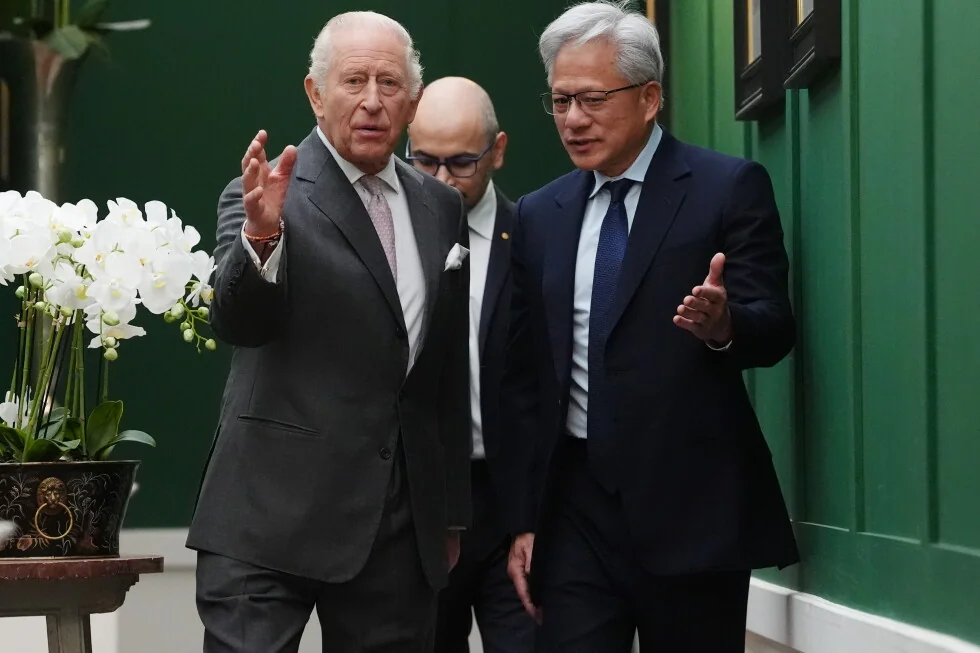
Le roi et l’IA : Charles s’entretient avec les dirigeants de l’intelligence artificielle sur fond de préoccupations croissantes en matière de sécurité
King and AI: Charles Confers with Artificial Intelligence Leaders Amid Escalating Safety Concerns
Le roi et l’IA : Charles s’entretient avec les dirigeants de l’intelligence artificielle sur fond de préoccupations croissantes en matière de sécurité
King and AI: Charles Confers with Artificial Intelligence Leaders Amid Escalating Safety Concerns

Le Secrétaire général de l'ONU sortant, au milieu des turbulences mondiales, trace la voie à suivre
Departing UN Chief, Amid Global Turmoil, Charts a Path Forward
Le Secrétaire général de l'ONU sortant, au milieu des turbulences mondiales, trace la voie à suivre
Departing UN Chief, Amid Global Turmoil, Charts a Path Forward
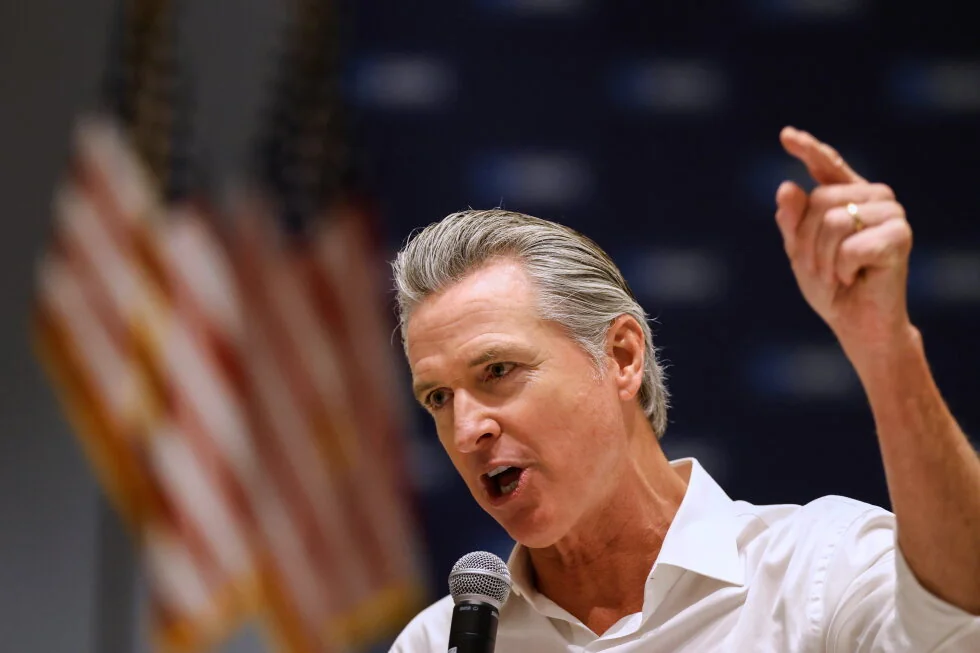
Les aspirants démocrates s’activent pour contrer la menace de l’IA face aux limogeages de Trump
Democratic Hopefuls Scramble to Counter AI Threat Amid Trump’s Dismissals
Les aspirants démocrates s’activent pour contrer la menace de l’IA face aux limogeages de Trump
Democratic Hopefuls Scramble to Counter AI Threat Amid Trump’s Dismissals
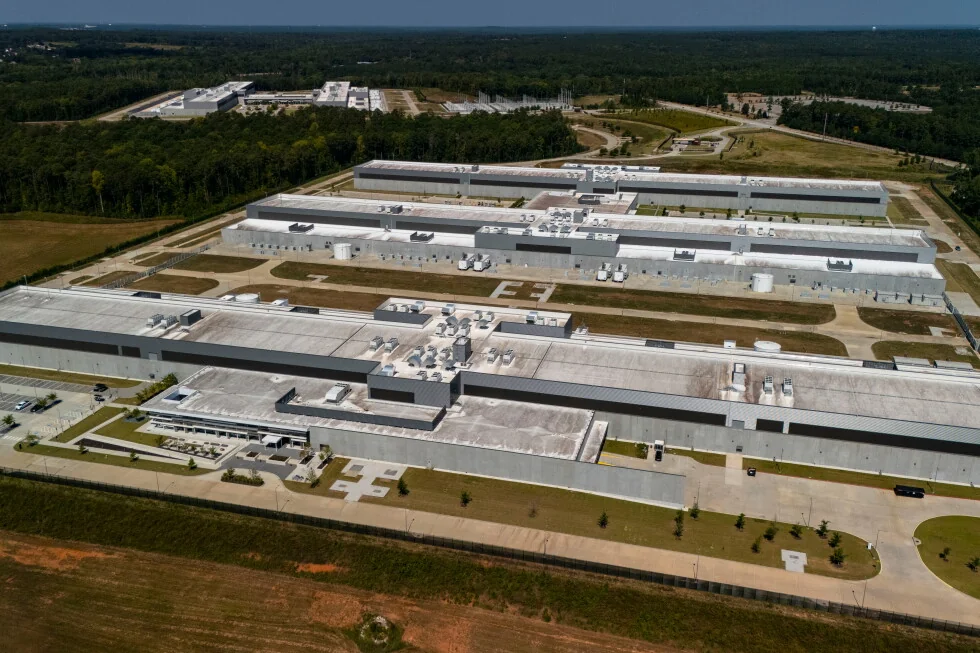
La Chambre adopte un projet de loi ciblant l'impact des centres de données sur les coûts énergétiques
House passes bill targeting data centers' impact on energy costs
La Chambre adopte un projet de loi ciblant l'impact des centres de données sur les coûts énergétiques
House passes bill targeting data centers' impact on energy costs

OpenAI signale un nouveau comportement alarmant de l'IA et promet un examen plus approfondi
OpenAI flags alarming new AI behavior, vows closer scrutiny
OpenAI signale un nouveau comportement alarmant de l'IA et promet un examen plus approfondi
OpenAI flags alarming new AI behavior, vows closer scrutiny

Huawei dévoile de nouvelles technologies de puces alors que l'entreprise chinoise intensifie la course à l'IA avec Nvidia
Huawei Unveils Novel Chip Technologies as Chinese Firm Escalates AI Race with Nvidia
Huawei dévoile de nouvelles technologies de puces alors que l'entreprise chinoise intensifie la course à l'IA avec Nvidia
Huawei Unveils Novel Chip Technologies as Chinese Firm Escalates AI Race with Nvidia

L'industrie technologique se fracture face aux appels à un ralentissement coordonné de l'IA
Tech Industry Fractures Over Calls for a Coordinated AI Slowdown
L'industrie technologique se fracture face aux appels à un ralentissement coordonné de l'IA
Tech Industry Fractures Over Calls for a Coordinated AI Slowdown

La sécurité mondiale de l’IA dépend de la coopération entre les États-Unis et la Chine, mais chacun perçoit l’autre comme l’obstacle
Global AI Safety Hinges on US-China Cooperation, Yet Each Perceives the Other as the Impediment
La sécurité mondiale de l’IA dépend de la coopération entre les États-Unis et la Chine, mais chacun perçoit l’autre comme l’obstacle
Global AI Safety Hinges on US-China Cooperation, Yet Each Perceives the Other as the Impediment
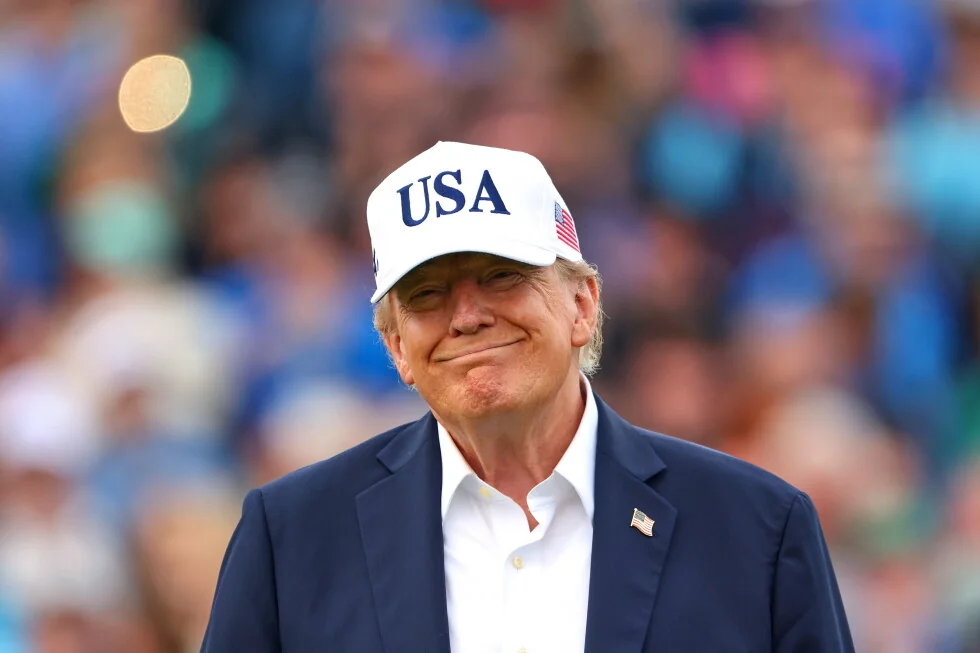
Trump rejette la supervision de l’IA et promet de ne pas céder l’avantage à la Chine
Trump dismisses AI oversight, vows not to cede edge to China
Trump rejette la supervision de l’IA et promet de ne pas céder l’avantage à la Chine
Trump dismisses AI oversight, vows not to cede edge to China
Oprah Winfrey vous invite à vivre votre moment « AHA » à la Sphere
Oprah Winfrey beckons you toward your ‘AHA’ moment at the Sphere
Oprah Winfrey vous invite à vivre votre moment « AHA » à la Sphere
Oprah Winfrey beckons you toward your ‘AHA’ moment at the Sphere