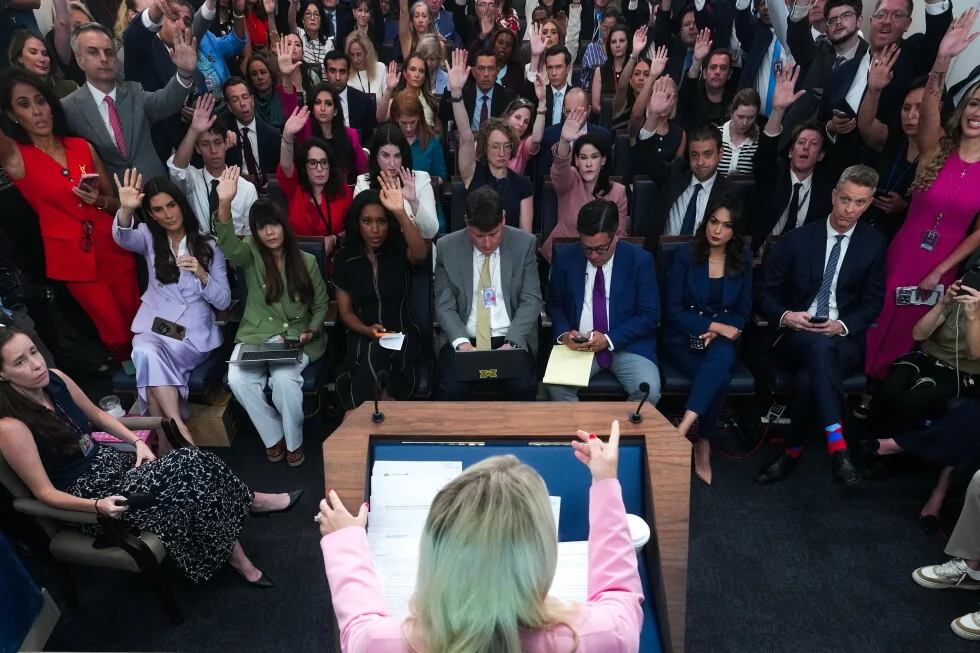
Ein Jahrhundert freiwilliger journalistischer Ethikkodizes steht vor einer KI-Ära-Überarbeitung durch die Chefredaktionen.
September 1st, 2026
Ein Jahrhundert freiwilliger journalistischer Ethikkodizes steht vor einer KI-Ära-Überarbeitung durch die Chefredaktionen.
🇩🇪 Deutsch
Venture into a corner of any newsroom and you will frequently discover it affixed to a bulletin board, perhaps surreptitiously protruding from behind the coffee percolator: the Society of Professional Journalists’s Code of Ethics.
Comprising fewer than a thousand words, it fits with impeccable neatness upon a single poster.
Yet those words — structured around four cardinal tenets of journalism — are of such consequence, Dan Axelrod contends, that they may well prove the very salvation of our democracy.
“I shall state it plainly,” says Axelrod, chair of the SPJ Ethics Committee and a former longtime business reporter for Gannett.
“This is the means by which democracy is safeguarded.
This is the means by which society is protected.
There but for the grace of God goes a society bereft of journalists.”
Axelrod’s remarks extend beyond the mere existence of the code to underscore the imperative of its periodic revision—a formidable undertaking that demands approximately a year of exhaustive deliberation, encompassing countless hours of iterative feedback and consultation, conducted both virtually and in person.
Yet as the media landscape appears to mutate almost daily and novel technologies continue to proliferate, the Society of Professional Journalists has concluded that the moment has arrived — for the first time in twelve years, and only the sixth occasion in the code's century-long existence.
The gravity of the undertaking convened the committee and other media ethics experts in Indianapolis in June, following a protracted series of virtual deliberations.
Evidently, it proved to be anything but a leisurely way to while away a weekend.
“Passions unequivocally reached a fever pitch,” Axelrod observes.
“Well, there were no fisticuffs,” quips his colleague, Chris Roberts, vice chairman of the committee and a journalism professor at the University of Alabama.
He elucidates that there was “a considerable forging of the lexicon.”
The outcome: no white smoke, yet a 967-word draft code, surpassing its predecessor by 73 words.
Yet why undertake the update at all?
The foremost impetus — scarcely a revelation — is the precipitous ascendancy of artificial intelligence.
“We were contemplating artificial intelligence and its deployment—and, at times, its misappropriation—by news organizations,” Roberts observes, “as they grapple with this emergent technology that yields cost efficiencies, yet precipitates considerable turmoil when wielded without efficacy or ethical rigor.”
A further complication pertains to the very designation of “professional journalists.”
In recent years, there has been a marked proliferation of independent, so-called “creator journalists.”
The SPJ maintains that this cohort, too, ought to be governed by a code of conduct.
(As ever, the code constitutes a voluntary framework rather than a legally binding instrument.)
A paramount objective is to confront an existential predicament besetting the field: the escalating erosion of public confidence in the media.
“We are speaking of a world whose confidence in us has waned considerably,” Roberts observes.
“We are speaking of politicians and others who go to great lengths to disparage journalism for daring to expose their failings.
Concurrently, the financial landscape of journalism has undergone profound transformation, and a third of journalists no longer operate within a traditional news organization.
“All of those things and so many more constitute eminently compelling grounds for a reappraisal,” he remarks, “and serve to remind us that certain standards ought to remain inviolable, irrespective of whether one professes to be a journalist or of the nature of the platform for which one labours.”
The Society of Professional Journalists (SPJ), with a nationwide cadre of approximately 4,000 members, traces its inception to 1909.
Its inaugural code of ethics was promulgated in 1926, subsequently leading to the formation of an ethics committee in 1948, and the code has been revised on five occasions, the most recent being in 2014.
The four immutable, foundational tenets: “Seek Truth and Report It.” “Minimize Harm.” “Act Independently.” “Be Accountable and Transparent.”
But much else has evolved.
A report accompanying the draft notes that traditional newsroom roles are contracting as the industry shrinks.
Concurrently, it observes a pronounced proliferation of citizen journalists, freelancers, online influencers, and pundits.
The report cites a Pew study indicating that fully one-third of journalists were freelance or self-employed in 2023.
It further adduces the dwindling presence of news outlets functioning as watchdogs, alongside “people, organizations and private investors without journalism backgrounds, who are buying or opening news properties, affecting news coverage, influencing editorial decisions and pushing personal agendas.”
The Society of Professional Journalists contends that the exponential proliferation of generative artificial intelligence and other emergent technologies — within the newsroom and across society at large — precipitates a host of profound ethical quandaries.
A newly articulated principle asserts: “Remember that speed, technology or medium do not excuse inaccuracy or unfairness.
Journalists are ethically responsible for their work, regardless of tools and technologies used.”
In essence, ultimate accountability resides with the journalist, irrespective of any pronouncements an AI might generate.
“We cannot countenance individuals invoking technology as a pretext to claim that ethical and transparent production was beyond their purview,” asserts Roberts.
The proposed draft — slated for a vote in October by the broader organization following the current consultation period — conspicuously omits any explicit reference to artificial intelligence, alluding instead merely to tools and technologies, thereby ensuring its enduring pertinence amid evolving technological landscapes.
It further grapples with ancillary concerns, encompassing verification protocols, the proliferation of misinformation, journalistic practices in crime coverage, and the fabrication of imagery, among other matters.
A particularly salient addition — and one that ignited considerable debate — is the following assertion: “Be vigilant and courageous about holding those with power accountable. Counter the unfair marginalization of those with less power.”
What is most compelling is what it supplants.
The original text read: “Give voice to the voiceless.”
That formulation was deemed problematic, as it presupposed that certain collectivities are inherently bereft of agency.
Notes committee member Eric Deggans: “It is not that they lack a voice; rather, it is that mainstream news outlets all too frequently fail to heed it, or remain entirely oblivious to its very existence.”
“What we sought to articulate,” observes Deggans, NPR’s critic-at-large and a media ethics professor at Washington and Lee University, “was the notion that certain groups may find themselves marginalized from news coverage... and that journalists ought to make a deliberate endeavor to incorporate them where pertinent, particularly when doing so enhances the veracity of the report.”
Given the industry's evolving landscape, one might pose a more encompassing, overarching inquiry: Is a singular, universal code truly applicable across all contexts?
And, moreover, will such a code even receive due recognition?
“We ought not to recoil from it,” responds Chris Vaccaro, the current president of SPJ, “merely because the industry is in flux or because the very notion of what constitutes a journalist is itself undergoing transformation.”
Vaccaro is confident that the code, which has been rendered into a multitude of languages, will be universally embraced.
That newsroom bulletin board, he asserts, now epitomizes the entire world.
“We are categorically not going to proceed under the premise that nobody will avail themselves of it, or that it is a matter of indifference, or that journalism has undergone such a seismic transformation as to render it inconsequential,” asserts Vaccaro.
“It is, in fact, consequential.”
Deggans notes that he instructs two courses in ethics, both of which examine the Society of Professional Journalists' code.
Yet beyond the cultivation of nascent journalists, the code serves other pivotal functions.
"If you’re operating in a country that has had authoritarian rule for a long time or doesn’t have a long history of a free press, how do you figure out how that works?
You turn to the SPJ code, right?"
Deggans laments the dearth of practicing journalists who would unreservedly espouse the tenets enshrined within the code.
And others, too: “I wish some individuals who own journalistic enterprises would peruse the code, for all too frequently they are compelling their staff to engage in conduct that is patently unethical, leaving the employee to navigate the delicate imperative of upholding their professional integrity in journalism whilst simultaneously satisfying the demands of their employer.”
September 1st, 2026
Trending Articles
Jon Stewart erläutert seine anhaltende philanthropische Unterstützung von Ersthelfern
Jon Stewart elucidates his sustained philanthropic backing of first responders
Jon Stewart erläutert seine anhaltende philanthropische Unterstützung von Ersthelfern
Jon Stewart elucidates his sustained philanthropic backing of first responders
Duncan Sheik, Tony- und Grammy-prämierter Komponist von „Spring Awakening“ und Pop-Ikone, ist im Alter von 56 Jahren gestorben
Duncan Sheik, Tony- and Grammy-winning ‘Spring Awakening’ composer and pop icon, dies at 56
Duncan Sheik, Tony- und Grammy-prämierter Komponist von „Spring Awakening“ und Pop-Ikone, ist im Alter von 56 Jahren gestorben
Duncan Sheik, Tony- and Grammy-winning ‘Spring Awakening’ composer and pop icon, dies at 56
Kennedy Center muss vor größeren baulichen Veränderungen 30 Tage im Voraus benachrichtigen, entscheidet Richter
Kennedy Center Must Give 30 Days’ Notice Before Major Physical Changes, Judge Rules
Kennedy Center muss vor größeren baulichen Veränderungen 30 Tage im Voraus benachrichtigen, entscheidet Richter
Kennedy Center Must Give 30 Days’ Notice Before Major Physical Changes, Judge Rules
Von LA Acclaim nach New York: Gustavo Dudamels nächster Schritt
From LA Acclaim to New York: Gustavo Dudamel's Next Movement
Von LA Acclaim nach New York: Gustavo Dudamels nächster Schritt
From LA Acclaim to New York: Gustavo Dudamel's Next Movement
„The Pitt“ strebt nach einer Zugabe, während „Widow’s Bay“ bei den Emmy Awards einen epischen Durchmarsch bedroht
‘The Pitt’ seeks encore as ‘Widow’s Bay’ threatens an epic sweep at the Emmy Awards
„The Pitt“ strebt nach einer Zugabe, während „Widow’s Bay“ bei den Emmy Awards einen epischen Durchmarsch bedroht
‘The Pitt’ seeks encore as ‘Widow’s Bay’ threatens an epic sweep at the Emmy Awards
Bob Mackie, Couturier der Stars, der Cher und Marilyn einkleidete und den Glamour der 70er Jahre verkörperte, stirbt mit 87
Bob Mackie, couturier to the stars who garbed Cher and Marilyn and epitomized ’70s glamour, dies at 87
Bob Mackie, Couturier der Stars, der Cher und Marilyn einkleidete und den Glamour der 70er Jahre verkörperte, stirbt mit 87
Bob Mackie, couturier to the stars who garbed Cher and Marilyn and epitomized ’70s glamour, dies at 87

Filmkritik: „Practical Magic 2“ hätte dem ursprünglichen Zauberbuch treu bleiben sollen
Movie Review: ‘Practical Magic 2' ought to have remained faithful to the original spell book
Filmkritik: „Practical Magic 2“ hätte dem ursprünglichen Zauberbuch treu bleiben sollen
Movie Review: ‘Practical Magic 2' ought to have remained faithful to the original spell book
Vier Renoirs aus französischem Museum gestohlen; zwei Werke bleiben weiterhin unauffindbar.
Four Renoirs stolen from French museum; two works remain unaccounted for.
Vier Renoirs aus französischem Museum gestohlen; zwei Werke bleiben weiterhin unauffindbar.
Four Renoirs stolen from French museum; two works remain unaccounted for.
Elon-Musk-Dokumentarfilm und Penélope-Cruz–Javier-Bardem-Thriller feiern Premiere in Venedig
Elon Musk documentary and Penélope Cruz–Javier Bardem thriller premiere at Venice
Elon-Musk-Dokumentarfilm und Penélope-Cruz–Javier-Bardem-Thriller feiern Premiere in Venedig
Elon Musk documentary and Penélope Cruz–Javier Bardem thriller premiere at Venice
Geschworene sprechen einen Mann des Mordes ersten Grades im Fall der Tötung des Rap-Ikonen Tupac Shakur im Jahr 1996 schuldig.
Jury convicts a man of first-degree murder in the 1996 slaying of rap icon Tupac Shakur
Geschworene sprechen einen Mann des Mordes ersten Grades im Fall der Tötung des Rap-Ikonen Tupac Shakur im Jahr 1996 schuldig.
Jury convicts a man of first-degree murder in the 1996 slaying of rap icon Tupac Shakur