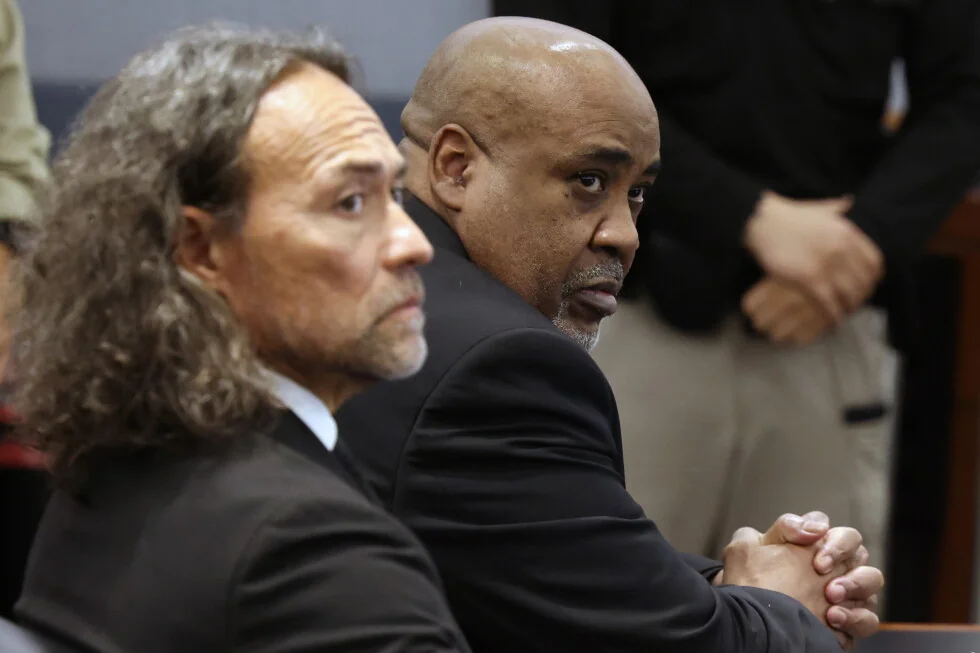
Geschworene sprechen einen Mann des Mordes ersten Grades im Fall der Tötung des Rap-Ikonen Tupac Shakur im Jahr 1996 schuldig.
September 1st, 2026
Geschworene sprechen einen Mann des Mordes ersten Grades im Fall der Tötung des Rap-Ikonen Tupac Shakur im Jahr 1996 schuldig.
🇩🇪 Deutsch
A jury convicted Duane “Keffe D” Davis of masterminding the 1996 slaying of rap luminary Tupac Shakur, thereby affording a modicum of closure to a case that had captivated hip-hop aficionados and lingered in the collective consciousness for decades.
Davis, a 63-year-old, was found guilty on Monday of one count of murder involving a deadly weapon, a conviction that carries the possibility of a life sentence.
After a trial lasting several weeks in Las Vegas, the jury reached its decision in fewer than three hours of deliberation.
Upon the pronouncement of the verdict, Shakur’s sister, Sekyiwa “Set” Shakur, dissolved into tears and embraced the prosecutors, whereas Davis’ son shielded his face with a single hand.
Chief Deputy District Attorney Binu Palal informed jurors during closing arguments earlier Monday that Davis had procured a firearm and proceeded to “go hunting” for Shakur and Death Row Records co-founder Marion “Suge” Knight, subsequent to the men having physically assaulted Davis’ nephew earlier that evening.
"He bears culpability for the murder of Tupac Shakur," Palal proclaimed.
"Ensure that your voice reaches him. Render a verdict of guilt."
Prosecutors contended that, although his account had undergone successive revisions over the years, Davis had consistently situated himself within a white Cadillac from which the gunfire emanated.
Furthermore, they asserted that, notwithstanding his failure to discharge the weapon, the evidentiary record demonstrated that he had orchestrated the volley, given that, as a formidable gang leader, the younger occupants of the vehicle—his nephew among them—were bound to heed his directive.
Defense attorney Michael Sanft challenged the jurors to consider whether any evidence had been adduced indicating that Davis had ever exercised command, whether in the period preceding or following the shooting.
The panel of sixteen jurors, four of whom were designated as alternates, was subjected to the testimony of twenty-four prosecution witnesses and three for the defense, spanning a period of nine days.
The prosecution indicated that the state would withdraw a gang enhancement charge, citing logistical complications pertaining to witness availability.
Prosecutors declined to offer any commentary subsequent to the verdict, while members of Shakur’s family stated that they would defer their remarks until the sentencing, presently scheduled for October.
The trial served as the climactic culmination of a decades-old case that has persistently captivated both aficionados of hip-hop and connoisseurs of true crime.
Shakur, universally regarded as one of the most seminal rappers in history, found himself in Las Vegas on September 7, 1996, halted at a red light when a white Cadillac drew alongside, and gunfire erupted.
He succumbed to his injuries six days later.
Knight, though wounded, managed to survive.
For years, no individual had been held accountable in the rapper’s demise until Davis commenced making public declarations, asserting his presence in the Cadillac and his act of handing the firearm to others in the rear compartment, characterizing the shooting as retributive in response to the prior assault on his nephew.
Davis stands as the sole surviving individual among the four men whom prosecutors allege were situated within the Cadillac.
Witnesses delineated the acrimonious internecine feud between the Los Angeles gang factions Mob Piru and Davis’ Southside Compton Crips in the period preceding Shakur’s demise, elucidating how these collectives became enmeshed with Knight’s Death Row Records and Sean “Diddy” Combs’ Bad Boy Records.
Sanft, Davis’ attorney, argued that no physical evidence linked his client to the shooting.
He contended that the book Davis co-authored and his public statements constituted dramatized bravado, calculated to generate revenue rather than to convey veracity.
Throughout the trial, Sanft systematically dismantled the prosecution’s narrative, contending that investigators had failed to substantiate his client’s alleged conduct.
He repeatedly underscored the absence of corroborative physical evidence—such as phone records—that would have implicated Davis as the orchestrator of the scheme.
“In this case, they possess nothing whatsoever indicating that this individual was present in Las Vegas on September 7, 1996,” Sanft asserted during his closing argument.
In his rebuttal, prosecutor Marc DiGiacomo highlighted a scrapbook meticulously compiled by Davis, which was replete with articles concerning Shakur.
“This individual is meticulously chronicling his own homicide, for heaven’s sake,” DiGiacomo apprised the jury.
Palal brandished Davis’ 2019 memoir, “Compton Street Legend,” and presented an interview in which Davis exhorted audiences to procure it in order to access the “real truth.”
Notwithstanding the volume’s disclaimer acknowledging that certain facts had been altered, prosecutors contended that its central narrative remained unembellished.
In his summation, Sanft additionally drew upon his client's memoir, and while reciting a passage, he vocalized the racial epithet, causing observers in the auxiliary courtroom to visibly recoil and shake their heads in unmistakable censure.
In multiple interviews, Davis asserted that he had handed the firearm to the back seat, yet in others, as well as in his book, he remained conspicuously reticent, declining to disclose the identity of the individual who had discharged it.
While maintaining that Davis’ statements alone sufficed for conviction, prosecutors contended that an internecine gang rivalry furnished the explanatory context for the perpetration of the shooting.
Witnesses recounted the acrimonious internecine feud between the Los Angeles gang factions in the period preceding Shakur’s demise, detailing how these organizations subsequently aligned themselves with two competing record labels — the Mob Piru with Knight’s Death Row Records, and the South Side Compton Crips with Sean “Diddy” Combs’ Bad Boy Records.
The shooting death of the Notorious B.I.G., which occurred six months after Shakur's, was a recurrent theme throughout the trial, with law enforcement witnesses testifying that Davis had briefly been considered a suspect in that homicide before being exonerated.
That case, which has likewise captivated hip-hop aficionados, remains unresolved to this day.
September 1st, 2026
Trending Articles
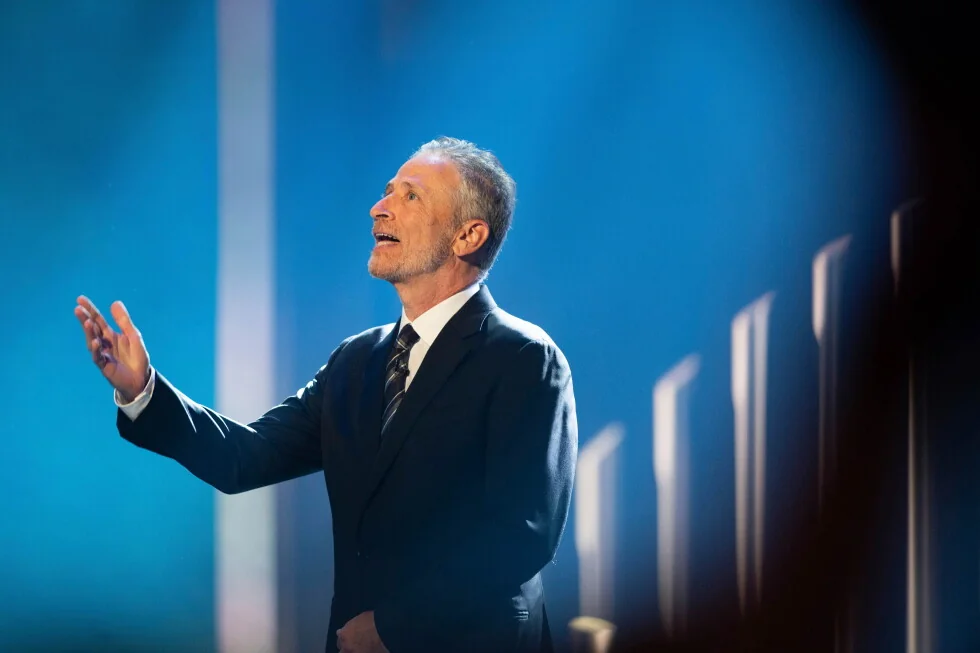
Jon Stewart erläutert seine anhaltende philanthropische Unterstützung von Ersthelfern
Jon Stewart elucidates his sustained philanthropic backing of first responders
Jon Stewart erläutert seine anhaltende philanthropische Unterstützung von Ersthelfern
Jon Stewart elucidates his sustained philanthropic backing of first responders
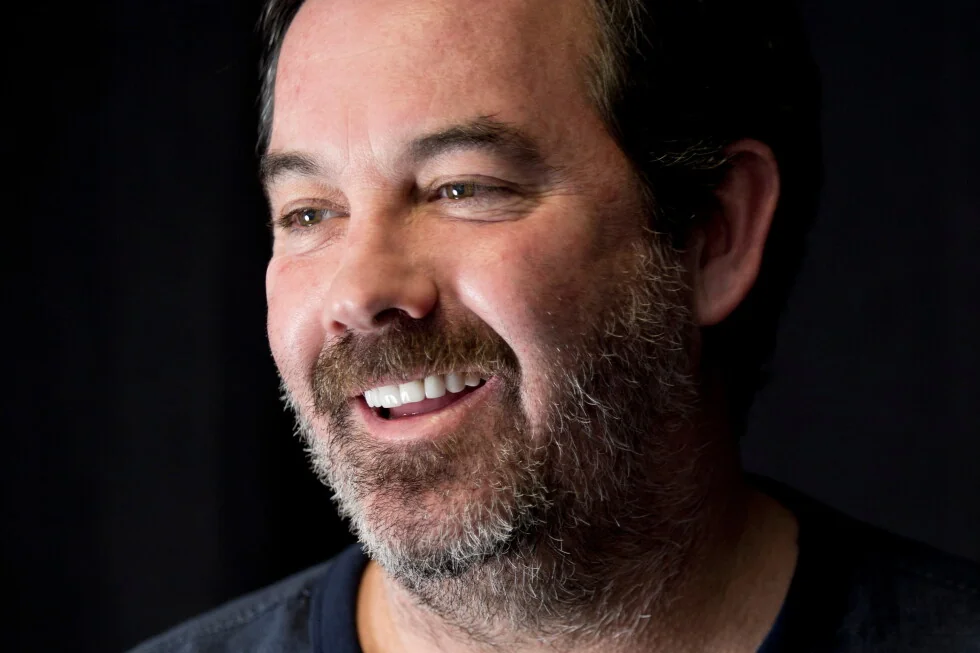
Duncan Sheik, Tony- und Grammy-prämierter Komponist von „Spring Awakening“ und Pop-Ikone, ist im Alter von 56 Jahren gestorben
Duncan Sheik, Tony- and Grammy-winning ‘Spring Awakening’ composer and pop icon, dies at 56
Duncan Sheik, Tony- und Grammy-prämierter Komponist von „Spring Awakening“ und Pop-Ikone, ist im Alter von 56 Jahren gestorben
Duncan Sheik, Tony- and Grammy-winning ‘Spring Awakening’ composer and pop icon, dies at 56
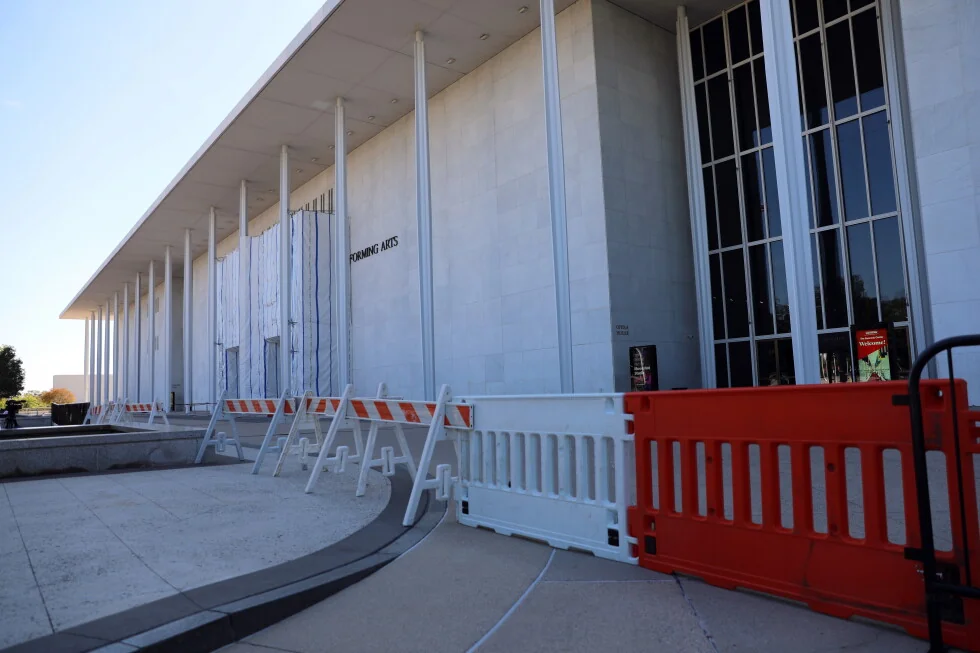
Kennedy Center muss vor größeren baulichen Veränderungen 30 Tage im Voraus benachrichtigen, entscheidet Richter
Kennedy Center Must Give 30 Days’ Notice Before Major Physical Changes, Judge Rules
Kennedy Center muss vor größeren baulichen Veränderungen 30 Tage im Voraus benachrichtigen, entscheidet Richter
Kennedy Center Must Give 30 Days’ Notice Before Major Physical Changes, Judge Rules
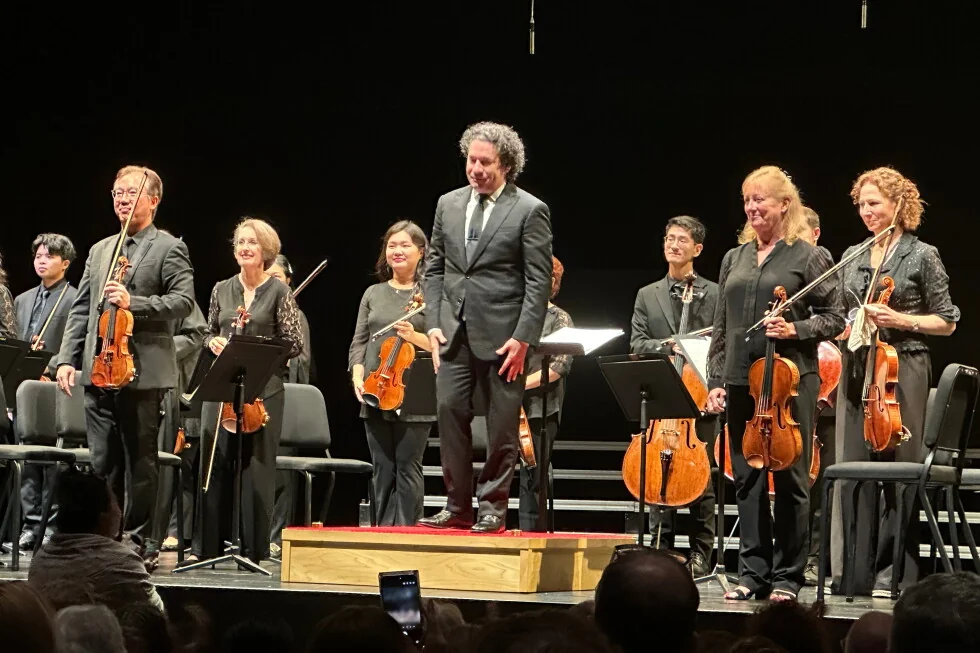
Von LA Acclaim nach New York: Gustavo Dudamels nächster Schritt
From LA Acclaim to New York: Gustavo Dudamel's Next Movement
Von LA Acclaim nach New York: Gustavo Dudamels nächster Schritt
From LA Acclaim to New York: Gustavo Dudamel's Next Movement
„The Pitt“ strebt nach einer Zugabe, während „Widow’s Bay“ bei den Emmy Awards einen epischen Durchmarsch bedroht
‘The Pitt’ seeks encore as ‘Widow’s Bay’ threatens an epic sweep at the Emmy Awards
„The Pitt“ strebt nach einer Zugabe, während „Widow’s Bay“ bei den Emmy Awards einen epischen Durchmarsch bedroht
‘The Pitt’ seeks encore as ‘Widow’s Bay’ threatens an epic sweep at the Emmy Awards
Bob Mackie, Couturier der Stars, der Cher und Marilyn einkleidete und den Glamour der 70er Jahre verkörperte, stirbt mit 87
Bob Mackie, couturier to the stars who garbed Cher and Marilyn and epitomized ’70s glamour, dies at 87
Bob Mackie, Couturier der Stars, der Cher und Marilyn einkleidete und den Glamour der 70er Jahre verkörperte, stirbt mit 87
Bob Mackie, couturier to the stars who garbed Cher and Marilyn and epitomized ’70s glamour, dies at 87

Filmkritik: „Practical Magic 2“ hätte dem ursprünglichen Zauberbuch treu bleiben sollen
Movie Review: ‘Practical Magic 2' ought to have remained faithful to the original spell book
Filmkritik: „Practical Magic 2“ hätte dem ursprünglichen Zauberbuch treu bleiben sollen
Movie Review: ‘Practical Magic 2' ought to have remained faithful to the original spell book

Vier Renoirs aus französischem Museum gestohlen; zwei Werke bleiben weiterhin unauffindbar.
Four Renoirs stolen from French museum; two works remain unaccounted for.
Vier Renoirs aus französischem Museum gestohlen; zwei Werke bleiben weiterhin unauffindbar.
Four Renoirs stolen from French museum; two works remain unaccounted for.
Elon-Musk-Dokumentarfilm und Penélope-Cruz–Javier-Bardem-Thriller feiern Premiere in Venedig
Elon Musk documentary and Penélope Cruz–Javier Bardem thriller premiere at Venice
Elon-Musk-Dokumentarfilm und Penélope-Cruz–Javier-Bardem-Thriller feiern Premiere in Venedig
Elon Musk documentary and Penélope Cruz–Javier Bardem thriller premiere at Venice