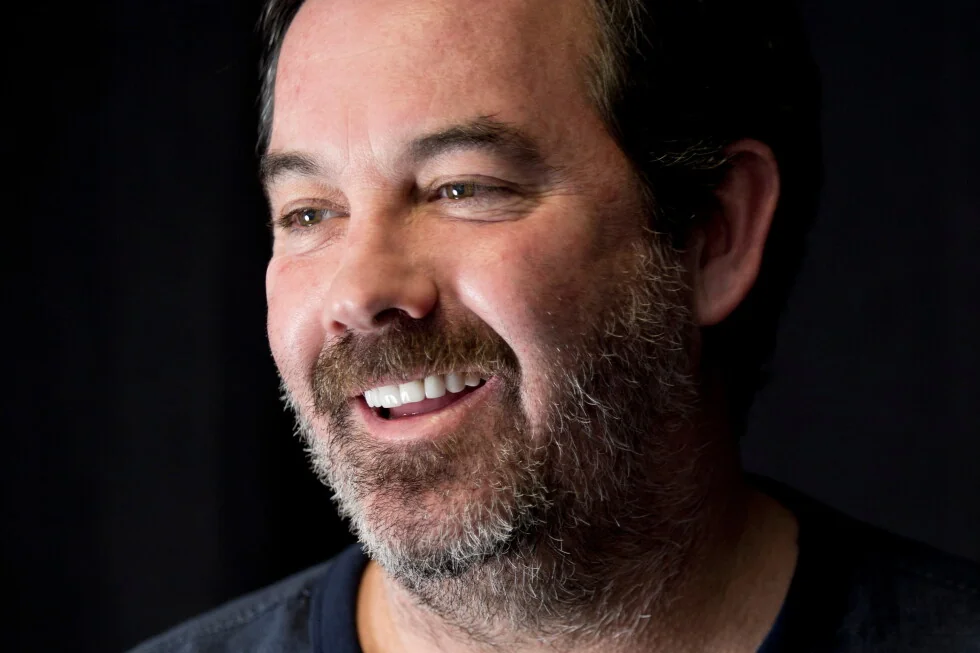
Duncan Sheik, Tony- und Grammy-prämierter Komponist von „Spring Awakening“ und Pop-Ikone, ist im Alter von 56 Jahren gestorben
September 18th, 2026
Duncan Sheik, Tony- und Grammy-prämierter Komponist von „Spring Awakening“ und Pop-Ikone, ist im Alter von 56 Jahren gestorben
🇩🇪 Deutsch
Duncan Sheik, the Tony- and Grammy-winning singer-songwriter who crafted the music for “Spring Awakening,” has died.
He was 56.
Sheik died Thursday night, according to a post on his Instagram page.
“The world has lost a singular talent, and a deeply influential voice in music and theater,” the post reads.
“His musical legacy will continue to inspire generations to come.”
Sheik had garnered renown chiefly for his enduring radio hit “Barely Breathing” when he redirected his ambitions toward Broadway with “Spring Awakening,” yielding the envelope-pushing production that set teenage angst to music.
"Save for our director, we are all, in a sense, Broadway outsiders.
We sought to shake things up a bit.
And we simply set out to craft this truly remarkable piece of theater," Sheik said in 2007, as the show swept Tony nominations.
Sheik likewise undertook musicals adapted from “American Psycho” and “Alice in Wonderland,” while “Barely Breathing” remained on the Billboard Hot 100 for 55 weeks, ascending to a peak of No. 16.
Yet it was arguably “Spring Awakening,” which commenced its Broadway run in 2006 and exceeded 860 performances, for which he was most renowned.
“His profound sensibility and his exultation bestowed upon us such resplendence,” the playwright and actor Eisa Davis wrote.
“Duncan, I thank you for your camaraderie and for that transcendent music.”
The musical — adapted from a 19th-century play by the German playwright Frank Wedekind, with music by Sheik and lyrics by the playwright Steven Sater — is unflinching in its depictions of incest, abortion and suicide.
It is conceived in part as a cautionary exhortation that adolescents require sound information about sex lest they make tragic mistakes.
“I harbour no intention of disparaging the more traditionally inclined theater composers,” he told the Los Angeles Times in 2015.
“I hold Stephen Sondheim in the highest regard.
Nevertheless, it is my mission to ensure that the theater remains attentive to that to which the rest of the world is listening.”
Sheik and Sater, both adherents of Buddhist practice, initially crossed paths in the act of chanting.
Engaged in collaboration on Sheik’s third album, “Phantom Moon,” they were thus occupied when Sater chanced to disclose that he was engaged upon a new production.
Neither had hitherto authored a musical.
In 2006, Sheik remarked, "I told Steven, 'I am perfectly willing to undertake this musical, but I would only consent to do so on the condition that the music within the play be of a sort that I and my contemporaries could endorse stylistically, identify with, and take pleasure in.'"
They forged a compact: they would preserve the provincial, nineteenth-century German milieu whilst permitting, in Sater’s phrasing, “the characters breaking into pop-contemporary when they sing.”
“Spring Awakening” secured eight Tony Awards, best musical among them, alongside the Grammy for best musical show album.
“Sheik’s music, spare in its simple orchestrations, lush in the lapping reach of its seductive choruses, embodies the shadowy air of longing that infuses the show, the excitement shading into fear, the joy that comes with a chaser of despair,” The New York Times said in its review.
The show is venerated within the musical theatre community for its pioneering strides in staging and content, standing shoulder to shoulder with the likes of “Rent” and “Hamilton.”
It made its return to Broadway in 2015 in a Deaf West Theatre production that garnered considerable acclaim.
An off-Broadway iteration is poised to premiere this autumn, as is his musical “Memoirs of Amorous Gentlemen,” adapted from Moyoco Anno’s manga of the same name.
The ensemble of the original production was replete with nascent talents such as Jonathan Groff, Lea Michele, Lilli Cooper, Jennifer Damiano, Gideon Glick, John Gallagher Jr., Lauren Pritchard and Krysta Rodriguez, each of whom has since ascended to prominence across television, cinema and the stage.
Groff would subsequently garner a Tony for “Merrily We Roll Along,” while Michele attained superstardom through “Glee.”
Sheik subsequently transmuted the music he had encountered upon gaining admittance past the velvet ropes of fashionable late-1980s Manhattan nightclubs into a Broadway adaptation of Bret Easton Ellis’s novel “American Psycho.”
The 1991 novel — subsequently adapted into a 2000 film starring Christian Bale — chronicles a homicidal New York yuppie by the name of Patrick Bateman, whose obsession with high-end apparel and beauty products persists unabated even as he slashes his way through Manhattan.
Sheik, who likewise furnished the lyrics, recounted that, as a Brown University student, she managed only to get halfway through the book before hurling it across the room.
For one particularly arresting track, “You Are What You Wear,” he solicited from former girlfriends a rather pointed query: what, in truth, did you favour wearing in the late ’80s?
Their responses he then embedded within the tune, a paean to haute couture: “Chanel, Gaultier, or Giorgio Armani/Moschino, Alaïa, or Norma Kamali/Should I rock/The Betsey Johnson/Or stick with classic/Comme des Garçons?”
“Duncan is veritably a genius and an intellectual, and brings to the stage something at once uniquely his own yet, crucially, of this period,” producer Jesse Singer said at the time.
Insofar as Bateman — portrayed onstage by Benjamin Walker — indulges a self-conception as something of a music critic, emitting largely vacuous musings on Phil Collins and Huey Lewis and the News, Sheik likewise interlarded his score with cunning reworkings of “In the Air Tonight” and “Hip to Be Square.”
“There is unquestionably a distinct artistry inherent in crafting a song that operates simultaneously on the plane of a pop composition while also being obligated to convey a narrative and sustain an audience’s engagement within a broader dramaturgical arc,” Sheik said in 2013.
“When one undertakes to write a song for the theater, it must fulfill all these additional imperatives.
It must function in concert with a multiplicity of other agendas and creative impulses.”
The production, helmed by Rupert Goold and featuring a narrative penned by Roberto Aguirre-Sacasa, premiered in London in 2013.
Upon its 2016 Broadway transfer, it proved an unmitigated flop, enduring fewer than 90 performances.
"We were all somewhat apprehensive that it might prove excessively violent for audiences and might come across as too misogynistic," Sheik said on the eve of the opening.
"But, in fact, the truth is this piece constitutes a critique of a certain way of thinking about things.
So in truth it's preferable to go all-in."
Having been reared between South Carolina and New Jersey, Sheik took up the guitar in childhood and, at the age of 12, came into possession of his first synthesizer.
He drew heavily upon the influence of Talk Talk, David Sylvian and Nick Drake.
His self-titled debut album saw release in 1996, and Rolling Stone bestowed upon it a four-star review, pronouncing it “a defiant debut — beautiful and benevolent of spirit.”
“Barely Breathing,” a track from that album, garnered a nomination for best pop vocal performance in 1998 and would be sustained in the cultural consciousness through television programs such as “Glee” and “Girls.”
Further endeavours encompass “Whisper House,” an album-cum-musical — a ghost story staged in 2010 at the Old Globe Theatre in San Diego — alongside “Legerdemain,” an album that probed the fraught tension between art and commerce.
His most recent album was 2022’s “Claptrap.”
Yet for a man who had once been an utter stranger to Broadway, he recounted to AP in 2016 that he harboured a sense of mission.
“I feel as though it has rather become my personal mission to, in a sense, draw in individuals who might not ordinarily attend musical theater pieces and induce them to come and witness a piece of musical theater,” he said.
He is survived by his parents; his wife, Nora Ariffin; and a daughter, Ines.
September 18th, 2026
Trending Articles
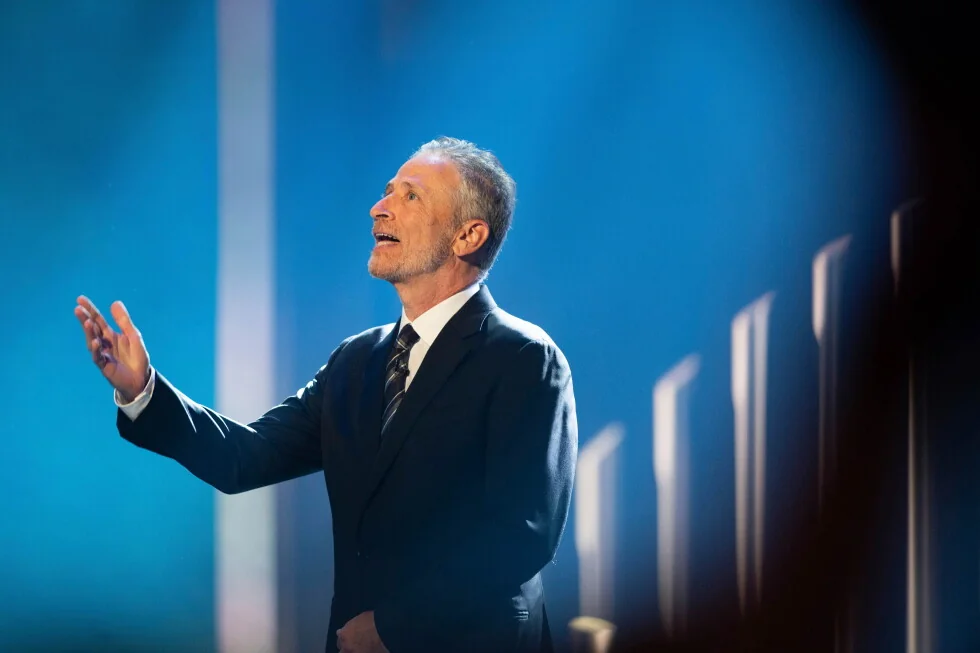
Jon Stewart erläutert seine anhaltende philanthropische Unterstützung von Ersthelfern
Jon Stewart elucidates his sustained philanthropic backing of first responders
Jon Stewart erläutert seine anhaltende philanthropische Unterstützung von Ersthelfern
Jon Stewart elucidates his sustained philanthropic backing of first responders

Kennedy Center muss vor größeren baulichen Veränderungen 30 Tage im Voraus benachrichtigen, entscheidet Richter
Kennedy Center Must Give 30 Days’ Notice Before Major Physical Changes, Judge Rules
Kennedy Center muss vor größeren baulichen Veränderungen 30 Tage im Voraus benachrichtigen, entscheidet Richter
Kennedy Center Must Give 30 Days’ Notice Before Major Physical Changes, Judge Rules
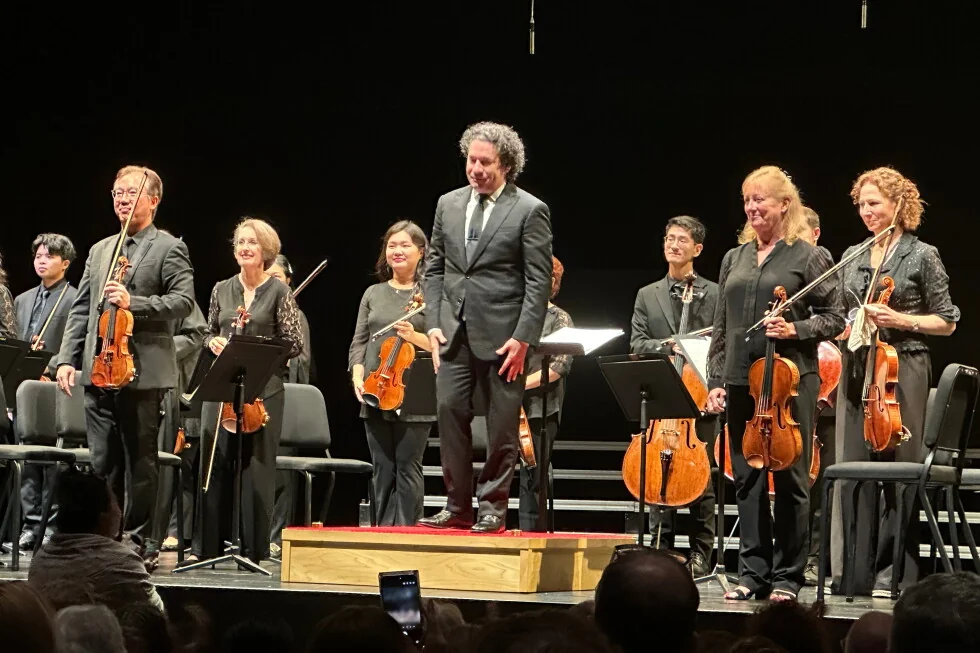
Von LA Acclaim nach New York: Gustavo Dudamels nächster Schritt
From LA Acclaim to New York: Gustavo Dudamel's Next Movement
Von LA Acclaim nach New York: Gustavo Dudamels nächster Schritt
From LA Acclaim to New York: Gustavo Dudamel's Next Movement
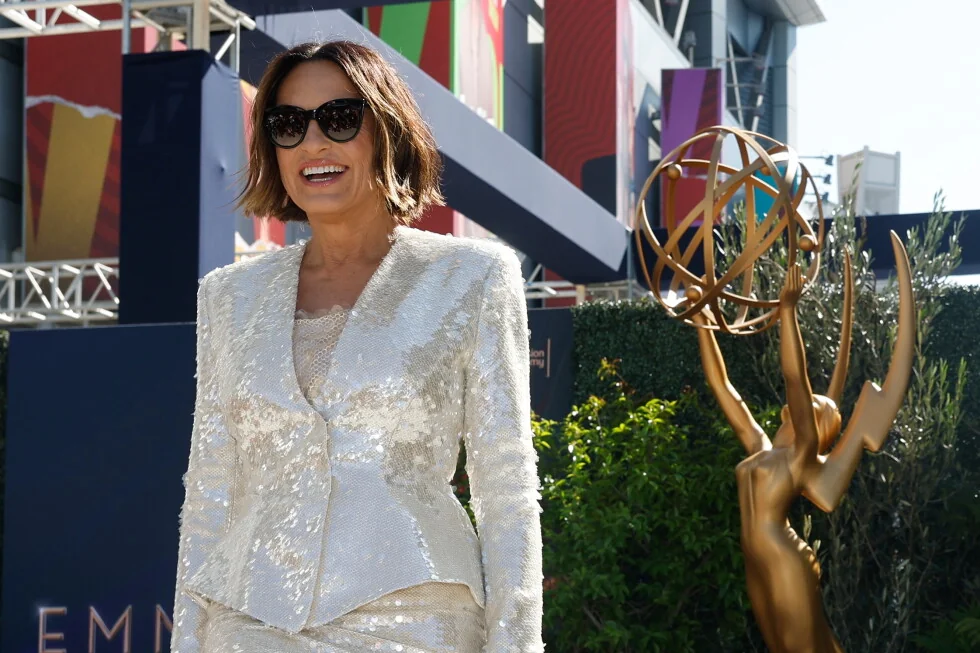
„The Pitt“ strebt nach einer Zugabe, während „Widow’s Bay“ bei den Emmy Awards einen epischen Durchmarsch bedroht
‘The Pitt’ seeks encore as ‘Widow’s Bay’ threatens an epic sweep at the Emmy Awards
„The Pitt“ strebt nach einer Zugabe, während „Widow’s Bay“ bei den Emmy Awards einen epischen Durchmarsch bedroht
‘The Pitt’ seeks encore as ‘Widow’s Bay’ threatens an epic sweep at the Emmy Awards
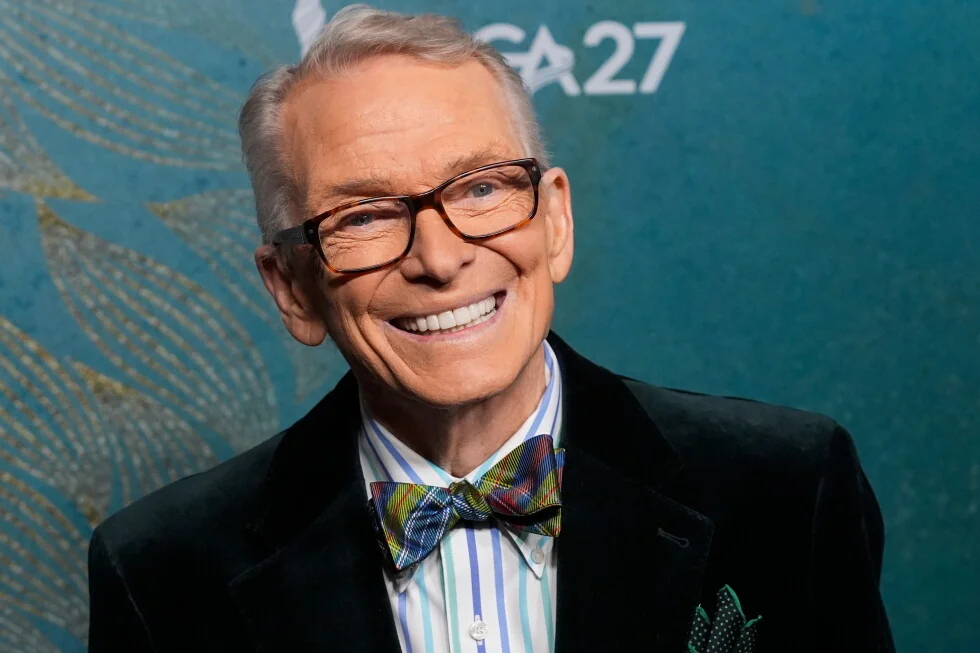
Bob Mackie, Couturier der Stars, der Cher und Marilyn einkleidete und den Glamour der 70er Jahre verkörperte, stirbt mit 87
Bob Mackie, couturier to the stars who garbed Cher and Marilyn and epitomized ’70s glamour, dies at 87
Bob Mackie, Couturier der Stars, der Cher und Marilyn einkleidete und den Glamour der 70er Jahre verkörperte, stirbt mit 87
Bob Mackie, couturier to the stars who garbed Cher and Marilyn and epitomized ’70s glamour, dies at 87

Filmkritik: „Practical Magic 2“ hätte dem ursprünglichen Zauberbuch treu bleiben sollen
Movie Review: ‘Practical Magic 2' ought to have remained faithful to the original spell book
Filmkritik: „Practical Magic 2“ hätte dem ursprünglichen Zauberbuch treu bleiben sollen
Movie Review: ‘Practical Magic 2' ought to have remained faithful to the original spell book

Vier Renoirs aus französischem Museum gestohlen; zwei Werke bleiben weiterhin unauffindbar.
Four Renoirs stolen from French museum; two works remain unaccounted for.
Vier Renoirs aus französischem Museum gestohlen; zwei Werke bleiben weiterhin unauffindbar.
Four Renoirs stolen from French museum; two works remain unaccounted for.

Elon-Musk-Dokumentarfilm und Penélope-Cruz–Javier-Bardem-Thriller feiern Premiere in Venedig
Elon Musk documentary and Penélope Cruz–Javier Bardem thriller premiere at Venice
Elon-Musk-Dokumentarfilm und Penélope-Cruz–Javier-Bardem-Thriller feiern Premiere in Venedig
Elon Musk documentary and Penélope Cruz–Javier Bardem thriller premiere at Venice

Geschworene sprechen einen Mann des Mordes ersten Grades im Fall der Tötung des Rap-Ikonen Tupac Shakur im Jahr 1996 schuldig.
Jury convicts a man of first-degree murder in the 1996 slaying of rap icon Tupac Shakur
Geschworene sprechen einen Mann des Mordes ersten Grades im Fall der Tötung des Rap-Ikonen Tupac Shakur im Jahr 1996 schuldig.
Jury convicts a man of first-degree murder in the 1996 slaying of rap icon Tupac Shakur