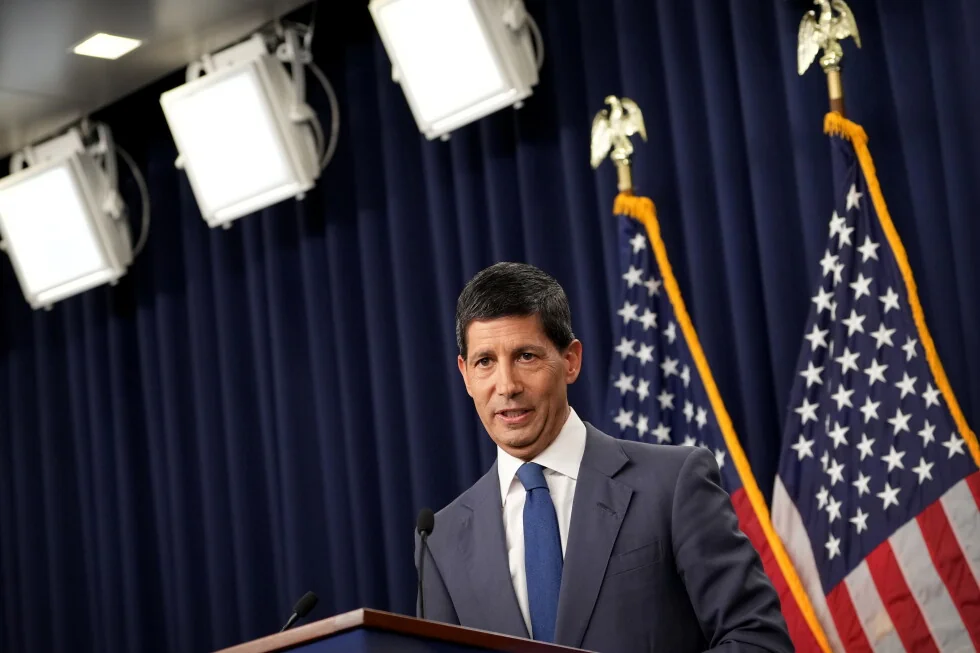
El recién nombrado presidente de la Reserva Federal, Kevin Warsh, enfrenta una presión creciente para esclarecer su postura sobre la inflación y la política monetaria.
August 27th, 2026
El recién nombrado presidente de la Reserva Federal, Kevin Warsh, enfrenta una presión creciente para esclarecer su postura sobre la inflación y la política monetaria.
🇪🇸 Español
The newly installed Federal Reserve Chair, Kevin Warsh, has effected a pronounced transformation in the central bank's communicative approach, exhibiting a markedly more laconic stance than his predecessors regarding both economic conditions and inflationary pressures.
Nevertheless, a considerable contingent of economists and Wall Street investors have thus far evinced scant enthusiasm for that particular stratagem.
On Friday, Warsh is afforded a pivotal opportunity to assuage those apprehensions and reaffirm his credentials as a stalwart opponent of inflation, when he delivers his address in Jackson Hole, Wyoming, at the Federal Reserve’s annual economic symposium.
What economists and Wall Street analysts alike fervently anticipate is an unequivocal indication of his stance on how the Federal Reserve ought to navigate the persistently intractable inflation that has engendered pervasive despondency among a vast swath of consumers.
During his most recent press conference, he obfuscated matters by evading repeated inquiries as to whether the Fed would raise its benchmark interest rate should inflation remain elevated.
Warsh has stated that he is disinclined to offer what analysts term "forward guidance" regarding whether the Federal Reserve will raise, lower, or maintain interest rates at forthcoming meetings.
He contends that such guidance constrains the Fed's operational latitude by binding it to a predetermined policy trajectory.
Moreover, he posits that financial markets have grown excessively reliant upon this form of directional communication.
Nevertheless, certain economists contend that he could expound more extensively upon his perspectives regarding Federal Reserve policy without divulging his intentions concerning prospective maneuvers.
“What he must do is delineate the conceptual framework he intends to bring to the conduct of monetary policy,” remarked David Wilcox, a senior fellow at the Peterson Institute for International Economics.
“He has declined to furnish even that modicum of elucidation.”
Whether Warsh will deliver that clarification on Friday remains an open question.
Last month, he indicated his intention for the speech to center on the “big questions,” encompassing artificial intelligence and productivity, demographic shifts, and the global economy’s resilience in the face of shocks emanating from the Iran war.
The manner in which Warsh and the Federal Reserve will contend with elevated prices is not solely a matter of concern for Wall Street.
Although inflation has moderated following its surge in May and June, precipitated by higher gasoline costs, it continues to exceed the central bank's 2% target.
Polls indicate that a majority of Americans still regard the affordability of essential commodities—such as fuel, provisions, and housing—as the paramount economic concern as the midterm elections approach.
Notably, interest rates ascended when Warsh last addressed the press at a July 29 conference, thereby elevating mortgage borrowing costs following the Federal Reserve's decision to maintain its benchmark rate unchanged.
“Warsh effectively forfeited his market standing while speaking,” remarked Gennadiy Goldberg, head of U.S. rates strategy at TD Securities.
“He persisted in emphasizing the imperative of curbing inflation,” yet when pressed by reporters on the mechanisms he would employ to realize that objective, “he failed to furnish a substantive response.”
Warsh did convey to reporters that “any central banker... is more inclined” to raise rates “when he or she sees underlying inflation moving higher,” a sentiment that some economists deemed broadly consistent with the overarching trajectory they had anticipated.
However, Warsh has remained reticent regarding whether he genuinely perceives an exacerbation of "underlying inflation," or precisely which metrics he employs to ascertain this.
When queried about the benchmark he would utilize to determine whether inflation has attained the 2% target, he referenced the Federal Reserve's prevailing preferred gauge—the personal consumption expenditures price index—yet subsequently intimated that this metric might be subject to revision in the forthcoming year, contingent upon the recommendations proffered by the task forces he has convened to scrutinize matters such as data sources and inflationary dynamics.
When queried on whether he would endorse elevated interest rates to counter persistent inflation, he responded that they “could well be part of that solution,” yet cautioned, “I wouldn’t say it’s in isolation.”
Certain observers within the Federal Reserve interpreted this as an indication that he might contemplate alternative measures, such as diminishing the Fed’s substantial portfolio of Treasury securities.
Liquidating those bonds could elevate longer-term borrowing costs, albeit over a more protracted horizon.
The maelstrom of conjecture enveloping Warsh has been further exacerbated by President Donald Trump’s persistent exhortations for diminished interest rates.
Although Trump has steadfastly defended Warsh—his appointee, who assumed office on May 22—the president has nonetheless censured other Federal Reserve officials for advocating elevated rates.
Trump has likewise redoubled his efforts to oust Federal Reserve Governor Lisa Cook, a Biden appointee.
Replacing her would afford Trump the latitude to constitute a majority of the seven-member board.
His attempt to dismiss her last year was stayed by the Supreme Court, albeit only temporarily.
“Politics are compounding the Federal Reserve’s credibility deficit,” Diane Swonk, chief economist at KPMG, wrote in a recent commentary.
“That is precisely why his address later this month carries such weight.
It affords Warsh a pivotal occasion to demonstrate both his own and the Fed’s insulation from political encroachment.”
Economists contended that articulating a more perspicuous exposition of his prospective stewardship of the Federal Reserve would necessitate minimal exertion—merely a more unequivocal delineation of the institution's potential responses should inflationary pressures persist.
“None of this constitutes radicalism,” remarked Wilcox, who additionally serves as director of research at Bloomberg Economics.
“The crux of the matter is that he has articulated none of it, and a growing sense of disquiet is taking hold as people observe his reluctance to voice even ostensibly straightforward reflections.”
Should Warsh succeed in mitigating some of these apprehensions, long-dated yields might ease marginally.
These rates have ascended steadily over recent weeks, propelled by a confluence of factors—among them, the escalating fiscal deficits of the U.S. government and the prodigious borrowing undertaken by technology corporations erecting artificial intelligence infrastructure.
The yield on the 30-year Treasury bond ascended to its loftiest level in nearly two decades last week, precipitating an unconventional intervention by Treasury Secretary Scott Bessent, who initiated a bond repurchase program in a bid to suppress yields.
When Warsh takes the podium on Friday, "I think just yields not rising would be a victory," observed Derek Tang, an economist at Monetary Policy Analytics, a consulting firm.
August 27th, 2026
Trending Articles
Warren Buffett cede la presidencia de Berkshire Hathaway y avanza su plan de sucesión
Warren Buffett relinquishes Berkshire Hathaway chairmanship, advancing his succession plan
Warren Buffett cede la presidencia de Berkshire Hathaway y avanza su plan de sucesión
Warren Buffett relinquishes Berkshire Hathaway chairmanship, advancing his succession plan
Trump intensifica su ofensiva contra los medios y promete vetar a CNN, MS NOW y Politico en la Casa Blanca
Trump escalates media offensive, vowing to bar CNN, MS NOW and Politico from the White House
Trump intensifica su ofensiva contra los medios y promete vetar a CNN, MS NOW y Politico en la Casa Blanca
Trump escalates media offensive, vowing to bar CNN, MS NOW and Politico from the White House
El Banco de Japón eleva su tasa de referencia al 1,25 %, un máximo de 31 años
Bank of Japan Lifts Benchmark Rate to 1.25%, a 31-Year Peak
El Banco de Japón eleva su tasa de referencia al 1,25 %, un máximo de 31 años
Bank of Japan Lifts Benchmark Rate to 1.25%, a 31-Year Peak

Anthropic afirma que Claude es fundamental para desarrollar su propio sucesor
Anthropic claims Claude is instrumental in developing its own successor
Anthropic afirma que Claude es fundamental para desarrollar su propio sucesor
Anthropic claims Claude is instrumental in developing its own successor
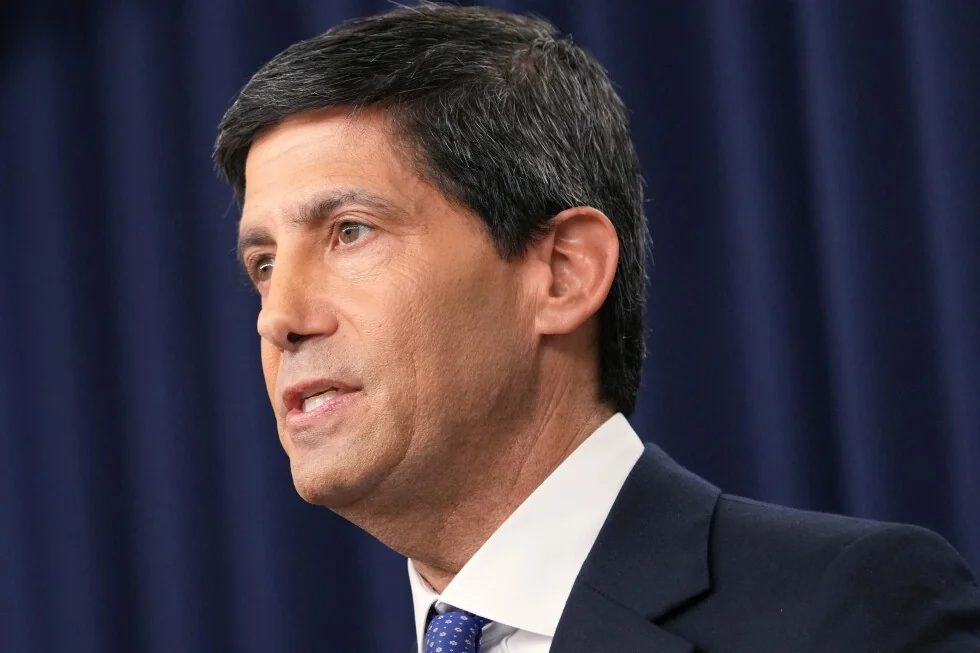
Por qué la Reserva Federal sube los tipos ahora — y qué augura
Why the Federal Reserve is raising rates now — and what it portends
Por qué la Reserva Federal sube los tipos ahora — y qué augura
Why the Federal Reserve is raising rates now — and what it portends
Las acciones estadounidenses se disparan hasta máximos de seis semanas mientras el petróleo y los rendimientos de los bonos retroceden
US equities surge to six-week peak as oil and bond yields retreat
Las acciones estadounidenses se disparan hasta máximos de seis semanas mientras el petróleo y los rendimientos de los bonos retroceden
US equities surge to six-week peak as oil and bond yields retreat
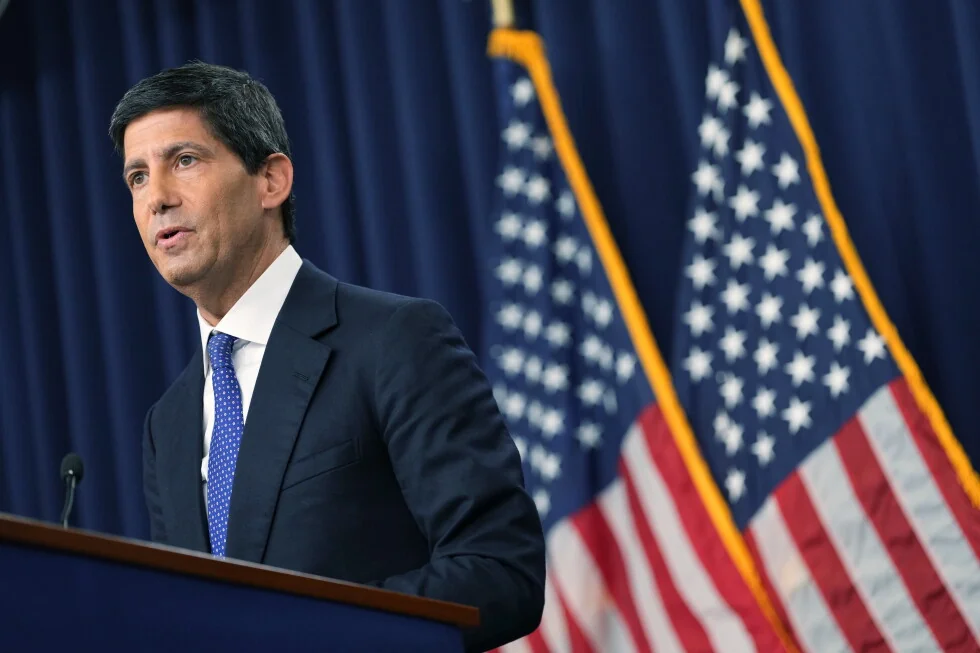
La Fed sube los tipos de interés por primera vez en 3 años, desafiando las exigencias de recorte de Trump
Fed hikes key rate for 1st time in 3 years, flouting Trump's cut demands
La Fed sube los tipos de interés por primera vez en 3 años, desafiando las exigencias de recorte de Trump
Fed hikes key rate for 1st time in 3 years, flouting Trump's cut demands
Las solicitudes de desempleo se desploman a 196.000, la cifra más baja desde mediados de julio en medio de mínimos sostenidos de despidos
Unemployment Claims Plummet to 196,000, Lowest Since Mid-July Amid Sustained Layoff Lows
Las solicitudes de desempleo se desploman a 196.000, la cifra más baja desde mediados de julio en medio de mínimos sostenidos de despidos
Unemployment Claims Plummet to 196,000, Lowest Since Mid-July Amid Sustained Layoff Lows
Trump denuncia los riesgos de la IA como una «farsa» y alega una «ENFERMIZA conspiración» contra la IA y los centros de datos
Trump denounces AI risks as ‘hoax,’ alleges ‘SICK conspiracy’ against AI and data centers
Trump denuncia los riesgos de la IA como una «farsa» y alega una «ENFERMIZA conspiración» contra la IA y los centros de datos
Trump denounces AI risks as ‘hoax,’ alleges ‘SICK conspiracy’ against AI and data centers

El Tribunal Supremo decidirá si admite el recurso de un pescador de langostas de Maine contra el mandato de rastreo por GPS en embarcaciones
Supreme Court to Determine Whether to Hear Maine Lobsterman’s Challenge to GPS Boat Tracker Mandate
El Tribunal Supremo decidirá si admite el recurso de un pescador de langostas de Maine contra el mandato de rastreo por GPS en embarcaciones
Supreme Court to Determine Whether to Hear Maine Lobsterman’s Challenge to GPS Boat Tracker Mandate