
ホルムズ海峡再開:終わらぬイラン戦争のなかでのアメリカ合衆国の前進
September 11th, 2026
ホルムズ海峡再開:終わらぬイラン戦争のなかでのアメリカ合衆国の前進
🇯🇵 日本語
In recent weeks, the United States has succeeded in loosening Iran’s grip over the Strait of Hormuz while virtually shutting down Iran’s own oil exports, thereby accelerating its economic free fall.
Yet the war launched by the U.S. and Israel in February — envisaged as a matter of but a few weeks — remains far from concluded, and the ensuing stalemate exacts a heavy toll on both belligerents.
An accord brokered in June swiftly disintegrated, and no indications of diplomatic headway have since materialised.
Low-intensity hostilities endure, and the U.S. appears bereft of any exit strategy.
The escalating economic strictures upon Iran have yet to foment an insurrection, and should its leadership be driven into a corner, they may well elect military escalation over capitulation.
Their Houthi confederates in Yemen, in the interim, have intensified their assaults upon Saudi Arabia, thereby helping to propel oil prices upward once more.
The per-barrel price of Brent crude — the international benchmark — soared past $100 this week, while diesel, a fuel indispensable to transport and agriculture, reached a record high, threatening to reignite inflationary pressures.
U.S. President Donald Trump has conceded that gasoline prices are liable to remain elevated through the midterm congressional elections.
"Regrettably, the United States is not prevailing in its war with Iran, notwithstanding its circumscribed success in attenuating Tehran's stranglehold over the strait and the deleterious ramifications for Iran's economy," observed Mona Yacoubian, a Middle East specialist at the Center for Strategic and International Studies in Washington.
Iran evinces no inclination to capitulate; on the contrary, it has manifested a readiness not merely to retaliate but to escalate wherever circumstances permit.
The conflict is liable to prove protracted, with no decisive victor in sight.
Iran effectively shuttered the Strait of Hormuz — the conduit through which a fifth of the world's traded oil and gas passes in peacetime — in the war's opening days, wielding the global economic shock as leverage.
Concurrently, it persisted in exporting its own oil, chiefly to China.
Yet in recent weeks, that equilibrium has inverted: a U.S. blockade has all but extinguished Iran’s exports, whilst the American military has abetted expanded exports by Gulf states, according to figures compiled by Homayoun Falakshahi, an oil analyst at Kpler, a global trade monitor.
He ascertained that Iran’s oil exports had plummeted from 1.85 million barrels a day the previous spring to approximately 255,000 by August.
Exports of non-Iranian oil, meanwhile, surged from 300,000 barrels a day at the war’s zenith to 8.4 million in September, with exports via alternative routes elevating that figure to 10.8 million.
U.S. Energy Secretary Chris Wright, on Sunday, made a point of adducing comparable figures, contending that “we’re probably two-thirds or more of preconflict flows.”
According to Falakshahi, non-Iranian exports had stood at approximately 14 million barrels a day prior to the war.
Yet the augmented throughput hinges upon a substantial U.S. deployment to the strait—one that has already stretched the military’s resources to their limits.
The unpopular war has cost American taxpayers in excess of $37.5 billion and claimed the lives of 18 U.S. service members, and it is anticipated to weigh heavily upon Republicans in November’s election.
The intensified blockade, compounded by freshly imposed U.S. sanctions, is already exacting a severe toll on Iran's economy, propelling prices upward and giving rise to ever-lengthening queues outside gas stations.
Yet thus far, it has evinced no indication of impelling the nation's progressively intransigent leadership to yield concessions regarding the Strait of Hormuz, Iran's contested nuclear programme, or its backing of armed factions throughout the region.
“Washington’s cardinal predicament resides in its enduring want of a theory of victory: ever more vessels are slipping through, and Iran is palpably suffering, and yet none of this has yielded a political denouement,” observed Ali Vaez, a specialist on Iran at the International Crisis Group think tank.
Iran has persisted in mounting attacks on vessels traversing the strait, eliciting only circumscribed U.S. strikes upon its coastal regions and subsequently retaliating with missile assaults targeting Arab nations that host American forces.
Trump recently dismissed the conflict as “small potatoes.”
Yet with the American stockpile of sophisticated interceptors betraying signs of strain, Iran might be tempted to escalate its attacks — or to retaliate through regional proxies.
This week, the Iran-backed Houthis unleashed a barrage of attacks upon Saudi oil facilities, the latest escalation in a conflict whose origins predate the past decade by some margin yet which has intensified markedly in recent weeks.
The Houthis are likewise targeting Saudi shipping, imperilling both its oil exports and a vital trade artery traversing the Bab el-Mandeb chokepoint that leads to the Red Sea and the Suez Canal.
The Houthis have inflicted damage upon Saudi Arabia’s Jizan refinery—a substantial purveyor of diesel and jet fuel to Europe—Falakshahi said.
The volume of Saudi oil transiting the Bab el-Mandeb en route to Asia has plummeted from approximately 3.4 million barrels per day in June to a mere 128,000 in August, according to Kpler’s figures, though it has rebounded marginally to some 700,000 barrels per day in September.
“Tehran has repeatedly signaled that it will respond to growing U.S. pressure by moving up the escalation ladder, not by backing down,” Danny Citrinowicz, a senior researcher at Israel’s Institute for National Security Studies and a former Israeli intelligence officer focused on Iran, wrote on X.
“Iran will not simply acquiesce to an indefinite maritime blockade, nor will it permit Washington to impose escalating economic costs without exacting costs of its own,” he wrote.
Krauss reported from the Middle East for upwards of two decades, with postings in Cairo, Jerusalem and Baghdad.
September 11th, 2026
Trending Articles
EUのカナダに対する「準加盟国」提案:潜在的な影響
The EU’s “associate member” overture to Canada: potential implications
EUのカナダに対する「準加盟国」提案:潜在的な影響
The EU’s “associate member” overture to Canada: potential implications

ホワイトハウスは、トランプ氏が来週ニューヨークでベネズエラのデルシー・ロドリゲス暫定大統領と会談すると発表した。
Trump to convene with Venezuelan acting President Delcy Rodríguez in New York next week, White House announces
ホワイトハウスは、トランプ氏が来週ニューヨークでベネズエラのデルシー・ロドリゲス暫定大統領と会談すると発表した。
Trump to convene with Venezuelan acting President Delcy Rodríguez in New York next week, White House announces
ロシアの戦時経済は債務と軍事支出による長期的な侵食に直面している
Russia’s Wartime Economy Faces Long-Term Erosion from Debt and Military Spending
ロシアの戦時経済は債務と軍事支出による長期的な侵食に直面している
Russia’s Wartime Economy Faces Long-Term Erosion from Debt and Military Spending

ロシア、議会選挙で3日間の投票を開始、クレムリンの権力固めの様相
Russia Embarks on Three Days of Voting in Parliamentary Election Poised to Entrench Kremlin’s Power
ロシア、議会選挙で3日間の投票を開始、クレムリンの権力固めの様相
Russia Embarks on Three Days of Voting in Parliamentary Election Poised to Entrench Kremlin’s Power
アメリカ合衆国は、戦時下の敵対関係にもかかわらず、国連ハイレベル会合のためにイランの最高指導者らにビザを付与した。
US grants visas to top Iranian leaders for UN high-level meeting despite wartime hostilities
アメリカ合衆国は、戦時下の敵対関係にもかかわらず、国連ハイレベル会合のためにイランの最高指導者らにビザを付与した。
US grants visas to top Iranian leaders for UN high-level meeting despite wartime hostilities
国連支援の専門家らは、イラン攻撃における潜在的なアメリカ合衆国の戦争犯罪を主張
UN-backed experts allege potential US war crimes in Iran strikes
国連支援の専門家らは、イラン攻撃における潜在的なアメリカ合衆国の戦争犯罪を主張
UN-backed experts allege potential US war crimes in Iran strikes
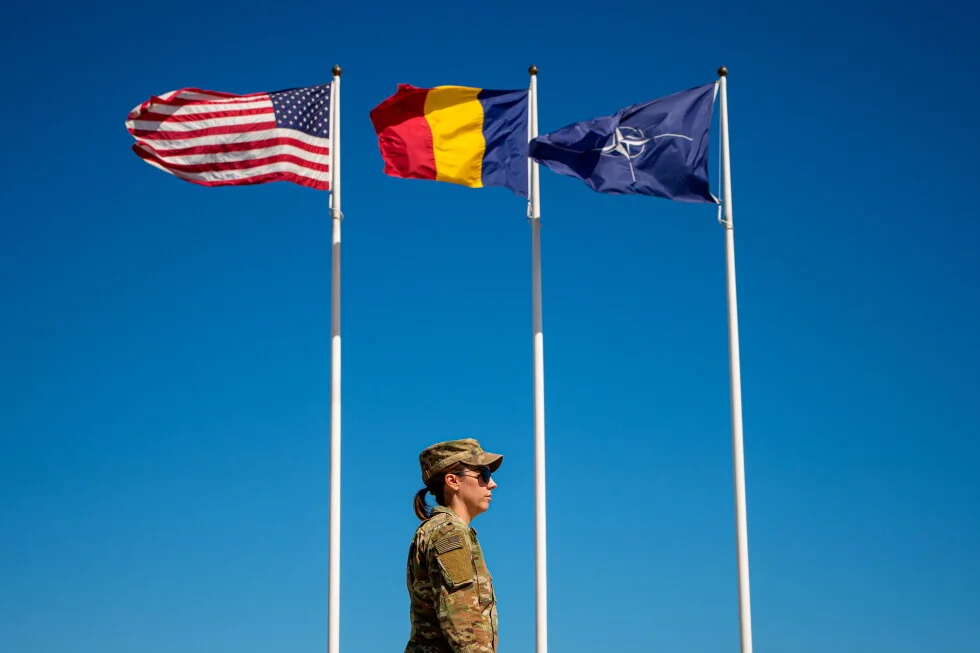
ルーマニア国境沿いの住民、ドローン警報の激化に警戒を強める
Romanian Border Residents Alarmed as Drone Alerts Escalate
ルーマニア国境沿いの住民、ドローン警報の激化に警戒を強める
Romanian Border Residents Alarmed as Drone Alerts Escalate
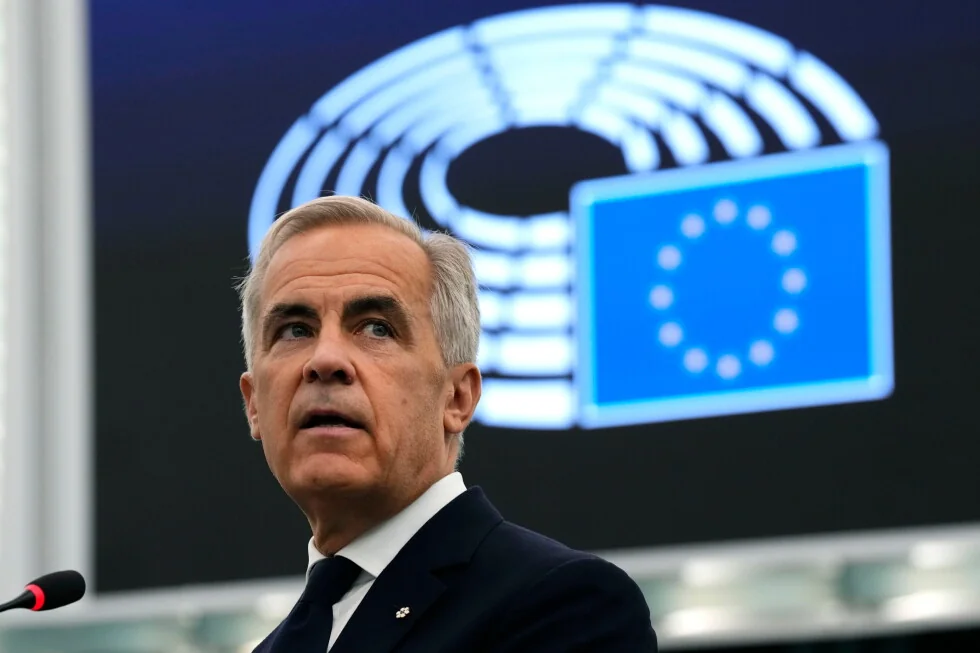
カーニー、EU準加盟提案を受け入れる――トランプがカナダをヨーロッパへと押しやる中で
Carney Embraces EU Associate Membership Proposal as Trump Propels Canada Toward Europe
カーニー、EU準加盟提案を受け入れる――トランプがカナダをヨーロッパへと押しやる中で
Carney Embraces EU Associate Membership Proposal as Trump Propels Canada Toward Europe

ナイジェリア人6名、ロマンス詐欺で女性から600万ドルを騙し取った容疑でアメリカ合衆国へ身柄引き渡し
Six Nigerians Extradited to US for Defrauding Women of $6M in Romance Scams
ナイジェリア人6名、ロマンス詐欺で女性から600万ドルを騙し取った容疑でアメリカ合衆国へ身柄引き渡し
Six Nigerians Extradited to US for Defrauding Women of $6M in Romance Scams