
Metaの子ども向け新ルール:より厳しい利用時間制限と深夜0時の遮断、しかし批評家らは不十分と断じる。
August 27th, 2026
Metaの子ども向け新ルール:より厳しい利用時間制限と深夜0時の遮断、しかし批評家らは不十分と断じる。
🇯🇵 日本語
Minors will soon encounter a sweeping array of modifications to their Instagram and Facebook usage, consequent to a landmark $18 billion settlement that Meta Platforms concluded with 48 U.S. states on Wednesday.
Beyond the pecuniary remuneration, which is to be disbursed incrementally over a ten-year period, Meta has consented to refine its age-verification methodologies to preclude children under thirteen from accessing its platforms, whilst ensuring adolescents are confined to age-appropriate accounts; to impose a stringent two-hour daily usage cap for minors; to prohibit access to the applications between midnight and six in the morning; and to obscure "like" tallies, among a panoply of additional modifications.
Meta has declared that the newly implemented protective measures will be confined exclusively to the United States, with the preponderance of these stipulations scheduled to persist for a full decade.
While acknowledging that these measures surpass any child-safety initiative Meta has previously undertaken, critics and child-advocacy groups contend that such steps will scarcely redress the company's multifarious and deeply entrenched deficiencies in the immediate term.
Arturo Béjar, a former Meta engineering director, extolled the settlement as a 'significant milestone,' yet admonished that parents ought not to perceive Instagram as having been rendered inherently safe for children.
“The agreement is fundamentally flawed in that it grants Meta the prerogative to define harm,” Béjar remarked in an interview on Wednesday.
“It is one thing to assert, ‘Indeed, you are permitted merely two hours of alcohol or two hours of cigarettes per day,’ yet the deleterious impact remains unabated, contingent upon the nature of the content being disseminated.”
Béjar, the first witness to testify during the federal trial aborted by the settlement, wishes to see Meta confront the ramifications of content recommendations for adolescents, which he contends can prove habit-forming.
Although teenagers may set aside their devices upon reaching the two-hour threshold, they can experience considerable distress in doing so, as the platform's architecture is deliberately engineered to leave them perpetually desirous of more.
Meta indicated that individuals over the age of 18 may likewise avail themselves of discrete iterations of the newly introduced controls—such as daily time-limit reminders—yet no provision exists for them to subscribe to the comprehensive parameters governing the adolescent experience on the platform.
To safeguard minors, Meta must first ascertain their true identities.
Although the company has already deployed artificial intelligence to detect whether children are misrepresenting their age—either to circumvent the prohibition on under-13 registration or to gain access to adult accounts while aged 13 to 17—this mechanism has proven fallible.
Pursuant to the proposed settlement, Meta has committed to augmenting its age-verification technology through a combination of proprietary and third-party instruments, subject to periodic independent audits assessing its efficacy.
The accord further delineates specific benchmarks concerning false-positive rates—namely, instances in which minors are erroneously classified as over 18.
Moreover, should a user be identified as under 13 and subsequently expelled from the platforms, Meta will extend its age-verification protocols to encompass that individual's network of friends.
"The age assurance section is commendably robust, as it integrates quantifiable metrics, autonomous verification, and clearly delineated targets," Béjar observed.
"For I maintain that Meta's performance should be assessed on the basis of tangible outcomes, rather than on the mere expenditure of effort."
Meta stipulates that individuals must have attained the age of thirteen years prior to the establishment of an account, a mandate that is consonant with federal legislation enacted to safeguard the privacy of minors.
In his testimony last week, Béjar contended that Meta had espoused a policy of 'don't ask, don't tell' with respect to minors under the age of thirteen on its platforms.
“Meta possesses one of the most sophisticated infrastructures globally for detecting fraudulent accounts,” he remarked.
Nevertheless, he conceded, there existed “no objectives, no metrics” for identifying and verifying the ages of minors suspected to be under 13.
Critics have censured Meta for a multitude of its safety provisions that necessitate manual activation by users, or which they must elect to enable themselves.
Among the myriad safeguards enumerated in the settlement, the majority are activated by default.
This encompasses the two-hour time limit, which can only be deactivated with parental consent, in addition to the night mode that precludes usage between midnight and 6 a.m.
Nevertheless, under the terms of the agreement, additional functionalities—such as disabling video autoplay or presenting posts in chronological sequence rather than permitting algorithms to determine the content displayed to children perusing their feeds—will be offered on an opt-in basis.
Josh Golin, executive director of the online safety nonprofit Fairplay, contended that the agreement appeared unduly preoccupied with equipping parents with tools, rather than curtailing inherently harmful features altogether.
We are profoundly disheartened that the settlement fails to disable, by default, the recommendation algorithms that facilitate contact between minors and predatory individuals, propelling young users into perilous echo chambers of escalating harm, Golin remarked.
During the trial earlier this week, deliberations concerning default settings surfaced when counsel representing the coalition of states pursuing litigation against Meta interrogated Adam Mosseri, Instagram's chief, regarding the notably scant uptake of the "take a break" feature among adolescents—a mechanism designed to prompt users to disengage following prolonged scrolling.
A minuscule proportion of adolescents availed themselves of the feature upon its initial introduction by Instagram; however, subsequent to the 2021 launch of distinct accounts for minors, Meta has established it as the default setting for underage users.
Nevertheless, in the event that a minor harbored no inclination to observe the intermission, they could simply dismiss the notification with a mere swipe.
Some researchers have ascertained that numerous protective measures previously deployed by Meta prove ineffectual or fail to operate as claimed.
“It is, regrettably, somewhat premature to ascertain with certainty whether all the transformations we aspire to witness will indeed materialize,” remarked Yaël Eisenstat, director of policy and impact for the Cybersafety Research Center, which recently conducted a comprehensive audit of dozens of safety mechanisms offered by both Meta and other social media platforms, concluding that the majority fell short of expectations.
Nevertheless, Eisenstat contended that Wednesday's settlement stands as a landmark, demonstrating that viable alternatives to the prevailing paradigm are indeed attainable.
For years, Meta “decided to go against the advice of some of their own internal employees and continue to ignore the fact that these design features were unsafe in search of profit,” said Eisenstat, who also previously worked at Meta, then Facebook, before leaving the company in 2019.
The measures outlined Wednesday at the very least show that there are technically-feasible options that can make the platform safer, she said — something whistleblowers and others have already “been saying very loudly.”
Echoing his peers, Eisenstat underscored that considerable work remained — and that its completion would demand a confluence of technological innovation, market dynamics, and governmental oversight.
“There is no panacea that will rectify this multifarious predicament,” she remarked.
“I am merely gratified that we are, at long last, making some modicum of progress.”
The settlement, which encompasses the District of Columbia and U.S. territories as well, remains contingent upon judicial ratification.
August 27th, 2026
Trending Articles
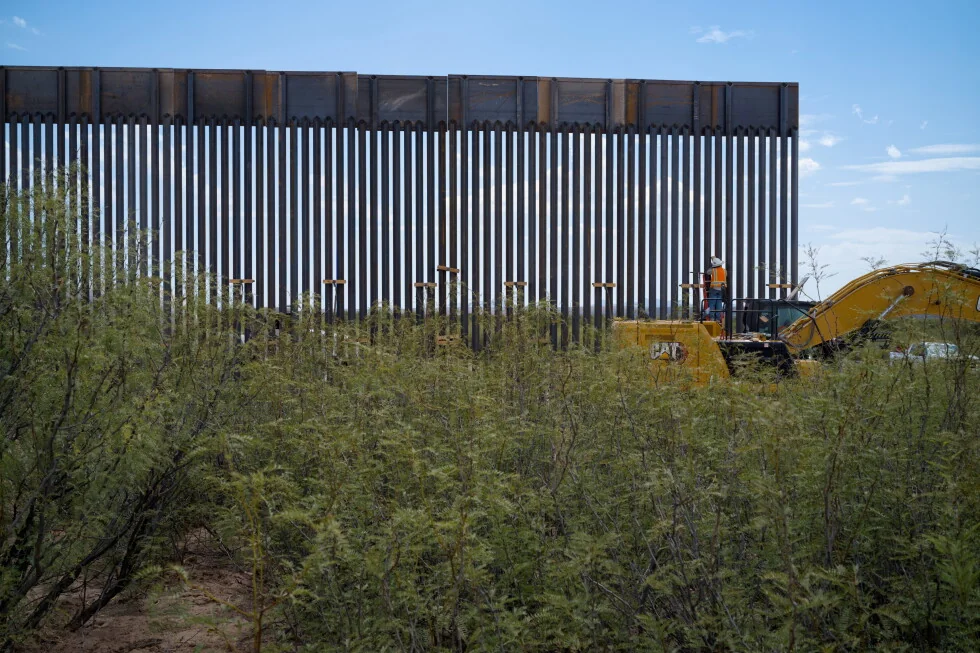
トランプ政権、テキサス州ビッグベンド地域で国境壁の建設を開始
Trump Administration Commences Border Wall Construction in Texas’ Big Bend Region
トランプ政権、テキサス州ビッグベンド地域で国境壁の建設を開始
Trump Administration Commences Border Wall Construction in Texas’ Big Bend Region
ICE職員、ミネアポリスでの致死に至らなかった銃撃事件に関しFBIに虚偽の供述をした罪で無罪を主張
ICE officer pleads not guilty to charges of lying to FBI about nonfatal Minneapolis shooting
ICE職員、ミネアポリスでの致死に至らなかった銃撃事件に関しFBIに虚偽の供述をした罪で無罪を主張
ICE officer pleads not guilty to charges of lying to FBI about nonfatal Minneapolis shooting
クランシー陪審員は、我が子の死における彼女の責任に関して「いかなる疑念」も抱かなかった
Clancy Juror Held No "Any Doubts" Regarding Her Culpability in Her Children's Deaths
クランシー陪審員は、我が子の死における彼女の責任に関して「いかなる疑念」も抱かなかった
Clancy Juror Held No "Any Doubts" Regarding Her Culpability in Her Children's Deaths
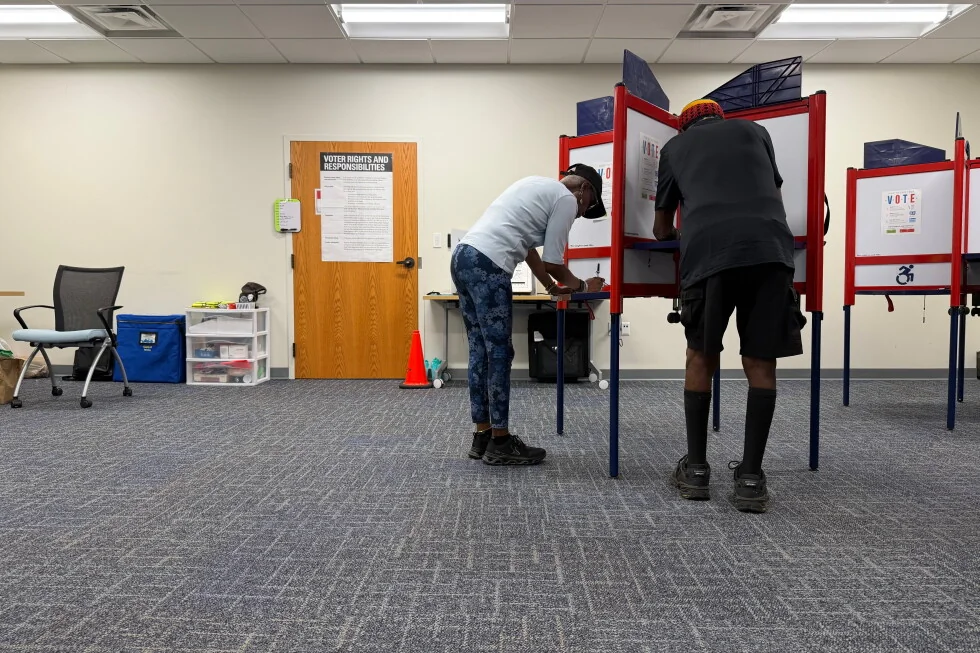
米国中間選挙で早期投票が開始、議会支配の逆転が視野に
Early Voting Commences in US Midterms Poised to Flip Congressional Control
米国中間選挙で早期投票が開始、議会支配の逆転が視野に
Early Voting Commences in US Midterms Poised to Flip Congressional Control

ロサンゼルスのニュースヘリコプターが、「空飛ぶ目」報道の発祥地——そしておそらくその震源地——で墜落
LA news helicopter crashes in birthplace—and arguable epicenter—of ‘eye-in-the-sky’ reporting
ロサンゼルスのニュースヘリコプターが、「空飛ぶ目」報道の発祥地——そしておそらくその震源地——で墜落
LA news helicopter crashes in birthplace—and arguable epicenter—of ‘eye-in-the-sky’ reporting

アメリカ南部における黒人に対する絞首刑:国家のリンチの歴史を痛烈に想起させるもの
Hangings of Black People in the US South: A Stark Reminder of the Nation’s Lynching History
アメリカ南部における黒人に対する絞首刑:国家のリンチの歴史を痛烈に想起させるもの
Hangings of Black People in the US South: A Stark Reminder of the Nation’s Lynching History

ミネアポリスでの非致死的一斉射撃事件で偽証罪と暴行罪に問われたICE職員に保釈が認められる
Bail Granted for ICE Officer Accused of Perjury and Assault in Minneapolis Non-Fatal Shooting
ミネアポリスでの非致死的一斉射撃事件で偽証罪と暴行罪に問われたICE職員に保釈が認められる
Bail Granted for ICE Officer Accused of Perjury and Assault in Minneapolis Non-Fatal Shooting
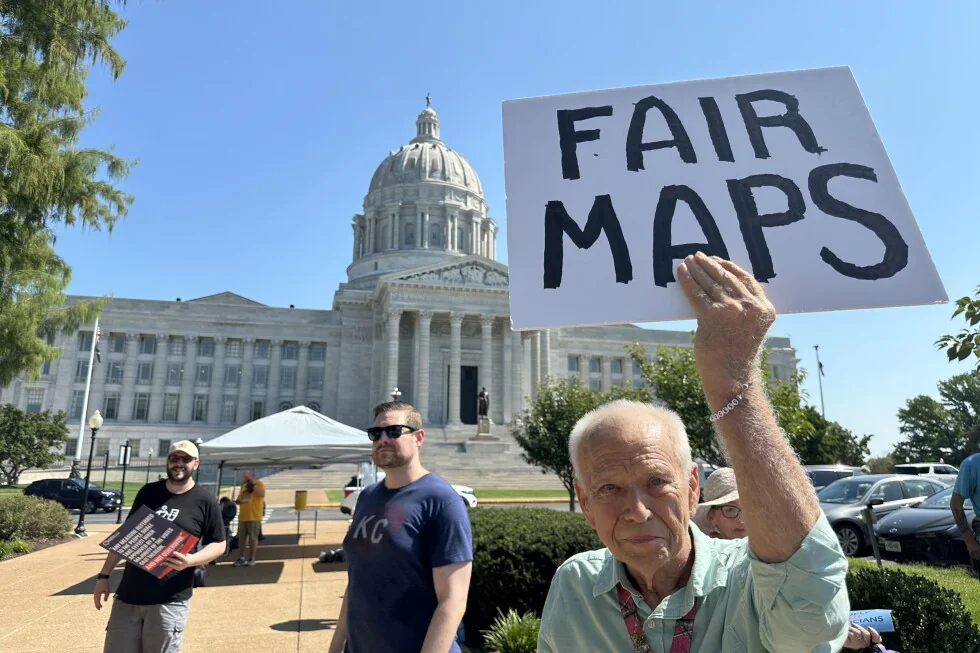
連邦最高裁の阻止にもかかわらず、控訴裁判所はトランプ支持のミズーリ州議会選挙区画を審理
Appeals court weighs Trump-backed Missouri congressional map despite Supreme Court block
連邦最高裁の阻止にもかかわらず、控訴裁判所はトランプ支持のミズーリ州議会選挙区画を審理
Appeals court weighs Trump-backed Missouri congressional map despite Supreme Court block

「ビッグベンド」は、テキサス州の米墨国境沿いに位置する、リオグランデ川の大部分が画する国立公園である。
「ビッグベンド」は、テキサス州の米墨国境沿いに位置する、リオグランデ川の大部分が画する国立公園である。

ミシシッピ州の女性絞殺死事件で男が無罪を主張
Man enters not-guilty plea in Mississippi woman's hanging death
ミシシッピ州の女性絞殺死事件で男が無罪を主張
Man enters not-guilty plea in Mississippi woman's hanging death