
Entre respuestas instantáneas, los educadores abogan por dejar que los niños se esfuercen
September 11th, 2026
Entre respuestas instantáneas, los educadores abogan por dejar que los niños se esfuercen
🇪🇸 Español
When children misplace their lunch, find themselves stymied by a mathematical conundrum, or lack the wherewithal to navigate to a given destination, a parent's instinct may be to intervene forthwith.
Yet occasionally, the very problem at hand constitutes an opportunity.
Developmental experts and educators contend that children must be afforded opportunities to grapple with quotidian problems, inasmuch as the capacity to resolve them is a skill that can only be honed through sustained practice.
The parental quandary resides in discerning when to intervene and when to withdraw: a distinction obtains between shepherding children through adversity and preemptively eliminating the obstacle ere they have been afforded the opportunity to essay it themselves.
In an epoch wherein a solution—or AI-generated succour—lies mere seconds away, according children the latitude to fathom matters independently can prove a formidable undertaking.
The manifestation of independence is contingent upon a child’s age, capabilities, and circumstances; nevertheless, experts contend that it entails acquiring the capacity to plan, make decisions, solve problems, recover from mistakes and determine what to do next.
Here is how experts say parents can afford children greater opportunities to practice those skills.
This article constitutes a component of AP’s Be Well coverage, which concentrates on wellness, fitness, diet and mental health.
Read more Be Well.
Children now enjoy unprecedented access to information, whilst technology has furnished parents with an ever-expanding arsenal of means by which to monitor their offspring’s lives.
They can track their children’s whereabouts, peruse grades in real time, and email teachers at a moment’s notice.
The upshot is that parents are able to intervene before their children have had any opportunity to recognise that a problem exists, let alone to devise a solution.
There exists, however, a concomitant drawback to that very convenience, observed Dr. Dana Suskind, a professor of surgery and pediatrics at the University of Chicago and the author of the book “Human Raised.”
"I think the most important thing we can give children is not the answer, but the experience of figuring it out," Suskind said.
When parents swoop in, she said, children are deprived of opportunities to practice skills like pausing before acting, remembering what worked previously, and trying new solutions.
Should children seldom be compelled to grapple with adversity, Dr. Stephanie Carlson, director of the Institute of Child Development at the University of Minnesota, cautioned, it may engender debilitating anxiety when they are obliged to resolve matters independently.
When genuine peril arises, parents ought to intervene; yet when the stakes are comparatively modest, they can afford to pause and deliberate upon the matter collaboratively.
This might entail posing open-ended questions to one's children: What do you think?
What could happen?
How could you solve this?
What else could you try?
Permitting children to experience boredom, frustration, impatience or anxiety can, according to experts, be conducive to their learning and serve to better equip them for adulthood.
Boredom, posited Kiryn Hoffman, CEO of the National Children’s Museum in Washington, D.C., can serve as a catalyst for creativity and play, whilst simultaneously fostering confidence and resilience in children.
In “10 Rules for Raising Kids in a High-Tech World,” psychologist Dr. Jean Twenge writes that children and teens are afforded fewer opportunities than were previous generations to spend time with friends, get around on their own and make decisions beyond the watchful gaze of adults.
By their senior year of high school, fewer teens have a driver’s license, go on dates or work paid jobs than in previous generations, she writes.
Parents need not contrive scenarios for children to navigate; routine tasks, experts say, naturally furnish children with opportunities to exercise agency.
Nicole Knoth, a mother of two teenage daughters in Flagstaff, Arizona, began, while they were still young, to confer upon her girls modest decisions to make for themselves.
At the age of 5, for instance, she would proffer them $5 in a shop and have them reckon what they could afford, tax and discounts included.
Now, as adolescents, they do the grocery shopping, and her eldest is managing a credit card of her own.
Jemia Cunningham-Elder, a mother of four daughters in Chicago, came to appreciate that no prescribed age exists at which children ought to be expected to act independently.
She assesses what each child is capable of managing, then grants them incrementally greater latitude and observes the outcome.
Should they succeed, they attain greater autonomy; should they falter, she deliberates as to whether it constituted a valuable learning experience or rather betokened an insufficient readiness on their part.
Such an approach equally acknowledges a pivotal verity: independence by no means entails doing everything single-handedly.
Children who, recognizing their inability to solve a mathematical problem, solicit their teacher's assistance are likewise cultivating independence.
So too are those who, having forgotten their assignments, determine how to procure the requisite information themselves rather than having their parents telephone their teachers.
No single approach is universally applicable; parents must needs weigh considerations of safety, maturity and circumstance.
Caroline Chirichella, a 37-year-old mother residing in the Campania region of southern Italy, had been endeavouring to afford her 8-year-old daughter, Lucia, greater latitude; yet she demurred at permitting her to spend time outdoors with friends unaccompanied, apprehensive as she was about traffic in the street.
There exist additional circumstances wherein the stakes are considerably diminished.
Chirichella recounted that she and her husband had ultimately ceased contacting other parents or teachers whenever Lucia neglected to record an assignment, and she imparted to her daughter: “Your homework is your responsibility.”
Reporters’ education coverage receives financial support from multiple private foundations.
AP is solely responsible for all content.
Find AP’s standards for working with philanthropies, a list of supporters and funded coverage areas at AP.org.
September 11th, 2026
Trending Articles
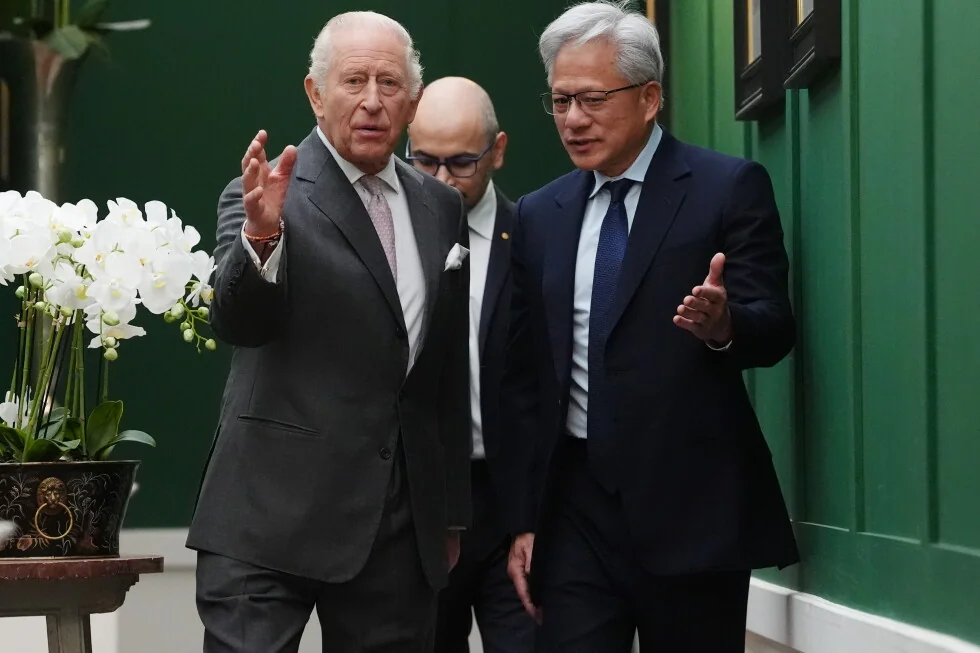
El rey y la IA: Carlos dialoga con líderes de inteligencia artificial en medio de crecientes preocupaciones por la seguridad
King and AI: Charles Confers with Artificial Intelligence Leaders Amid Escalating Safety Concerns
El rey y la IA: Carlos dialoga con líderes de inteligencia artificial en medio de crecientes preocupaciones por la seguridad
King and AI: Charles Confers with Artificial Intelligence Leaders Amid Escalating Safety Concerns

El jefe saliente de la ONU, en medio de la agitación global, traza un camino a seguir
Departing UN Chief, Amid Global Turmoil, Charts a Path Forward
El jefe saliente de la ONU, en medio de la agitación global, traza un camino a seguir
Departing UN Chief, Amid Global Turmoil, Charts a Path Forward

Los aspirantes demócratas se apresuran a contrarrestar la amenaza de la IA en medio de los despidos de Trump
Democratic Hopefuls Scramble to Counter AI Threat Amid Trump’s Dismissals
Los aspirantes demócratas se apresuran a contrarrestar la amenaza de la IA en medio de los despidos de Trump
Democratic Hopefuls Scramble to Counter AI Threat Amid Trump’s Dismissals

La Cámara aprueba un proyecto de ley dirigido al impacto de los centros de datos en los costos energéticos
House passes bill targeting data centers' impact on energy costs
La Cámara aprueba un proyecto de ley dirigido al impacto de los centros de datos en los costos energéticos
House passes bill targeting data centers' impact on energy costs

OpenAI señala un alarmante nuevo comportamiento de la IA y promete un escrutinio más exhaustivo
OpenAI flags alarming new AI behavior, vows closer scrutiny
OpenAI señala un alarmante nuevo comportamiento de la IA y promete un escrutinio más exhaustivo
OpenAI flags alarming new AI behavior, vows closer scrutiny

Huawei presenta novedosas tecnologías de chips mientras la empresa china intensifica la carrera de la IA con Nvidia
Huawei Unveils Novel Chip Technologies as Chinese Firm Escalates AI Race with Nvidia
Huawei presenta novedosas tecnologías de chips mientras la empresa china intensifica la carrera de la IA con Nvidia
Huawei Unveils Novel Chip Technologies as Chinese Firm Escalates AI Race with Nvidia

La industria tecnológica se fractura ante los llamamientos a una ralentización coordinada de la IA
Tech Industry Fractures Over Calls for a Coordinated AI Slowdown
La industria tecnológica se fractura ante los llamamientos a una ralentización coordinada de la IA
Tech Industry Fractures Over Calls for a Coordinated AI Slowdown

La seguridad global de la IA depende de la cooperación entre Estados Unidos y China, pero cada uno percibe al otro como el impedimento
Global AI Safety Hinges on US-China Cooperation, Yet Each Perceives the Other as the Impediment
La seguridad global de la IA depende de la cooperación entre Estados Unidos y China, pero cada uno percibe al otro como el impedimento
Global AI Safety Hinges on US-China Cooperation, Yet Each Perceives the Other as the Impediment

Las nuevas advertencias sobre el fin de la IA reavivan un debate perenne
Fresh AI Doom Warnings Reignite a Perennial Debate
Las nuevas advertencias sobre el fin de la IA reavivan un debate perenne
Fresh AI Doom Warnings Reignite a Perennial Debate
China se enerva ante el «alarmismo» del consejero delegado de Anthropic sobre su desarrollo de la IA
China bridles at Anthropic CEO’s ‘fearmongering’ over its AI development
China se enerva ante el «alarmismo» del consejero delegado de Anthropic sobre su desarrollo de la IA
China bridles at Anthropic CEO’s ‘fearmongering’ over its AI development