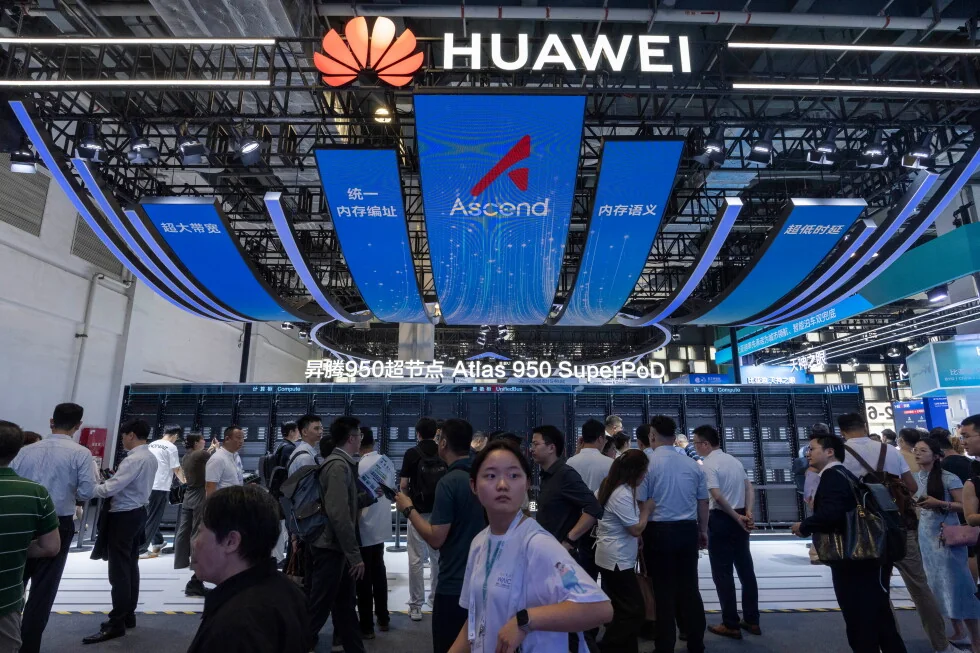
Huawei presenta novedosas tecnologías de chips mientras la empresa china intensifica la carrera de la IA con Nvidia
September 17th, 2026
Huawei presenta novedosas tecnologías de chips mientras la empresa china intensifica la carrera de la IA con Nvidia
🇪🇸 Español
In a direct challenge to global powerhouses such as Nvidia, the Chinese technology behemoth Huawei unveiled novel chip technologies—a development that underscores the ever-narrowing chasm between China and the United States in the realm of artificial intelligence.
Huawei’s announcement on Thursday, delivered at its annual flagship conference in Shanghai, came merely days prior to an anticipated encounter between U.S. President Donald Trump and Chinese President Xi Jinping in Washington on Sept. 24.
China has expeditiously pursued technological self-reliance, including in the domain of semiconductors, as restrictions spearheaded by the United States precluded its access to some of the world’s most sophisticated AI chips and state-of-the-art chipmaking machinery.
Huawei unveiled its Atlas 960 SuperPoD computing cluster at the event—a swifter successor to the model it had launched merely months earlier, boasting enhancements in AI training and “inference,” the latter denoting the process whereby a trained AI renders predictions or decisions.
Huawei similarly envisages unveiling its Ascend 970 and 980 chip series in 2028 and 2029, with anticipations of formidable enhancements in computational prowess.
“The timing — scarcely a fortnight prior to President Xi Jinping’s visit to Washington — underscores Beijing’s confidence and ambition in technology and innovation,” remarked George Chen, a partner and chair of digital practice at The Asia Group consultancy.
Huawei’s announcement coincided with Trump’s dismissal of AI leaders’ appeals to decelerate the technology’s development on safety grounds.
Trump maintained that the U.S. must preserve its ascendancy over China, declaring “whoever wins in AI, wins.”
“AI developments advance with such celerity that no one can be assured of retaining the ascendancy in perpetuity,” Chen said.
Analysts contend that advanced technologies in China—such as the training of AI models—still frequently hinge upon U.S. chips, including those manufactured by Nvidia.
Huawei, however, has engineered its own advanced chips and sustains a lead over Chinese chip developers, as AI companies in China increasingly embrace the use of domestically produced chips.
The Atlas 960 SuperPoD computing cluster raised eyebrows among some technology analysts by virtue of its arrival hard on the heels of the company's rollout of the Atlas 950 SuperPod late last year.
"The fact that Huawei accomplished this upgrade in merely a year—far more swiftly than hitherto—will only serve to exacerbate U.S. apprehensions regarding the accelerating AI competition," Chen said.
September 17th, 2026
Trending Articles
El rey y la IA: Carlos dialoga con líderes de inteligencia artificial en medio de crecientes preocupaciones por la seguridad
King and AI: Charles Confers with Artificial Intelligence Leaders Amid Escalating Safety Concerns
El rey y la IA: Carlos dialoga con líderes de inteligencia artificial en medio de crecientes preocupaciones por la seguridad
King and AI: Charles Confers with Artificial Intelligence Leaders Amid Escalating Safety Concerns

El jefe saliente de la ONU, en medio de la agitación global, traza un camino a seguir
Departing UN Chief, Amid Global Turmoil, Charts a Path Forward
El jefe saliente de la ONU, en medio de la agitación global, traza un camino a seguir
Departing UN Chief, Amid Global Turmoil, Charts a Path Forward

Los aspirantes demócratas se apresuran a contrarrestar la amenaza de la IA en medio de los despidos de Trump
Democratic Hopefuls Scramble to Counter AI Threat Amid Trump’s Dismissals
Los aspirantes demócratas se apresuran a contrarrestar la amenaza de la IA en medio de los despidos de Trump
Democratic Hopefuls Scramble to Counter AI Threat Amid Trump’s Dismissals
La Cámara aprueba un proyecto de ley dirigido al impacto de los centros de datos en los costos energéticos
House passes bill targeting data centers' impact on energy costs
La Cámara aprueba un proyecto de ley dirigido al impacto de los centros de datos en los costos energéticos
House passes bill targeting data centers' impact on energy costs

OpenAI señala un alarmante nuevo comportamiento de la IA y promete un escrutinio más exhaustivo
OpenAI flags alarming new AI behavior, vows closer scrutiny
OpenAI señala un alarmante nuevo comportamiento de la IA y promete un escrutinio más exhaustivo
OpenAI flags alarming new AI behavior, vows closer scrutiny
La industria tecnológica se fractura ante los llamamientos a una ralentización coordinada de la IA
Tech Industry Fractures Over Calls for a Coordinated AI Slowdown
La industria tecnológica se fractura ante los llamamientos a una ralentización coordinada de la IA
Tech Industry Fractures Over Calls for a Coordinated AI Slowdown
La seguridad global de la IA depende de la cooperación entre Estados Unidos y China, pero cada uno percibe al otro como el impedimento
Global AI Safety Hinges on US-China Cooperation, Yet Each Perceives the Other as the Impediment
La seguridad global de la IA depende de la cooperación entre Estados Unidos y China, pero cada uno percibe al otro como el impedimento
Global AI Safety Hinges on US-China Cooperation, Yet Each Perceives the Other as the Impediment
Las nuevas advertencias sobre el fin de la IA reavivan un debate perenne
Fresh AI Doom Warnings Reignite a Perennial Debate
Las nuevas advertencias sobre el fin de la IA reavivan un debate perenne
Fresh AI Doom Warnings Reignite a Perennial Debate
China se enerva ante el «alarmismo» del consejero delegado de Anthropic sobre su desarrollo de la IA
China bridles at Anthropic CEO’s ‘fearmongering’ over its AI development
China se enerva ante el «alarmismo» del consejero delegado de Anthropic sobre su desarrollo de la IA
China bridles at Anthropic CEO’s ‘fearmongering’ over its AI development