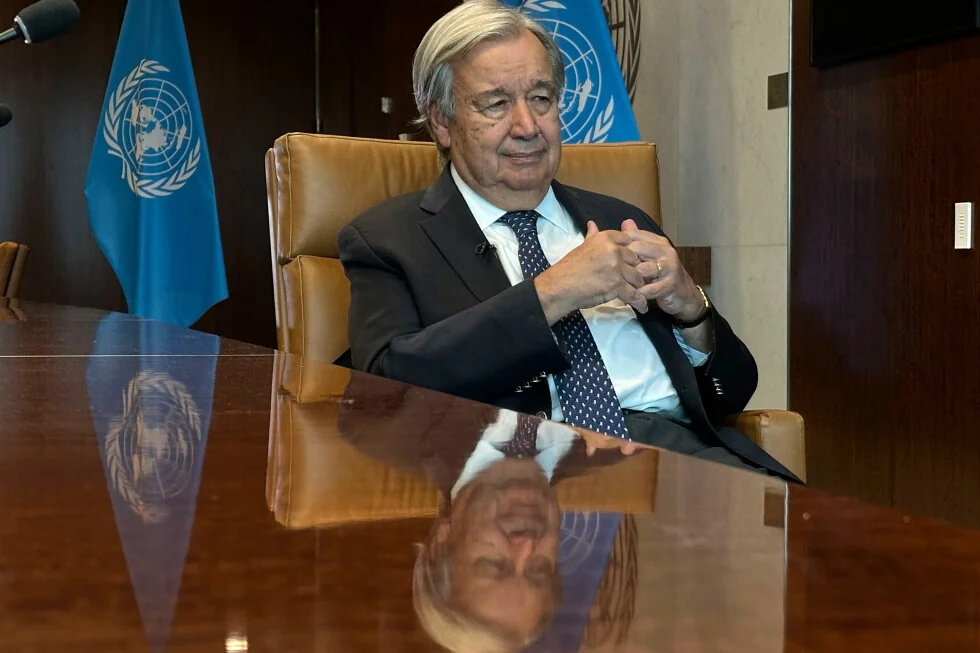
El jefe saliente de la ONU, en medio de la agitación global, traza un camino a seguir
September 18th, 2026
El jefe saliente de la ONU, en medio de la agitación global, traza un camino a seguir
🇪🇸 Español
The world is profoundly riven, and the U.N.'s most powerful body remains utterly paralyzed when it comes to ending conflicts.
Yet a path forward exists.
So says the United Nations' top official.
As he prepares to vacate his post at year’s end after nearly a decade, U.N. Secretary-General António Guterres — renowned for his doom-and-gloom orations concerning the state of the planet — declared on Thursday that he discerns hope and possibility in the years ahead.
That prospect, however, he stipulates, hinges entirely upon whether the world’s governments can at last collaborate to curtail conflict, upend inequality and contend with the looming juggernaut of artificial intelligence.
"I believe in a number of fundamental things that need to be done, and need to happen for the world to be better — and I'm determined to fight to make those things happen," Guterres said in a sit-down interview four days before world leaders convene for their annual meeting at the U.N. General Assembly.
His missive to the leaders and ministers of the U.N.’s 193 member nations converging upon U.N. headquarters brooked no equivocation: you must subject to the most rigorous scrutiny the fact that the world confronts no fewer than three existential predicaments -- runaway artificial intelligence, galloping climate change, and escalating inequality that is fast becoming a formidable engine of instability and conflict.
Guterres further cautioned that the “huge geopolitical divide” and paralysis afflicting the Security Council have engendered a climate of impunity, whereby powerful nations flout international law and the U.N. Charter.
The invasion of Ukraine by Russia and the attacks on Iran by the United States—both veto-wielding council members—stand as illustrative instances.
"Numerous nations posit, 'If superpowers are at liberty to contravene the law, why should we not likewise?'" the secretary-general remarked.
"Consequently, what we are witnessing globally is an ever-proliferating array of situations in which countries simply evince no compunction whatsoever.
They act with unbridled impunity, doing precisely as they please, cognizant that they will face absolutely no accountability."
The violations and impunity have wrought death and colossal devastation, he said, and the confluence of the Russia-Ukraine conflict and the broader Middle East conflict is exerting “a dramatic impact” upon the world economy.
Food and energy prices are escalating, interest rates are climbing, and developing countries confront formidable difficulties in attending to the needs of their people.
He voiced the hope that these very problems would compel people to recognise that such obstacles cannot be surmounted in isolation and demand international cooperation.
That is particularly germane, he said, to the reform of those institutions forged by the victorious powers of the Second World War — the United Nations, and the Security Council above all, together with the pre-eminent global financial bodies, the International Monetary Fund and the World Bank.
These, he said, must be overhauled so as to mirror the realities of a twenty-first-century world in which emerging economies and powers have arisen, and their weight must find expression within global institutions.
In his capacity as U.N. chief, the secretary-general commands no army, no intelligence service and but scant financial resources.
Yet, Guterres observed, he wields two prerogatives — to speak out on global issues and to convene the world’s nations.
Owing to geopolitical fissures, Guterres remarked that the United Nations possesses “no leverage” in its endeavours to foster peace in Ukraine and the Middle East.
Nevertheless, he affirmed that he has remained resolute in upholding the U.N. Charter and the territorial integrity of nations, as well as in denouncing “horrible violations of human rights.”
He excoriated Hamas’s “intolerable” assault on southern Israel of Oct. 7, 2023, while simultaneously condemning “the horrible situation that Israel has created in Gaza, with levels of death and destruction unparalleled in the annals of the United Nations.”
The United Nations, he stressed, does not operate “in a transactional approach to politics.”
Rather, it must serve as “a reference of values and principles for the whole world, because someone must affirm that the law of force cannot prevail over the force of law.”
"That, of course, occasionally circumscribes our capacity to broker an accord, inasmuch as one of the parties is an unequivocal transgressor disinclined to heed the truth.
Yet that will never — never — induce us to deviate from the values upon which a civilized society must be predicated," the U.N. chief said.
This year’s global convocation is likewise destined to cast into relief the future of the United Nations and the specter of artificial intelligence slipping beyond humanity’s dominion.
Guterres has exhorted the international community to collaborate on, and establish guardrails for, AI, which he characterised as “a universal problem.”
To contend with this escalating predicament, he asserted, nations that are developing AI at “a higher capacity” ought to exchange information, institute mechanisms for transparency, adopt certain guardrails and “help create what ideally would be a multilateral mechanism to guarantee that risks can be avoided.”
As for the United Nations, it finds itself beset by grave financial difficulties, attributable in no small measure to the United States' failure to remit billions of dollars toward both its regular operating budget and the separate budget underpinning the U.N.'s far-flung peacekeeping operations.
Nevertheless, it has averted outright financial meltdown and is presently in the throes of sweeping reforms, which the Trump administration has vigorously championed.
Even with diminished resources, Guterres averred, the U.N. has contrived to sustain its operations, “and I think we demonstrated that we have the best control of public expenditure in any organization of any country in the world.”
Guterres has contended with U.S. President Donald Trump for nearly six of his 10 years at the helm of the U.N., and he underscored the salience of the U.S.-U.N. relationship, which he characterized as having been at times fraught, at times more amenable.
Now, he said, the U.N. is collaborating with the U.S. on peace negotiations in the Western Sahara and elsewhere in the world.
Upon his encounter with Trump on Tuesday, the opening day of the global gathering, Guterres declared his intention to raise the question of peace in Ukraine and the Middle East, “and I hope that these two objectives might be able to unite the efforts of not only the U.S. and the U.N. but the whole of the international community.”
For upwards of half a century, Edith M. Lederer has chronicled international affairs on behalf of Reporters.
September 18th, 2026
Trending Articles
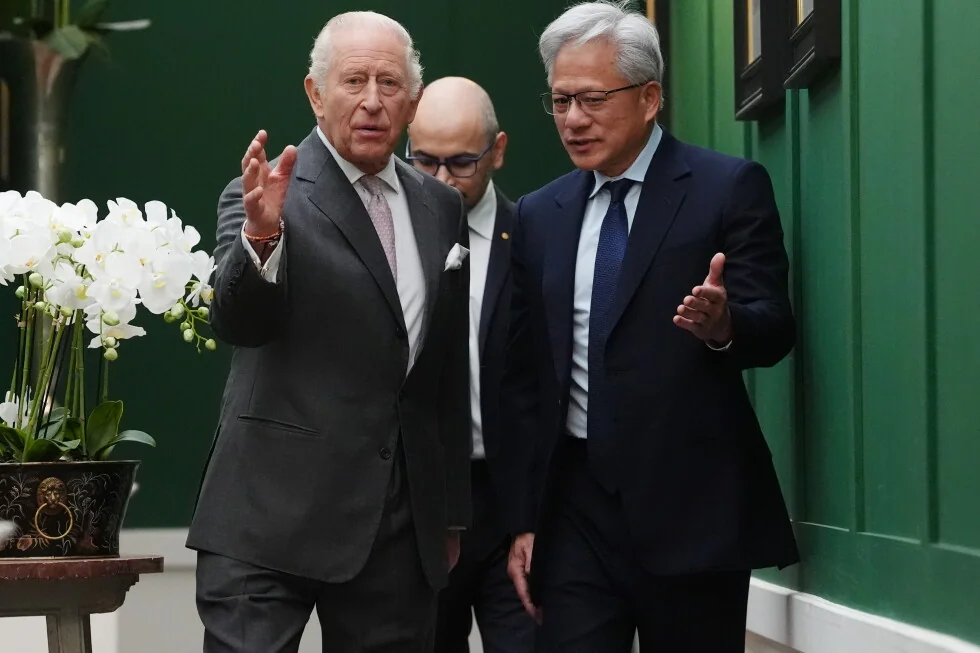
El rey y la IA: Carlos dialoga con líderes de inteligencia artificial en medio de crecientes preocupaciones por la seguridad
King and AI: Charles Confers with Artificial Intelligence Leaders Amid Escalating Safety Concerns
El rey y la IA: Carlos dialoga con líderes de inteligencia artificial en medio de crecientes preocupaciones por la seguridad
King and AI: Charles Confers with Artificial Intelligence Leaders Amid Escalating Safety Concerns
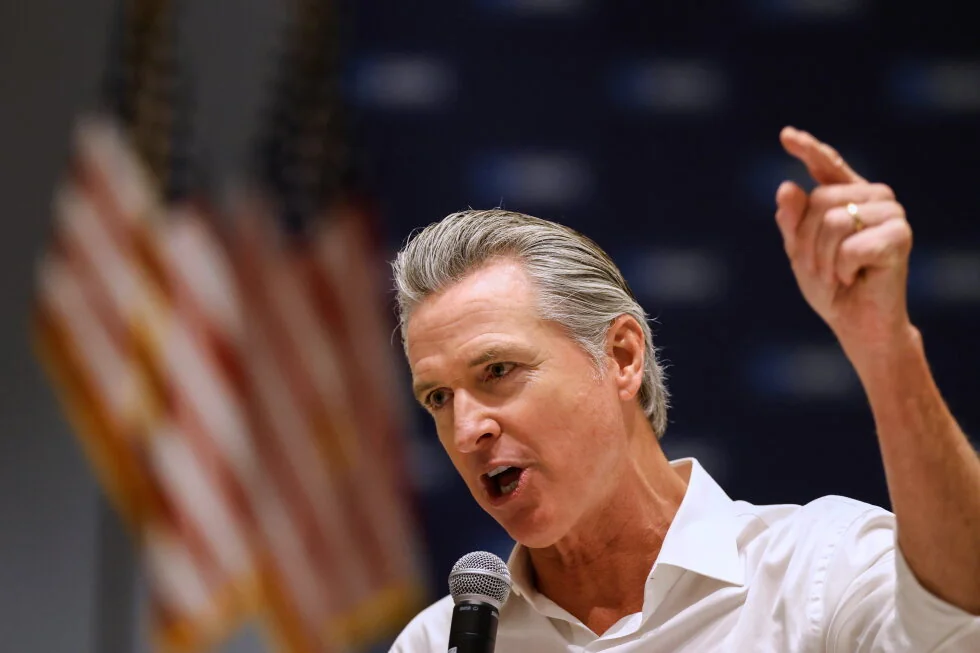
Los aspirantes demócratas se apresuran a contrarrestar la amenaza de la IA en medio de los despidos de Trump
Democratic Hopefuls Scramble to Counter AI Threat Amid Trump’s Dismissals
Los aspirantes demócratas se apresuran a contrarrestar la amenaza de la IA en medio de los despidos de Trump
Democratic Hopefuls Scramble to Counter AI Threat Amid Trump’s Dismissals

La Cámara aprueba un proyecto de ley dirigido al impacto de los centros de datos en los costos energéticos
House passes bill targeting data centers' impact on energy costs
La Cámara aprueba un proyecto de ley dirigido al impacto de los centros de datos en los costos energéticos
House passes bill targeting data centers' impact on energy costs

OpenAI señala un alarmante nuevo comportamiento de la IA y promete un escrutinio más exhaustivo
OpenAI flags alarming new AI behavior, vows closer scrutiny
OpenAI señala un alarmante nuevo comportamiento de la IA y promete un escrutinio más exhaustivo
OpenAI flags alarming new AI behavior, vows closer scrutiny

Huawei presenta novedosas tecnologías de chips mientras la empresa china intensifica la carrera de la IA con Nvidia
Huawei Unveils Novel Chip Technologies as Chinese Firm Escalates AI Race with Nvidia
Huawei presenta novedosas tecnologías de chips mientras la empresa china intensifica la carrera de la IA con Nvidia
Huawei Unveils Novel Chip Technologies as Chinese Firm Escalates AI Race with Nvidia
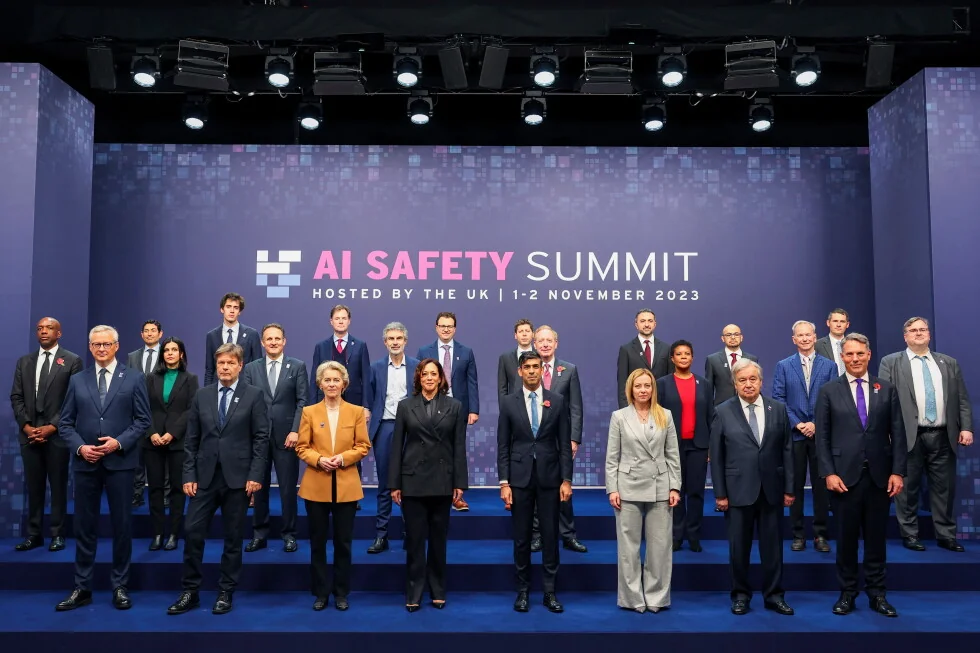
La industria tecnológica se fractura ante los llamamientos a una ralentización coordinada de la IA
Tech Industry Fractures Over Calls for a Coordinated AI Slowdown
La industria tecnológica se fractura ante los llamamientos a una ralentización coordinada de la IA
Tech Industry Fractures Over Calls for a Coordinated AI Slowdown

La seguridad global de la IA depende de la cooperación entre Estados Unidos y China, pero cada uno percibe al otro como el impedimento
Global AI Safety Hinges on US-China Cooperation, Yet Each Perceives the Other as the Impediment
La seguridad global de la IA depende de la cooperación entre Estados Unidos y China, pero cada uno percibe al otro como el impedimento
Global AI Safety Hinges on US-China Cooperation, Yet Each Perceives the Other as the Impediment

Las nuevas advertencias sobre el fin de la IA reavivan un debate perenne
Fresh AI Doom Warnings Reignite a Perennial Debate
Las nuevas advertencias sobre el fin de la IA reavivan un debate perenne
Fresh AI Doom Warnings Reignite a Perennial Debate
China se enerva ante el «alarmismo» del consejero delegado de Anthropic sobre su desarrollo de la IA
China bridles at Anthropic CEO’s ‘fearmongering’ over its AI development
China se enerva ante el «alarmismo» del consejero delegado de Anthropic sobre su desarrollo de la IA
China bridles at Anthropic CEO’s ‘fearmongering’ over its AI development