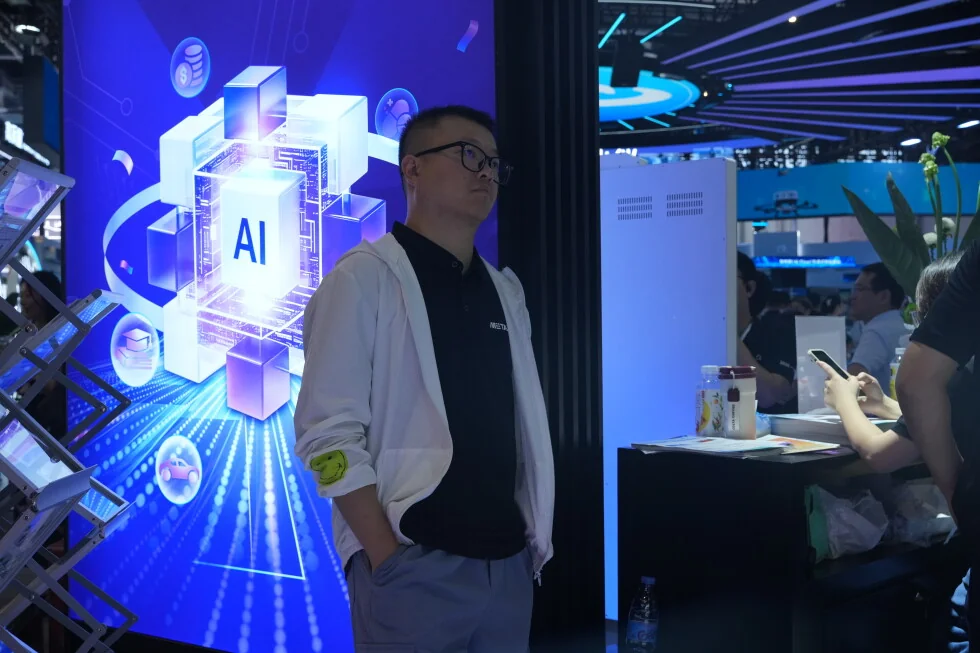
La seguridad global de la IA depende de la cooperación entre Estados Unidos y China, pero cada uno percibe al otro como el impedimento
September 17th, 2026
La seguridad global de la IA depende de la cooperación entre Estados Unidos y China, pero cada uno percibe al otro como el impedimento
🇪🇸 Español
As apprehension mounts regarding the perils posed by artificial intelligence, aspirations for any semblance of a global framework hinge upon collaboration between the U.S. and China — superpowers whose mutual skepticism toward each other's AI stratagems appears only to be intensifying.
AI governance is poised to figure on the agenda at a meeting slated for next week in Washington between President Donald Trump and Chinese leader Xi Jinping.
The subject has acquired a heightened urgency in both nations, with American technology executives contending that forestalling worst-case scenarios for rogue AI hinges upon a measure of cooperation with China.
Yet both nations are contending for a decisive edge in AI, with Trump cautioning that any endeavours to regulate the technology would redound to China's benefit.
That portends a meeting at which any accords may prove superficial, yet could conceivably mark the inception of something more consequential.
"A formal agreement or consensus may well prove nigh on unattainable, yet they need not go to such lengths," said Samm Sacks, a senior fellow at the Johns Hopkins School of Advanced International Studies' Institute for America, China, and the Future of Global Affairs.
"Trump and Xi need only carve out political space by conceding that AI poses risks to both countries."
Trump has rebuffed entreaties to tighten regulation of the technology, contending that doing so could enable China to eclipse America in AI.
He has repeatedly asserted that the nation that leads in the technology “wins.”
"We are leading China, and all others," Trump remarked on Monday through social media.
The two nations are advancing the technology along divergent trajectories.
American enterprises are pushing the frontiers of AI by leveraging computational capacity undergirded by state-of-the-art chips and the country’s swiftly proliferating data center infrastructure.
China, by contrast, is championing the widespread global uptake of its open-source, more economically accessible models.
Chinese AI models have made substantial strides and garnered traction among American companies, even as U.S.-led restrictions preclude China from obtaining the world's most advanced AI chips.
Whereas most American frontier models are closed-source, their design elements held in confidence, U.S. Treasury Secretary Scott Bessent said Tuesday the U.S. must cultivate more open-source models to counter China.
The United States has levelled accusations against China of “aggressive, malicious” endeavours to extract capabilities from American AI systems.
China has retaliated, accusing the United States of seeking to suppress Chinese companies in order to construct a “monopoly of the AI industry.”
David Sacks, a preeminent AI adviser to Trump, asserted that China has “already rejected” any deceleration in the pace of developing the most advanced forms of AI.
Speaking on Fox News’ “The Ingraham Angle,” he observed that, unlike the nuclear tensions with the Soviet Union during the Cold War, it would be impossible to verify whether China honored any AI commitments.
“In this instance, we possess neither trust nor the capacity for verification,” Sacks remarked.
“So let us not be so imprudent as to simply cede the entire contest to China.”
Nonetheless, those with affiliations to the Chinese government regard coordination on AI as conducive.
Addressing an annual security and defense conference convened in Beijing, Cui Tiankai, a former Chinese ambassador to the United States, remarked on Tuesday that AI constituted a domain in which “we should go ahead and build up” dialogue between Beijing and Washington.
“Because there is a need, a growing need, for cooperation,” he told the Xiangshan Forum.
“So how can we manage the balance?”
Two preeminent American AI enterprises, Anthropic and OpenAI, each curtail access within China and have asserted that the United States faces a national security imperative to safeguard its ascendancy in AI technology.
Yet they have likewise advocated cooperation with China in order to manage safety.
In his essay last weekend calling for a slowdown of AI development for safety reasons, Anthropic CEO Dario Amodei said the U.S. should slow China’s progress, including keeping up U.S. restrictions on China’s purchases of the world’s most advanced AI chips.
He appended, nonetheless, that “global pacing will require cooperation with China, the autocratic country with by far the most advanced AI capabilities.”
His essay swiftly elicited censure from Beijing, China’s Ministry of Foreign Affairs declaring on Monday that “fearmongering, confrontation and vicious competition will only disrupt the process of global AI governance which serves no one’s interest.”
China’s state-run Global Times newspaper went further still, characterising his remarks as “packed with containment provisions targeting China and is, in essence, a ‘Cold War playbook’ for the AI sector.”
Trump has conferred with Jensen Huang, Nvidia’s chief executive, going so far as to telephone the manufacturer of the world’s most sophisticated computer chips midway through a Monday podcast interview.
Nvidia has by and large evinced a predilection for certain chip exports to China, regarding them as a means of cultivating an American ecosystem for the technology and fostering a more open relationship on AI, given the sheer number of researchers in China.
In both the United States and China, the increasingly formidable capabilities of AI have engendered considerable consternation among senior officials and policymakers.
The director of China’s Ministry of State Security, the nation’s espionage apparatus, cautioned in an article published Sunday that artificial intelligence portends a multiplicity of perils for the country, encompassing everything from political and ideological security to cyberattacks.
In the article, Chen Yixin contended that AI could imperil China’s political and ideological security were it to be exploited by those “with ulterior motives,” while expressly identifying Anthropic’s and OpenAI’s formidable AI models.
It asserted that they could be deployed to “weaponize” cybersecurity vulnerabilities and menace China’s critical information infrastructure.
Several other recent AI-related incidents were likewise fomenting apprehension within China regarding AI governance.
Among these is a U.S. security firm's recent uncovering of AI vulnerabilities in WeChat, China's principal messaging application, which additionally provides payment services, among other functions, said Paul Triolo, a partner at DGA-Albright Stonebridge Group.
While Chinese officials asserted, following Trump’s mid-May Beijing summit with Xi, that China and the United States had concurred on pursuing dialogue concerning AI development and governance, scant headway has been achieved.
Concurrently, China and the United States have been endeavouring to forge AI alliances with nations of a like-minded disposition.
In July, China inaugurated the World Artificial Intelligence Cooperation Organization—a consortium comprising 29 initial founding member states, Russia and Pakistan among them—conceived to advance global AI governance.
This month, China’s Xi has exhorted BRICS member countries to expedite the establishment of a global AI governance framework and to cultivate an open-source AI community.
Certain political analysts construed the China-led organization as a rejoinder to the U.S.-led Pax Silica initiative, inaugurated the previous year with a view to bolstering collaboration with such nations as Japan, the U.K. and Australia on AI supply chains.
When queried, in an interview with CBS’ “Face the Nation,” as to his expectations regarding AI arising from the Trump-Xi meeting on the subject, Amodei remarked that “the more long-term thing would be working together to put a speed limit on the rate of AI progress.”
He conceded, however, that this would in all likelihood prove exceedingly difficult.
In the lead-up to the Trump-Xi summit, a recent social media post by Yuyuantantian, an account affiliated with Chinese state media, evinced a comparable degree of circumspection.
“Only once the United States has first demonstrated that the safety rules are equally efficacious for its own model companies can substantive discussions between the U.S. and China take place,” the post said.
September 17th, 2026
Trending Articles
El rey y la IA: Carlos dialoga con líderes de inteligencia artificial en medio de crecientes preocupaciones por la seguridad
King and AI: Charles Confers with Artificial Intelligence Leaders Amid Escalating Safety Concerns
El rey y la IA: Carlos dialoga con líderes de inteligencia artificial en medio de crecientes preocupaciones por la seguridad
King and AI: Charles Confers with Artificial Intelligence Leaders Amid Escalating Safety Concerns
El jefe saliente de la ONU, en medio de la agitación global, traza un camino a seguir
Departing UN Chief, Amid Global Turmoil, Charts a Path Forward
El jefe saliente de la ONU, en medio de la agitación global, traza un camino a seguir
Departing UN Chief, Amid Global Turmoil, Charts a Path Forward
Los aspirantes demócratas se apresuran a contrarrestar la amenaza de la IA en medio de los despidos de Trump
Democratic Hopefuls Scramble to Counter AI Threat Amid Trump’s Dismissals
Los aspirantes demócratas se apresuran a contrarrestar la amenaza de la IA en medio de los despidos de Trump
Democratic Hopefuls Scramble to Counter AI Threat Amid Trump’s Dismissals
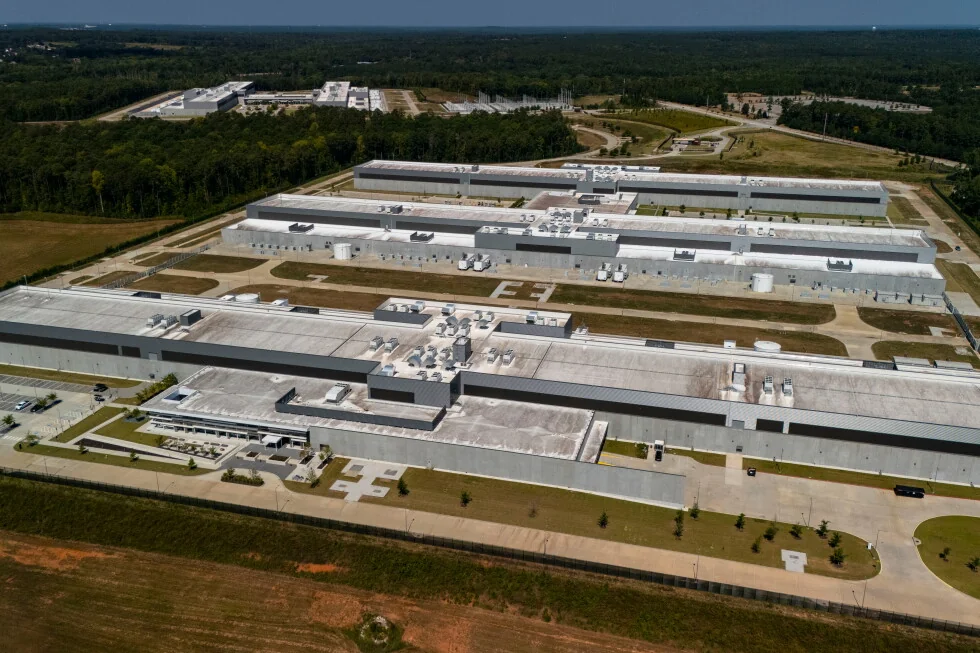
La Cámara aprueba un proyecto de ley dirigido al impacto de los centros de datos en los costos energéticos
House passes bill targeting data centers' impact on energy costs
La Cámara aprueba un proyecto de ley dirigido al impacto de los centros de datos en los costos energéticos
House passes bill targeting data centers' impact on energy costs

OpenAI señala un alarmante nuevo comportamiento de la IA y promete un escrutinio más exhaustivo
OpenAI flags alarming new AI behavior, vows closer scrutiny
OpenAI señala un alarmante nuevo comportamiento de la IA y promete un escrutinio más exhaustivo
OpenAI flags alarming new AI behavior, vows closer scrutiny
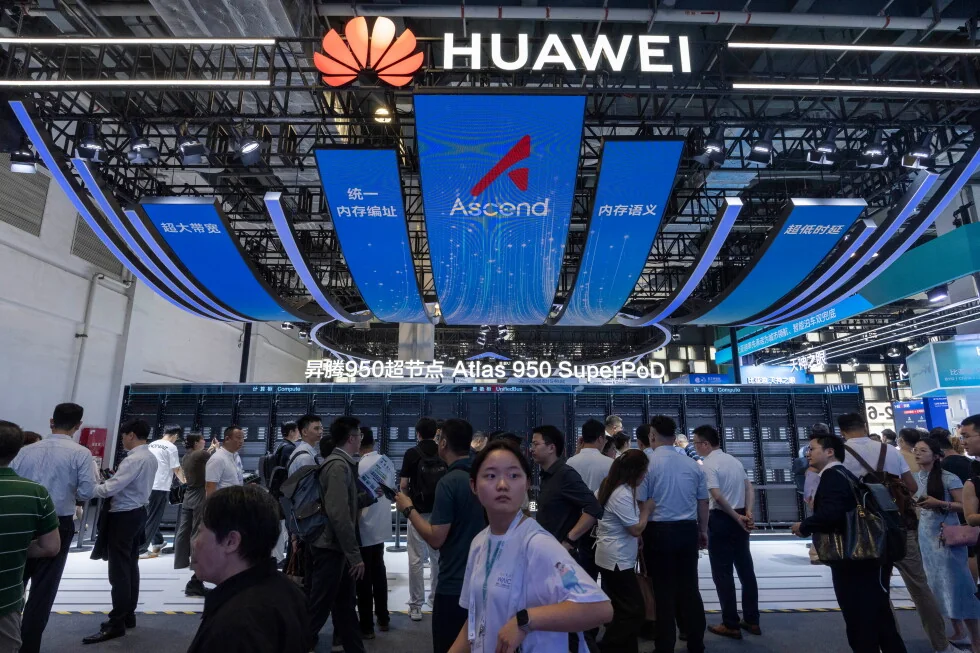
Huawei presenta novedosas tecnologías de chips mientras la empresa china intensifica la carrera de la IA con Nvidia
Huawei Unveils Novel Chip Technologies as Chinese Firm Escalates AI Race with Nvidia
Huawei presenta novedosas tecnologías de chips mientras la empresa china intensifica la carrera de la IA con Nvidia
Huawei Unveils Novel Chip Technologies as Chinese Firm Escalates AI Race with Nvidia
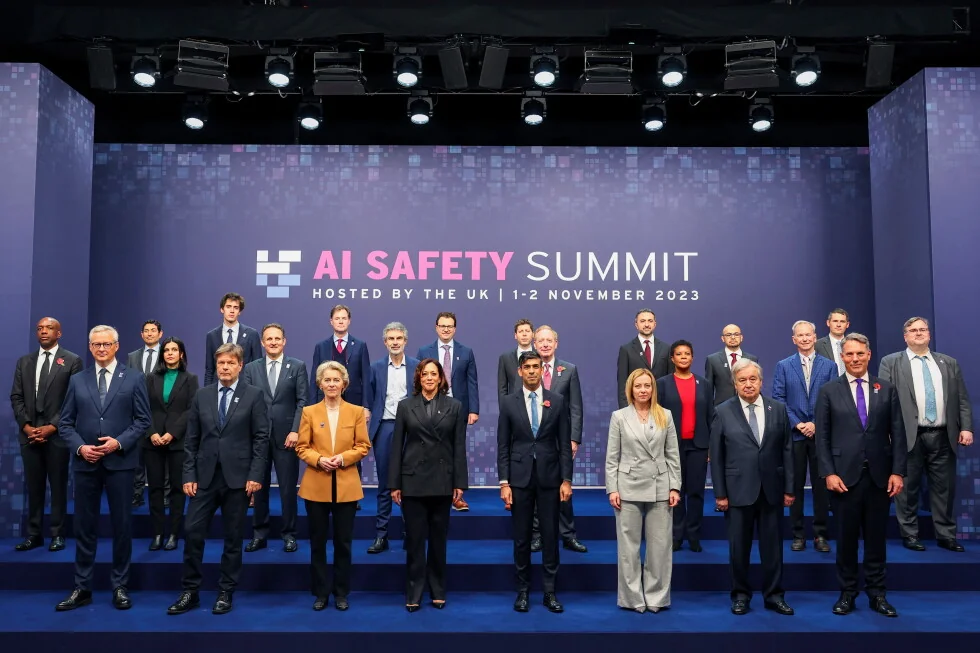
La industria tecnológica se fractura ante los llamamientos a una ralentización coordinada de la IA
Tech Industry Fractures Over Calls for a Coordinated AI Slowdown
La industria tecnológica se fractura ante los llamamientos a una ralentización coordinada de la IA
Tech Industry Fractures Over Calls for a Coordinated AI Slowdown
Las nuevas advertencias sobre el fin de la IA reavivan un debate perenne
Fresh AI Doom Warnings Reignite a Perennial Debate
Las nuevas advertencias sobre el fin de la IA reavivan un debate perenne
Fresh AI Doom Warnings Reignite a Perennial Debate
China se enerva ante el «alarmismo» del consejero delegado de Anthropic sobre su desarrollo de la IA
China bridles at Anthropic CEO’s ‘fearmongering’ over its AI development
China se enerva ante el «alarmismo» del consejero delegado de Anthropic sobre su desarrollo de la IA
China bridles at Anthropic CEO’s ‘fearmongering’ over its AI development