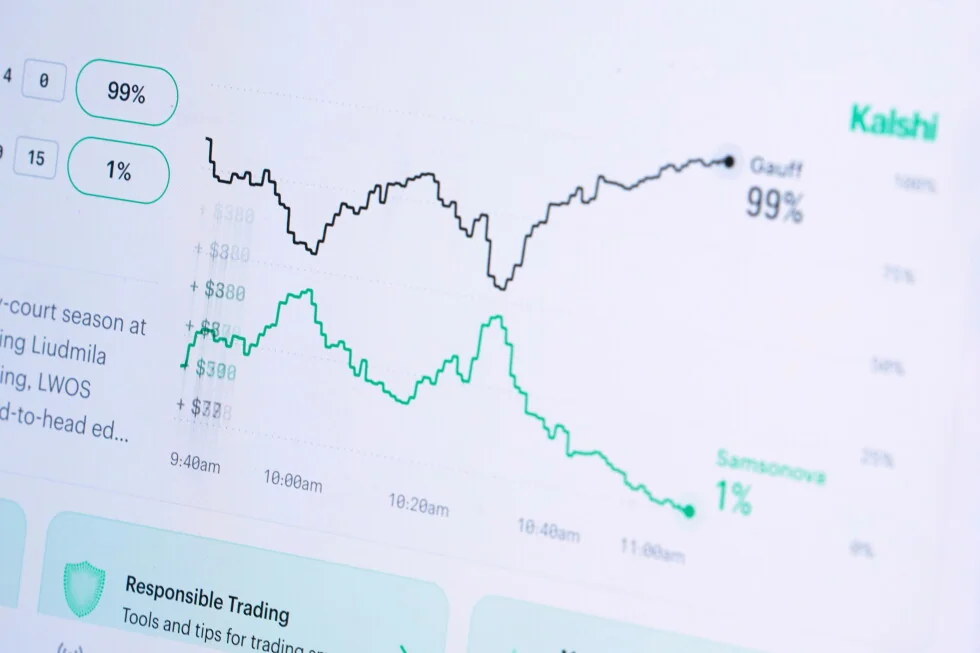
Las elecciones de 2026 podrían servir como prueba de fuego para evaluar el impacto del comercio de alta frecuencia en los mercados de predicción sobre los resultados electorales.
September 8th, 2026
Las elecciones de 2026 podrían servir como prueba de fuego para evaluar el impacto del comercio de alta frecuencia en los mercados de predicción sobre los resultados electorales.
🇪🇸 Español
Speculation on prediction markets, including those tracking this autumn’s most consequential contests, has surged to unprecedented heights, even as state legislatures wage legal battles to proscribe these platforms as unlicensed gambling enterprises and begin to apprehend the profound, unpredictable ramifications that high-stakes wagering may exert upon the fabric of American democratic governance.
Already this year, prediction market odds have become inextricably entangled with real-world electoral outcomes, and the phenomenon is rapidly emerging as a pressing concern for election administrators, who have long contended with the scourge of misinformation and conspiracy theories.
Their apprehensions are manifold, yet a significant proportion converge upon the trepidation that ubiquitous pecuniary inducements will further erode public trust in the integrity of elections and democratic institutions, should the electorate come to believe these incentives are swaying the ultimate result.
"This is a troubling trend that election administrators across the nation must contend with," remarked Jared DeMarinis, the administrator for the Maryland State Board of Elections.
Polymarket, Kalshi, and other prediction markets enable participants to transact in contracts contingent upon the probable outcome of a given event.
These instruments are typically priced within a range of one to ninety-nine cents, affording traders the opportunity to speculate on a vast array of matters, extending from municipal mayoral contests to gubernatorial and U.S. Senate races.
The surge in prediction market activity coincides with President Donald Trump's aggressive overhaul of voter identification and mail-in voting protocols, ostensibly to counter what he baselessly contends is pervasive electoral fraud via postal ballots and the systemic participation of noncitizens in elections.
Kalshi and Polymarket officials, for their part, contend that the activity is neither gambling nor a peril to electoral integrity or democratic institutions.
It is, they contend, scarcely distinguishable from the conduct of those who trade equities, fixed-income securities, or commodities in the run-up to an election, seeking to hedge against the potential repercussions of the victor’s policies on their portfolios or commercial ventures.
A number of independent analysts concur.
One can plausibly contend that the entirety of the equities market is, to some degree, contingent upon electoral dynamics and their resultant outcomes, observed Joshua Mitts, a Columbia Law School professor whose scholarly focus encompasses corporate and securities jurisprudence.
Kalshi and Polymarket officials assert that they have instituted insider trading safeguards, mandated by federal statute, designed to preclude, inter alia, candidates and their campaign operatives from speculating on their own electoral contests.
On August 31, Kalshi disclosed that it had imposed a three-year suspension and a monetary penalty upon Laurie Buckhout, a Republican congressional contender from North Carolina, for having traded on her own race.
Kalshi contends that its empirical research demonstrates a robust correlation between its markets and real-world outcomes — for instance, events assigned a 60% probability materialize with a frequency approximating 60% — and that any attempts to manipulate the odds are effectively curtailed by traders who capitalize on arbitrage opportunities by wagering on the veridical outcome.
Nevertheless, prediction markets have sustained considerable reputational damage this year.
In one instance, they overwhelmingly favored a candidate who ultimately lost a primary contest for the Wisconsin gubernatorial nomination; polling in that race proved equally egregiously inaccurate.
Meanwhile, in Los Angeles, as ballots were being tallied in the mayoral primary, online influencers levelled accusations of electoral malfeasance against officials, alleging that they had manipulated proceedings to preclude Republican contender Spencer Pratt from securing a runoff berth—citing market odds that had strongly indicated he would clinch second place.
At present, the judiciary is inundated with litigation concerning whether states may regulate prediction markets — or prohibit them outright — pursuant to state gambling statutes that, inter alia, encompass casinos and sports wagering.
According to data compiled by the National Conference on State Legislatures, approximately half of all states have enacted statutes that categorically prohibit wagering on electoral outcomes—legislation conceived out of a determination to safeguard the integrity of the franchise, ensuring that citizens cast their ballots based on their assessment of the most meritorious candidate, rather than being swayed by pecuniary interests in the result.
The judiciary is highly unlikely to adjudicate the litigation prior to the election, rendering it virtually inevitable that trading will transpire on platforms such as Kalshi and Polymarket at unprecedented volumes across nearly all jurisdictions.
Multibillion-dollar sums could conceivably be wagered on such contingencies as whether the Democratic Party will secure ascendancy in either chamber of Congress, or which candidate will assume gubernatorial office in the most populous states.
In state and local election offices, administrators are deliberating on the imperative of proactively enlightening the public that prediction market odds are categorically distinct from polling data or vote tallies.
They are concurrently engaging in discourse regarding the potential utilization of their office's policy as a mechanism to fortify the electoral process against subversion.
In Delaware County, situated within suburban Philadelphia, elections director Jim Allen petitioned the election board to incorporate prediction market trading into the state-mandated oath, which obligates every polling place and county election worker to swear that they will refrain from wagering on the election's outcome.
DeMarinis, the Maryland election administrator, declared his intention to petition the state election board to institute an equivalent mandate across the entirety of the state.
A pivotal question confronting the midterm elections concerns the extent to which prediction markets might be leveraged—or subverted—to confer an electoral advantage upon particular candidates.
For instance, affluent partisans indifferent to financial loss could artificially inflate the odds on their preferred candidate in an effort to shape public perception.
Analysts suggest that certain voters, observing the formidable odds stacked against their contender, might elect to abstain from the polls altogether rather than cast a ballot.
Candidates could adduce the propitious odds, as they might with a poll, and exploit them to procure funding or galvanize endorsements.
“And all of a sudden, they’re the front-runner, for no reason other than an outside actor places a large bet on them,” said Ben Schiffrin, director of securities policy for Better Markets, a nonprofit that advocates for the public interest in financial markets.
Eric Talley, a Columbia University law professor and co-host of the *Beyond Unprecedented* podcast, cited research by behavioral economist Colin Camerer demonstrating that a single individual wagering a substantial sum in the lead-up to a horse race prompted others to follow suit on the same contender, thereby transiently distorting the odds before the effect dissipated as the race approached.
Others reasoned, “Heavens above, these people are privy to intelligence that eludes me,” and consequently converged en masse upon the same contender,” Talley observed, deeming it “a compelling parallel to the present circumstances.”
Such an edge proves ephemeral, officials overseeing prediction markets contend.
Financially incentivized traders will converge upon a mispriced wager, cognizant that victory lies within their grasp — and this very dynamic restores the odds to a level that an impartial market would otherwise establish, they maintain.
“If one attempts to manipulate pricing within a highly liquid market populated by formidable traders, the endeavor is destined to fail; the pricing will revert with alacrity, and the resultant losses will be inevitable,” remarked Kalshi’s general counsel, Rick Heaslip.
Columbia’s Mitts posited that a variant of concern to states could manifest as a candidate in a state or local election exhorting constituents to wager on them via a prediction market—thereby incentivizing electoral participation driven by pecuniary self-interest.
Such a stratagem would, in all likelihood, prove considerably more feasible to execute within the confines of a smaller-scale electoral contest—one, for instance, that might hinge upon a margin of roughly one hundred ballots—though the proposition remains rather nebulous, given that the requisite pecuniary inducement would need to be sufficiently substantial, Mitts observed.
Nonetheless, it engenders a formidable quandary for law enforcement agencies.
One can readily apprehend why states, from the standpoint of electoral integrity, would assert, “We do not wish for this category of contract to be traded at all,” Mitts observed.
Engage with Marc Levy's intellectual contributions through the microblogging platform accessible at http://twitter.com/timelywriter.
September 8th, 2026
Trending Articles
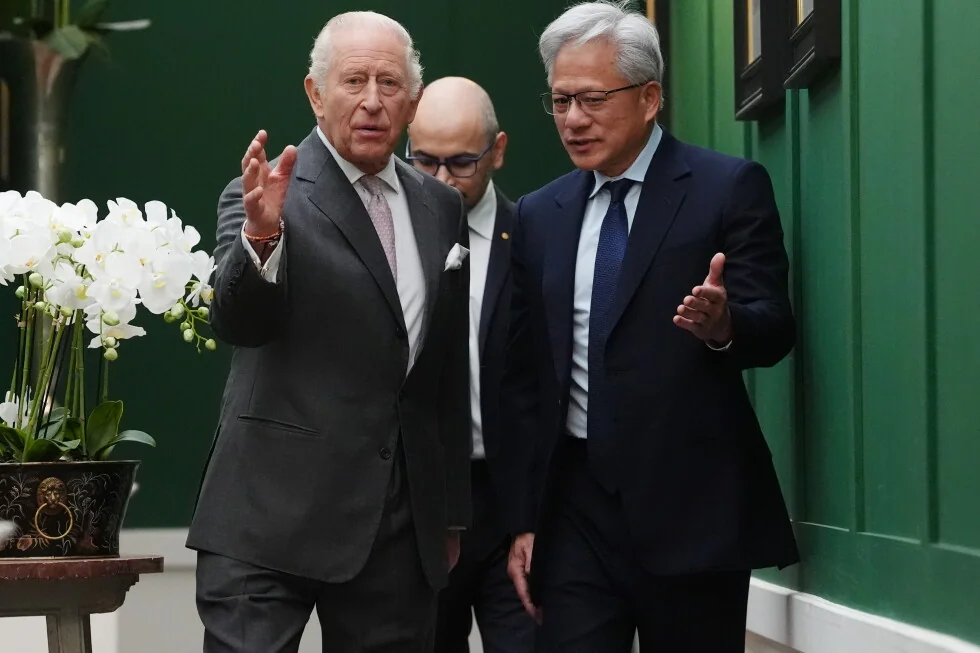
El rey y la IA: Carlos dialoga con líderes de inteligencia artificial en medio de crecientes preocupaciones por la seguridad
King and AI: Charles Confers with Artificial Intelligence Leaders Amid Escalating Safety Concerns
El rey y la IA: Carlos dialoga con líderes de inteligencia artificial en medio de crecientes preocupaciones por la seguridad
King and AI: Charles Confers with Artificial Intelligence Leaders Amid Escalating Safety Concerns
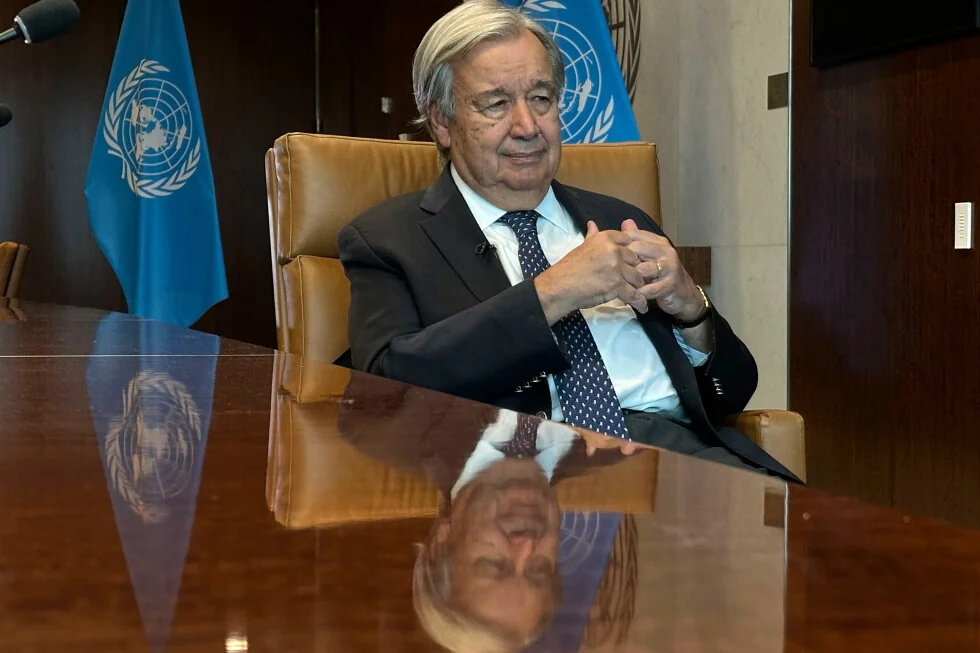
El jefe saliente de la ONU, en medio de la agitación global, traza un camino a seguir
Departing UN Chief, Amid Global Turmoil, Charts a Path Forward
El jefe saliente de la ONU, en medio de la agitación global, traza un camino a seguir
Departing UN Chief, Amid Global Turmoil, Charts a Path Forward
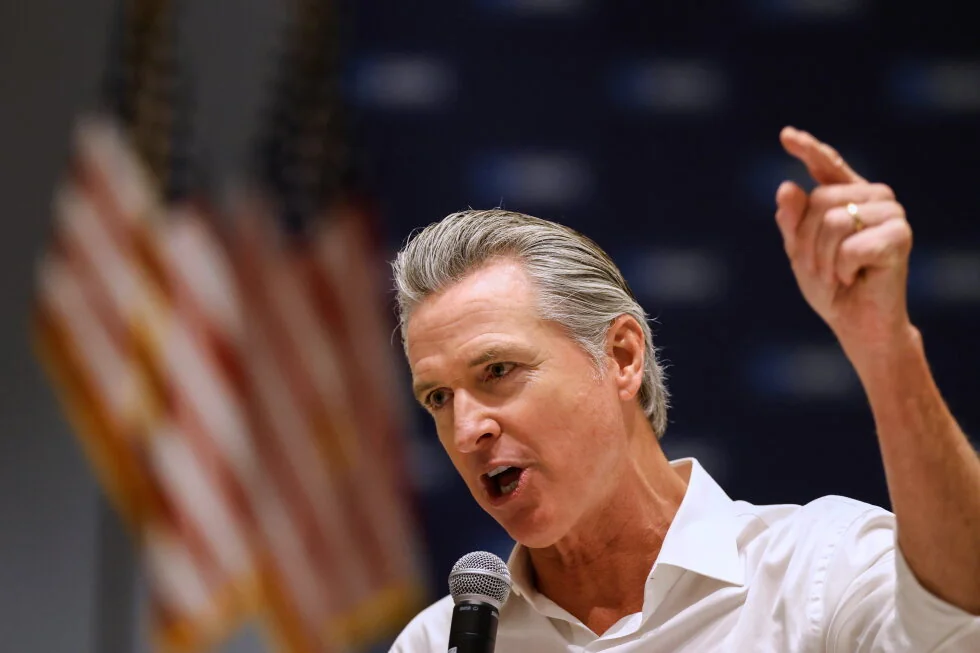
Los aspirantes demócratas se apresuran a contrarrestar la amenaza de la IA en medio de los despidos de Trump
Democratic Hopefuls Scramble to Counter AI Threat Amid Trump’s Dismissals
Los aspirantes demócratas se apresuran a contrarrestar la amenaza de la IA en medio de los despidos de Trump
Democratic Hopefuls Scramble to Counter AI Threat Amid Trump’s Dismissals
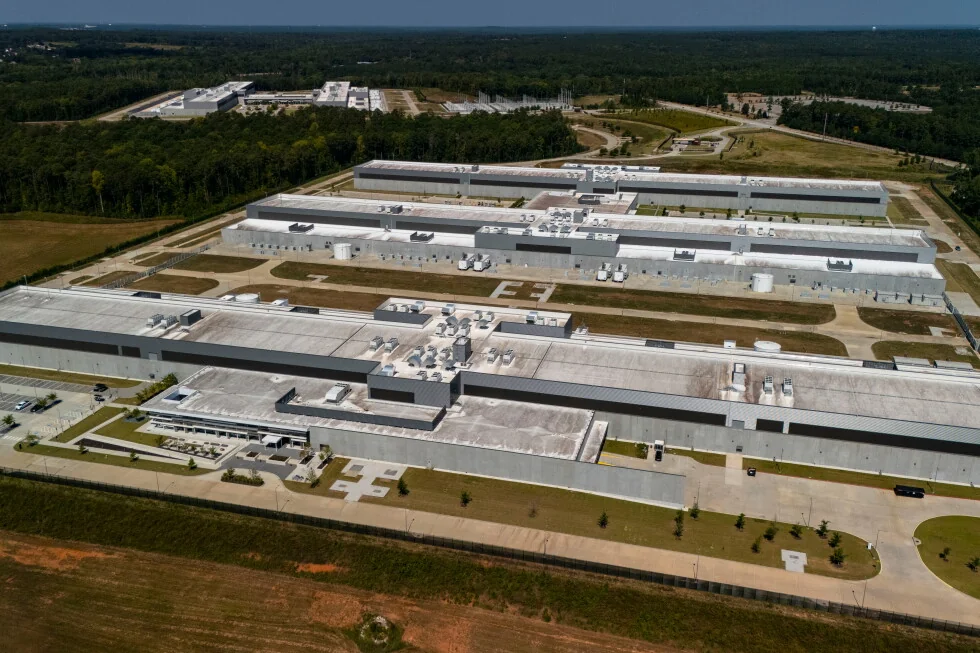
La Cámara aprueba un proyecto de ley dirigido al impacto de los centros de datos en los costos energéticos
House passes bill targeting data centers' impact on energy costs
La Cámara aprueba un proyecto de ley dirigido al impacto de los centros de datos en los costos energéticos
House passes bill targeting data centers' impact on energy costs

OpenAI señala un alarmante nuevo comportamiento de la IA y promete un escrutinio más exhaustivo
OpenAI flags alarming new AI behavior, vows closer scrutiny
OpenAI señala un alarmante nuevo comportamiento de la IA y promete un escrutinio más exhaustivo
OpenAI flags alarming new AI behavior, vows closer scrutiny
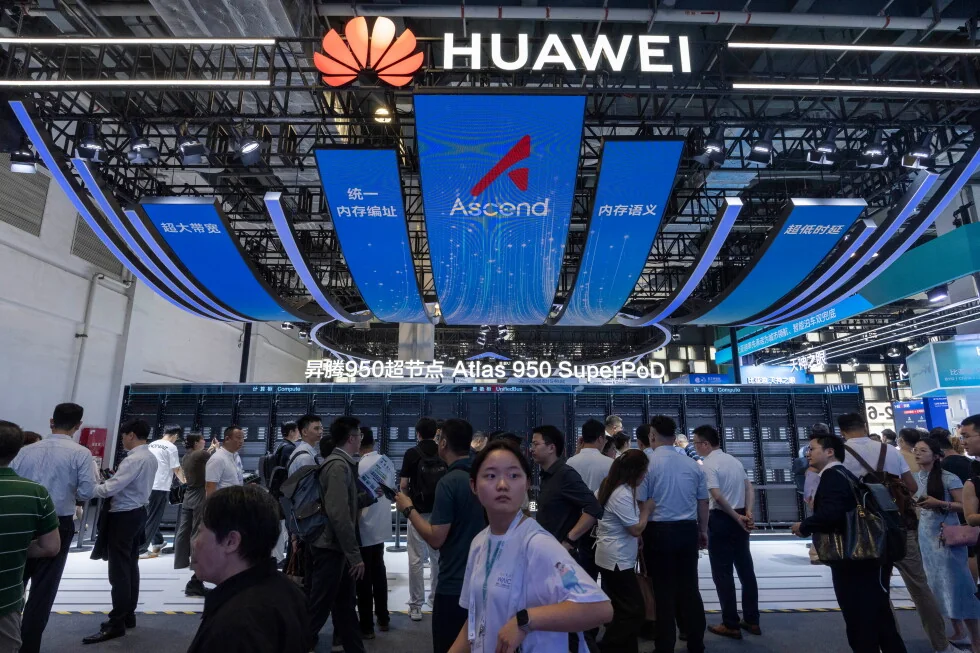
Huawei presenta novedosas tecnologías de chips mientras la empresa china intensifica la carrera de la IA con Nvidia
Huawei Unveils Novel Chip Technologies as Chinese Firm Escalates AI Race with Nvidia
Huawei presenta novedosas tecnologías de chips mientras la empresa china intensifica la carrera de la IA con Nvidia
Huawei Unveils Novel Chip Technologies as Chinese Firm Escalates AI Race with Nvidia
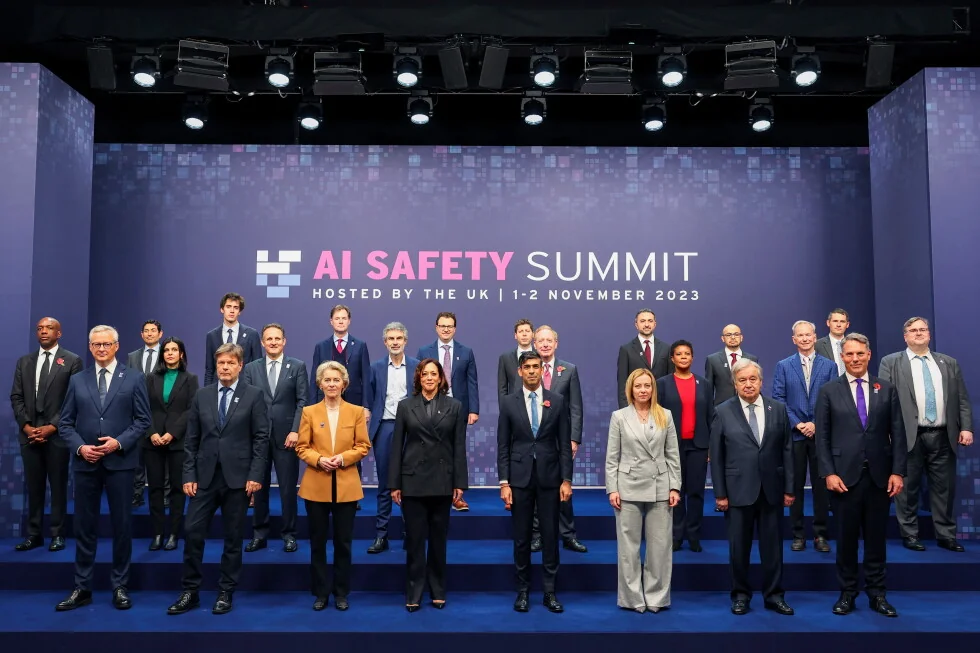
La industria tecnológica se fractura ante los llamamientos a una ralentización coordinada de la IA
Tech Industry Fractures Over Calls for a Coordinated AI Slowdown
La industria tecnológica se fractura ante los llamamientos a una ralentización coordinada de la IA
Tech Industry Fractures Over Calls for a Coordinated AI Slowdown

La seguridad global de la IA depende de la cooperación entre Estados Unidos y China, pero cada uno percibe al otro como el impedimento
Global AI Safety Hinges on US-China Cooperation, Yet Each Perceives the Other as the Impediment
La seguridad global de la IA depende de la cooperación entre Estados Unidos y China, pero cada uno percibe al otro como el impedimento
Global AI Safety Hinges on US-China Cooperation, Yet Each Perceives the Other as the Impediment
Las nuevas advertencias sobre el fin de la IA reavivan un debate perenne
Fresh AI Doom Warnings Reignite a Perennial Debate
Las nuevas advertencias sobre el fin de la IA reavivan un debate perenne
Fresh AI Doom Warnings Reignite a Perennial Debate

China se enerva ante el «alarmismo» del consejero delegado de Anthropic sobre su desarrollo de la IA
China bridles at Anthropic CEO’s ‘fearmongering’ over its AI development
China se enerva ante el «alarmismo» del consejero delegado de Anthropic sobre su desarrollo de la IA
China bridles at Anthropic CEO’s ‘fearmongering’ over its AI development