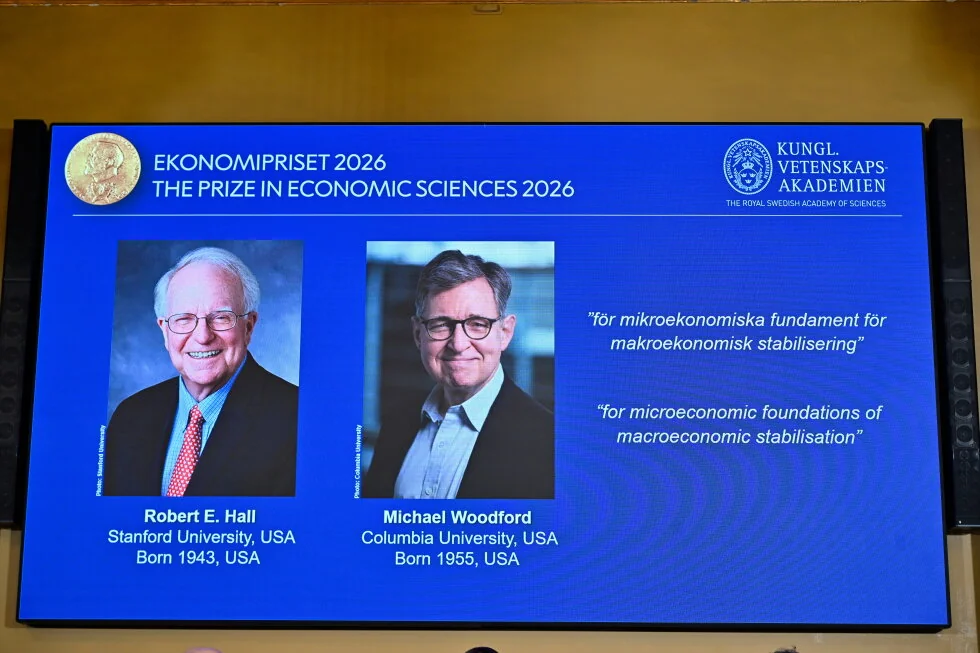
Dos economistas estadounidenses galardonados con el Premio Nobel por sus investigaciones sobre la gestión de las conmociones económicas
October 12th, 2026
Dos economistas estadounidenses galardonados con el Premio Nobel por sus investigaciones sobre la gestión de las conmociones económicas
🇪🇸 Español
American economists Robert E. Hall and Michael Woodford were on Monday awarded the Nobel Memorial Prize in economics for their formulation of models that have aided governments and central banks in managing economic shocks, such as energy crises and inflation.
The Royal Swedish Academy of Sciences, convening in Stockholm, announced the laureates, observing that their scholarship had furnished the theoretical underpinnings requisite for a more nuanced comprehension of how consumers adjudicate between saving and spending—insights that afford policymakers across the globe greater facility in stabilizing economies in the wake of fluctuations.
“The laureates’ research has rendered it feasible to manage major macroeconomic crises far more effectively than hitherto,” the Nobel committee wrote in a paper explicating the economists’ work.
“It has proven hugely beneficial amid the pandemic and the energy crises of recent years.”
Hall, 83, is affiliated with Stanford University in California, whereas Woodford, born in 1955, is affiliated with Columbia University in New York.
Addressing the committee telephonically from New York, Woodford remarked: “It’s a tremendous honor. It’s a surprise.”
Hall additionally characterised the accolade as a “wonderful surprise.”
“I have devoted my career to fathoming the workings of the economy, pursuing compelling questions wherever they might lead.
When I believed I had alighted upon a novel idea, the ensuing imperative was to ascertain whether it was genuinely novel, whether it was sound, and whether it held any consequence,” he said in a statement released by Stanford.
For decades, governments confronted economic shocks by adhering to the Depression-era prescriptions of the British economist John Maynard Keynes: intervene in the economy by lowering interest rates and taxes and hiking government spending, thereby inducing consumers and businesses to spend and invest and helping to reignite growth.
"This is the Keynesian recipe, and it performed admirably — until it ceased to," said Timo Boppart of the Nobel economics committee.
Policymakers had presupposed that economic management entailed straightforward trade-offs — unemployment, for instance, would remain subdued during periods of elevated inflation and would rise once inflation abated.
Yet the “stagflation” of the 1970s — an epoch in which the world economy endured concurrently soaring inflation and soaring unemployment — demonstrated that such a formulation was reductive in the extreme.
Certain economists contended that governmental endeavours to intervene in the economy were foredoomed to failure.
Hall and Woodford, however, in discrete contributions, undertook to refine the Keynesian model so as to account for the ways in which consumers and businesses actually arrive at decisions regarding whether to invest and spend.
“Economic outcomes are the upshot of millions of decisions taken at the microlevel by households and businesses,’’ the Nobel committee wrote.
“Employing models predicated upon this approach, rather than merely scrutinising the economy from a macro perspective, as though viewed from a bird’s eye vantage,” Hall and Woodford’s research “precipitated a paradigm shift in the theory of stabilization policy.”
Hall investigated the manner in which consumers' decisions regarding whether and to what extent to spend are contingent upon their expectations of future income.
“Should they be optimistic, they will consume more than if they are pessimistic,’’ the committee wrote.
Yet consumer expectations are liable to shift unpredictably as novel information regarding the economy emerges.
Hall ascertained that forecasting future consumer spending is well-nigh impossible.
The notion that consumption is largely unpredictable “is not good news for forecasters, or policymakers,” Olivier Blanchard, who was chief economist at the International Monetary Fund during the 2008 financial crisis, said by email.
“But it is news they must take into account in thinking about the effects of policy.”
Hall further probed the notion that certain households are so financially constrained that they are unable to borrow or draw upon savings in response to economic fluctuations.
In a 1982 paper co-authored with the economist Fredric Mishkin, Hall ascertained that approximately 80% of households predicated their spending decisions on their expectations for the future “while the rest lived hand to mouth,” the committee wrote.
“The prize recognizes research that advances our comprehension of macroeconomics from the ground up—from households and enterprises engaged in intertemporal decision-making, all the while peering forward,” Ivan Werning, an economist at the Massachusetts Institute of Technology, remarked in an email.
Woodford's research established that firms' pricing decisions are predicated upon their expectations regarding the future trajectory of interest rates.
“Should a business anticipate that its competitors’ prices and its own costs will rise, it would be prudent to establish a higher price than it would under the contrary expectation,” the Nobel committee wrote.
“Businesses’ decisions are thus likewise contingent upon their expectations.”
Consequently, central banks—such as the U.S. Federal Reserve, which determines short-term interest rates—ought to furnish “clear and credible communication about how they reason and what they plan to do.”
Central banks have responded to this insight by redoubling their efforts to elucidate their actions.
The incoming Fed chair, Kevin Warsh, has remarked that the drift toward such “forward guidance” was carried to excess.
He is endeavoring to curtail the extent to which the U.S. central bank divulges its deliberations and its intentions.
Woodford’s research likewise proffered counsel as to how central banks ought to react to energy price shocks — such as the one that ensued from the U.S. and Israeli attack on Iran in February — which are capable both of stoking inflation and of driving unemployment upwards.
“In contradistinction to conventional Keynesian paradigms, Woodford’s framework advocates a restrictive intervention—namely, an elevation of interest rates—so as to forestall runaway inflation,” the Nobel committee wrote.
“His perspicacity has rendered it feasible to contend with contemporary supply shocks with a efficacy surpassing that witnessed during the oil crises of the 1970s.”
During the telephone call broadcast at a news conference, Woodford asserted that his work had placed emphasis upon “the understanding of the people who are in the markets and making decisions about spending.”
The economics prize is formally designated the Bank of Sweden Prize in Economic Sciences in Memory of Alfred Nobel, an accolade instituted in 1968 by the central bank as a commemorative tribute to Nobel — the 19th-century Swedish businessman and chemist who devised dynamite and endowed the five Nobel Prizes.
Nobel purists emphasise that the economics prize is, strictly speaking, not a Nobel Prize, yet it is invariably conferred alongside the others on Dec. 10, the anniversary of Nobel's death in 1896.
The roll of Nobel laureates was disclosed last week in the fields of medicine, physics, chemistry, literature, and peace.
Monday’s accolade constituted the second Nobel laureateship conferred upon a Stanford University professor this year.
Dr. Karl Deisseroth shared the medicine prize with Peter Hegemann and Georg Nagel for their endeavours, which yielded a tool that harnesses light to help elucidate the workings of the brain.
The prize money this year stands at 12 million Swedish kronor (approximately $1.2 million), irrespective of whether it is conferred upon an individual, a small group of laureates, or an organization.
October 12th, 2026
Trending Articles
El Partido Republicano se apoya en el voto agrícola mientras una cosecha costosa suscita preocupación; Trump se dirige a Kansas
GOP Relying on Farmers' Votes as Costly Harvest Stirs Concern; Trump Heads to Kansas
El Partido Republicano se apoya en el voto agrícola mientras una cosecha costosa suscita preocupación; Trump se dirige a Kansas
GOP Relying on Farmers' Votes as Costly Harvest Stirs Concern; Trump Heads to Kansas
Musk promete asignar una participación en SpaceX a «todos los niños de Estados Unidos»
Musk vows to allocate a stake in SpaceX to ‘every kid in America’
Musk promete asignar una participación en SpaceX a «todos los niños de Estados Unidos»
Musk vows to allocate a stake in SpaceX to ‘every kid in America’
La economía de China se acelera en el trimestre julio-septiembre gracias a unas exportaciones robustas
China’s Economy Accelerates in July–September Quarter on Robust Exports
La economía de China se acelera en el trimestre julio-septiembre gracias a unas exportaciones robustas
China’s Economy Accelerates in July–September Quarter on Robust Exports
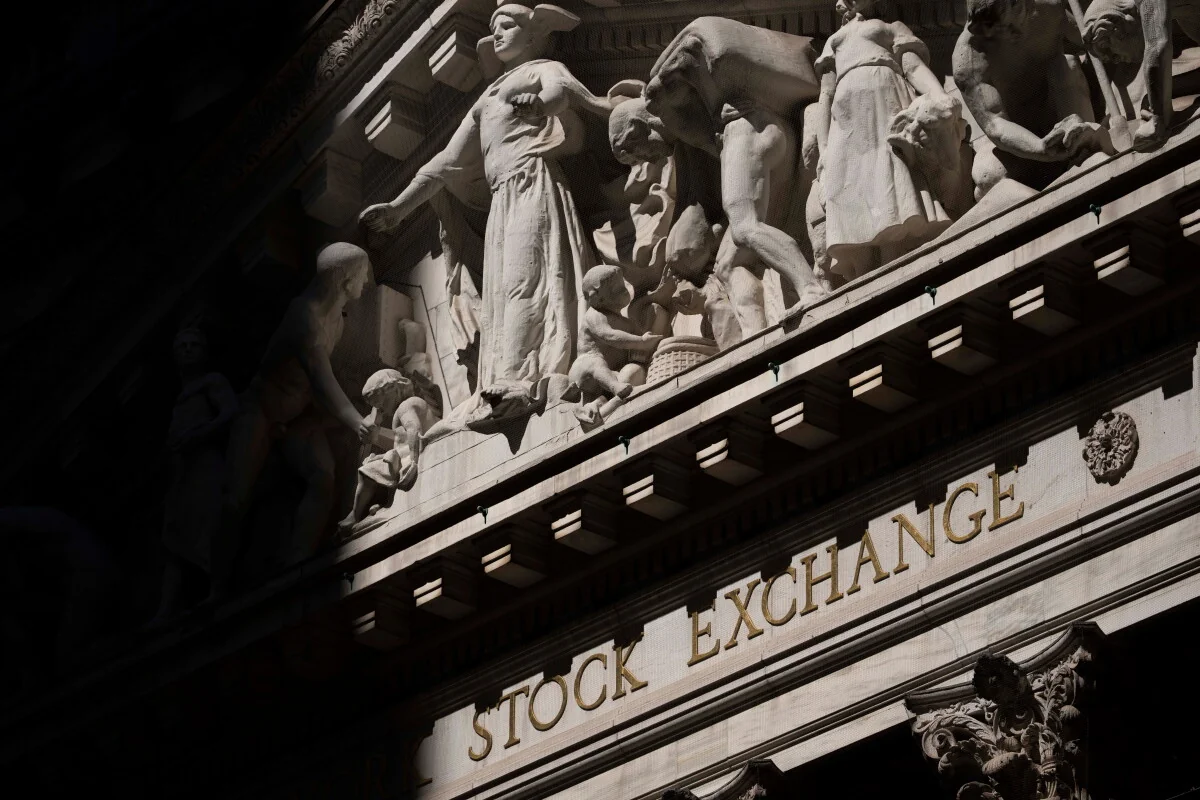
Las acciones de IA impulsan el repunte de Wall Street mientras los mercados europeos se desploman en medio de protestas
AI Stocks Propel Wall Street Rebound as European Markets Slump Amid Protests
Las acciones de IA impulsan el repunte de Wall Street mientras los mercados europeos se desploman en medio de protestas
AI Stocks Propel Wall Street Rebound as European Markets Slump Amid Protests
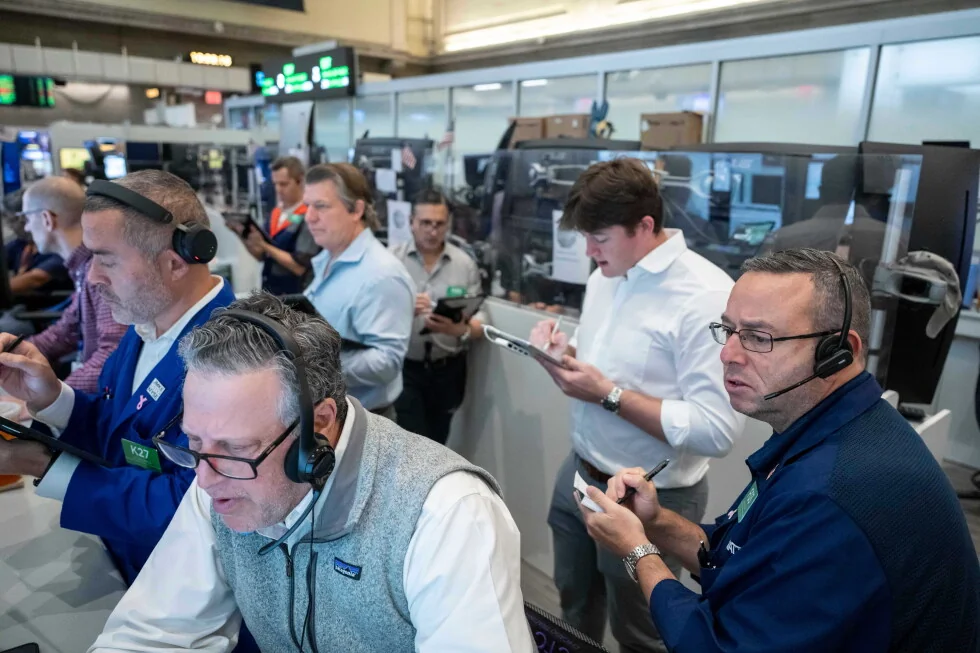
Las acciones estadounidenses se mantienen cerca de máximos históricos en medio de un comercio mixto en Wall Street
US equities linger near record highs amid mixed Wall Street trading
Las acciones estadounidenses se mantienen cerca de máximos históricos en medio de un comercio mixto en Wall Street
US equities linger near record highs amid mixed Wall Street trading

De la conducción «sin manos» a la «sin ojos»: el camino simulado de General Motors hacia la conducción autónoma
From ‘hands-free’ to ‘eyes-off’: General Motors’ simulated path to autonomous driving
De la conducción «sin manos» a la «sin ojos»: el camino simulado de General Motors hacia la conducción autónoma
From ‘hands-free’ to ‘eyes-off’: General Motors’ simulated path to autonomous driving
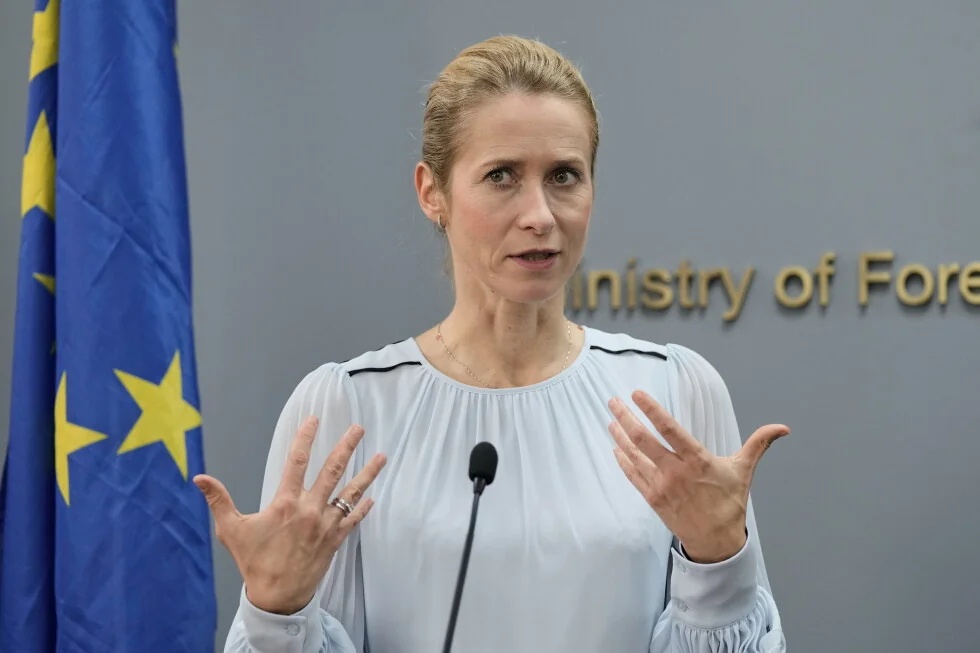
La UE sanciona a casi 1.600 entidades rusas por componentes de drones y misiles
EU Sanctions Nearly 1,600 Russian Entities Over Drone and Missile Components
La UE sanciona a casi 1.600 entidades rusas por componentes de drones y misiles
EU Sanctions Nearly 1,600 Russian Entities Over Drone and Missile Components
Wall Street se acerca a un septiembre victorioso gracias a un alentador dato de inflación
Wall Street Nears Winning September on Encouraging Inflation Update
Wall Street se acerca a un septiembre victorioso gracias a un alentador dato de inflación
Wall Street Nears Winning September on Encouraging Inflation Update
Trump desvelará una inversión surcoreana de 54.000 millones de dólares en Alaska, epicentro de una reñida contienda por el Senado
Trump to Unveil $54 Billion South Korean Investment in Alaska, Nexus of Tight Senate Race
Trump desvelará una inversión surcoreana de 54.000 millones de dólares en Alaska, epicentro de una reñida contienda por el Senado
Trump to Unveil $54 Billion South Korean Investment in Alaska, Nexus of Tight Senate Race