油价与债券走势疲软,令美国股市几乎原地踏步
September 24th, 2026
油价与债券走势疲软,令美国股市几乎原地踏步
🇨🇳 中文
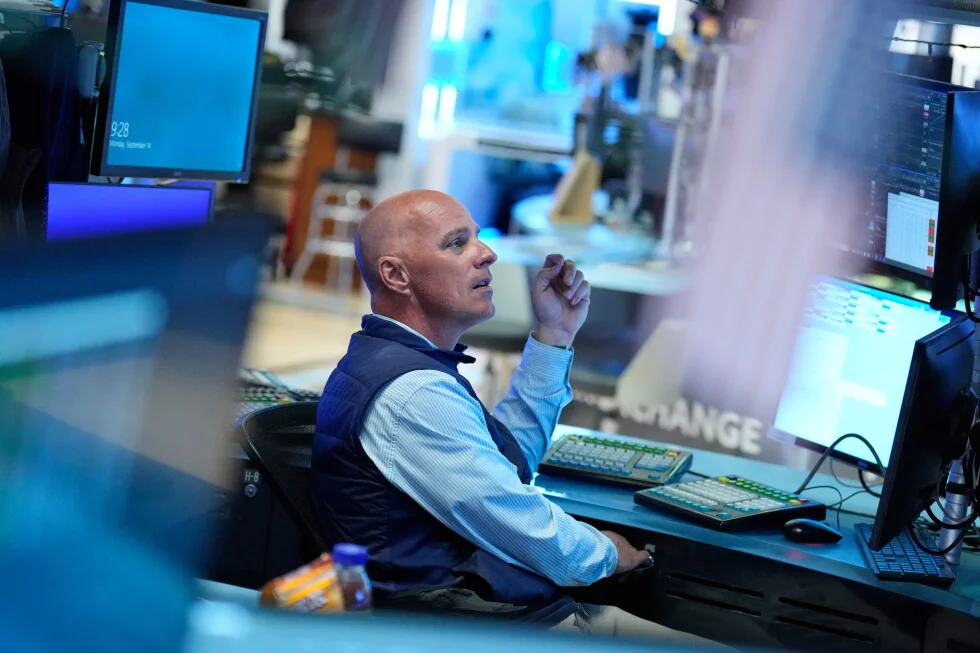
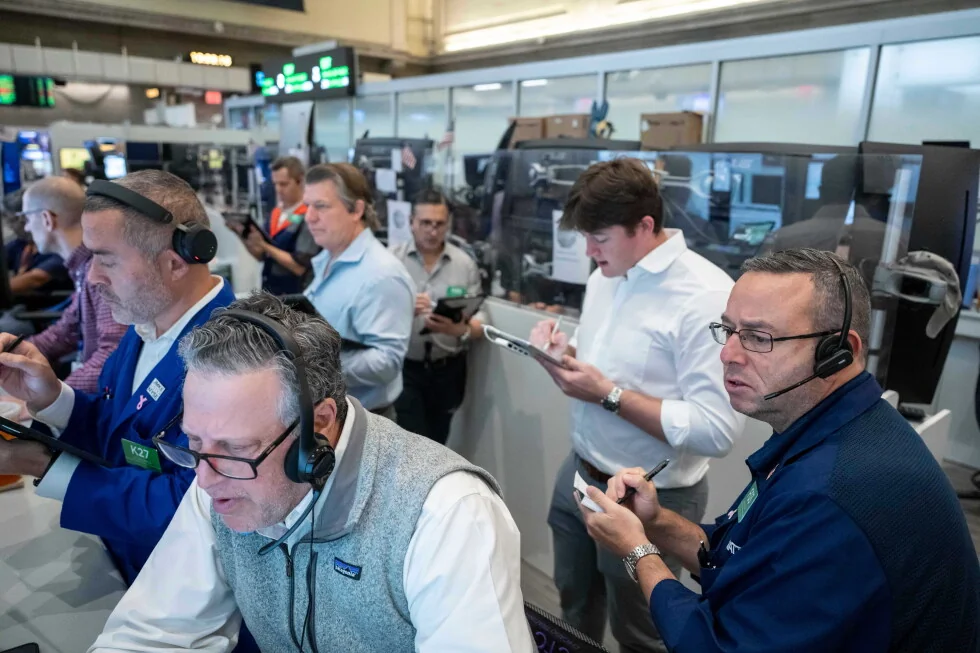
After a couple of abrupt reversals, stocks on Wall Street concluded Thursday's erratic trading session at roughly the same level where they had started.
The S&P 500 concluded the session virtually unchanged, edging down by less than 0.1% after oscillating between losses and gains on several occasions.
The Dow Jones Industrial Average shed 161 points, equivalent to 0.3%, while the Nasdaq composite gained less than 0.1%.
Stocks have slowed their rally since the S&P 500 climbed to the brink of its all-time high earlier this week, as pressure from the bond market has cranked higher.
The yield on the 10-year Treasury jumped to 5.20% from 5.11% late Wednesday and is back to where it was in 2007.
High yields slow the overall economy by making it more expensive to borrow money, while also undercutting prices for stocks and other investments.
Yields climbed throughout the morning, exerting downward pressure on stocks, until they reversed course abruptly during the midday hours.
The 10-year yield fell from nearly 5.17% to less than 5.13% over roughly 20 minutes before ultimately turning higher once more.
Yields were once again tracking oil prices, which have remained erratic owing to uncertainty about when the war with Iran will allow crude oil to flow freely again from the Middle East.
The price of a barrel of Brent crude in the most actively traded segment of the market declined from $102 to approximately $99 within minutes around midday on Thursday.
It subsequently climbed to settle at $100.22, marking a 2.1% increase from the previous day.
Certain reversals leave stocks at approximately the same level as their starting point.
It is not merely apprehensions regarding costly oil and inflation that have driven Treasury yields upward.
The U.S. economy continues to expand, which likewise underpins yields.
On Thursday, a report indicated that fewer U.S. workers filed for unemployment benefits the previous week, further reinforcing expectations regarding the economy.
Figures of this magnitude might persuade the Federal Reserve that the economy is capable of absorbing further increases to short-term interest rates.
Last week, the Fed raised its benchmark rate for the first time in three years, aiming to cool the economy and eliminate some of the impetus behind inflation.
According to data from CME Group, traders now assign a better-than-even probability that the Fed could raise rates twice more by the end of the year.
Thus far, the robust overall economy has enabled U.S. companies to sustain their delivery of substantial profit growth.
This, in turn, has helped their stock prices remain comparatively resilient notwithstanding anxieties surrounding war, inflation and tariffs.
"The headlines have become more ominous, but the underlying drivers of growth remain intact," strategists at Barclays wrote in a report.
"As long as AI-related investment, US corporate profitability, and consumer spending continue to exceed expectations, the economy and markets seem able to absorb tighter central banks and higher rates."
Stitch Fix became one of the latest U.S. companies late Wednesday to report quarterly results that surpassed analysts' expectations.
Nevertheless, its stock plummeted 21.6% after the company cautioned that “a more challenging consumer environment” could impede its revenue growth in the forthcoming fiscal year.
Darden Restaurants, the parent company of Olive Garden and LongHorn Steakhouse, saw its shares decline by 3% following the release of quarterly earnings that aligned precisely with analysts' projections.
Elevated yields in the bond market depress prices across all categories of stocks, and they frequently inflict the greatest damage on those perceived as the most expensive.
This renders AI stocks particularly vulnerable, given that they had surged for years amid the frenzy surrounding the technology.
Higher yields also make borrowing more expensive for companies building AI data centers, which could slow their construction and hold back demand for AI chips.
Nvidia slipped 0.4%, exerting the heaviest drag on the S&P 500.
Among the victors on Wall Street was Everpure.
The data storage and management company's shares surged 11.2% after it reaffirmed its financial forecasts for the current fiscal year and indicated that it anticipates revenue growth to accelerate in the next.
On balance, the S&P 500 declined 1.90 to 7,704.13 points.
The Dow Jones Industrial Average fell 161.61 to 51,349.98, while the Nasdaq composite advanced 3.34 to 26,939.37.
Overseas stock markets saw indexes decline modestly across much of the globe.
A 1.2% drop in Shanghai and a 0.8% gain in Tokyo ranked among the more pronounced movements.
September 24th, 2026
Trending Articles
共和党依赖农民的选票;特朗普前往堪萨斯州之际,高昂的收成成本引发担忧
GOP Relies on Farmers' Votes; Costly Harvest Raises Concerns as Trump Heads to Kansas
共和党依赖农民的选票;特朗普前往堪萨斯州之际,高昂的收成成本引发担忧
GOP Relies on Farmers' Votes; Costly Harvest Raises Concerns as Trump Heads to Kansas

马斯克承诺将SpaceX的一部分股份送给“美国每一个孩子”
Musk pledges to give a share of SpaceX to ‘every kid in America’
马斯克承诺将SpaceX的一部分股份送给“美国每一个孩子”
Musk pledges to give a share of SpaceX to ‘every kid in America’
中国经济在7月至9月这一季度增长势头增强,主要受强劲出口的推动。
China’s economy gained momentum in the July-September quarter, driven by robust exports
中国经济在7月至9月这一季度增长势头增强,主要受强劲出口的推动。
China’s economy gained momentum in the July-September quarter, driven by robust exports
AI股票推动华尔街反弹,欧洲市场则在抗议中下跌
AI stocks drive Wall Street rebound as European markets fall amid protests
AI股票推动华尔街反弹,欧洲市场则在抗议中下跌
AI stocks drive Wall Street rebound as European markets fall amid protests
美国股市在华尔街涨跌互现的交易中徘徊于历史高点附近
US stocks linger near record highs amid mixed Wall Street trading
美国股市在华尔街涨跌互现的交易中徘徊于历史高点附近
US stocks linger near record highs amid mixed Wall Street trading

从“解放双手”到“解放双眼”:通用汽车基于仿真的自动驾驶之路
From ‘hands-free’ to ‘eyes-off’: General Motors’ simulation-based path to autonomous driving
从“解放双手”到“解放双眼”:通用汽车基于仿真的自动驾驶之路
From ‘hands-free’ to ‘eyes-off’: General Motors’ simulation-based path to autonomous driving

欧盟就无人机和导弹零部件问题对近1600名俄罗斯人和企业实施制裁
EU sanctions almost 1,600 Russians and companies over drone and missile components
欧盟就无人机和导弹零部件问题对近1600名俄罗斯人和企业实施制裁
EU sanctions almost 1,600 Russians and companies over drone and missile components
两名美国经济学家因经济冲击管理研究获诺贝尔奖
Two American economists awarded Nobel Prize for research on economic shock management
两名美国经济学家因经济冲击管理研究获诺贝尔奖
Two American economists awarded Nobel Prize for research on economic shock management
华尔街在令人鼓舞的通胀数据更新后有望迎来胜利的九月
Wall Street Nears Winning September After Encouraging Inflation Update
华尔街在令人鼓舞的通胀数据更新后有望迎来胜利的九月
Wall Street Nears Winning September After Encouraging Inflation Update
特朗普将在阿拉斯加公布韩国540亿美元的投资,而该州参议院选情胶着
Trump to unveil $54 billion in South Korean investment in Alaska, where a Senate race is tight
特朗普将在阿拉斯加公布韩国540亿美元的投资,而该州参议院选情胶着
Trump to unveil $54 billion in South Korean investment in Alaska, where a Senate race is tight