共和党依赖农民的选票;特朗普前往堪萨斯州之际,高昂的收成成本引发担忧
October 19th, 2026
共和党依赖农民的选票;特朗普前往堪萨斯州之际,高昂的收成成本引发担忧
🇨🇳 中文
Glenn Brunkow, a fifth-generation Kansas farmer, describes this time of year as "go time," when farmers combine fields, haul crops to town and move livestock from summer pastures to their winter homes.
But this harvest season, they are doing so with diesel prices more than $2.50 per gallon higher than a year ago, adding to the financial strain caused by rising costs, unpredictable markets and shrinking profits.
“It appears to be coming at us from every direction,” said Brunkow, president of the Kansas Farm Bureau.
The economic strain is becoming an increasingly pressing political concern for Republicans in states they have long dominated.
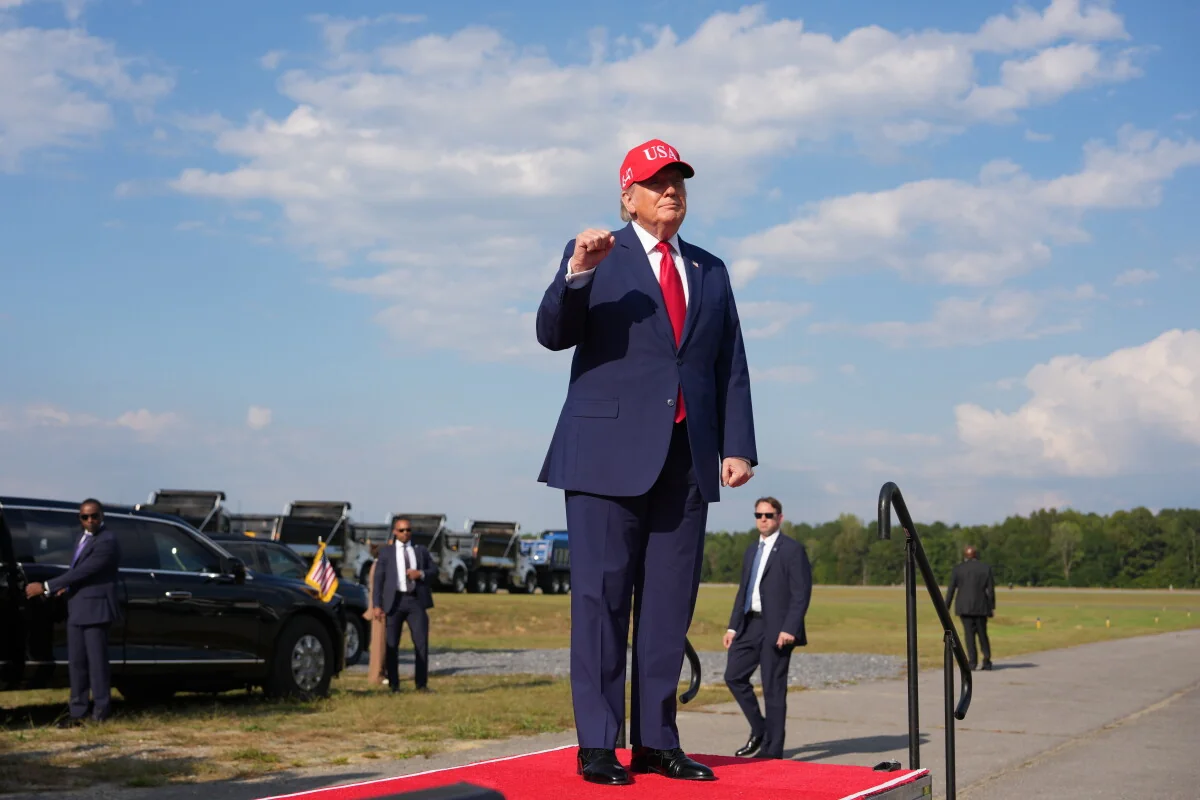
President Donald Trump is heading to Kansas on Monday and Iowa later in the week, the latest in a series of stops where he is endeavoring to galvanize his base in the final weeks before the midterm elections.
The visits come as Republicans pour money into Senate races in Kansas, Nebraska and Iowa amid concerns about voter enthusiasm.
The anxiety may be especially notable in Kansas — a state Trump won by 16 percentage points against Democrat Kamala Harris in 2024 — as Republican Sen. Roger Marshall faces a tough challenge from Democrat Adam Hamilton.
Democrats have not won a Senate election in Kansas in 94 years.
Brunkow, whose organization endorsed Marshall, said he had frequently been asked whether economic frustrations might prompt Republican farmers to vote for Democrats.
“I don’t believe it inevitably accomplishes that,” Brunkow said.
“But I do think it diminishes the enthusiasm of agricultural producers to turn out at the polls.”
Don Hineman, a western Kansas rancher and former Republican state House majority leader, said he is witnessing growing frustration among GOP voters beyond just farmers, including some who have backed Trump across multiple elections.
He said farmers understand that Trump’s tariffs have hurt their businesses and are upset over the ongoing war with Iran.
Immigration has also become a source of concern, particularly following recent immigration raids in western Kansas that resulted in the detention of more than 100 people.
“We need a secure border — we can all agree on that,” Hineman said.
“But we also need a workable immigration policy that furnishes the workforce upon which the United States has always depended and will always continue to need.”
Hineman said the traditional Republican argument in Kansas — that electing Democrats would empower the party’s liberal wing — is losing its effectiveness with some voters, including himself.
“I am tired of being swayed by claims that the boogeyman is coming to get us,” he said.
“I am so fed up with the Republican Party and its readiness to act as sycophants to our current commander in chief that I am willing to consider alternatives.”
Debbie Geneva, 61, of Nortonville, Kansas, said she was impressed by Hamilton after he visited a local market to meet people, something she hasn’t seen Marshall do.
She’s never voted for a Democrat, she said, but remains undecided about the Senate race.
“I’ve never voted for a Democrat in my entire life, so being undecided is somewhat disconcerting for me,” said Geneva.
“I mentioned that to one of my friends, and they can scarcely believe it, but that’s simply how I feel at the moment.”
Geneva said that escalating costs for healthcare and everyday expenses had compounded her frustrations.
“And then, naturally, there are the trade agreements,” she added.
“The Republicans have hardly done the Midwest any favours in that regard.”
Farmers have endured months of mounting pressure as the costs of inputs such as diesel, fertilizer and seed have soared, driven by refinery constraints and supply disruptions linked to the Iran war.
Diesel averaged $6.30 per gallon nationwide on Friday, exceeding year-ago levels by more than 70%, according to the motor club AAA.
The surge has proved particularly burdensome during harvest season, when farmers rely heavily on fuel to operate machinery and transport crops.
“This is a time of year when we consume a considerable amount of fuel, and there is simply very little we can do about it,” Brunkow said.
“The margins are tight, and anything that erodes that margin is genuinely detrimental.”
The U.S. Department of Agriculture projects that net farm income will decline by 2.6% this year, driven by a 4.5% rise in production expenses.
According to the agency’s September forecast, fuel and oil expenses alone are expected to surge by nearly 30%.
The Trump administration has sought to alleviate some of those burdens.
Earlier this month, Trump signed an executive order aimed at relaxing restrictions on the tax-free use of red-dyed diesel, a decision he claimed would save “millions” for farmers.
This followed a $12 billion aid package for farmers that the Trump administration had announced in December.
However, these efforts have not dispelled the frustrations of some farmers who had expected their financial outlook to improve under Trump.
Brunkow said many farmers “thought it would be better” under Trump, although he believes most would still regard him as the preferable option in the 2024 election.
“He’s made some unforced errors,” said Brunkow.
“Miscalculations, ill-considered advice, which had unintended consequences.”
On Thursday, Trump will travel to Iowa, where Republicans are defending competitive races for governor and Senate.
The state, which Trump has carried in three consecutive presidential elections, is another agricultural stronghold where economic frustrations have become part of the political debate.
In Nebraska, Senate Republicans have channeled nearly $15 million into the contest between GOP Sen. Pete Ricketts and independent candidate Dan Osborn—an unprecedented amount for a state that Trump won by 20 percentage points in 2024.
David McIntosh, president of the influential Club for Growth, said his group has been closely monitoring the heavily agricultural states since summer and acknowledged concerns about a drop-off in enthusiasm.
His group is spending millions of dollars on behalf of GOP candidates in Kansas, Nebraska and elsewhere.
“Farmers are squeezed between higher input prices and a smaller international market because of retaliatory tariffs,” McIntosh said.
“The economic environment has not been good.”
Democrats, for their part, perceive an opportunity in the economic frustrations, even in states where they have struggled to prevail in statewide elections.
Former Sen. Jon Tester, a Montana Democrat who lost his bid for reelection in 2024, said there is “no doubt” that Democrats will perform better than anticipated in agricultural states.
“These individuals have bills to pay at the end of the month, and for several months now that has been difficult to manage,” said Tester.
“This goes far beyond politics.”
A third-generation farmer, Tester said he first began farming in 1978 and witnessed the farm crisis of the 1980s, when “a fair number of my neighbors left town.”
“We’re setting up for the same kind of situation,” said Tester.
“The economics of family farm production agriculture at present are probably worse now than they were in the 1980s.”
October 19th, 2026
Trending Articles
马斯克承诺将SpaceX的一部分股份送给“美国每一个孩子”
Musk pledges to give a share of SpaceX to ‘every kid in America’
马斯克承诺将SpaceX的一部分股份送给“美国每一个孩子”
Musk pledges to give a share of SpaceX to ‘every kid in America’
中国经济在7月至9月这一季度增长势头增强,主要受强劲出口的推动。
China’s economy gained momentum in the July-September quarter, driven by robust exports
中国经济在7月至9月这一季度增长势头增强,主要受强劲出口的推动。
China’s economy gained momentum in the July-September quarter, driven by robust exports
AI股票推动华尔街反弹,欧洲市场则在抗议中下跌
AI stocks drive Wall Street rebound as European markets fall amid protests
AI股票推动华尔街反弹,欧洲市场则在抗议中下跌
AI stocks drive Wall Street rebound as European markets fall amid protests
美国股市在华尔街涨跌互现的交易中徘徊于历史高点附近
US stocks linger near record highs amid mixed Wall Street trading
美国股市在华尔街涨跌互现的交易中徘徊于历史高点附近
US stocks linger near record highs amid mixed Wall Street trading

从“解放双手”到“解放双眼”:通用汽车基于仿真的自动驾驶之路
From ‘hands-free’ to ‘eyes-off’: General Motors’ simulation-based path to autonomous driving
从“解放双手”到“解放双眼”:通用汽车基于仿真的自动驾驶之路
From ‘hands-free’ to ‘eyes-off’: General Motors’ simulation-based path to autonomous driving
欧盟就无人机和导弹零部件问题对近1600名俄罗斯人和企业实施制裁
EU sanctions almost 1,600 Russians and companies over drone and missile components
欧盟就无人机和导弹零部件问题对近1600名俄罗斯人和企业实施制裁
EU sanctions almost 1,600 Russians and companies over drone and missile components
两名美国经济学家因经济冲击管理研究获诺贝尔奖
Two American economists awarded Nobel Prize for research on economic shock management
两名美国经济学家因经济冲击管理研究获诺贝尔奖
Two American economists awarded Nobel Prize for research on economic shock management
华尔街在令人鼓舞的通胀数据更新后有望迎来胜利的九月
Wall Street Nears Winning September After Encouraging Inflation Update
华尔街在令人鼓舞的通胀数据更新后有望迎来胜利的九月
Wall Street Nears Winning September After Encouraging Inflation Update
特朗普将在阿拉斯加公布韩国540亿美元的投资,而该州参议院选情胶着
Trump to unveil $54 billion in South Korean investment in Alaska, where a Senate race is tight
特朗普将在阿拉斯加公布韩国540亿美元的投资,而该州参议院选情胶着
Trump to unveil $54 billion in South Korean investment in Alaska, where a Senate race is tight