债券收益率为何攀升——以及为何这关乎每个人
September 24th, 2026
债券收益率为何攀升——以及为何这关乎每个人
🇨🇳 中文
The effects of what is happening in the bond market will be felt by almost everyone, however distant and abstract it may seem.
Bond yields have surged to their highest levels in approximately two decades, a development that has ramifications for anyone who borrows money.
This encompasses discouraged individuals striving to keep pace with elevated inflation, as well as enterprises seeking to construct data centers for artificial-intelligence technology.
Elevated yields exert an impact even on those who refrain from borrowing.
For savers, this translates into the potential to accrue greater interest by allocating cash toward bonds or a high-yield savings account.
It could likewise diminish the value of the stocks held within their 401(k) accounts.
And for all U.S. taxpayers, higher yields could mean higher interest payments for their federal government, which must keep borrowing to cover the huge gap between what it spends and what it takes in.
That would leave less money for everything else.
Here is an examination of what is transpiring and what it signifies:
When governments and large corporations require capital, they do not turn to a bank for a loan.
Instead, they sell IOUs to investors, pledging to repay the sum at a specified interest rate.
IOUs that are redeemed years later are designated as bonds.
Once issued, investors trade these IOUs in the bond market.
If bonds start to look less appealing—for example, when inflation worries increase—a buyer can purchase one previously worth $100 for less than that.
Even when a bond’s price declines, it continues to remit the same rate of interest.
Consequently, the new purchaser will obtain a proportionally greater return on their investment than the interest rate the bond pays on its face value.
Such payments are referred to as the bond’s yield.
Put differently, a decline in a bond's price is accompanied by a corresponding rise in its yield, and conversely.
The centerpiece of the bond market is the U.S. Treasury, the IOU the U.S. government sells to borrow money.
Yields on U.S. Treasurys are the baseline on which the interest rate for most other kinds of borrowing is based.
For a prospective homeowner, for instance, the interest rate on a 30-year fixed mortgage will largely correspond to the yield on the 10-year Treasury, with the difference—whether small or large—depending on how good or bad their credit score is.
The U.S. Treasury market consists of various segments, from short-term bills that mature in just a few days to bonds that will be repaid in three decades.
Each segment influences different types of loans, whether it affects how much a saver can earn on a 12-month certificate of deposit or how much interest a company will pay to borrow money to expand its factories.
The various segments of the bond market do not invariably move in tandem, yet at present, they are all ascending.
On Thursday, the yield on the 10-year Treasury climbed to nearly 5.18%, returning to a level last seen in 2007, before the 2008 financial crisis and the Great Recession drove yields toward zero.
It had been climbing ever since bottoming out below 0.50% in 2020 owing to the COVID pandemic.
However, its rise has accelerated since the end of February, when the war with Iran sent oil prices and inflation concerns considerably higher.
The 10-year yield stood at just 3.97% before the United States and Iran attacked Iran.
That climb has pushed the average long-term U.S. mortgage rate to 7% for the first time since early 2025, making it even harder for would-be homebuyers to afford a house.
It has also weakened a rally in the U.S. stock market, which had come back to the edge of a record high earlier this week.
High Treasury yields push down prices for all kinds of investments, from stocks to gold to cryptocurrencies.
The thinking is: why should anyone pay high prices for riskier investments, or ones that pay no dividends, when U.S. Treasurys are paying more than before?
A substantial portion of the recent surge in Treasury yields can be attributed to escalating oil prices and mounting concerns regarding inflation.
When inflation runs high, $1 a year from now will purchase less than $1 does today.
Moreover, bonds typically disburse a fixed amount of interest over a span of years into the future, which renders inflation a considerable risk.
At the same time, governments around the world keep piling up more debt.
This means they issue more bonds to borrow, and the steady rise in supply drives their prices down.
The bonds being issued by large companies aiming to build AI data centers and otherwise expand their businesses are having the same effect.
Part of the surge in Treasury yields also stems from the fact that the U.S. economy appears remarkably robust despite the numerous challenges it faces.
Treasury yields received a jolt on Wednesday, for instance, following a preliminary report indicating that growth in U.S. business activity had soared to its most vigorous level in over five years.
Data of this nature could persuade the Federal Reserve that the economy is sufficiently robust to endure further increases to the very short-term interest rate it directly controls.
Last week, the Fed raised its federal funds rate for the first time since 2023, aiming to cool the economy and deprive inflation of some of its momentum.
Traders are wagering that the Fed will raise rates once more this year and the next, a wager that has driven shorter-term Treasury yields upward.
It is not solely the U.S. Treasury market that is witnessing rising yields.
They are climbing on a global scale, as investors perceive escalating debt burdens and inflation across continents.
Germany's 10-year yield, long regarded as one of Europe's safest havens for lending, stands near 3.60%, returning to levels last seen in 2008.
Earlier this month, the European Central Bank raised its own interest rate in the hope of curbing inflation.
The Japanese 10-year yield stands at 3.08%, a dramatic reversal from the negative yield it carried as recently as 2020, when officials were attempting to stimulate the economy.
September 24th, 2026
Trending Articles

共和党依赖农民的选票;特朗普前往堪萨斯州之际,高昂的收成成本引发担忧
GOP Relies on Farmers' Votes; Costly Harvest Raises Concerns as Trump Heads to Kansas
共和党依赖农民的选票;特朗普前往堪萨斯州之际,高昂的收成成本引发担忧
GOP Relies on Farmers' Votes; Costly Harvest Raises Concerns as Trump Heads to Kansas
马斯克承诺将SpaceX的一部分股份送给“美国每一个孩子”
Musk pledges to give a share of SpaceX to ‘every kid in America’
马斯克承诺将SpaceX的一部分股份送给“美国每一个孩子”
Musk pledges to give a share of SpaceX to ‘every kid in America’
中国经济在7月至9月这一季度增长势头增强,主要受强劲出口的推动。
China’s economy gained momentum in the July-September quarter, driven by robust exports
中国经济在7月至9月这一季度增长势头增强,主要受强劲出口的推动。
China’s economy gained momentum in the July-September quarter, driven by robust exports
AI股票推动华尔街反弹,欧洲市场则在抗议中下跌
AI stocks drive Wall Street rebound as European markets fall amid protests
AI股票推动华尔街反弹,欧洲市场则在抗议中下跌
AI stocks drive Wall Street rebound as European markets fall amid protests
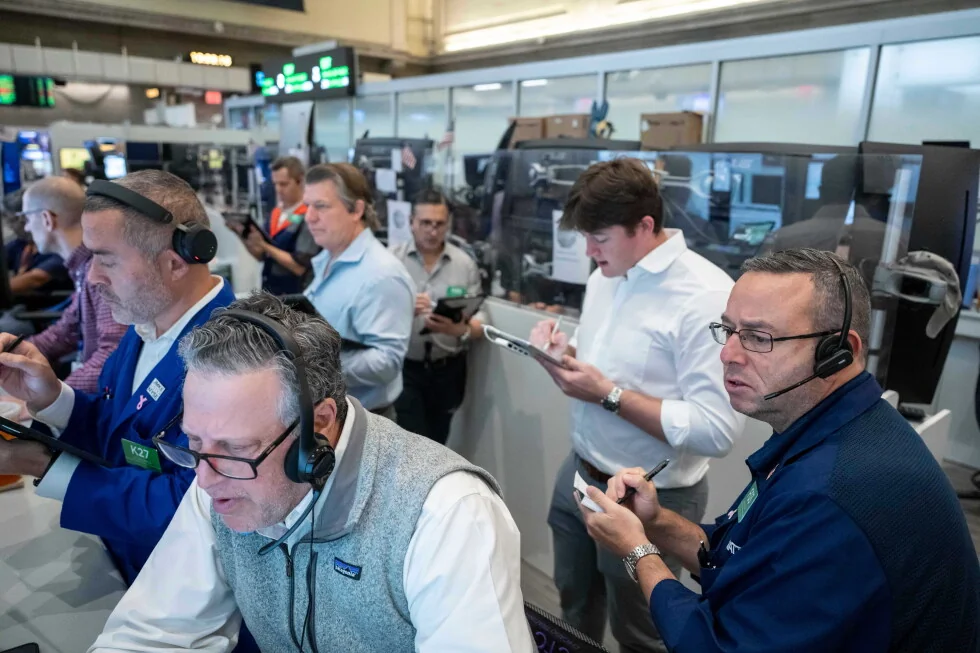
美国股市在华尔街涨跌互现的交易中徘徊于历史高点附近
US stocks linger near record highs amid mixed Wall Street trading
美国股市在华尔街涨跌互现的交易中徘徊于历史高点附近
US stocks linger near record highs amid mixed Wall Street trading

从“解放双手”到“解放双眼”:通用汽车基于仿真的自动驾驶之路
From ‘hands-free’ to ‘eyes-off’: General Motors’ simulation-based path to autonomous driving
从“解放双手”到“解放双眼”:通用汽车基于仿真的自动驾驶之路
From ‘hands-free’ to ‘eyes-off’: General Motors’ simulation-based path to autonomous driving

欧盟就无人机和导弹零部件问题对近1600名俄罗斯人和企业实施制裁
EU sanctions almost 1,600 Russians and companies over drone and missile components
欧盟就无人机和导弹零部件问题对近1600名俄罗斯人和企业实施制裁
EU sanctions almost 1,600 Russians and companies over drone and missile components

两名美国经济学家因经济冲击管理研究获诺贝尔奖
Two American economists awarded Nobel Prize for research on economic shock management
两名美国经济学家因经济冲击管理研究获诺贝尔奖
Two American economists awarded Nobel Prize for research on economic shock management
华尔街在令人鼓舞的通胀数据更新后有望迎来胜利的九月
Wall Street Nears Winning September After Encouraging Inflation Update
华尔街在令人鼓舞的通胀数据更新后有望迎来胜利的九月
Wall Street Nears Winning September After Encouraging Inflation Update
特朗普将在阿拉斯加公布韩国540亿美元的投资,而该州参议院选情胶着
Trump to unveil $54 billion in South Korean investment in Alaska, where a Senate race is tight
特朗普将在阿拉斯加公布韩国540亿美元的投资,而该州参议院选情胶着
Trump to unveil $54 billion in South Korean investment in Alaska, where a Senate race is tight