Russlands Kriegswirtschaft droht langfristige Erosion durch Schulden und Militärausgaben
September 18th, 2026
Russlands Kriegswirtschaft droht langfristige Erosion durch Schulden und Militärausgaben
🇩🇪 Deutsch
The frictions besetting Russia’s wartime economy are mounting, as prodigious military expenditure balloons the budget deficit.
Consumers and businesses alike are increasingly downcast.
Growth has decelerated.
None of that, however, portends an imminent financial crisis or economic collapse, economists contend.
With crucial oil export revenues remaining robust owing to elevated prices stemming from the Iran war, the government is able to procure the funds necessary to finance its 4 1/2-year-old invasion of Ukraine, at least for the time being.
Concurrently, the paucity of unemployment alongside governmental munificence in impoverished regions serves to suppress consumer discontent.
That image dovetails neatly with the Kremlin’s narrative of stability on the eve of Russia’s stage-managed parliamentary election, which commenced on Friday and draws to a close on Sunday.
Yet economists caution that more deep-seated, protracted afflictions are eroding the very bedrock of the system — and might, in time, precipitate a crisis.
Measures of consumer sentiment have trended downward since a peak in 2024-25, when augmented military expenditure was buoying growth and wages.
Of late, consumers have contended with elevated gasoline prices and shortages occasioned by Ukrainian drone strikes that incapacitated refineries.
Moreover, numerous small businesses have forfeited inventory and clientele owing to strikes targeting the online retailers Wildberries and Ozon.
Simultaneously, growth has decelerated from a peak surpassing 4% annual expansion in 2023-24.
The government envisages 0.6% this year, and the economy contracted in the first quarter prior to a partial recovery in the second.
The consumer sentiment index compiled by the Levada Center, an independent Russian pollster, slid to 94 over the summer, a decline from 116 in spring and summer of 2025.
Readings falling short of 100 betoken a consumer sentiment more negative than positive.
Those interrogated regarding the Moscow election predominantly voiced concerns of a rudimentary nature, centring on pensions and prices.
Alexander Vertukhin, a 72-year-old retired military prosecutor, averred that the government ought to be concentrating on “a decent standard of living for pensioners.”
As for his own circumstances, he remarked, “I’m doing fine, both financially and in every other respect.”
"By and large, I should like housing to become more affordable, and I should like pensioners to be able to live decently rather than merely eking out a survival," said Dmitry Kirillin, 26.
"I should likewise like travel within our country to be more affordable.
Those are the principal matters that first spring to mind; were I to give it further thought, I could doubtless enumerate more."
He appended, “I would prefer that prices escalate at a more measured pace, should prevailing circumstances permit.”
The gasoline predicament and the Wildberries strikes have rendered the war more conspicuous to the populace, yet they do not amount to a crisis, said Chris Weafer, CEO of the Macro-Advisory Ltd. consultancy operating across the former Soviet Union.
He characterised the economy as inhabiting a state of “tolerable stability” and the public mood as “grumbling” rather than protesting.
"The economy is under duress — it is mired in a state of stagnation, such that it remains stable yet devoid of growth," Weafer said.
"Yet neither is it teetering on the precipice of recession."
The overwhelming majority, he contended, "are not that affected" by the Ukrainian strikes.
"Just because your shopping habits are disrupted, that’s not going to change the public support for the Kremlin."
President Vladimir Putin’s approval rating has waned in recent months, yet it persists at a level exceeding that which obtained prior to the outbreak of war in 2022.
A salient indicator of strain is Russia’s budgetary shortfall and the government’s endeavours to unearth novel revenue streams.
Putin has had recourse to augmenting the value-added tax borne by consumers at the point of sale, imposing a panoply of additional levies, and tightening the fiscal treatment of small enterprises.
Yet the deficit has persisted in its upward trajectory.
By the close of July, budgetary data had disclosed a deficit amounting to 2.8% of annual economic output — nearly double the original annual budget target.
The resources remaining in Russia's reserve fund have been depleted to 1.6% of GDP, necessitating that the Kremlin resort to borrowing from domestic banks.
That, however, entails incurring exorbitant borrowing costs, with interest rates on Russian bonds reaching as high as 17%, according to Janis Kluge, an expert on Russia's finances at the German Institute for International and Security Affairs.
Budgetary strain is “adding to doubts about how long Russia can sustain the war,” he wrote in a recent report.
Russia’s central bank has kept rates elevated to contain the inflation engendered by war spending.
That places pressure on civilian companies, which are denied the privileged access to credit afforded to defense firms.
An additional conduit for financing the war effort has been the augmented private lending extended by Russia’s acquiescent banks to enterprises tied to the defense sector, with the consequence that such liabilities remain conspicuously absent from the deficit figures.
Over the protracted term, Western sanctions deprive Russia of the novel investment that would render its economy more productive.
And the risk factors — prodigious expenditure, anaemic growth, escalating indebtedness and inflated borrowing costs — impel certain economists to caution that, whilst Russia's economy has not collapsed, its structural underpinnings are being dangerously eroded.
The prevailing trajectory is, in the estimation of Torbjörn Becker of the Stockholm School of Economics, “unsustainable.”
Nevertheless, “the timing of a crisis remains highly uncertain.”
Oil export revenues—having plummeted to below $10 billion monthly in the run-up to the Iran war—recovered to $15.8 billion by June, before settling at $13.8 billion in July.
Russia’s budgetary strictures “may effectively disappear for as long as elevated energy prices persist,” Becker wrote.
To alter that, he contended, more stringent measures targeting Russia’s sanctions-circumventing oil tanker fleet must constitute a priority.
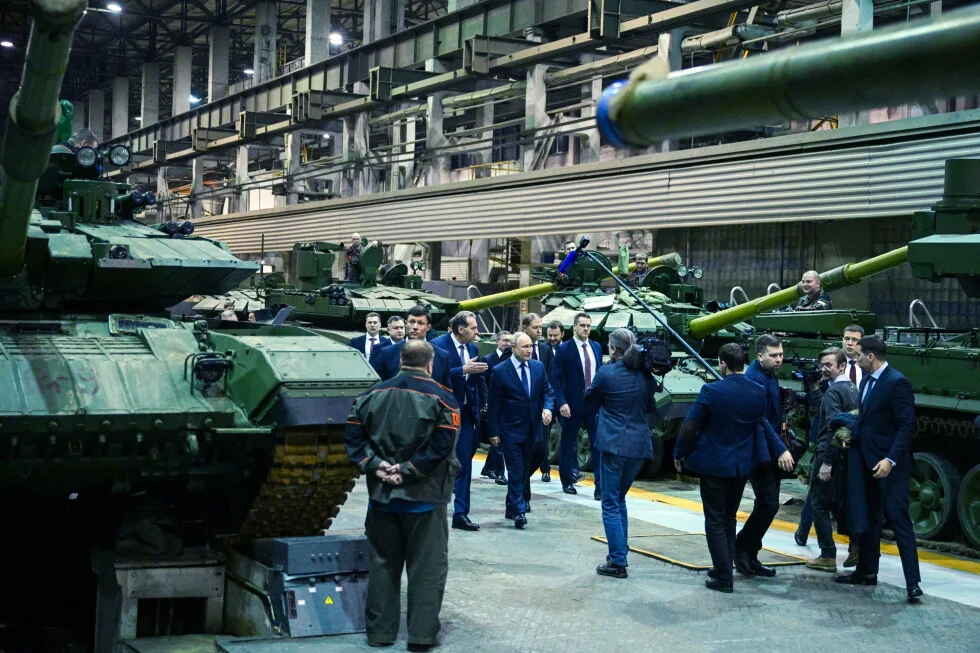
The channelling of resources into defense factories and enlistment bonuses has constituted an unequivocal boon to Russia's provinces, which remain appreciably poorer than Moscow and St. Petersburg.
With factories frequently operating at full tilt, unemployment nationwide stands at 2.2%.
The Uralvagonzavod tank factory in Nizhny Tagil, in the Urals region, has augmented its workforce from approximately 20,000 to upward of 38,000 since the invasion of Ukraine, having instituted round-the-clock production, according to a recent report from the Center for Strategic & International Studies on Russia’s defense industries.
Kupol, a manufacturer of drones and surface-to-air missiles, constitutes the largest industrial enterprise in the Udmurtia region on the Volga River and more than doubled its output in 2025.
Skilled-labor scarcities are constraining output among defense contractors and throughout the broader economy, a predicament exacerbated by the exodus of several hundred thousand predominantly younger individuals fleeing conscription and political repression.
Kremlin spokesperson Dmitry Peskov characterised month-to-month deficit figures as volatile, contending that “this is not a figure that should be cause for concern.
Macroeconomic stability is absolutely ensured.”
Yet Andrei Klepach, chief economist of Russia’s state-owned VEB.RF state development bank, cautioned in a speech that sanctions and economic isolation meant “we’re falling behind in the technological and economic competition in the world,” and that “we can’t win the competition in this war of attrition.”
He was summarily dismissed from his position.
Dasha Litvinova, reporting from Tallinn, Estonia, contributed to this article.
September 18th, 2026
Trending Articles
Das Angebot der EU an Kanada, „assoziiertes Mitglied“ zu werden: mögliche Implikationen
The EU’s “associate member” overture to Canada: potential implications
Das Angebot der EU an Kanada, „assoziiertes Mitglied“ zu werden: mögliche Implikationen
The EU’s “associate member” overture to Canada: potential implications
Das Weiße Haus gibt bekannt, dass Trump sich nächste Woche in New York mit der venezolanischen amtierenden Präsidentin Delcy Rodríguez treffen wird.
Trump to convene with Venezuelan acting President Delcy Rodríguez in New York next week, White House announces
Das Weiße Haus gibt bekannt, dass Trump sich nächste Woche in New York mit der venezolanischen amtierenden Präsidentin Delcy Rodríguez treffen wird.
Trump to convene with Venezuelan acting President Delcy Rodríguez in New York next week, White House announces

Russland beginnt mit dreitägigen Abstimmungen bei der Parlamentswahl, die geeignet ist, die Macht des Kremls zu festigen
Russia Embarks on Three Days of Voting in Parliamentary Election Poised to Entrench Kremlin’s Power
Russland beginnt mit dreitägigen Abstimmungen bei der Parlamentswahl, die geeignet ist, die Macht des Kremls zu festigen
Russia Embarks on Three Days of Voting in Parliamentary Election Poised to Entrench Kremlin’s Power
Die USA erteilen trotz Kriegshandlungen führenden iranischen Vertretern Visa für ein hochrangiges UN-Treffen
US grants visas to top Iranian leaders for UN high-level meeting despite wartime hostilities
Die USA erteilen trotz Kriegshandlungen führenden iranischen Vertretern Visa für ein hochrangiges UN-Treffen
US grants visas to top Iranian leaders for UN high-level meeting despite wartime hostilities
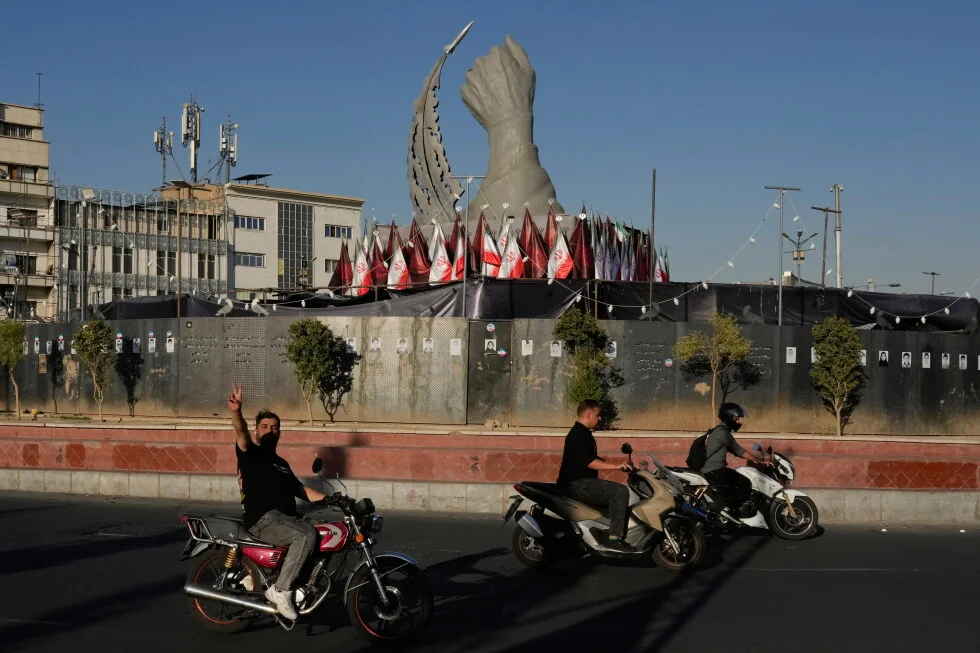
Von der UN unterstützte Experten erheben den Vorwurf möglicher US-Kriegsverbrechen bei Angriffen im Iran
UN-backed experts allege potential US war crimes in Iran strikes
Von der UN unterstützte Experten erheben den Vorwurf möglicher US-Kriegsverbrechen bei Angriffen im Iran
UN-backed experts allege potential US war crimes in Iran strikes
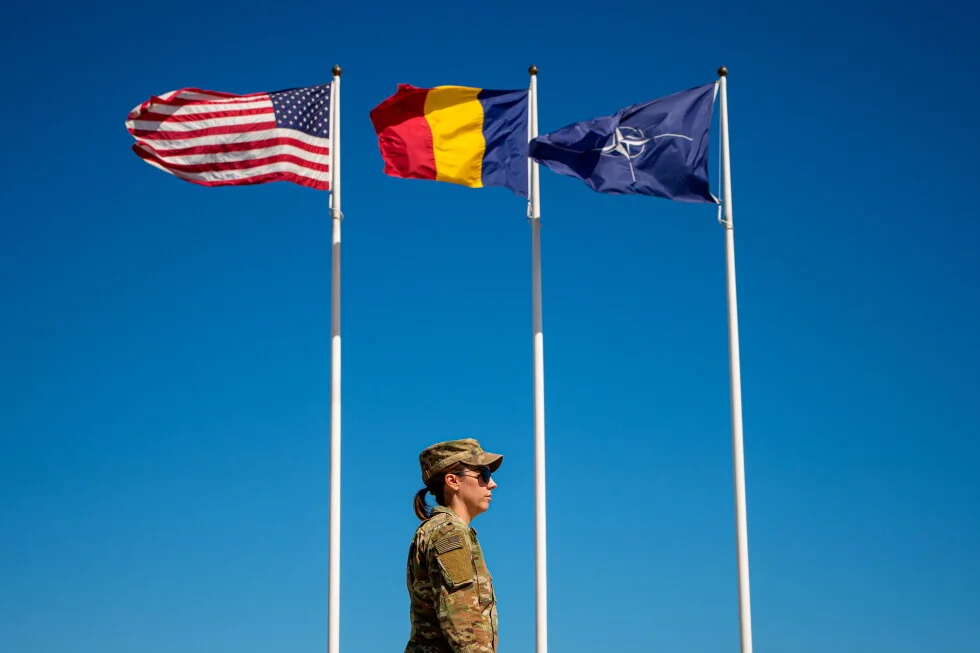
Anwohner der rumänischen Grenze alarmiert, da sich Drohnenwarnungen häufen
Romanian Border Residents Alarmed as Drone Alerts Escalate
Anwohner der rumänischen Grenze alarmiert, da sich Drohnenwarnungen häufen
Romanian Border Residents Alarmed as Drone Alerts Escalate
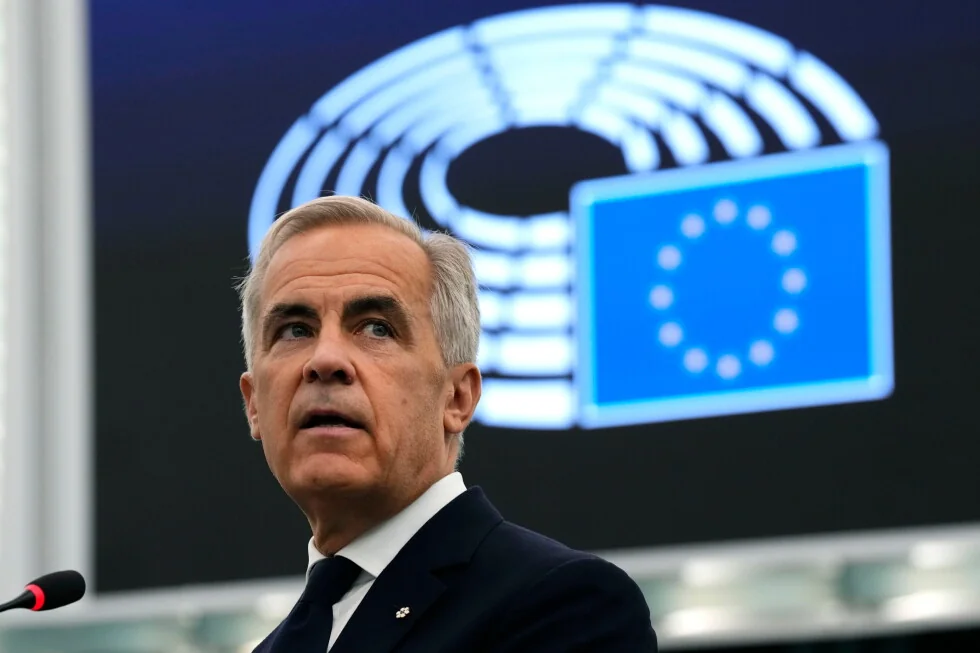
Carney begrüßt den Vorschlag einer EU-Assoziierungsmitgliedschaft, während Trump Kanada in Richtung Europa drängt
Carney Embraces EU Associate Membership Proposal as Trump Propels Canada Toward Europe
Carney begrüßt den Vorschlag einer EU-Assoziierungsmitgliedschaft, während Trump Kanada in Richtung Europa drängt
Carney Embraces EU Associate Membership Proposal as Trump Propels Canada Toward Europe

Straße von Hormus wieder geöffnet: US-Fortschritte inmitten eines unvollendeten Iran-Krieges
Strait of Hormuz Reopened: US Progress Amid an Unfinished Iran War
Straße von Hormus wieder geöffnet: US-Fortschritte inmitten eines unvollendeten Iran-Krieges
Strait of Hormuz Reopened: US Progress Amid an Unfinished Iran War

Sechs Nigerianer an die USA ausgeliefert, weil sie Frauen in Romance-Betrugsmaschen um 6 Millionen Dollar betrogen haben
Six Nigerians Extradited to US for Defrauding Women of $6M in Romance Scams
Sechs Nigerianer an die USA ausgeliefert, weil sie Frauen in Romance-Betrugsmaschen um 6 Millionen Dollar betrogen haben
Six Nigerians Extradited to US for Defrauding Women of $6M in Romance Scams