Investigadores abandonan EE. UU. en medio de los recortes de financiación de Trump y la politización de la ciencia
October 19th, 2026
Investigadores abandonan EE. UU. en medio de los recortes de financiación de Trump y la politización de la ciencia
🇪🇸 Español
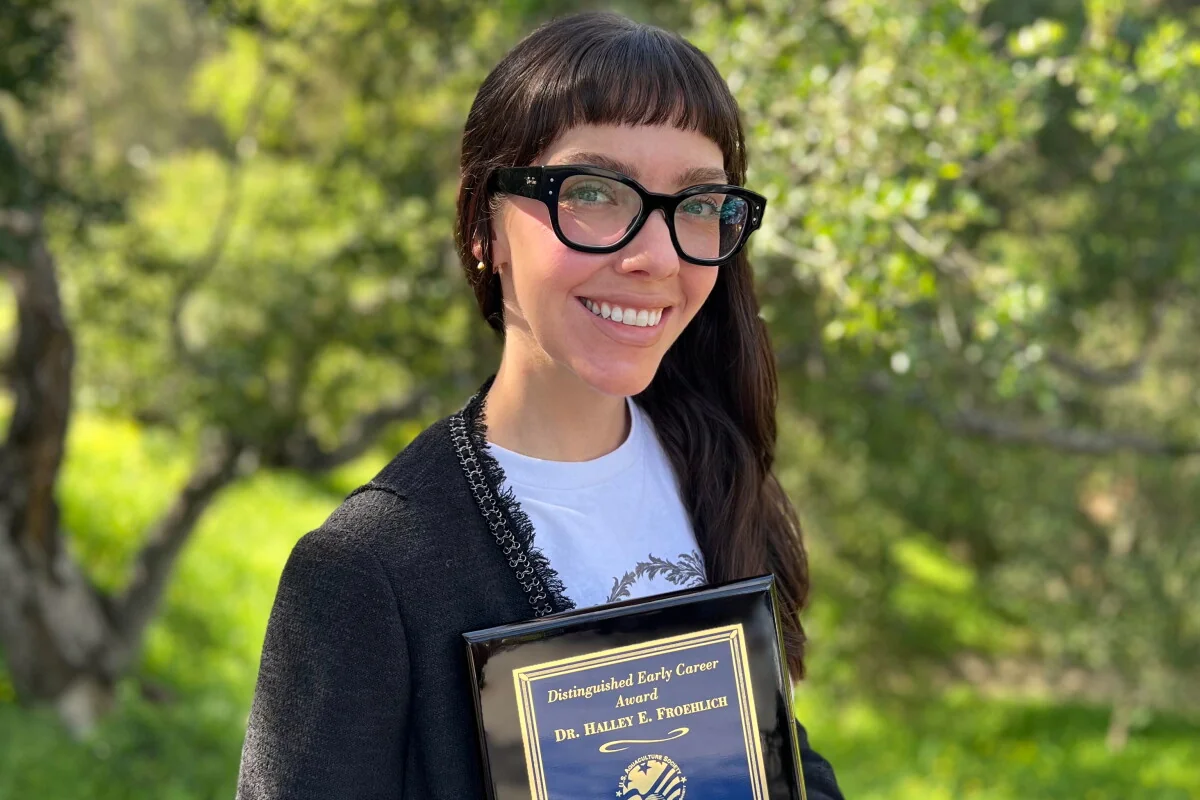
Halley Froehlich was convinced she would devote her scientific career to the United States, a country her family had inhabited since the 1700s.
Over the past two years, however, delayed federal grants and apprehension about the future had impelled her to pack her life into boxes.
She relocated to Finland with her husband and daughter and is continuing her research — investigating how the fish, shellfish and seaweed consumed by humans are responding to climate change — at the University of Helsinki.
When the Trump administration began upending U.S. scientific research last year—dismantling the federal grant-giving process and attempting to exert greater political influence over which projects get funded—foreign universities perceived an opportunity.
They adopted programs designed to lure U.S. researchers abroad, promising more stable streams of funding and academic freedom.
Since then, many have taken the bait.
While there is no means of quantifying the overall shift nationwide, scientists, researchers and professional groups contend that the change is unmistakable, unprecedented and disquieting.
"One need only speak with virtually any vice president for research at a university, and they will recount having lost one or two of their top faculty," said Tobin Smith, senior vice president of government relations and public policy for the Association of American Universities.
White House spokesperson Liz Huston said Trump is “ending waste” and is “committed to keeping America the world leader in scientific innovation, and that means funding real science.”
Yet, according to an April report from the Business for Federal Research Funding Coalition, more than half of American states have forfeited scientists to recruitment programs abroad.
Last March, early-career biomedical scientists were approximately 20 percentage points less inclined to say they would “now” remain in the U.S. than they recalled feeling six months earlier.
Moreover, physics Ph.D. graduates in 2025 departed the U.S. at the highest rate in 30 years, according to the American Institute of Physics.
Countries such as Canada, France, Belgium and Finland are vaunting their recruitment of personnel from U.S. institutions—a development that scientists describe as both disquieting and astonishing for a nation that by a wide margin leads the world in Nobel prizes for medicine, physics and chemistry.
“It was once the shining city on the hill to which we all aspired,” said Christine Stawitz, now at the University of Birmingham in England.
“That loss of repute, I think, is difficult to quantify, but it is also profoundly damaging.”
Stawitz relinquished her position at the U.S. National Oceanic and Atmospheric Administration last year to take up the role of research software engineer in the United Kingdom.
She said NOAA no longer aligned with her values, particularly after she was instructed to purge websites of references to climate change and to diversity, equity and inclusion topics.
She contends that the upheaval besetting U.S. science constitutes a perennial talking point at scientific gatherings.
“People talk about the U.S. at conferences in the U.K. now like, I don’t know what’s going on there. It’s not good,” she said.
Froehlich’s decision to leave was a slow burn.
She had already been preoccupied with school safety and gun violence in the U.S. when the nation’s research landscape was upended.
Then, at the University of California, Santa Barbara, her colleagues’ grants were repeatedly postponed or canceled.
Student researchers burst into her office in tears, at a loss as to how to navigate their futures.
She harbored concerns about future federal funding for her own research, which involves climate change.
The cumulative effect of those factors ultimately culminated in our becoming profoundly convinced that — "I don't believe this is our home any longer," said Froehlich.
Recruited through an initiative by the Research Council of Finland, she now holds five years of guaranteed funding totaling about $3 million.
She moved into a flat by the Baltic Sea in Helsinki and is taking Finnish lessons offered by the university.
International researchers who were attracted to the United States by virtue of its reputation as a global leader in science are likewise exploring alternative venues in which to pursue their work.
Married biologists James Letts and Maria Maldonado were recruited by Australia’s Monash University, relinquishing their positions at the University of California, Davis.
Letts hails from Canada, Maldonado from Argentina.
Both earned their doctoral degrees in New York and devoted over a decade to scientific work in the U.S.
Uncertainty surrounding grant funding — including the necessity of laying off a staff scientist while awaiting stalled funding — impelled them to take the leap.
“All I want is to do great science and make discoveries, yet I equally want my work to carry meaning.
And the opportunity to do so seemed exceedingly difficult in the U.S.,” Letts said.
Forty percent of the United States' science Nobel Prizes have been conferred upon immigrants.
Omar Yaghi, a 2025 Nobel laureate in chemistry, relinquished his post at the University of California, Berkeley this year in order to direct an artificial intelligence laboratory at China's Tsinghua University.
The U.S. remains a formidable scientific powerhouse, replete with institutions nationwide boasting robust research communities and well-resourced establishments that draw foreign scientists.
Even were every European country to throw open its doors, there would still be insufficient capacity to accommodate every American scientist.
Nor is everyone departing: numerous scientists are electing to remain, whether by seeking out novel sources of research funding or by pivoting towards positions within industry.
Yet the erosion of reputation and the attendant talent drain may be far from over.
According to a tracking tool released by the States United Democracy Center and the organization Grant Witness, the Trump administration has cut or frozen up to $174 billion in federal grants since the president's second term began.
Moreover, a proposed rule from the Office of Management and Budget could afford political appointees greater control over which future projects are funded.
A resolution approved by Congress has postponed a final decision on the rule until December.
Scientists who have departed and those who remain in the U.S. alike are apprehensive about what has been left behind.
They contend that the next generation of scientists may well grapple with a diminished array of graduate programs, funding and mentorship — and it could take a decade or longer for the U.S. scientific enterprise to register those effects in any meaningful way.
According to admissions data compiled by the Association of American Universities, major research institutions admitted 15% fewer applicants to fall 2026 doctoral programs than in the previous year.
Among the students affected was a mentee of Smith's.
"What, then, is one of the pieces of advice I would proffer to that young man?
Next year, look to Canada," he said.
Reporters’ health and science coverage receives financial support from reporters Fund for Journalism and private foundations.
AP is solely responsible for all content.
AP’s standards for working with philanthropies, together with a list of supporters and funded coverage areas, are available at AP.org.
October 19th, 2026
Trending Articles
El Departamento de Justicia presenta cargos contra más de dos docenas de personas en una operación en California dirigida contra presuntos votantes no ciudadanos
Justice Department Levels Charges Against Over Two Dozen in California Operation Targeting Alleged Noncitizen Voters
El Departamento de Justicia presenta cargos contra más de dos docenas de personas en una operación en California dirigida contra presuntos votantes no ciudadanos
Justice Department Levels Charges Against Over Two Dozen in California Operation Targeting Alleged Noncitizen Voters
Florida presenta cargos adicionales contra el expresidente cubano Raúl Castro
Florida Files Additional Charges Against Former Cuban President Raúl Castro
Florida presenta cargos adicionales contra el expresidente cubano Raúl Castro
Florida Files Additional Charges Against Former Cuban President Raúl Castro
Los demócratas ganan terreno entre los adultos AAPI mientras la confianza en los republicanos se erosiona, según una encuesta de datos de AP-NORC/AAPI
Democrats Gain Ground with AAPI Adults as Republican Trust Erodes, AP-NORC/AAPI Data Poll Finds
Los demócratas ganan terreno entre los adultos AAPI mientras la confianza en los republicanos se erosiona, según una encuesta de datos de AP-NORC/AAPI
Democrats Gain Ground with AAPI Adults as Republican Trust Erodes, AP-NORC/AAPI Data Poll Finds
Día de los Pueblos Indígenas: Celebración, Protesta y la Reivindicación de la Historia
Indigenous Peoples' Day: Celebration, Protest, and the Reclamation of History
Día de los Pueblos Indígenas: Celebración, Protesta y la Reivindicación de la Historia
Indigenous Peoples' Day: Celebration, Protest, and the Reclamation of History

Día de los Pueblos Indígenas: Se honra al atleta nativo Shiyazh Pete
Indigenous Peoples Day: Native Athlete Shiyazh Pete Honored
Día de los Pueblos Indígenas: Se honra al atleta nativo Shiyazh Pete
Indigenous Peoples Day: Native Athlete Shiyazh Pete Honored
Musk emerge como el donante preeminente de las elecciones de medio mandato en una maniobra encubierta para rescatar a los republicanos
Musk Emerges as Midterms' Preeminent Donor in Covert Bid to Salvage Republicans
Musk emerge como el donante preeminente de las elecciones de medio mandato en una maniobra encubierta para rescatar a los republicanos
Musk Emerges as Midterms' Preeminent Donor in Covert Bid to Salvage Republicans
Arzobispo militar de EE. UU.: los soldados católicos no deben formar parte de los pelotones de fusilamiento
U.S. Military Archbishop: Catholic Soldiers Must Not Serve on Firing Squads
Arzobispo militar de EE. UU.: los soldados católicos no deben formar parte de los pelotones de fusilamiento
U.S. Military Archbishop: Catholic Soldiers Must Not Serve on Firing Squads
Hochul exige una investigación sobre la gestión de la denuncia de violación en grupo en Cornell en 2024
Hochul Demands Inquiry into Cornell’s 2024 Gang Rape Allegation Handling
Hochul exige una investigación sobre la gestión de la denuncia de violación en grupo en Cornell en 2024
Hochul Demands Inquiry into Cornell’s 2024 Gang Rape Allegation Handling
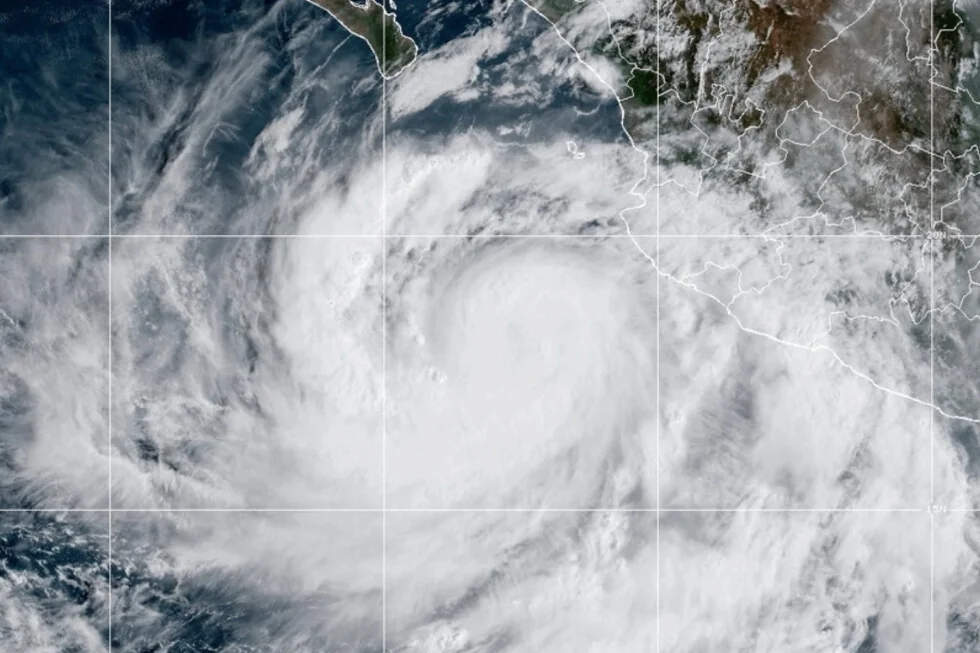
El huracán Rachel se materializa en el Pacífico, aunque los meteorólogos afirman que no amenaza ninguna masa continental
Hurricane Rachel materializes in the Pacific, yet forecasters aver it menaces no landmass
El huracán Rachel se materializa en el Pacífico, aunque los meteorólogos afirman que no amenaza ninguna masa continental
Hurricane Rachel materializes in the Pacific, yet forecasters aver it menaces no landmass