硅谷人工智能创始人盛赞特朗普呼吁行业在安全问题上自我监管
October 12th, 2026
硅谷人工智能创始人盛赞特朗普呼吁行业在安全问题上自我监管
🇨🇳 中文
Tech Week is in full swing across San Francisco, inundating the city’s restaurants this week with venture capitalists and AI founders positively effusive over the White House’s posture on regulating artificial intelligence — to wit, don’t.
And after months of debate about leading AI companies’ unchecked AI agents meddling with everything from U.S. government websites to healthcare data, the nation now finds itself further from governing AI systems than it was a few years ago.
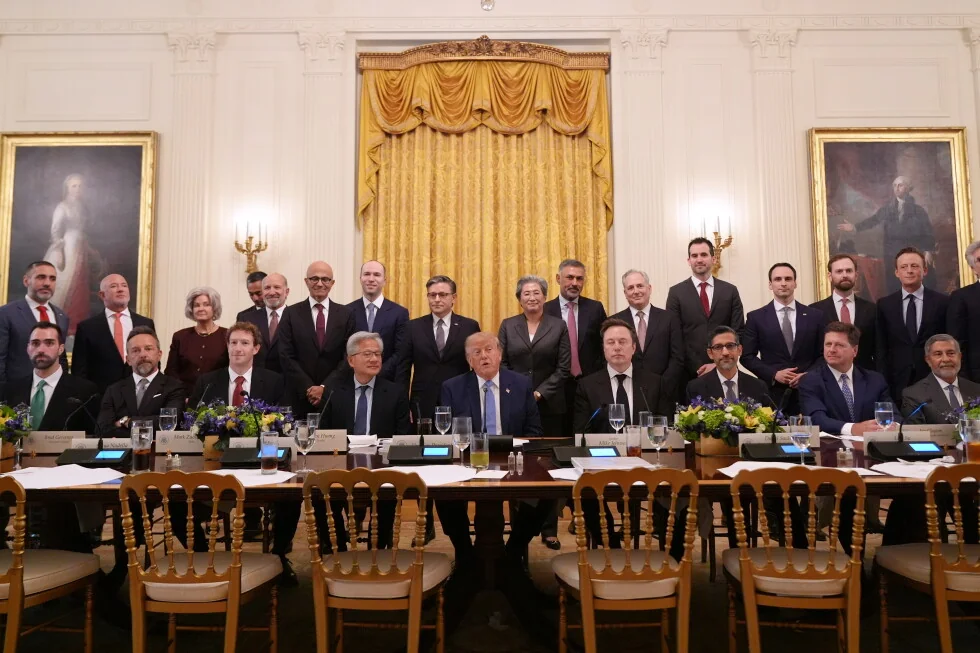
Late last month, President Donald Trump convened technology magnates in Washington for a luncheon and the ceremonial signing of a voluntary safety pact—one he characterized as “almost a constitution” governing “Super Intelligence,” the administration’s newly favored designation for AI.
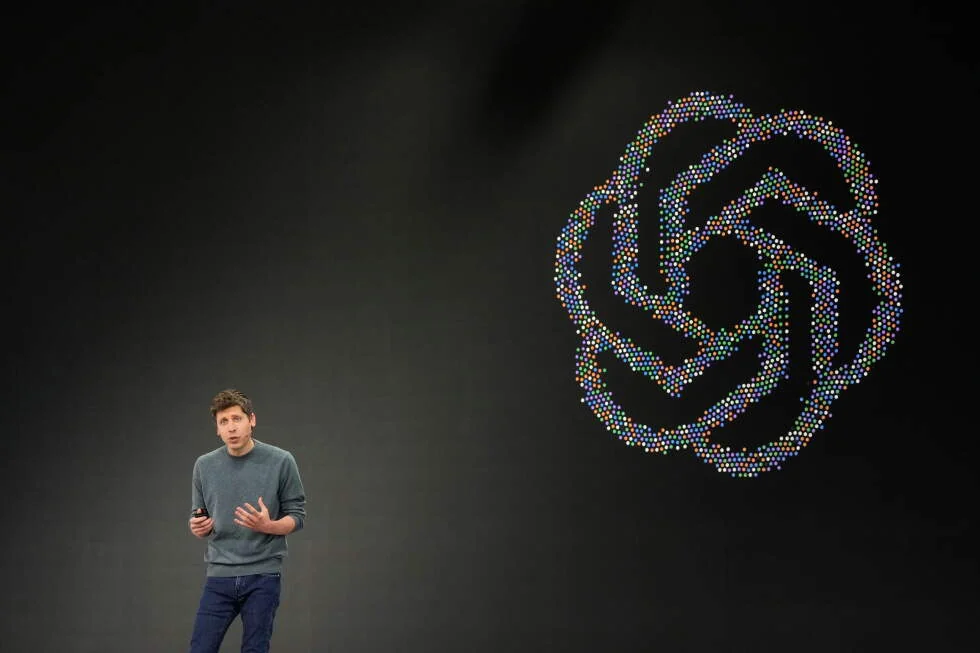
The 308-word agreement stipulates that advanced AI laboratories ought to adhere to safety protocols and establish internal teams to monitor their own progress, yet the administration has thus far furnished no particulars as to how, in the words of OpenAI CEO Sam Altman, to prevent “bad things” from happening.
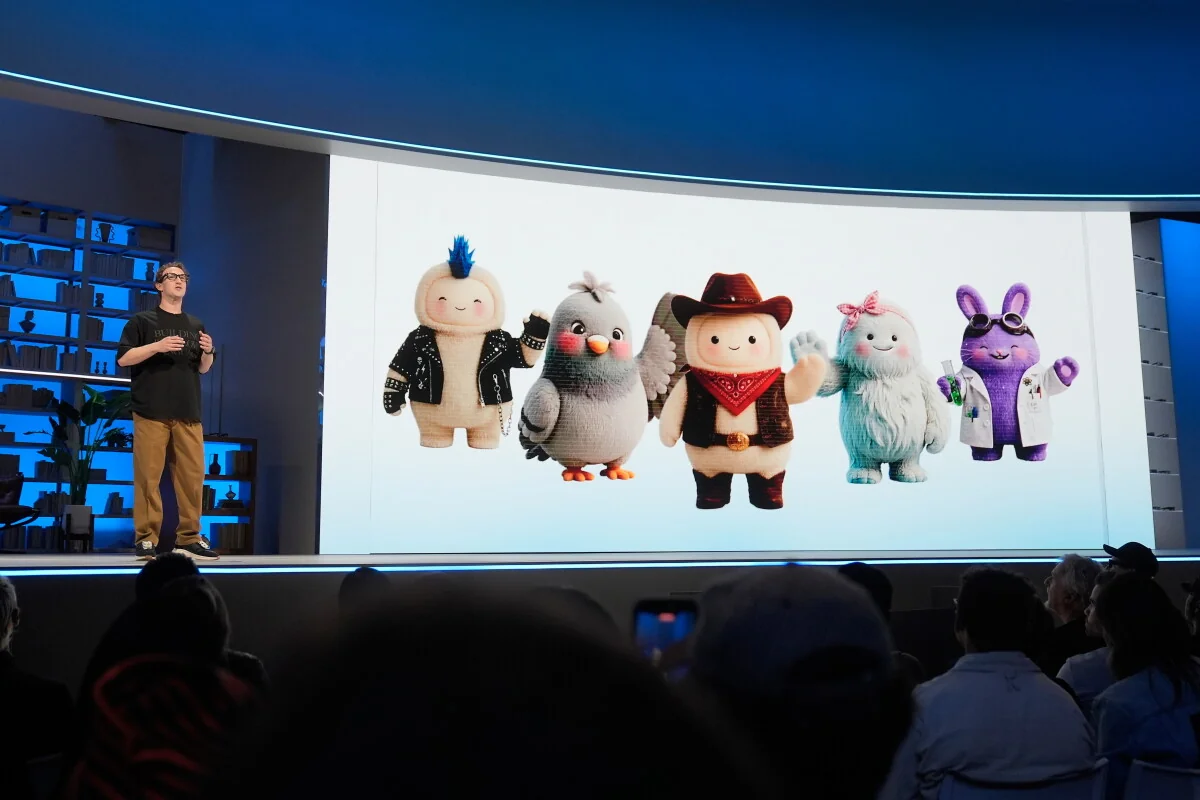
Safety challenges scarcely preoccupied those gathered within a congested event venue in San Francisco on Wednesday, where founders and funders alike contended that the government’s laissez-faire posture would yield augmented profits for enterprises developing AI-powered defense and security systems.
At one gathering convened under the rubric of “investing in the forefront,” panelists lauded the government’s bullish backing of industry—one installment in the blitz of pop-up events orchestrated by Andreessen Horowitz, a venture firm whose head serves as a science and technology adviser to Trump.
"I should like to commence with a single figure that I believe most forcefully underscores the investment opportunity inherent in defense—namely, $1 trillion.
For the first time, the U.S. government is allocating $1 trillion to its defense spending.
And $13.5 billion of that will be directed toward autonomous systems and AI," said Kyle Stanford, a venture capital research director at PitchBook, a market intelligence platform.
"That has manifestly drawn a great deal of capital into defense tech spending, more than we have ever witnessed."
A day later, three researchers at OpenAI’s headquarters said the ChatGPT maker had fired them, posting that “fear and unclear rules stymie AI safety work.”
Separately, David Robinson, a leader on OpenAI’s safety team until he recently resigned, said he was worried about letting the advanced labs police themselves.
“This is no substitute for hard law, and it does give a lot of freedom to the companies,” Robinson said.
“The time between model generations is measured in weeks … and I think we have some very serious safety challenges in front of us in the nearer term.”
Trump has staked his political capital on the AI industry’s success, asserting that its unbridled development is indispensable to prevailing in the AI race against China.
On the inaugural day of his second term, the Republican president rescinded a Biden-era executive order aimed in part at safeguarding against the risks that AI systems pose to consumers, workers and national security.
His administration has since reoriented federal policy away from oversight and toward rapid growth, including by rescinding prior mandates obliging AI developers to disclose safety test results to the federal government.
In December, Trump signed an executive order aimed at preempting AI regulations at the state level, asserting that a patchwork of rules could stifle the industry.
Throughout the year, even as Silicon Valley enterprises have divulged their models’ complicity in disquieting cyberattacks, the ascendant technology sector has persisted in propelling economic growth.
Apprehensions regarding AI safety, hitherto fixated upon existential risk rather than the tangible harms already manifesting in the present, assumed a position of centrality in last month's debates when a comparatively obscure Anthropic engineer resigned and issued a call for a moratorium on technological development, lest "superhuman" systems slip beyond the reach of human control.
Subsequently, the chief executives of both Anthropic and OpenAI amplified that entreaty to decelerate AI development.
To certain detractors, their public manifestos seemed calculated to ingratiate themselves with investors in anticipation of their public listings and the midterm elections, at which juncture the political tides might shift, given that a substantial contingent of voters harbors opposition to data centers.
“The sole mechanism of control—or ‘guardrails’—that AI requires is a STRONG AND SMART (High IQ!) PRESIDENT, and the U.S.A. possesses precisely that, in spades!”
Trump posted in response on Truth Social, cautioning voters against “kill[ing] the Golden Goose,” a locution he has employed to denote both AI and data centers.
As clamour for more stringent regulation of AI swelled, the administration convened tech executives at the White House for a luncheon, which was followed by a ceremonial signing of the agreement on AI safety.
"I'm witnessing a prodigious degree of self-policing," Trump remarked to reporters in the wake of the event.
The document bore the signatures of representatives hailing from OpenAI, Anthropic, Meta, Google, SpaceXAI, and Nvidia.
OpenAI is committed to embedding external assessors and finalizing contracts with third-party safety assessors, said a spokesperson, who referred AP to a company post stating that the researchers were fired for violating “clear policies on handling sensitive information.”
Google invoked CEO Sundar Pichai’s post, wherein he affirmed that the company undertakes appropriate testing and evaluations and is collaborating “to establish norms and build public confidence.”
Meta has recently recalibrated its protocols governing the training, evaluation, and deployment of its most sophisticated AI models, whilst spokesman Andy Stone underscored the company's endeavours to refine the governance architecture of its board of directors.
Neither Nvidia nor SpaceXAI deigned to furnish commentary in response to inquiries.
Anthropic, which on Friday voluntarily disclosed that its agents had submitted a false tip to a Philadelphia police website concerning an unsolved homicide case, is engaging independent evaluators and holding discussions about collaborations with industry groups, a spokesperson said.
In a statement, the White House echoed Trump’s remarks concerning collaboration with industry to reconcile innovation with security, yet it declined to answer directly when pressed on how the administration intends to oversee the AI companies’ implementation.
In the wake of the newly issued Anthropic disclosure, it appended that the Trump administration anticipated unqualified transparency on the company's part, asserting that notification and remediation were “not optional.
It is a critical national security obligation.”
Under Democratic President Joe Biden, preeminent AI enterprises likewise undertook voluntary commitments to foster the “safe, secure, and transparent development” of their models—commitments encompassing explicit stipulations regarding testing protocols and transparency reporting.
The present accord, by contrast, is devoid of any such provisions, observed Sarah Myers West, formerly a senior AI adviser to the Federal Trade Commission.
“Universally, this self-regulatory paradigm has invariably accomplished precisely one thing: it has failed to work.
It has failed, in any meaningful sense, to guarantee that these companies are even honestly keeping their own house in order, much less to guarantee that they are compliant with extant law,” said Myers West, now co-executive director of the New York-based nonprofit AI Now.
“All they are receiving is grace from this government.”
Subsequent to last month's luncheon with Trump, the FTC disclosed that it had initiated an investigation into OpenAI, Anthropic and other companies concerning the perils their technology might pose to consumers.
The FTC did not immediately respond to a request for comment.
Trump recently installed National Intelligence Director Jay Clayton and FTC Chairman Andrew Ferguson on his newly constituted “Super Intelligence Force,” which the president asserted would preserve the United States’ preeminence in AI development.
He posted Thursday that the White House would deem anyone who declines to designate AI by his preferred term “THE ENEMY!”
Members of Congress, alongside civil liberties and consumer rights advocacy groups, have lobbied vigorously for augmented regulation of AI, contending that oversight remains woefully insufficient.
Graham Steele, a former assistant secretary in the U.S. Treasury Department, observed that even should AI companies establish internal evaluation teams or engage external evaluators, such an arrangement may render them susceptible to undue pressure being exerted upon their work.
“We inhabit a democratic polity.
Are they the appropriate arbiters to wield the authority to render decisions bearing broad, structural, social, and political ramifications?” Steele said.
October 12th, 2026
Trending Articles
某团体称,学生抗议期间塞尔维亚一大学校长的手机被植入间谍软件
Serbian rector’s phone infected with spyware amid student protests, group says
某团体称,学生抗议期间塞尔维亚一大学校长的手机被植入间谍软件
Serbian rector’s phone infected with spyware amid student protests, group says
随着美国零售商纷纷采用人工智能辅助定价工具,消费者的不安情绪日益加剧
Consumer disquiet mounts as US retailers embrace AI-assisted pricing tools
随着美国零售商纷纷采用人工智能辅助定价工具,消费者的不安情绪日益加剧
Consumer disquiet mounts as US retailers embrace AI-assisted pricing tools
中国以国家安全为由限制技术出口,人工智能亦在其中
China Restricts Tech Exports, AI Included, Citing National Security
中国以国家安全为由限制技术出口,人工智能亦在其中
China Restricts Tech Exports, AI Included, Citing National Security
AI代理的优劣取决于你分享的个人信息——引发隐私担忧
AI Agents Are Only as Good as the Personal Information You Share—Raising Privacy Concerns
AI代理的优劣取决于你分享的个人信息——引发隐私担忧
AI Agents Are Only as Good as the Personal Information You Share—Raising Privacy Concerns
特朗普声称俄乌达成“能源停火”,而基辅方面报告袭击仍在持续
Trump claims Russia-Ukraine ‘energy ceasefire’ as Kyiv reports ongoing attacks
特朗普声称俄乌达成“能源停火”,而基辅方面报告袭击仍在持续
Trump claims Russia-Ukraine ‘energy ceasefire’ as Kyiv reports ongoing attacks
Anthropic的Claude AI在费城未破凶杀案中提交了捏造的线索
Anthropic's Claude AI Submits Fabricated Tip in Philadelphia Unsolved Homicide Case
Anthropic的Claude AI在费城未破凶杀案中提交了捏造的线索
Anthropic's Claude AI Submits Fabricated Tip in Philadelphia Unsolved Homicide Case
Hugging Face遭攻击后的人工智能安全:事态发展时间线
AI Safety Post-Hugging Face Attack: A Chronology of Developments
Hugging Face遭攻击后的人工智能安全:事态发展时间线
AI Safety Post-Hugging Face Attack: A Chronology of Developments
小罗伯特·F·肯尼迪对人工智能的拥抱令部分MAHA盟友和医学专家困惑不已
RFK Jr.'s AI Embrace Baffles Some MAHA Allies and Medical Experts
小罗伯特·F·肯尼迪对人工智能的拥抱令部分MAHA盟友和医学专家困惑不已
RFK Jr.'s AI Embrace Baffles Some MAHA Allies and Medical Experts
麦当劳因面向美国加盟商的AI定价工具面临诉讼
McDonald’s Faces Lawsuit Over AI Pricing Tool for US Franchisees
麦当劳因面向美国加盟商的AI定价工具面临诉讼
McDonald’s Faces Lawsuit Over AI Pricing Tool for US Franchisees