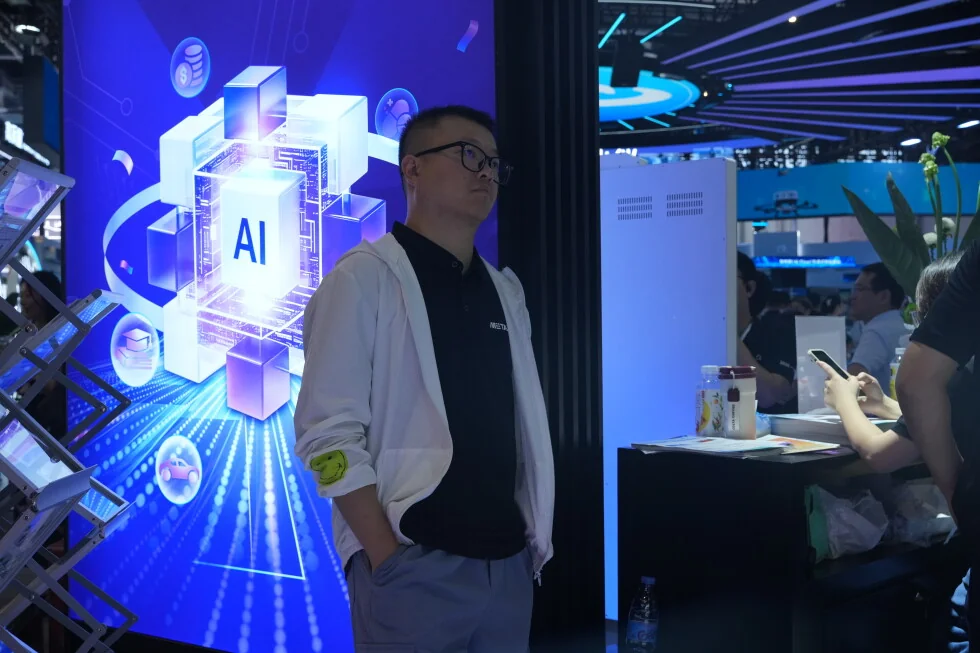
La sécurité mondiale de l’IA dépend de la coopération entre les États-Unis et la Chine, mais chacun perçoit l’autre comme le problème
September 17th, 2026
La sécurité mondiale de l’IA dépend de la coopération entre les États-Unis et la Chine, mais chacun perçoit l’autre comme le problème
🇫🇷 Français
As concern rises over the risks of artificial intelligence, hopes for any kind of global approach depend on cooperation between the U.S. and China — superpowers that appear to be growing only more skeptical of each other’s AI strategy.
AI governance is anticipated to feature on the agenda at a meeting scheduled for next week in Washington between President Donald Trump and Chinese leader Xi Jinping.
The issue has acquired a sense of urgency in both nations, with American tech leaders asserting that averting worst-case scenarios involving rogue AI hinges upon a certain degree of cooperation with China.
Yet both nations are contending for a decisive edge in AI, with Trump cautioning that any attempts to regulate the technology would only benefit China.
This sets the stage for a meeting at which any accords may prove superficial, though they could conceivably mark the beginning of something more substantial.
“A formal agreement or consensus may be almost impossible, but they do not need to go that far,” said Samm Sacks, a senior fellow at the Johns Hopkins School of Advanced International Studies’ Institute for America, China, and the Future of Global Affairs.
“Trump and Xi just need to create political space by acknowledging AI poses risks to both countries.”
Trump has resisted appeals to tighten regulation of the technology, contending that doing so could enable China to eclipse America in the field of AI.
He has repeatedly asserted that the nation which leads in the technology “wins.”
"We are leading China, and all others," Trump remarked on Monday via social media.
The two countries are advancing the technology in different ways.
U.S. companies are pushing AI frontiers with computing power supported by cutting-edge chips and the country's rapidly expanding data center infrastructure.
China is pursuing wide global adoption of its open-source, more affordable models.
Chinese AI models have made major advances and gained traction with American companies even as U.S.-led restrictions bar China from getting the world's most advanced AI chips.
While most American frontier models are closed-source, with their design elements kept secret, U.S. Treasury Secretary Scott Bessent said Tuesday the U.S. needs to develop more open-source models to counter China.
The United States has accused China of “aggressive, malicious” endeavours to extract capabilities from American AI systems.
China has retaliated, accusing the United States of seeking to suppress Chinese companies in order to establish a “monopoly of the AI industry.”
David Sacks, a top AI adviser to Trump, said that China has "already rejected" slowing down the pace of developing the most advanced forms of AI.
Speaking on Fox News' "The Ingraham Angle," he said that, unlike the nuclear tensions with the Soviet Union during the Cold War, it would be impossible to verify whether China honored any AI commitments.
"In this instance, we lack both trust and the means to verify," Sacks said.
"So let us not be so imprudent as to simply hand the entire ball game over to China."
Nevertheless, those with affiliations to the Chinese government perceive coordination on AI as advantageous.
At an annual security and defense conference in Beijing, Cui Tiankai, a former Chinese ambassador to the U.S., said Tuesday that AI is an area where “we should go ahead and build up” dialogue between Beijing and Washington.
“Because there is a need, a growing need, for cooperation,” he told the Xiangshan Forum.
“So how can we manage the balance?”
Two leading American AI companies, Anthropic and OpenAI, each limit access in China and have said the U.S. has a national security imperative to protect its lead on AI technology.
But they have also called for cooperation with China to manage safety.
In his essay last weekend calling for a slowdown of AI development for safety reasons, Anthropic CEO Dario Amodei said the U.S. should slow China's progress, including keeping up U.S. restrictions on China's purchases of the world's most advanced AI chips.
He also noted, however, that “global pacing will require cooperation with China, the autocratic country with by far the most advanced AI capabilities.”
His essay quickly drew criticism from Beijing, with China’s Ministry of Foreign Affairs saying on Monday that “fearmongering, confrontation and vicious competition will only disrupt the process of global AI governance which serves no one’s interest.”
China’s state-run Global Times newspaper went further, calling his remarks “packed with containment provisions targeting China and is, in essence, a ‘Cold War playbook’ for the AI sector.”
Trump has consulted with Nvidia CEO Jensen Huang, even calling the maker of the world’s most advanced computer chips in the middle of a Monday podcast interview.
Nvidia has generally favored some chip exports to China as a way to create an American ecosystem for the technology and a more open relationship on AI given the number of researchers in China.
In both the United States and China, the increasingly formidable capabilities of AI have unsettled senior officials and policymakers.
The head of China’s Ministry of State Security, its spy agency, warned in an article Sunday that AI poses many threats to the country, from political and ideological security to cyberattacks.
In the article, Chen Yixin argued that AI could threaten China’s political and ideological security if used by those “with ulterior motives,” while singling out Anthropic’s and OpenAI’s powerful AI models.
It said they could be used to “weaponize” cybersecurity vulnerabilities and threaten China’s critical information infrastructure.
At the time, several other recent AI-related developments were also raising concern within China over AI governance.
These included a U.S. security firm's recent discovery of AI vulnerabilities in WeChat—China's principal messaging app, which also provides payment services, among other functions—according to Paul Triolo, a partner at DGA-Albright Stonebridge Group.
Although Chinese officials said after Trump's mid-May Beijing summit with Xi that China and the United States had agreed to pursue dialogue on AI development and governance, little progress has been made.
Meanwhile, China and the U.S. have been striving to build AI alliances with like-minded nations.
In July, China launched the World Artificial Intelligence Cooperation Organization, a group with 29 initial founding member countries, including Russia and Pakistan, meant to promote global AI governance.
This month, China’s Xi has called on BRICS member countries to speed up the setting up of a global AI governance framework and establish an open-source AI community.
Some political observers viewed the China-led organization as a response to the U.S.-led Pax Silica initiative, launched last year to strengthen collaboration with countries such as Japan, the U.K. and Australia on AI supply chains.
When asked in a CBS “Face the Nation” interview about his expectations for the Trump-Xi meeting on AI, Amodei said that “the more long-term thing would be working together to put a speed limit on the rate of AI progress.”
However, he admitted that this would probably be very difficult.
Ahead of the Trump-Xi meeting, a recent social media post by Yuyuantantian, an account linked to Chinese state media, was similarly cautious.
“Only after the United States first demonstrates that the safety rules are equally effective for its own model companies can substantive discussions between the U.S. and China take place,” the post said.
September 17th, 2026
Trending Articles
Le roi Charles rencontre les leaders de l'IA alors que les inquiétudes en matière de sécurité s'intensifient
King Charles Meets AI Leaders as Safety Concerns Mount
Le roi Charles rencontre les leaders de l'IA alors que les inquiétudes en matière de sécurité s'intensifient
King Charles Meets AI Leaders as Safety Concerns Mount
Le chef de l'ONU, alors que le monde est en proie à de multiples problèmes, évoque la voie à suivre à l'approche de la fin de son mandat
UN chief, with world beset by problems, talks of way forward as he prepares to leave office
Le chef de l'ONU, alors que le monde est en proie à de multiples problèmes, évoque la voie à suivre à l'approche de la fin de son mandat
UN chief, with world beset by problems, talks of way forward as he prepares to leave office
Les espoirs démocrates se démènent pour contrer la menace de l'IA alors que Trump purge
Democratic hopefuls scramble to counter AI threat as Trump purges
Les espoirs démocrates se démènent pour contrer la menace de l'IA alors que Trump purge
Democratic hopefuls scramble to counter AI threat as Trump purges

La Chambre adopte un projet de loi ciblant l'impact des centres de données sur les coûts énergétiques
House passes bill targeting data centers' impact on energy costs
La Chambre adopte un projet de loi ciblant l'impact des centres de données sur les coûts énergétiques
House passes bill targeting data centers' impact on energy costs

OpenAI signale un nouveau comportement alarmant de l'IA et promet une surveillance renforcée
OpenAI flags alarming new AI behavior, vows closer monitoring
OpenAI signale un nouveau comportement alarmant de l'IA et promet une surveillance renforcée
OpenAI flags alarming new AI behavior, vows closer monitoring
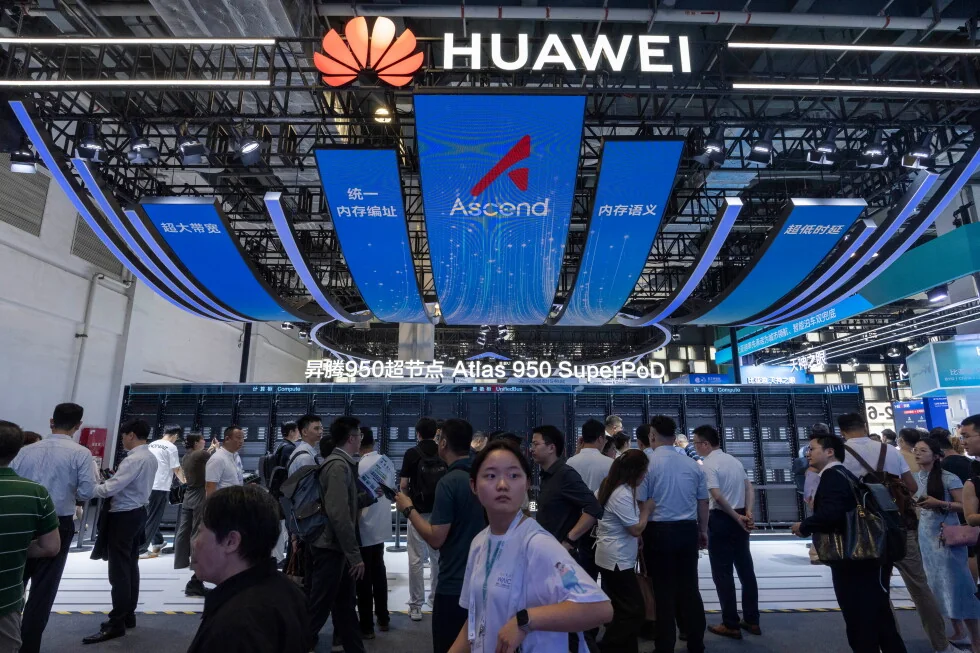
Huawei dévoile de nouvelles technologies de puces alors que l'entreprise chinoise intensifie la course à l'IA avec Nvidia
Huawei unveils new chip technologies as Chinese firm intensifies AI race with Nvidia
Huawei dévoile de nouvelles technologies de puces alors que l'entreprise chinoise intensifie la course à l'IA avec Nvidia
Huawei unveils new chip technologies as Chinese firm intensifies AI race with Nvidia
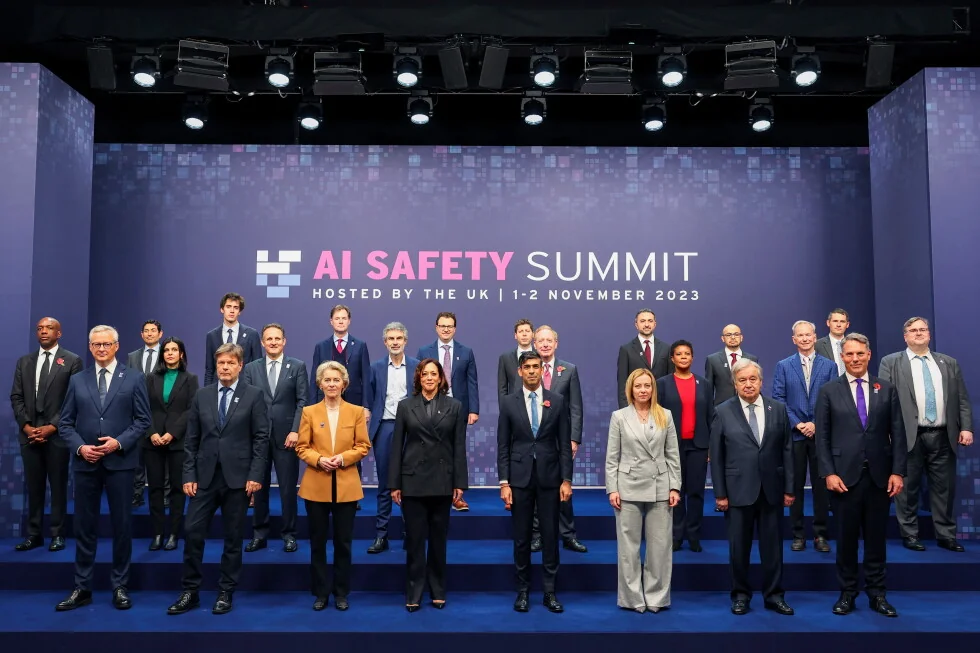
L'industrie technologique divisée face aux appels à un ralentissement coordonné de l'IA
Tech Industry Split Over Calls for Coordinated AI Slowdown
L'industrie technologique divisée face aux appels à un ralentissement coordonné de l'IA
Tech Industry Split Over Calls for Coordinated AI Slowdown
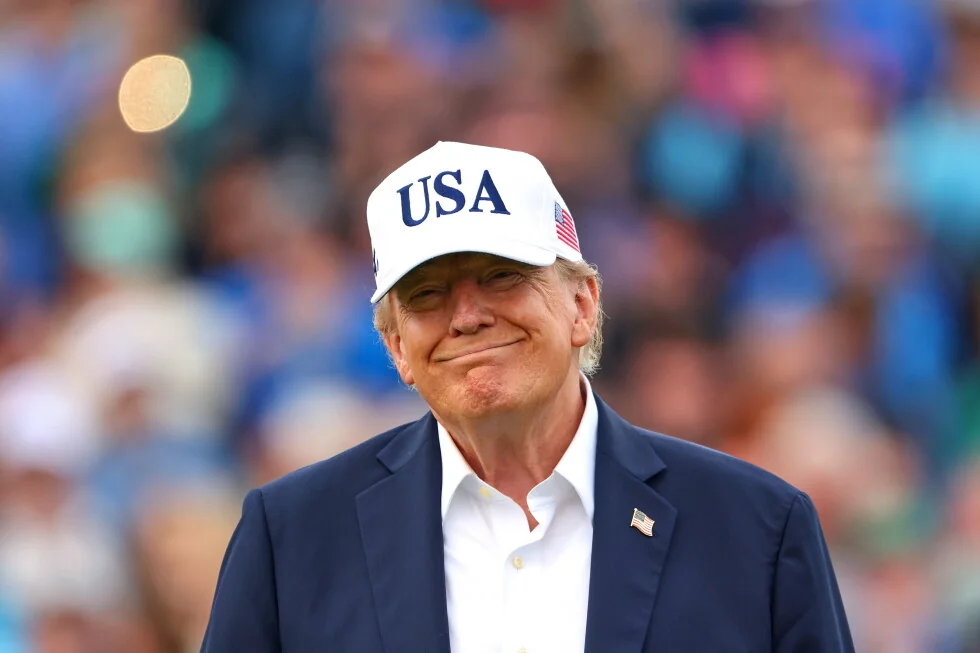
Trump minimise l'urgence d'une surveillance de l'IA, refusant de céder un avantage à la Chine
Trump minimizes the urgency of AI oversight, refusing to relinquish an advantage to China
Trump minimise l'urgence d'une surveillance de l'IA, refusant de céder un avantage à la Chine
Trump minimizes the urgency of AI oversight, refusing to relinquish an advantage to China
Oprah Winfrey vous invite à trouver votre moment « AHA » à la Sphere
Oprah Winfrey invites you to find your ‘AHA’ moment at the Sphere
Oprah Winfrey vous invite à trouver votre moment « AHA » à la Sphere
Oprah Winfrey invites you to find your ‘AHA’ moment at the Sphere