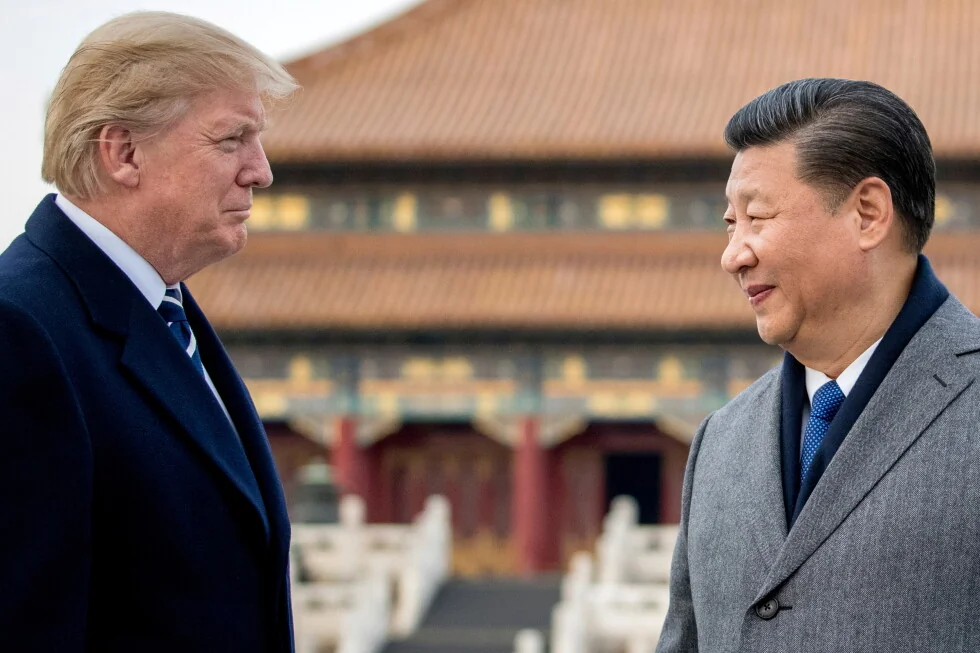
Trump und Xi manövrieren durch aufbrausende Spannungen über KI, Handel und Iran, während sie Stabilität anstreben
September 22nd, 2026
Trump und Xi manövrieren durch aufbrausende Spannungen über KI, Handel und Iran, während sie Stabilität anstreben
🇩🇪 Deutsch
State visits customarily transpire when two nations enjoy amicable relations, yet U.S. President Donald Trump is hosting Chinese leader Xi Jinping in Washington this week precisely as their economic and technological rivalry is intensifying, particularly through an artificial intelligence race.
Neither anticipates any grand bargain, yet the leaders are expected to play nice in their third meeting since Trump returned to the White House to try to steady fragile ties.
That is despite the world's two largest economies seeking the upper hand on AI developments and trade, while pushing for leverage in persistent hot spots like Iran and Taiwan.
“That they are convening, that dialogue is transpiring and that relationship is being cultivated, is arguably as consequential as any outcomes emanating from the meeting,” said Sen. Steve Daines, a Montana Republican who advises Trump on China and recently traveled there to lay groundwork for the summit.
Cui Tiankai, a former Chinese ambassador to the United States, remarked at a recent forum in Beijing that “always problems, sometimes very big problems” subsist between the two nations, yet “we’ll make our best efforts to maintain overall stability.”
Xi’s visit to Washington, commencing Wednesday, constitutes his first in a decade.
He and Trump are convening in the wake of their respective nations’ de-escalation from last year’s ferocious trade war, during which they levied reciprocally exorbitant tariffs that imperiled the global economy.
China, moreover, curtailed its globally preeminent supplies of critical minerals indispensable to products ranging from electric vehicles to fighter jets.
The United States finds itself not merely endeavoring to redress trade imbalances but equally intent on preserving its technological preeminence, the better to safeguard both its national security and its standing as a global leader.
China, which over the past several years has accumulated formidable economic, technological and military might in an effort to narrow the gaps separating it from the United States, is now bent on cementing its position within the global order.
The stability both sides are seeking is “for deeply competitive reasons,” said Evan Medeiros, a senior adviser at The Asia Group consultancy.
“This is basically two geopolitical strongmen circling each other on the playground, trying to determine what their next move may be.”
The countries appeared to be settling into a “new normal” of “overall stability,” notwithstanding their mutual blacklisting of each other’s companies and their restrictions on the flow of high-tech products, observed Da Wei, director of the Center for International Security and Strategy at Tsinghua University in Beijing.
The leaders must now forge accords their governments can implement, he said, observing that “we need to move fast.”
This website is safeguarded by reCAPTCHA, and Google's Privacy Policy and Terms of Service are applicable.
The development of AI technology has crystallised into a pivotal geopolitical contest, with neither side evincing any inclination to decelerate notwithstanding admonitions from tech CEOs regarding the existential perils that rogue AI might visit upon humanity.
“Whoever wins AI wins,” Trump has repeatedly said.
He asserted on social media Monday that the United States is preeminent over China and that he was “not going to stifle Growth, of something that will be bigger than the Industrial Revolution, or the Internet, itself.”
China can ill afford to forfeit either.
In a rare, unsparing essay, Chen Yixin, the head of China’s Ministry of State Security, cautioned that AI constitutes a direct menace to Communist Party rule should foreign and hostile forces attain superior capabilities.
The United States has already imposed restrictions on exports of its most potent AI chips to China, and has levelled accusations that Chinese developers are, on an industrial scale, exploiting American AI models to extract their capabilities.
Beijing asserts that the practice, designated distillation, enjoys ubiquitous application, not least among American enterprises, and has castigated the United States for endeavoring to monopolize the industry.
Beijing is likewise aggrieved by American endeavours to forge an alliance from which China is excluded, and is therefore endeavouring to devise novel global AI guardrails by courting developing nations.
Nevertheless, the United States and China are embarking upon a modest overture of collaboration in the realm of artificial intelligence.
Following his Sunday convocation in New York with Chinese Vice Premier He Lifeng, Treasury Secretary Scott Bessent disclosed that the United States had proffered a novel “notification mechanism” pertaining to AI incidents with potential ramifications for national security.
"We contend that, much as with any cross-border undertaking, the transition from opacity to greater transparency between the world's foremost and second-ranked AI powers is of paramount importance," Bessent said.
Although Washington and Beijing have eschewed sweeping punitive measures that would rupture their trade truce, they nonetheless continue to blacklist individual enterprises and proscribe particular products.
"What we have witnessed, in essence, is a reciprocal exercise in testing and probing on the part of both sides — an endeavor to ascertain what may be pursued competitively whilst simultaneously keeping that leader-level rapprochement on track," said Mira Rapp-Hooper, a visiting fellow at the Brookings Institution's Center for Asia Policy Studies.
The United States has of late trained its sights on Chinese telecommunications and surveillance equipment, on companies accused of resorting to forced labor in the ethnic region of Xinjiang, and on China's cutting-edge robots and drones.
The Pentagon, moreover, has debarred Alibaba, BYD, Baidu and other major Chinese enterprises from securing U.S. defense contracts.
Beijing retaliated by imposing export controls on drones and associated technologies, in addition to blacklisting six U.S. companies for their complicity in the punitive measures pertaining to Xinjiang.
After the Supreme Court struck down Trump's tariffs on trade partners this year, the administration has been endeavouring to impose them through alternative means.
In July, the White House imposed a 12.5% tariff on imports from 60 trading partners, China among them, ostensibly on the grounds that they had failed to do enough to prevent the importation of goods produced by forced labor.
The U.S. is contemplating an additional 7.5% tariff on China, accusing it of producing far more goods than it can reasonably consume.
Analysts contend that the tariff levels are now palatable to both parties, yet any appreciable escalation could reignite tensions.
The Trump administration, by contrast, has mounted a campaign aimed at isolating Iran from its remaining economic partners, yet Beijing has steadfastly asserted its prerogative to trade with Tehran.
Thus far, the Trump administration has done precious little to penalize China, owing in part to a desire not to imperil the leaders’ summit.
Yet Washington is likewise forfeiting leverage, inasmuch as China — Iran’s foremost oil purchaser and its largest trading partner — has been constructing a mechanism for effecting payments beyond the U.S.-led financial architecture, observed Alicia Garcia Herrero, an Asia-Pacific economist at the French investment bank Natixis.
Taiwan — a self-governing island that Beijing asserts as its own territory — persists as one of the most intractable flashpoints in U.S.-China relations.
Following his May trip to Beijing, Trump suspended a substantial arms package destined for Taiwan; nevertheless, the United States is bound by a domestic statute to furnish it with sufficient hardware and technology for its self-defense.
Analysts contend that Xi will in all likelihood impel Trump toward a further postponement of arms sales, thereby sowing in Taiwan doubts regarding Washington’s commitment.
September 22nd, 2026
Trending Articles
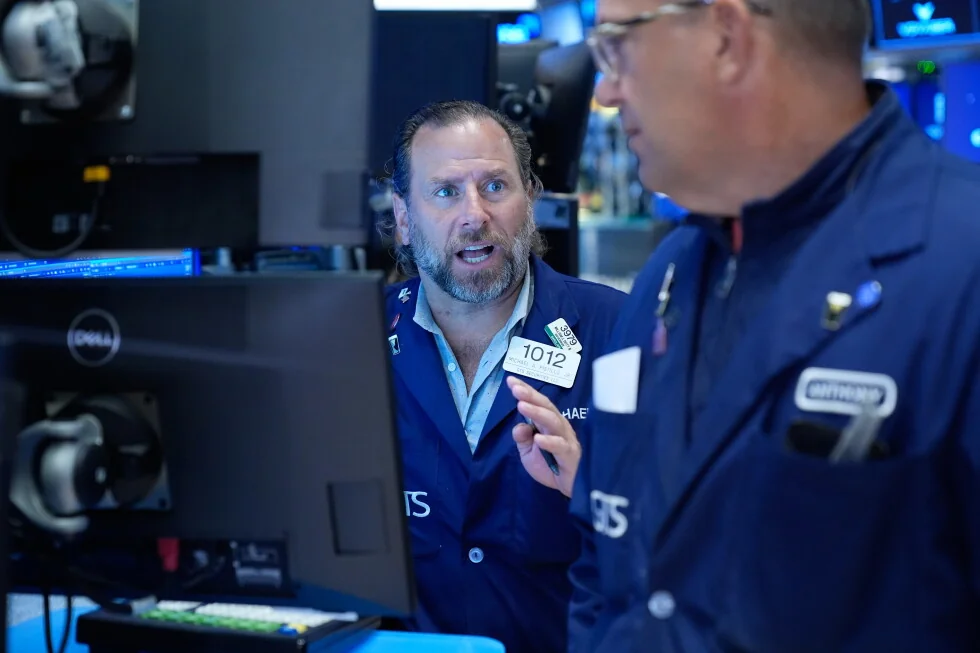
Der Wall Street nahe Rekordstand, während Brent-Rohöl kurzzeitig unter 98 Dollar fällt
Wall Street Nears Record as Brent Crude Briefly Dips Below $98
Der Wall Street nahe Rekordstand, während Brent-Rohöl kurzzeitig unter 98 Dollar fällt
Wall Street Nears Record as Brent Crude Briefly Dips Below $98
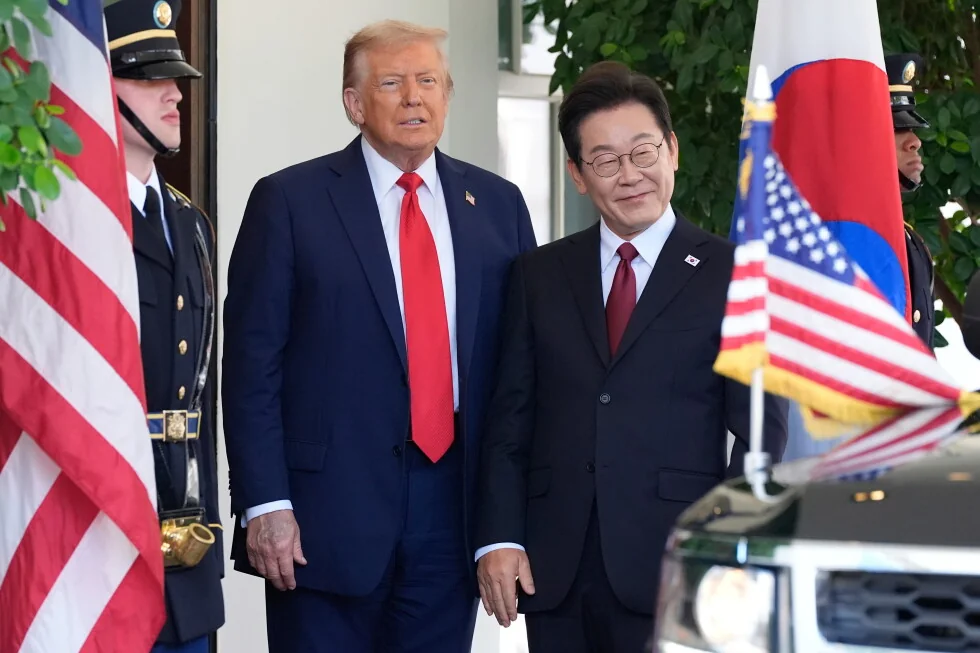
Südkoreas Lee plädiert in AP-Interview für schrittweise Denuklearisierung Nordkoreas
South Korea’s Lee Advocates Incremental Denuclearization of North Korea in AP Interview
Südkoreas Lee plädiert in AP-Interview für schrittweise Denuklearisierung Nordkoreas
South Korea’s Lee Advocates Incremental Denuclearization of North Korea in AP Interview

Russland und die Ukraine tauschen tödliche Angriffe aus, während Selenskyj sich auf ein Treffen mit Trump vorbereitet
Russia, Ukraine Exchange Deadly Strikes as Zelenskyy Prepares to Meet Trump
Russland und die Ukraine tauschen tödliche Angriffe aus, während Selenskyj sich auf ein Treffen mit Trump vorbereitet
Russia, Ukraine Exchange Deadly Strikes as Zelenskyy Prepares to Meet Trump
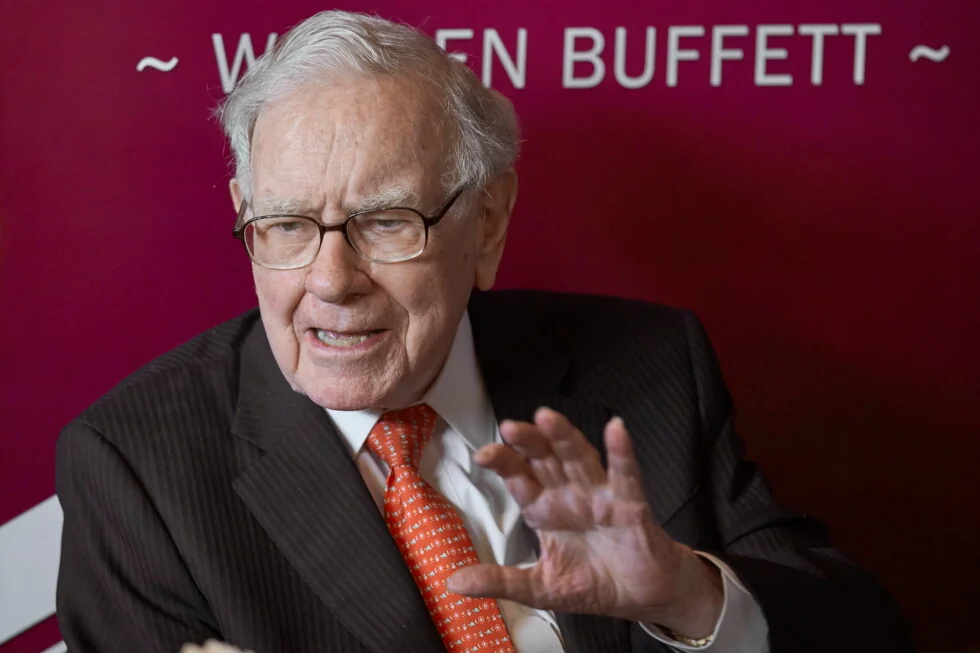
Warren Buffett gibt den Vorsitz von Berkshire Hathaway ab und bringt damit seinen Nachfolgeplan voran
Warren Buffett relinquishes Berkshire Hathaway chairmanship, advancing his succession plan
Warren Buffett gibt den Vorsitz von Berkshire Hathaway ab und bringt damit seinen Nachfolgeplan voran
Warren Buffett relinquishes Berkshire Hathaway chairmanship, advancing his succession plan
Trump verschärft die Medienoffensive und gelobt, CNN, MS NOW und Politico vom Weißen Haus auszuschließen
Trump escalates media offensive, vowing to bar CNN, MS NOW and Politico from the White House
Trump verschärft die Medienoffensive und gelobt, CNN, MS NOW und Politico vom Weißen Haus auszuschließen
Trump escalates media offensive, vowing to bar CNN, MS NOW and Politico from the White House
Bank of Japan hebt Leitzins auf 1,25 % an, den höchsten Stand seit 31 Jahren
Bank of Japan Lifts Benchmark Rate to 1.25%, a 31-Year Peak
Bank of Japan hebt Leitzins auf 1,25 % an, den höchsten Stand seit 31 Jahren
Bank of Japan Lifts Benchmark Rate to 1.25%, a 31-Year Peak
Anthropic behauptet, Claude sei maßgeblich an der Entwicklung seines eigenen Nachfolgers beteiligt
Anthropic claims Claude is instrumental in developing its own successor
Anthropic behauptet, Claude sei maßgeblich an der Entwicklung seines eigenen Nachfolgers beteiligt
Anthropic claims Claude is instrumental in developing its own successor
Warum die Federal Reserve jetzt die Zinsen erhöht – und was das verheißt
Why the Federal Reserve is raising rates now — and what it portends
Warum die Federal Reserve jetzt die Zinsen erhöht – und was das verheißt
Why the Federal Reserve is raising rates now — and what it portends
US-Aktien steigen auf Sechs-Wochen-Hoch, während Öl- und Anleiherenditen zurückgehen
US equities surge to six-week peak as oil and bond yields retreat
US-Aktien steigen auf Sechs-Wochen-Hoch, während Öl- und Anleiherenditen zurückgehen
US equities surge to six-week peak as oil and bond yields retreat