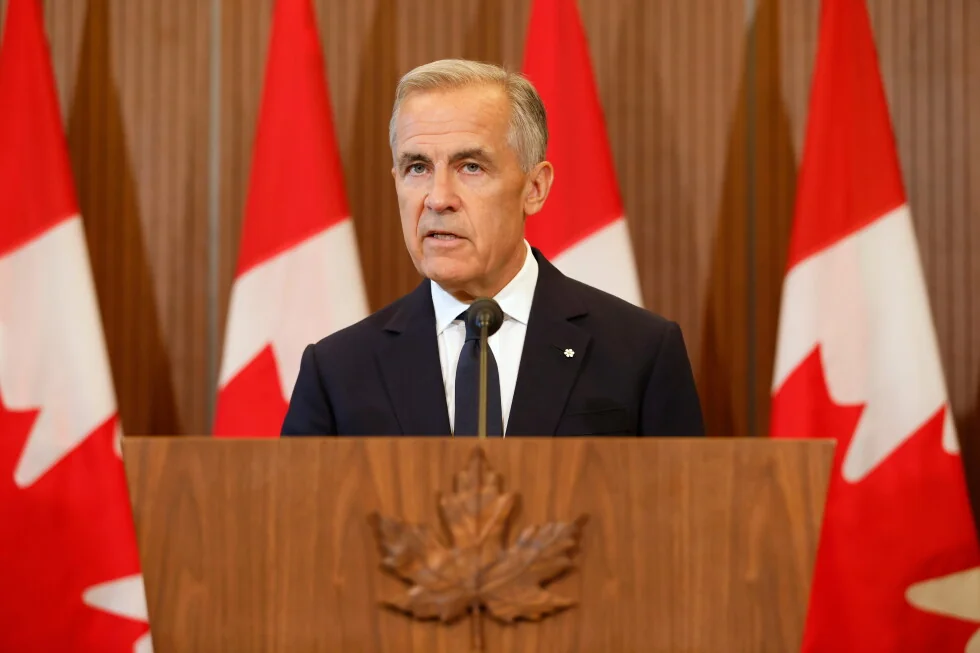
事實查核:川普聲稱美國銀行被禁止在加拿大營運——此說法經證實為錯誤。
September 8th, 2026
事實查核:川普聲稱美國銀行被禁止在加拿大營運——此說法經證實為錯誤。
🇹🇼 中文
When questioned on Wednesday regarding the trade war with Canada, President Donald Trump made the spurious assertion that U.S. financial institutions are categorically barred from conducting business with its northern neighbor.
The allegation was leveled during a session with U.S. travel executives in the Oval Office, following a reporter's inquiry to Trump as to whether renewed trade negotiations between the two nations are being contemplated.
According to experts, notwithstanding potential regulatory constraints, U.S. banks are not categorically barred from engaging in commercial activities within Canada's jurisdiction.
A far more rigorous and exhaustive scrutiny of the evidentiary record is absolutely indispensable.
TRUMP: “They maintain their banking institutions here—the Bank of Canada, along with all their major financial houses, which are, I must say, magnificent in scale.
I believe they operate six or seven principal banks in this jurisdiction.
Conversely, our own banks are conspicuously absent from their market.
And do you know the reason for that?
They categorically prohibit our entry.”
THE FACTS: As per a representative of the Canadian Bankers Association, a total of 15 U.S.-headquartered banking institutions currently operate within Canada, whether in the form of branches or subsidiary entities.
Although experts concede that certain regulatory impediments may hinder the competitive capacity of American banks north of the border, these institutions retain unfettered discretion to access the market.
In parallel, the most recent figures from the Federal Reserve reveal that eight Canadian banks are active within U.S. territory.
Notably, the Bank of Canada is absent from this roster—it serves as the nation's central monetary authority, paralleling the Federal Reserve in the United States, rather than operating as a commercial banking concern.
“One might contend that a measure of confusion arises from the disparities between the regulatory frameworks of the United States and Canada,” remarked James Thompson, a professor of finance at the University of Waterloo in Ontario, Canada.
“U.S. banks are, of course, authorized to conduct operations within Canada, yet the manner in which they elect to penetrate the Canadian market fundamentally determines the scope of their permissible activities.”
The Canadian banking landscape is delineated into three distinct classifications—Schedule I, Schedule II, and Schedule III—wherein domestically owned institutions fall under the Schedule I designation.
Within this tier, six preeminent Schedule I banks command combined assets that dwarf those amassed by the nation's 28 smaller financial entities.
Foreign entities may elect to operate as either Schedule II or Schedule III banks.
Schedule II banks constitute foreign-owned subsidiaries incorporated within Canada, subject to essentially the same regulatory framework as domestically owned institutions.
Schedule III banks, by contrast, represent branches of foreign banks that lack Canadian incorporation and are consequently encumbered by regulatory constraints, including elevated deposit minimums.
The preponderance of U.S.-owned banks in Canada operate as Schedule III entities.
Nathalie Bergeron, a spokesperson for the Canadian Bankers Association, stated that U.S.-based bank branches and subsidiaries operating within Canada possess combined assets approximating $124 billion in Canadian dollars (US$90.1 billion)—a figure exceeding half of all assets held by foreign bank subsidiaries and branches.
“These institutions are distinguished by their provision of a comprehensive spectrum of financial services, encompassing corporate and commercial lending, treasury operations, credit card offerings, investment banking, and mortgage financing,” she remarked.
“Their clientele extends beyond entities engaged in cross-border commerce to encompass Canada’s domestic retail sector as well.”
Among the U.S. banking institutions operating within Canadian jurisdiction are J.P. Morgan Chase Bank, Citibank, Bank of America, Capital One, and Wells Fargo.
Both Schedule II and Schedule III banks operate under the constraints imposed by Canadian banking regulations.
Jeremy Kronick, a specialist in financial and monetary policy who serves as president and CEO of the Canadian C.D. Howe Institute think tank, elucidated that Schedule III banks are precluded from accepting deposits below $150,000 (US$72,529).
Consequently, the vast majority of individuals will find it impracticable to utilize them as their primary retail banking institution.
He further noted that, given Schedule II banks constitute distinct legal entities separate from their foreign parent corporations, they are obliged to maintain independent domestic capital and liquidity frameworks — an arrangement that proves suboptimal from the banks' standpoint.
Such restrictions may well be the underlying cause for the preponderance of U.S.-owned banks opting to eschew cross-border operations.
Data from the Federal Reserve indicates that the United States boasts over 3,700 domestically chartered commercial banks, whereas a mere 15 maintain a foothold in Canada.
“Canada constitutes a comparatively modest market, and the incumbent domestic banks are already formidable institutions, distinguished by well-established brands, extensive branch networks, and enduring customer relationships,” observed Thompson.
“For a U.S. bank contemplating market entry, the requisite investment in infrastructure to vie for Canadian retail clientele would prove prohibitive, whilst initially securing merely a marginal share of an already relatively limited market.”
The White House refrained from proffering an immediate rejoinder to the entreaty for commentary.
This story initially appeared on September 3, 2026, and was subsequently revised on September 8, 2026, to rectify the figure pertaining to the aggregate assets held by U.S.-based banking entities—both branches and subsidiaries—operating within Canada.
Their combined holdings are estimated at US$90.1 billion, contingent upon prevailing exchange rates, rather than the previously cited US$904 million.
September 8th, 2026
Trending Articles
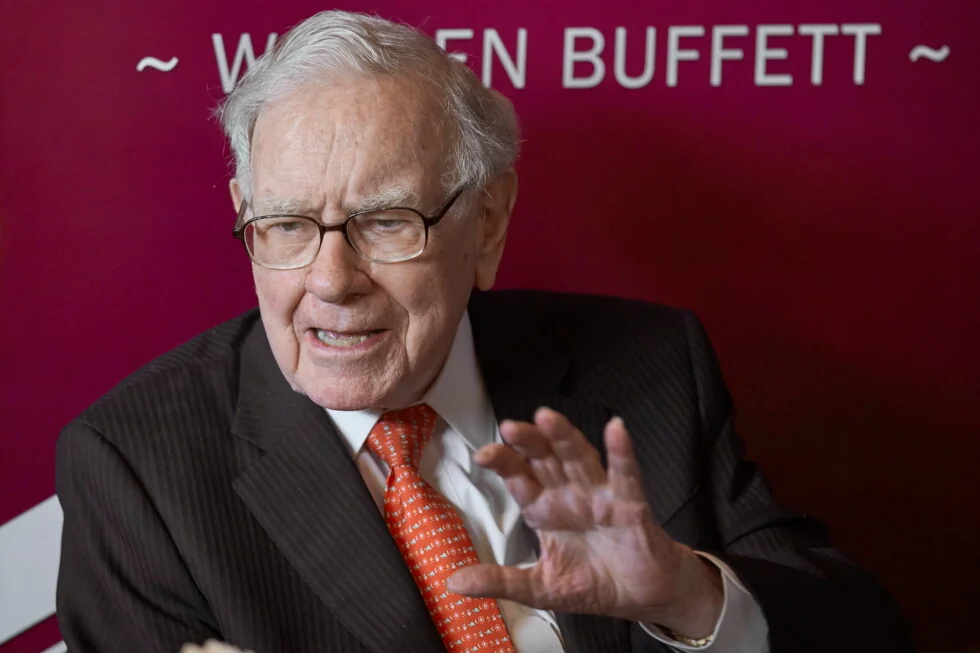
華倫·巴菲特卸下波克夏·海瑟威董事長職務,推進其接班計畫
Warren Buffett relinquishes Berkshire Hathaway chairmanship, advancing his succession plan
華倫·巴菲特卸下波克夏·海瑟威董事長職務,推進其接班計畫
Warren Buffett relinquishes Berkshire Hathaway chairmanship, advancing his succession plan
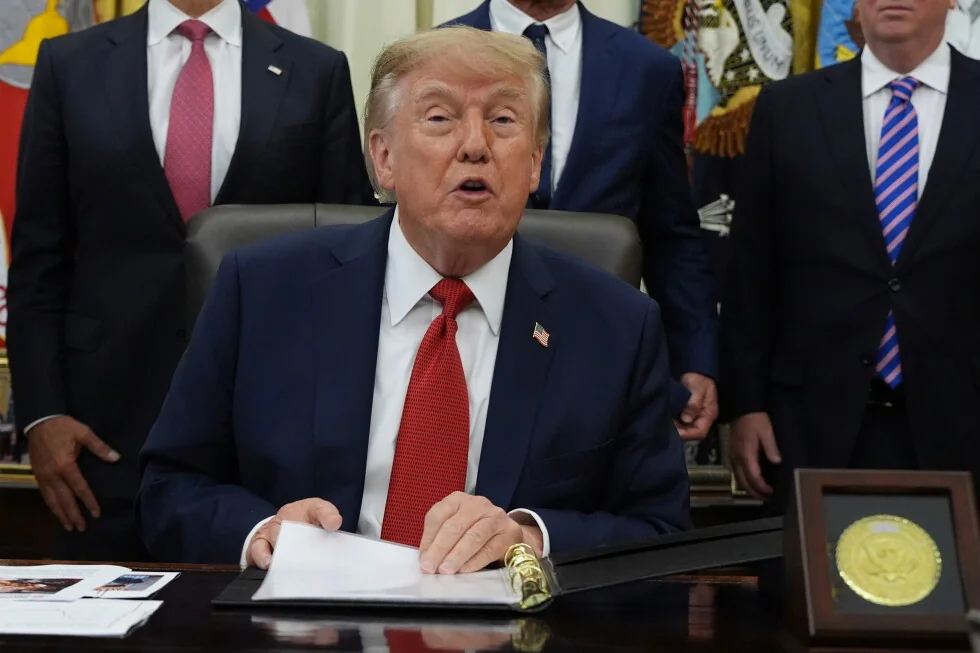
川普升高對媒體的攻勢,揚言禁止CNN、MS NOW與Politico進入白宮
Trump escalates media offensive, vowing to bar CNN, MS NOW and Politico from the White House
川普升高對媒體的攻勢,揚言禁止CNN、MS NOW與Politico進入白宮
Trump escalates media offensive, vowing to bar CNN, MS NOW and Politico from the White House
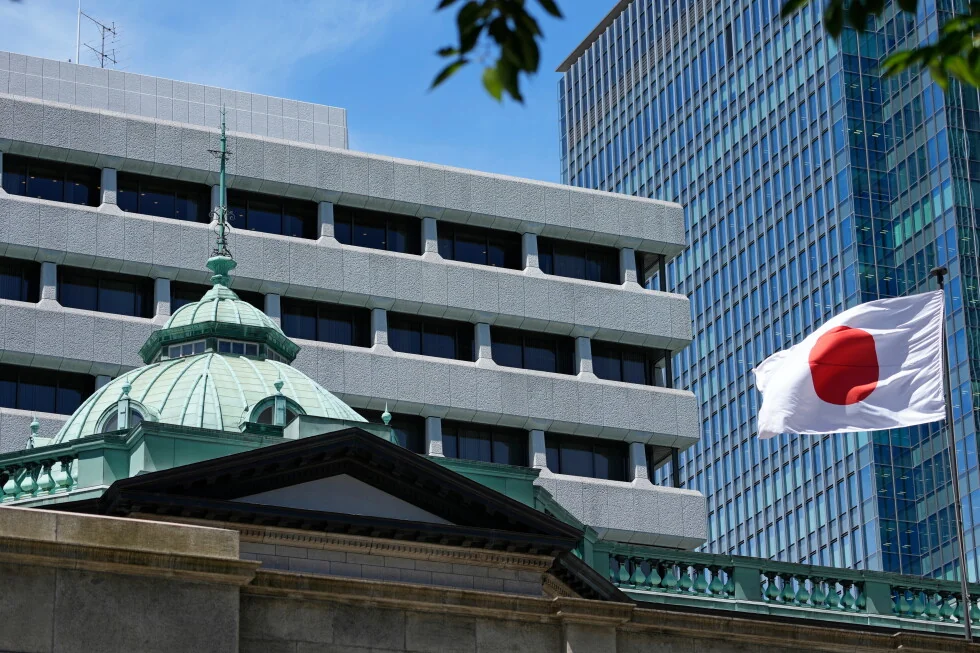
日本銀行將基準利率上調至1.25%,創31年新高
Bank of Japan Lifts Benchmark Rate to 1.25%, a 31-Year Peak
日本銀行將基準利率上調至1.25%,創31年新高
Bank of Japan Lifts Benchmark Rate to 1.25%, a 31-Year Peak

Anthropic 聲稱 Claude 在其自身後繼模型的開發過程中發揮了關鍵作用
Anthropic claims Claude is instrumental in developing its own successor
Anthropic 聲稱 Claude 在其自身後繼模型的開發過程中發揮了關鍵作用
Anthropic claims Claude is instrumental in developing its own successor
聯準會為何在此時升息——以及這預示著什麼
Why the Federal Reserve is raising rates now — and what it portends
聯準會為何在此時升息——以及這預示著什麼
Why the Federal Reserve is raising rates now — and what it portends
美國股市飆升至六週高點,因石油與債券殖利率回落
US equities surge to six-week peak as oil and bond yields retreat
美國股市飆升至六週高點,因石油與債券殖利率回落
US equities surge to six-week peak as oil and bond yields retreat
聯準會三年來首度調升基準利率,無視川普的降息要求
Fed hikes key rate for 1st time in 3 years, flouting Trump's cut demands
聯準會三年來首度調升基準利率,無視川普的降息要求
Fed hikes key rate for 1st time in 3 years, flouting Trump's cut demands
失業救濟申請人數驟降至196,000,創下自七月中旬以來新低,裁員人數持續維持低檔
Unemployment Claims Plummet to 196,000, Lowest Since Mid-July Amid Sustained Layoff Lows
失業救濟申請人數驟降至196,000,創下自七月中旬以來新低,裁員人數持續維持低檔
Unemployment Claims Plummet to 196,000, Lowest Since Mid-July Amid Sustained Layoff Lows
川普譴責AI風險為「騙局」,並指控針對AI與資料中心的「病態陰謀」
Trump denounces AI risks as ‘hoax,’ alleges ‘SICK conspiracy’ against AI and data centers
川普譴責AI風險為「騙局」,並指控針對AI與資料中心的「病態陰謀」
Trump denounces AI risks as ‘hoax,’ alleges ‘SICK conspiracy’ against AI and data centers
最高法院將裁定是否受理緬因州龍蝦漁民對GPS船舶追蹤器強制令的挑戰
Supreme Court to Determine Whether to Hear Maine Lobsterman’s Challenge to GPS Boat Tracker Mandate
最高法院將裁定是否受理緬因州龍蝦漁民對GPS船舶追蹤器強制令的挑戰
Supreme Court to Determine Whether to Hear Maine Lobsterman’s Challenge to GPS Boat Tracker Mandate