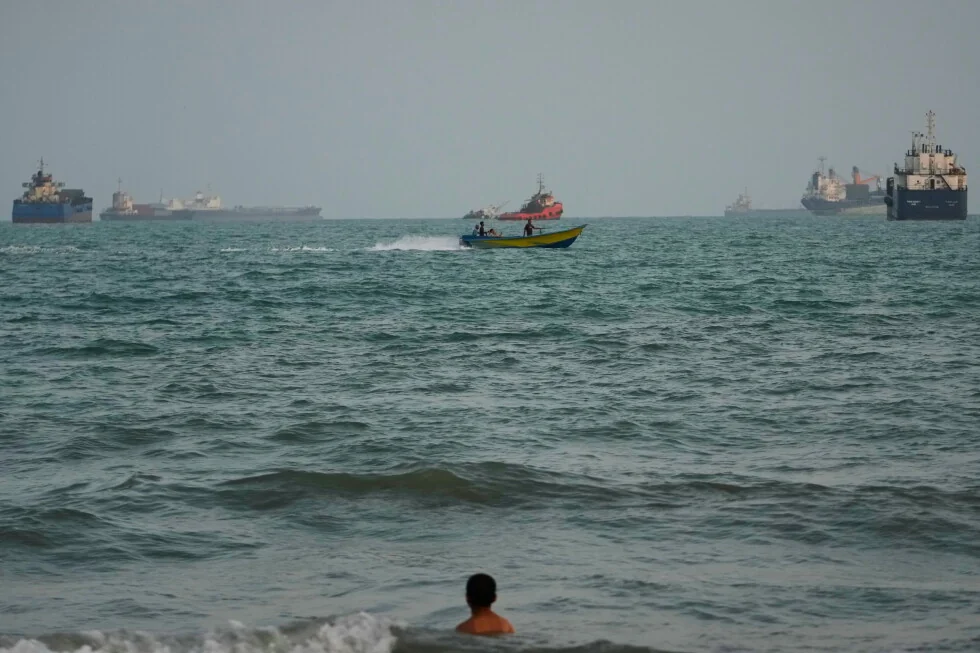
報じられた弾道ミサイルによる艦船攻撃を受け、米国はイランの石油タンカー3隻を攻撃した。
September 5th, 2026
報じられた弾道ミサイルによる艦船攻撃を受け、米国はイランの石油タンカー3隻を攻撃した。
🇯🇵 日本語
U.S. forces struck three Iranian oil tankers after Navy warships were targeted with ballistic missiles, the American military said Saturday, warning that it would "if necessary, destroy Iran's limited and exposed oil fleet."
Analysts described this as a dangerous escalation, following Iran's earlier attacks on commercial shipping at sea.
The strikes — occurring a day after U.S. President Donald Trump sought to downplay the conflict as “small potatoes” — indicate a renewed shift toward combat after six months of intermittent warfare that began with U.S. and Israeli attacks on the country on Feb. 28.
Both sides have aimed to inflict military and economic damage, while negotiations have stalled.
The military's statement reported that an American aircraft carrier and a destroyer had successfully avoided "multiple unprovoked Iranian attacks" while on patrol in the region, with no U.S. personnel harmed.
The timing of the Iranian missile launches remained uncertain.
Furthermore, the statement noted that two Iranian oil carriers had been "permanently disabled," and the third, which was empty, had been destroyed.
The U.S. statement described the tankers as part of a covert network that helps fund Iran's powerful Revolutionary Guard and its armed proxies in the region.
A spokesperson for Iran's joint military command later cautioned that any strikes on U.S. naval vessels would be even more severe if Washington continues to interfere with Iranian shipping, as reported by the state broadcaster.
That Iran targeted a U.S. aircraft carrier with a ballistic missile “indicates that Tehran is becoming increasingly willing to accept risks it previously sought to avoid, including directly threatening some of the most important U.S. military assets in the region,” Danny Citrinowicz, an Iran expert at Israel’s Institute for National Security Studies, said on X.
Earlier, Iranian state television had reported that four U.S. missiles struck a tanker roughly 6 miles (10 kilometers) from Kharg Island, which hosts a terminal through which the country channels the bulk of its oil exports.
Kharg Island has come under repeated assault during the conflict, including U.S. strikes on military installations there in March.
The United States reported that one tanker had been struck off Kharg Island, with a second targeted near Jask, to the east of the Strait of Hormuz.
The unloaded vessel was hit in the Gulf of Oman, and Washington stated that its crew had been “directed to abandon ship.”
The statement also released what it described as video footage of the attacks.
Following the U.S. statement, Iran’s state broadcaster reported that the two other tankers had come under attack, noting that their crews had been evacuated.
“We will not hesitate to defend American forces, and if necessary, destroy Iran’s limited and exposed oil fleet,” stated Adm. Brad Cooper, the commander of U.S. Central Command.
Given the ongoing conflict and the immobilization of vessels under the U.S. naval embargo on Iranian ports, the precise number of Iranian oil tankers that have come under attack remains unclear.
On May 8, the U.S. military reported that it had fired "precision munitions" into the smokestacks of two Iranian oil tankers, both of which were empty.
The latest strikes came nearly a week after the U.S. and Iran resumed attacks following a month of relative calm, with the Strait of Hormuz and Iranian communities along it again being targeted.
At least five people were killed earlier in the week during a U.S. bombardment of southern Iran.
One strike hit a wedding.
Masoumeh Zarei, a 13-year-old, sustained injuries in the assault.
She spoke to reporters from her hospital bed while receiving treatment for abdominal wounds.
She recounted that the wedding festivities were already underway when she set off to join them, but she never arrived.
On the way, she was knocked unconscious when a telecommunications tower was struck, and her next memory was of waking up in a hospital.
"The party had just begun, and we were eager to be there," Zarei said, her voice hoarse.
"I had made my nails really pretty for the party, but everything changed."
Her friend, 14-year-old Kiana Karimi, was likewise injured and remains in intensive care.
She recounted having heard five explosions.
"The initial trio of detonations at the telecommunications tower sent us sprawling to the ground," Karimi recounted.
"I scrambled to my feet to assist my brothers in rising.
Subsequently, two further explosions occurred, and from that point onward, my memory fails me."
The Trump administration appears to have adopted a two-pronged strategy toward the conflict, responding militarily to attacks on the strait while also targeting foreign financial institutions that handle Iran's funds.
Vice President JD Vance stated on Thursday that there was no prospect for renewed talks as long as Iran continues to target ships, while noting that major military operations had ended by July.
Yet Tehran’s newly installed hard-line leadership has signaled a determination to hold its ground after enduring decades of sanctions.
By contrast, the elected administration of Iranian President Masoud Pezeshkian has expressed a preference for a diplomatic resolution to the conflict.
Over the years, Iran has devised increasingly sophisticated methods to bypass sanctions — and now the U.S. blockade — ensuring its oil reaches buyers and thereby easing growing economic pressures.
This approach relies in part on a covert fleet of vessels transporting its crude.
Meanwhile, the issue that had contributed to the war—Iran's nuclear program—was meant to be addressed in negotiations that collapsed shortly after the U.S. and Iran signed a memorandum of understanding in mid-June.
Diplomats now say the U.S., Britain, France, and Germany are seeking to refer Iran to the U.N. Security Council for failing to meet its nuclear nonproliferation obligations.
Instead, Tehran’s newfound leverage centers on the strait, a vital artery for global oil and natural gas shipments that was regarded as an international waterway prior to the outbreak of hostilities.
The U.S. military has been assisting in the navigation of vessels through the strait as Tehran asserts its authority and singles out certain ships, yet overall maritime traffic remains subdued.
September 5th, 2026
Trending Articles
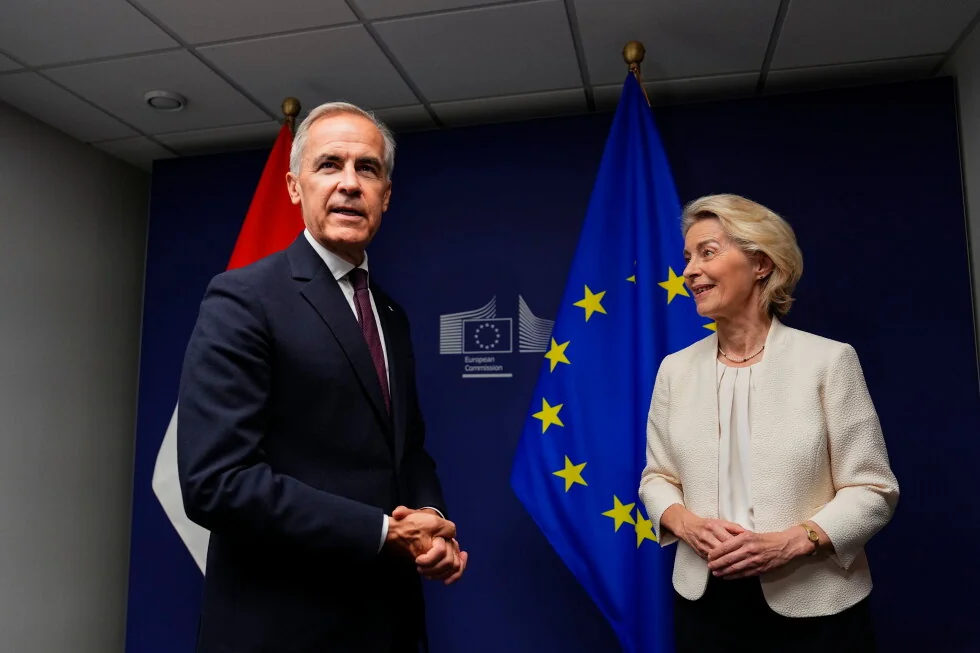
EUのカナダへの「準加盟国」提案が示唆しうるもの
What the EU’s ‘associate member’ offer to Canada could signify
EUのカナダへの「準加盟国」提案が示唆しうるもの
What the EU’s ‘associate member’ offer to Canada could signify
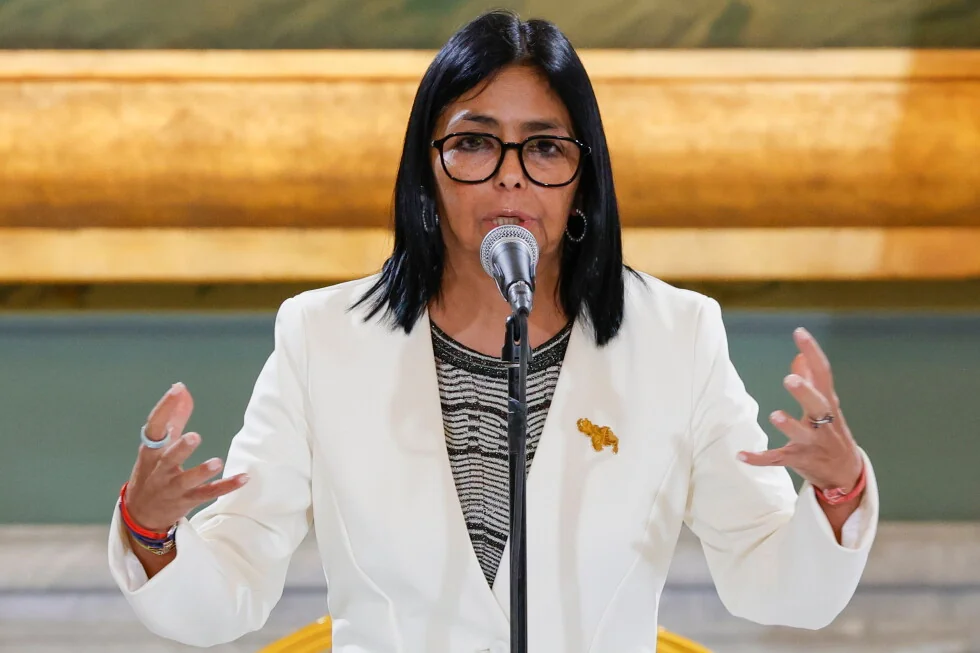
ホワイトハウスによると、トランプ氏は来週ニューヨークでベネズエラのデルシー・ロドリゲス暫定大統領と会談する予定である。
Trump to meet Venezuela's acting President Delcy Rodríguez in New York next week, White House says
ホワイトハウスによると、トランプ氏は来週ニューヨークでベネズエラのデルシー・ロドリゲス暫定大統領と会談する予定である。
Trump to meet Venezuela's acting President Delcy Rodríguez in New York next week, White House says
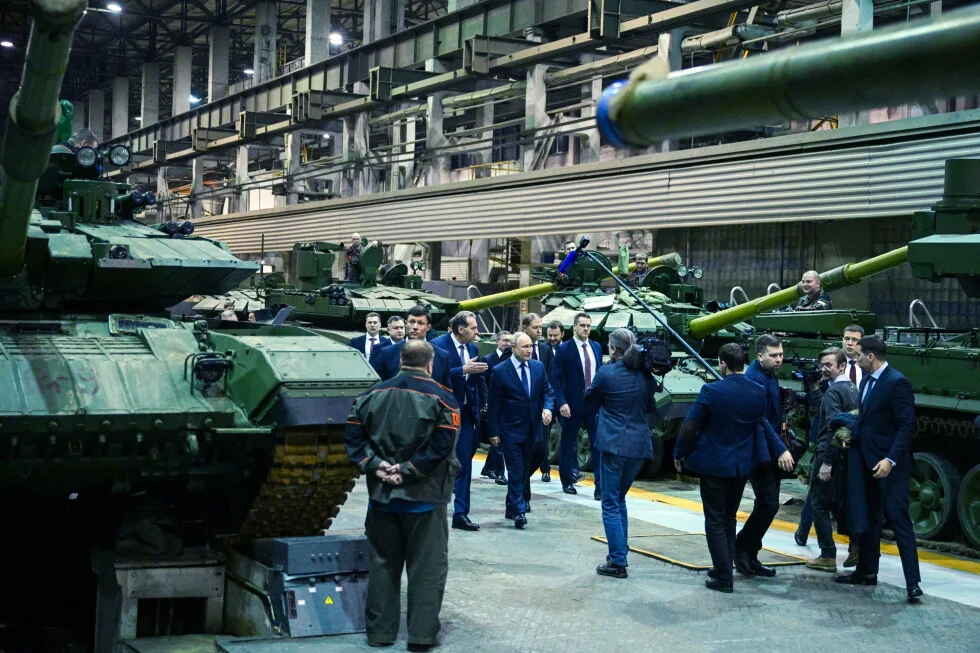
ロシアの戦時経済は債務と軍事支出による長期的な侵食に直面している
Russia’s Wartime Economy Faces Long-Term Erosion from Debt and Military Spending
ロシアの戦時経済は債務と軍事支出による長期的な侵食に直面している
Russia’s Wartime Economy Faces Long-Term Erosion from Debt and Military Spending

ロシアは、クレムリンの権力を確固たるものにするとみられる議会選挙で3日間の投票を開始した
Russia starts 3 days of voting in a parliamentary election poised to cement the Kremlin’s power
ロシアは、クレムリンの権力を確固たるものにするとみられる議会選挙で3日間の投票を開始した
Russia starts 3 days of voting in a parliamentary election poised to cement the Kremlin’s power
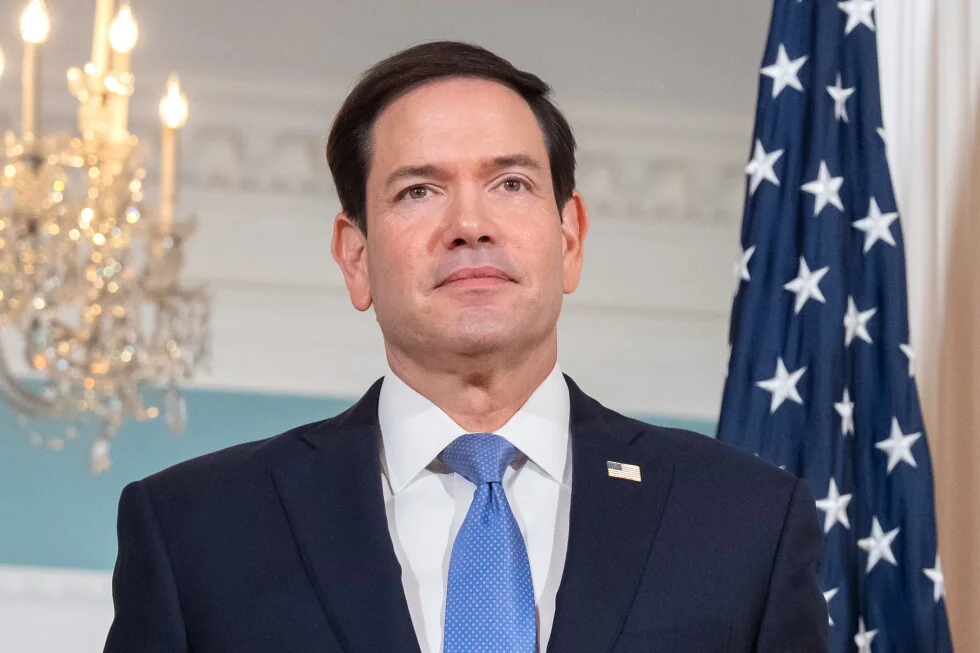
戦時中の敵対関係にもかかわらず、アメリカ合衆国は国連ハイレベル会合のためイランの最高指導者らにビザを付与
US grants visas to top Iranian leaders for UN high-level meeting despite wartime hostilities
戦時中の敵対関係にもかかわらず、アメリカ合衆国は国連ハイレベル会合のためイランの最高指導者らにビザを付与
US grants visas to top Iranian leaders for UN high-level meeting despite wartime hostilities
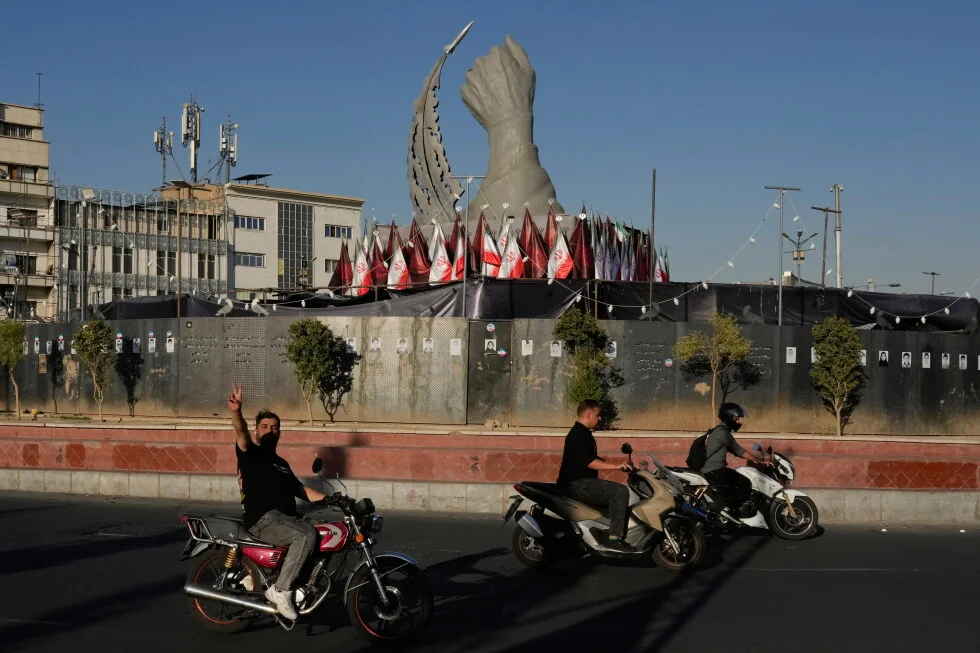
国連専門家、イラン攻撃におけるアメリカ合衆国の戦争犯罪の可能性を主張
UN experts allege possible US war crimes in Iran strikes
国連専門家、イラン攻撃におけるアメリカ合衆国の戦争犯罪の可能性を主張
UN experts allege possible US war crimes in Iran strikes
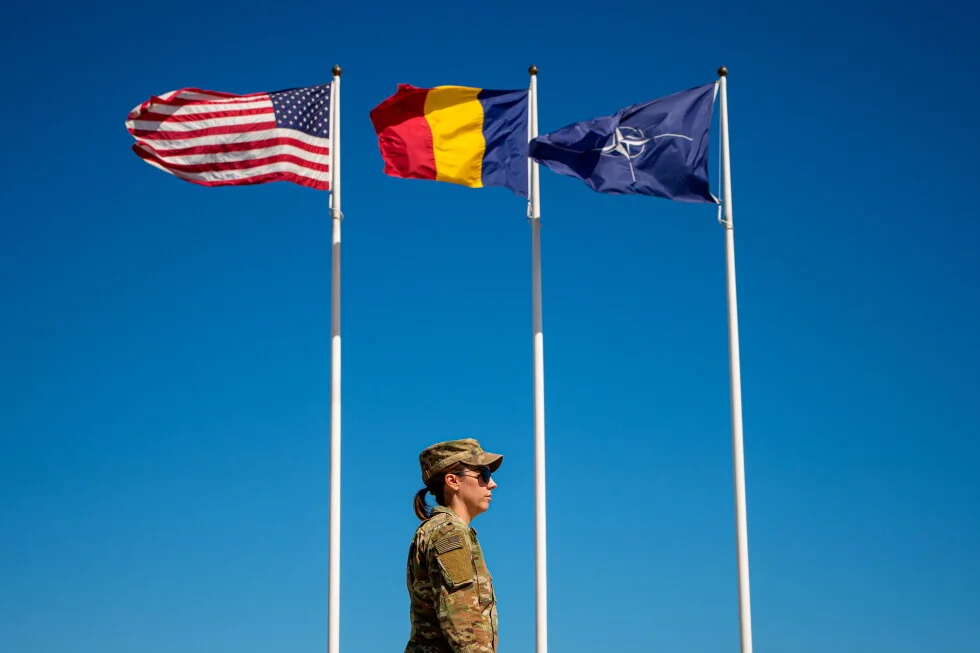
ルーマニア国境沿いの住民、ドローン警報の増加に警戒感を強める
Romanian Border Residents Alarmed as Drone Alerts Mount
ルーマニア国境沿いの住民、ドローン警報の増加に警戒感を強める
Romanian Border Residents Alarmed as Drone Alerts Mount
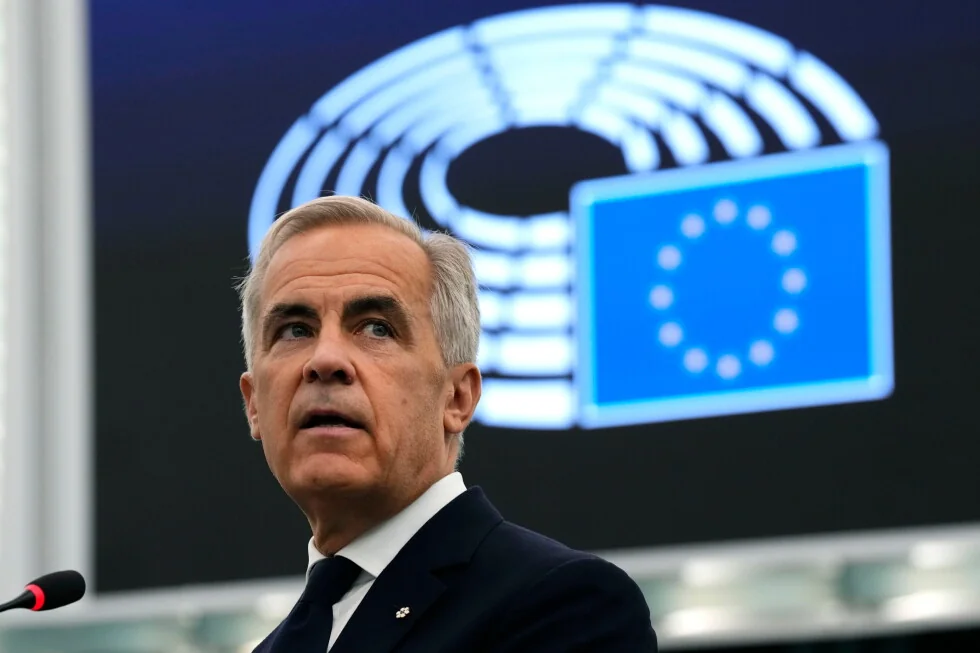
カーニー氏、トランプ氏がカナダを欧州へと押しやる中、EU準加盟国としての地位を支持
Carney backs EU associate membership as Trump pushes Canada toward Europe
カーニー氏、トランプ氏がカナダを欧州へと押しやる中、EU準加盟国としての地位を支持
Carney backs EU associate membership as Trump pushes Canada toward Europe

アメリカのホルムズ海峡再開への進展、しかしイラン戦争は依然続く
US Progress on Strait of Hormuz Reopening, Yet Iran War Persists
アメリカのホルムズ海峡再開への進展、しかしイラン戦争は依然続く
US Progress on Strait of Hormuz Reopening, Yet Iran War Persists

ナイジェリア人6人、ロマンス詐欺で女性から600万ドルを騙し取ったとしてアメリカ合衆国へ身柄引き渡しへ
6 Nigerians to Be Extradited to US for Defrauding Women of $6M in Romance Scams
ナイジェリア人6人、ロマンス詐欺で女性から600万ドルを騙し取ったとしてアメリカ合衆国へ身柄引き渡しへ
6 Nigerians to Be Extradited to US for Defrauding Women of $6M in Romance Scams