El proyecto de ley sobre centros de datos se estanca en el Senado mientras los legisladores emiten los votos finales antes de las elecciones de mitad de mandato
September 30th, 2026
El proyecto de ley sobre centros de datos se estanca en el Senado mientras los legisladores emiten los votos finales antes de las elecciones de mitad de mandato
🇪🇸 Español
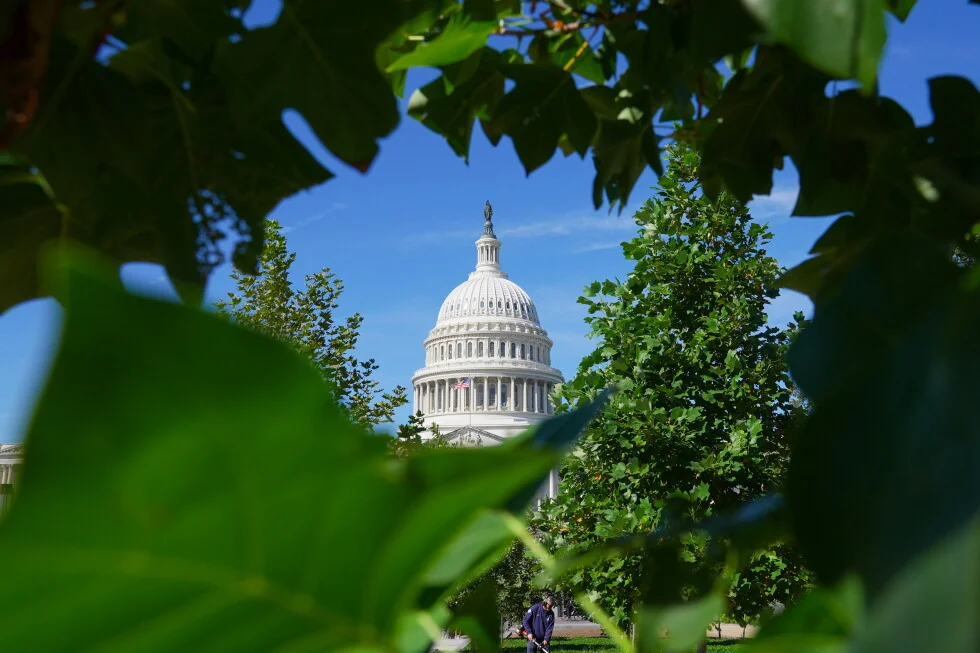
A bill intended to address voters' concerns about data centers and their impact on energy costs failed to advance in the Senate on Wednesday, becoming the casualty of an election-year clash over how best to tackle a growing concern.
Before leaving Washington to campaign, Senate Republicans set aside one of the chamber's final votes for a bill they hoped would highlight efforts to address the impact data centers have on voters' monthly energy bills.
The bill needed 60 votes to advance, but fell short, 57—43.
The bill is a modest one.
It would require utility regulators to consider adopting a federal standard that charges large power customers a rate that covers the cost of the system upgrades needed to serve them.
Democrats say it amounts to a suggestion and that more is needed.
Republicans say the bill sends a message to regulators to act.
The bill's sponsor, Sen. Jon Husted, a Republican from Ohio, is caught up in a tough reelection battle and has been labeled in campaign ads as the "face of data centers" by his Democratic challenger, former Sen. Sherrod Brown.
"You all know this is the only option available," Husted told reporters in advocating for his bill.
"Passing this bill is the only way to get a chance to prove to the American people before the midterm elections whose side you're on."
The measure passed the House by a vote of 417-3.
It would have needed support from at least seven Democratic senators to proceed to a final vote, but that did not happen, given the criticism from within their ranks that it does not go far enough and the knowledge that passage could give Husted's reelection prospects a lift.
"The bill is a fraud, plain and simple," Senate Democratic Leader Chuck Schumer asserted.
Democrats have put forward competing proposals.
Sen. Martin Heinrich, D-N.M., sponsored legislation that would direct the Federal Energy Regulatory Commission to issue rules for large electricity customers, requiring them to pay for necessary grid upgrades.
"They desire it to be optional, which effectively amounts to zero.
We, on the other hand, insist that it be mandatory," Schumer stated.
This website is safeguarded by reCAPTCHA, with the Google Privacy Policy and Terms of Service being applicable.
Republicans are seeking to cast Democrats as obstructionists who are blocking progress on key voter concerns.
Husted’s bill is one example.
Another would be the bill from Sen. Pete Ricketts, R-Neb., that would bar members of Congress from purchasing individual stocks.
The issue is a popular one with candidates running for office this election cycle, but also includes voter identification requirements that Democrats have called a poison pill.
Thune arranged for both bills to undergo procedural votes, and neither managed to reach the 60-vote threshold needed to move forward.
“Both pieces of legislation strike at the very heart of issues that the American people care deeply about, passionately about, and we’ll see if the Democrats are willing to take yes for an answer,” Thune said.
Both the House and the Senate are anticipated to remain out of session throughout the entirety of October.
The House adjourned in mid-September, forgoing nearly two weeks of votes, as Republicans were eager to hit the campaign trail in an effort to preserve their majority in the next Congress.
President Donald Trump has embraced the construction of additional data centers, yet a growing sense of apprehension is emerging among voters.
Roughly 6 in 10 Americans favor restricting the number of new data centers that may be built, a stance shared by most Democrats and Republicans alike.
Moreover, a majority of Americans are either “extremely” or “very” concerned about the impact of data centers on electricity prices or on the water supply in the communities where they are built.
In Ohio—a data center hot spot where races for governor and the U.S. Senate are closely contested—the National Republican Senatorial Committee cautioned in a recent memo that Husted is vulnerable to losing his seat on account of the centers.
While serving as lieutenant governor, Husted helped promote Ohio as a destination for data centers.
The Ohio race is regarded as crucial to determining control of the Senate, which helps explain why the data center bill has drawn such intense scrutiny and is so fiercely contested, despite the overwhelming vote it received in the House.
Speaking on the Senate floor before the vote, Husted said the bill requires states to at least confront the issue of data centers paying their own way for their power and the grid improvements needed to serve them.
He said the bill could hardly get broader support than it did in the House, but by blocking the bill in the Senate, Democrats would be showing they don't care about the issue of affordability.
“Let’s hold data centers accountable, and let’s stop blocking a path to affordability,” Husted said.
September 30th, 2026
Trending Articles

El teléfono del rector serbio está infectado con software espía en medio de las protestas estudiantiles, según un grupo
Serbian rector’s phone infected with spyware amid student protests, group says
El teléfono del rector serbio está infectado con software espía en medio de las protestas estudiantiles, según un grupo
Serbian rector’s phone infected with spyware amid student protests, group says
La inquietud de los consumidores aumenta a medida que los minoristas estadounidenses adoptan herramientas de precios impulsadas por la IA
Consumer unease mounts as US retailers embrace AI-driven pricing tools
La inquietud de los consumidores aumenta a medida que los minoristas estadounidenses adoptan herramientas de precios impulsadas por la IA
Consumer unease mounts as US retailers embrace AI-driven pricing tools

China toma medidas para restringir las exportaciones tecnológicas, incluida la IA, alegando riesgos para la seguridad nacional
China moves to restrict tech exports, including AI, citing national security risks
China toma medidas para restringir las exportaciones tecnológicas, incluida la IA, alegando riesgos para la seguridad nacional
China moves to restrict tech exports, including AI, citing national security risks
Los agentes de IA son tan buenos como la información personal que compartes. Eso plantea preocupaciones sobre la privacidad
AI agents are only as good as the personal information you share. That raises privacy concerns
Los agentes de IA son tan buenos como la información personal que compartes. Eso plantea preocupaciones sobre la privacidad
AI agents are only as good as the personal information you share. That raises privacy concerns

Trump afirma que Rusia y Ucrania han acordado un «alto el fuego energético», pero Kyiv informa de ataques en curso
Trump claims Russia and Ukraine have agreed to an ‘energy ceasefire’, but Kyiv reports ongoing attacks
Trump afirma que Rusia y Ucrania han acordado un «alto el fuego energético», pero Kyiv informa de ataques en curso
Trump claims Russia and Ukraine have agreed to an ‘energy ceasefire’, but Kyiv reports ongoing attacks
Los fundadores de IA de Silicon Valley acogen con beneplácito el impulso de Trump hacia la autorregulación del sector en materia de seguridad
Silicon Valley AI founders welcome Trump’s push for industry self-policing on safety
Los fundadores de IA de Silicon Valley acogen con beneplácito el impulso de Trump hacia la autorregulación del sector en materia de seguridad
Silicon Valley AI founders welcome Trump’s push for industry self-policing on safety

El archivo de IA Claude de Anthropic presenta un falso soplo en un caso sin resolver de Filadelfia
Anthropic's Claude AI Files a False Tip in a Philadelphia Cold Case
El archivo de IA Claude de Anthropic presenta un falso soplo en un caso sin resolver de Filadelfia
Anthropic's Claude AI Files a False Tip in a Philadelphia Cold Case

Desarrollos en seguridad de la IA desde el ataque a Hugging Face: una cronología
AI safety developments since the Hugging Face attack: a timeline
Desarrollos en seguridad de la IA desde el ataque a Hugging Face: una cronología
AI safety developments since the Hugging Face attack: a timeline
El respaldo de RFK Jr. a la IA desconcierta a algunos aliados de MAHA y a expertos médicos
RFK Jr.'s AI endorsement baffles some MAHA allies and medical experts
El respaldo de RFK Jr. a la IA desconcierta a algunos aliados de MAHA y a expertos médicos
RFK Jr.'s AI endorsement baffles some MAHA allies and medical experts

McDonald’s enfrenta una demanda por una herramienta de precios con IA para franquiciados en EE. UU.
McDonald’s faces lawsuit over AI pricing tool for US franchisees
McDonald’s enfrenta una demanda por una herramienta de precios con IA para franquiciados en EE. UU.
McDonald’s faces lawsuit over AI pricing tool for US franchisees