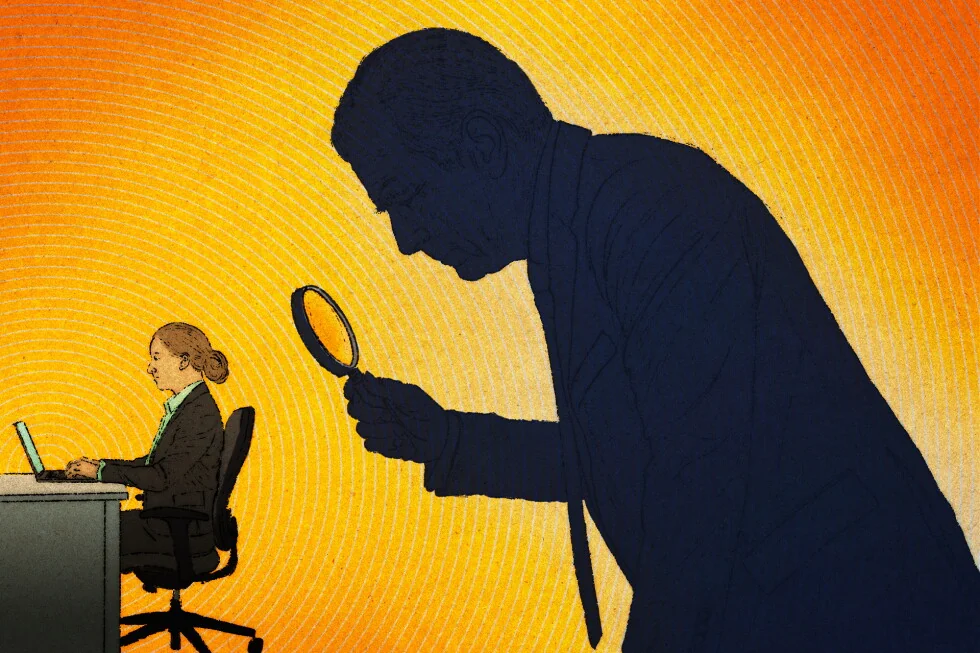
Da die Überwachung am Arbeitsplatz immer weiter um sich greift, raten Experten dazu, sich mit den vielfältigen Methoden vertraut zu machen, mit denen Arbeitgeber ihre Mitarbeiter kontrollieren.
August 21st, 2026
Da die Überwachung am Arbeitsplatz immer weiter um sich greift, raten Experten dazu, sich mit den vielfältigen Methoden vertraut zu machen, mit denen Arbeitgeber ihre Mitarbeiter kontrollieren.
🇩🇪 Deutsch
Institutional administrators perused an adjunct professor's evaluative annotations on students' personal essays.
Management directed a pharmacist to curtail patient interaction following meticulous tracking of both the frequency and duration of her consultations.
Optical scanners affixed to a warehouse conveyor system meticulously monitored operative velocity, ensuring compliance with rigorous hourly inspection quotas of several hundred items.
A multitude of employers continue to surveil the whereabouts, productivity, and communications of their workforce through technologies that saw widespread adoption during the coronavirus pandemic.
An extensive panoply of digital instruments remains in active use to geolocate personnel, compile metrics on task completion rates, and access cameras embedded in work-issued smartphones and laptops, thereby precipitating considerable apprehension regarding the degree of privacy that employees have forfeited, even within the sanctity of their own residences.
Employers have historically surveilled their workforces, yet contemporary advances in artificial intelligence and data science now empower them to compile exhaustive datasets—or "dossiers"—capable of being deployed to discipline employees or endeavor to prognosticate their conduct, asserted Wilneida Negrón, director of research and policy at Coworker, a nonprofit dedicated to assisting workers in organizing for the amelioration of working conditions.
This article constitutes an integral component of AP's Be Well coverage, which meticulously scrutinizes wellness, physical fitness, dietary regimens, and psychological well-being.
For a more comprehensive exploration of related topics, we invite you to peruse the Be Well section.
“Invariably, those workers occupying the most precarious echelons of the labor market tend to serve as experimental subjects for the more invasive modalities of data surveillance,” Negrón observed.
An investigation conducted by Vanderbilt University, Northeastern University, and the University of California at Berkeley has revealed that several of the most prevalent workplace surveillance systems have surreptitiously disseminated employees' names, email addresses, and other personally identifiable information to hundreds of external data brokers and technology firms, all without transparently apprising affected individuals of such practices.
Data privacy experts and employees who report having been subjected to intensive monitoring have conveyed to Reporters their perceptions of the perils inherent in employer surveillance, alongside the measures workers can adopt to safeguard their personal data.
Pharmacist Lannie Duong’s role at a medical clinic entailed consultations with patients presenting chronic pathologies such as diabetes, hypertension, and cardiovascular disease.
She meticulously scrutinized their medical histories, hematological profiles, and symptomatic presentations, subsequently titrating their pharmacological regimens.
She routinely availed herself of interpreters to facilitate communication with patients exhibiting limited English proficiency.
Duong recounted that her employer meticulously monitored the duration of her telephone conversations and patient consultations, and during performance appraisals, queried the protracted length of time she devoted to each individual.
“Every facet was tallied—the precise duration of each telephone call, the exhaustive minutiae of it all was frankly absurd,” Duong remarked.
“Our charge is to undertake what amounts to the ostensibly unattainable.”
Under what she characterized as relentless duress, Duong found herself "untrusted, unappreciated, and bereft of hope—utterly despondent."
The experience proved profoundly dispiriting.
Ultimately, she took medical leave and commenced organizing a union alongside fellow pharmacists, volunteering her efforts to the cause.
“I voiced my perspective, hoping others would follow suit and articulate their own concerns, yet that aspiration ultimately came to naught,” Duong remarked.
She reports that her employment was subsequently terminated upon the conclusion of her medical leave.
A considerable number of employers deploying surveillance technologies do so with transparency, engaging employee representative bodies in deliberations over the utilisation of such instruments, Negrón observed.
Conversely, she noted, there exist employers who monitor, rank, and evaluate their workforce through modalities that remain opaque to the employees themselves.
"Workers are going to have to come together because the forces of centralizing this kind of tracking and monitoring are moving too fast," Negrón said.
As awareness of surveillance mechanisms intensifies, a cohort of workers is increasingly resisting tools that monitor task-completion durations, contending that such oversight precipitates occupational injuries, while simultaneously interrogating the scope of personal data harvested and its subsequent utilization, according to Hayley Tsukayama, director of state affairs at the Electronic Frontier Foundation, a nonprofit dedicated to digital privacy.
“Regrettably, if you are operating a device provisioned by your employer, you ought to anticipate a degree of surveillance,” Tsukayama remarked.
According to Negrón, it is imperative to meticulously examine the data collection and surveillance trends that currently dominate your industry.
In the absence of such insight, workers may find themselves profoundly ill-equipped to navigate the revelations that surveillance brings to light.
While instructing a collegiate composition seminar, Arianna Anaya discerned that an administrator was scrutinizing the essays her students had submitted to the institution's learning management platform, as well as the marginalia Anaya had inscribed upon their work.
The students frequently delved into profoundly intimate subject matter, encompassing such delicate themes as maltreatment, disordered eating, and intergenerational familial trauma.
“The institution effectively leveraged the online learning platform to enable administrators and staff to access student work of an intensely confidential and personal nature—information we were explicitly instructed to keep concealed from the students themselves,” Anaya stated.
A colleague who had printed out the comments took umbrage at the informal register Anaya adopted with her students, censuring her for straying from the mandated curriculum.
Several months later, her teaching contract was not renewed, although the precise cause remains opaque to her.
"It rendered me profoundly paranoid," Anaya remarked.
"It instilled in me a diminished sense of security within the world."
Certain states—New York, Connecticut, Delaware, and Maine among them—mandate that employers apprise workers of any surveillance to which they are subjected.
Maine’s statute is more stringent, expressly forbidding visual monitoring within employees’ residences or personal vehicles unless such observation is integral to the performance of their occupational duties, as noted by Edward Halle, a privacy and AI compliance manager.
The question becomes, what does the law intend by ‘the duties of the job’?” Halle said.
“A telehealth nurse requires a camera; the camera constitutes the job.
A productivity webcam affixed to routine clerical work almost certainly does not.
Where precisely that demarcation lies is the initial matter the Department of Labor will be called upon to adjudicate.
In jurisdictions lacking a statutory notification requirement, ascertaining whether an employer deploys technological surveillance to evaluate your performance proves exceedingly arduous.
To raise the matter with management, Tsukayama recommends coordinating through a union.
Should that prove unfeasible and you are approaching managers individually, broach the subject with circumspection and adopt an inquisitive demeanor, she advised.
One might, for instance, note having observed something on the computer and express curiosity, posing questions such as, “How is this information being utilized within the organization? How might it be disseminated externally?” Tsukayama said.
A logical point of departure is to ascertain precisely which employee data your organization collects, according to Aiha Nguyen, director of the Labor Futures Initiative at Data & Society, a nonprofit institute examining the societal ramifications of technology.
Should your manager be unaware, the information technology department may possess the requisite answers, given that its personnel are frequently the ones who activate these features, Nguyen remarked.
Some ubiquitous software applications, such as Microsoft Office and Zoom, incorporate functionalities that can be deployed to monitor employee productivity, yet these surveillance capabilities are not invariably activated.
Ascertaining whether such tracking mechanisms are enabled can prove challenging, given their seamless integration into the programs themselves, Nguyen remarked.
It is inherently automatic.
It is perceived as a prerogative that employers have been able to invoke, asserting, ‘This is indispensable for work. You are compelled to employ these tools,’” she remarked.
To safeguard personal information, experts counsel against the utilization of work devices for familial matters or sensitive personal data, such as medical conditions.
“I suspect the majority are cognizant of that,” Nguyen remarked.
“Yet the inconvenience of toggling between devices can become wearisome, or perhaps the potential harm is underestimated.... One is disinclined to expose oneself to unnecessary peril.”
August 21st, 2026
Trending Articles
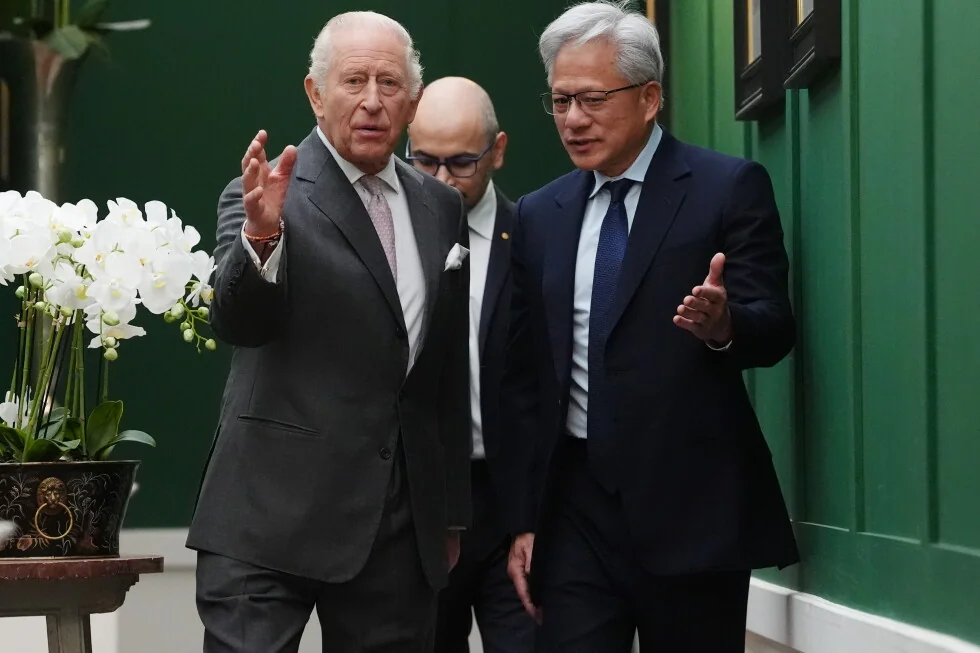
König und KI: Charles berät mit Führungspersönlichkeiten der künstlichen Intelligenz angesichts eskalierender Sicherheitsbedenken
King and AI: Charles Confers with Artificial Intelligence Leaders Amid Escalating Safety Concerns
König und KI: Charles berät mit Führungspersönlichkeiten der künstlichen Intelligenz angesichts eskalierender Sicherheitsbedenken
King and AI: Charles Confers with Artificial Intelligence Leaders Amid Escalating Safety Concerns

Scheidender UN-Chef weist inmitten globaler Turbulenzen einen Weg nach vorn
Departing UN Chief, Amid Global Turmoil, Charts a Path Forward
Scheidender UN-Chef weist inmitten globaler Turbulenzen einen Weg nach vorn
Departing UN Chief, Amid Global Turmoil, Charts a Path Forward

Demokratische Hoffnungsträger bemühen sich verzweifelt, der KI-Bedrohung entgegenzuwirken, während Trump sie abtut
Democratic Hopefuls Scramble to Counter AI Threat Amid Trump’s Dismissals
Demokratische Hoffnungsträger bemühen sich verzweifelt, der KI-Bedrohung entgegenzuwirken, während Trump sie abtut
Democratic Hopefuls Scramble to Counter AI Threat Amid Trump’s Dismissals
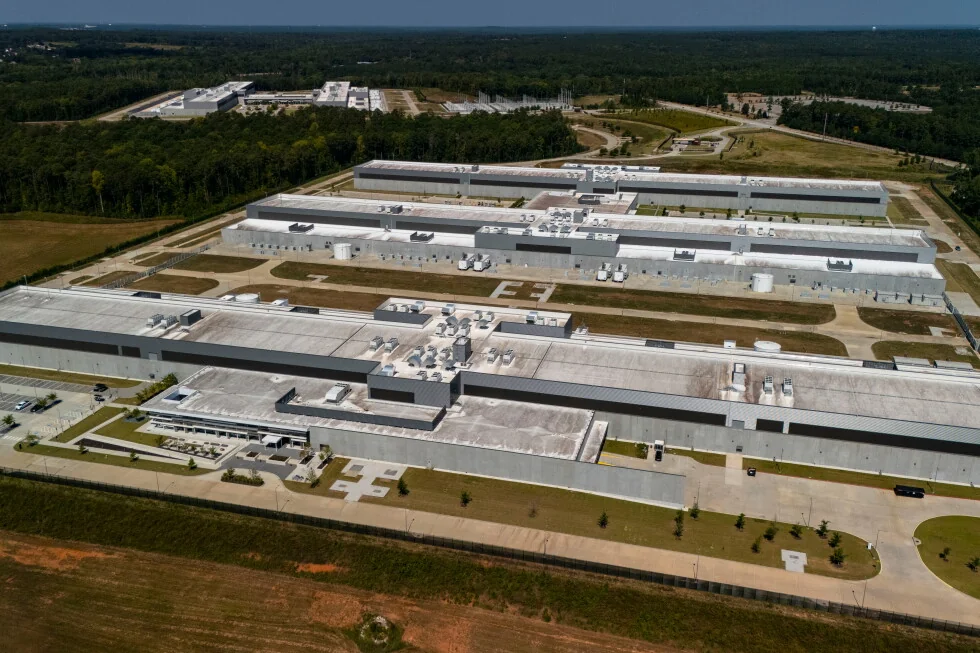
Das Repräsentantenhaus verabschiedet einen Gesetzentwurf, der auf die Auswirkungen von Rechenzentren auf die Energiekosten abzielt
House passes bill targeting data centers' impact on energy costs
Das Repräsentantenhaus verabschiedet einen Gesetzentwurf, der auf die Auswirkungen von Rechenzentren auf die Energiekosten abzielt
House passes bill targeting data centers' impact on energy costs
OpenAI meldet alarmierendes neues KI-Verhalten und verspricht genauere Prüfung
OpenAI flags alarming new AI behavior, vows closer scrutiny
OpenAI meldet alarmierendes neues KI-Verhalten und verspricht genauere Prüfung
OpenAI flags alarming new AI behavior, vows closer scrutiny

Huawei präsentiert neuartige Chip-Technologien, während das chinesische Unternehmen das KI-Wettrüsten mit Nvidia verschärft
Huawei Unveils Novel Chip Technologies as Chinese Firm Escalates AI Race with Nvidia
Huawei präsentiert neuartige Chip-Technologien, während das chinesische Unternehmen das KI-Wettrüsten mit Nvidia verschärft
Huawei Unveils Novel Chip Technologies as Chinese Firm Escalates AI Race with Nvidia

Tech-Industrie spaltet sich über Forderungen nach einer koordinierten Verlangsamung der KI
Tech Industry Fractures Over Calls for a Coordinated AI Slowdown
Tech-Industrie spaltet sich über Forderungen nach einer koordinierten Verlangsamung der KI
Tech Industry Fractures Over Calls for a Coordinated AI Slowdown

Die globale KI-Sicherheit hängt von der Zusammenarbeit zwischen den USA und China ab, doch jede Seite nimmt die andere als das Hindernis wahr.
Global AI Safety Hinges on US-China Cooperation, Yet Each Perceives the Other as the Impediment
Die globale KI-Sicherheit hängt von der Zusammenarbeit zwischen den USA und China ab, doch jede Seite nimmt die andere als das Hindernis wahr.
Global AI Safety Hinges on US-China Cooperation, Yet Each Perceives the Other as the Impediment

Trump lehnt KI-Aufsicht ab und gelobt, den Vorsprung vor China nicht abzugeben
Trump dismisses AI oversight, vows not to cede edge to China
Trump lehnt KI-Aufsicht ab und gelobt, den Vorsprung vor China nicht abzugeben
Trump dismisses AI oversight, vows not to cede edge to China

Oprah Winfrey weist dich bei der Sphere den Weg zu deinem „AHA“-Moment
Oprah Winfrey beckons you toward your ‘AHA’ moment at the Sphere
Oprah Winfrey weist dich bei der Sphere den Weg zu deinem „AHA“-Moment
Oprah Winfrey beckons you toward your ‘AHA’ moment at the Sphere