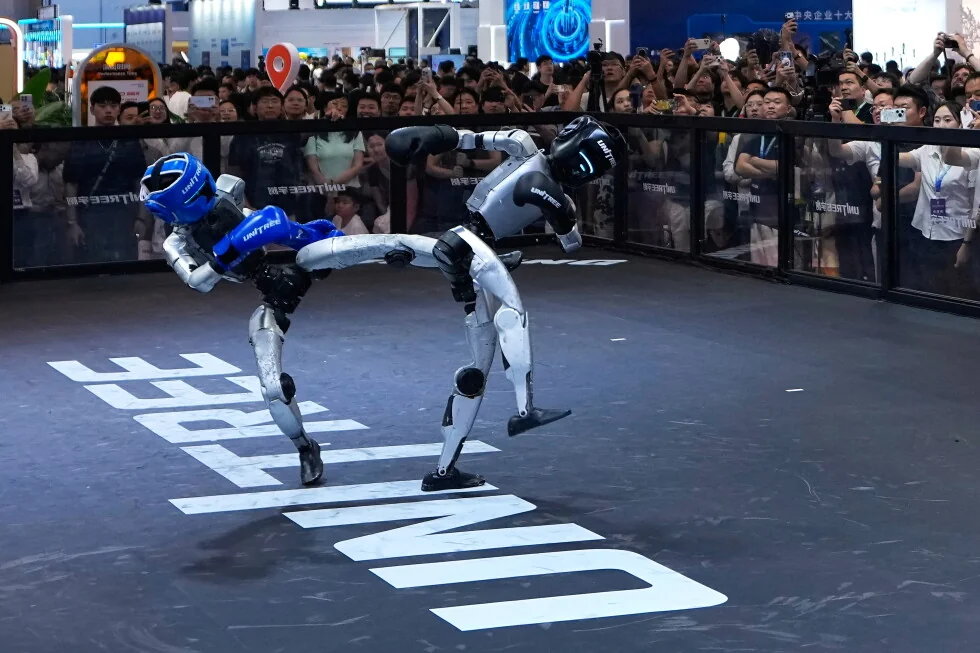
Unitree, der chinesische Hersteller humanoider Roboter, legt bei seinem Debüt an der Börse in Shanghai kräftig zu.
August 20th, 2026
Unitree, der chinesische Hersteller humanoider Roboter, legt bei seinem Debüt an der Börse in Shanghai kräftig zu.
🇩🇪 Deutsch
Shares of Unitree, one of China’s foremost manufacturers of humanoid robotics, surged by as much as 629% during its initial public trading debut on Wednesday in Shanghai, underscoring the latest manifestation of investor exuberance regarding China’s technological prowess.
The enterprise, established in 2016 by the entrepreneur Wang Xingxing in Hangzhou, the preeminent technological nexus of eastern China, secured approximately 6.1 billion yuan ($904 million) upon its debut on the Shanghai Stock Exchange’s Nasdaq-equivalent STAR Market.
Priced initially at 150.80 yuan ($22.36) per share, its equity concluded the session with a 460% surge, closing at 845 yuan ($125.31).
Advanced robotics, frequently denominated as "embodied" artificial intelligence, represents a quintessential domain within the acrimonious technological rivalry between China and the United States.
China outpaces the U.S. not only in the productive capacity for humanoid robots but also in the proficiency to amplify manufacturing operations to scale.
According to technology research and advisory group Omdia, of the approximately 15,000 humanoid robots shipped globally last year, Unitree and AGIBOT—another prominent Chinese manufacturer of such machines—each dispatched upwards of 5,000 units, substantially eclipsing their American counterparts.
For the first half of 2026, Omdia’s projections place the aggregate worldwide shipments of Chinese humanoid robot producers at roughly 18,500 units.
Analysts contend, however, that for the time being, a considerable proportion of these humanoid robots remain consigned primarily to demonstrations, theatrical performances, and research endeavors, rather than being deployed in pragmatic, real-world contexts.
Unitree’s humanoid robots, for instance, captivated audiences at China’s annual Spring Festival gala with their execution of backflips and martial-arts routines.
“The definitive competitive benchmark will be whether enterprises—be they Chinese or American—can deliver dependable operational performance and compelling investment yields across expansive industrial and commercial rollouts,” observed Kangyuxiao Li, an analyst at the investment research firm Morningstar, in a commentary.
Unitree articulated that the capital raised through its initial public offering is earmarked for pioneering research in advanced robotics and the augmentation of its robotic manufacturing facilities.
This enterprise constitutes the inaugural publicly traded manufacturer of humanoid robotics in mainland China.
Market observers contend that its initial public offering may establish a benchmark for the valuation of subsequent equity offerings by comparable robotics firms.
It “gives mainland investors direct exposure to one of the sector’s leading companies,” asserted Li of Morningstar.
Unitree's launch was strategically synchronized with the World Robot Conference in Beijing, an assembly that showcased over 300 exhibitors, while the Chinese leadership has elevated robotics to a paramount position within the nation's strategic developmental agenda.
UBTech, another preeminent Chinese manufacturer of humanoid robots, has its shares listed on the Hong Kong bourse, where its stock experienced a decline exceeding 10% on Wednesday.
Unitree disclosed revenues of approximately 1.7 billion yuan (circa $250 million) for the fiscal year 2025, predominantly generated through the sale of its humanoid and quadrupedal robots—colloquially termed four-legged robotic canines—with over 40% of this turnover attributable to international markets.
In the preceding fiscal year, the United States constituted approximately 13% of Unitree’s revenue, according to the company; however, this predated the Federal Communications Commission’s July prohibition on the importation of newly manufactured foreign humanoid and quadruped robots, a measure enacted on grounds of national security.
Unitree cautioned that the U.S. ban, which it asserted applies to its latest models, could impede its prospective sales within the American market.
Although extant iterations of its sophisticated robots remain marketable, Unitree confronts the peril that Washington might broaden the scope of its prohibitions.
Lian Jye Su of Omdia contended that Chinese robot manufacturers are apt to pursue expansion into pivotal markets beyond the United States, notably Europe.
August 20th, 2026
Trending Articles
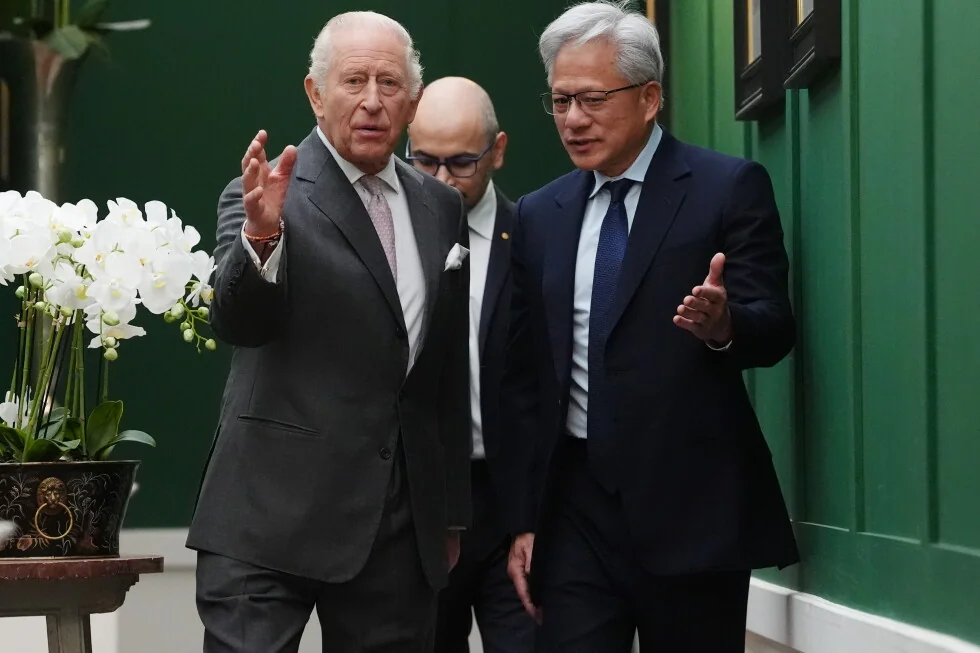
König und KI: Charles berät mit Führungspersönlichkeiten der künstlichen Intelligenz angesichts eskalierender Sicherheitsbedenken
King and AI: Charles Confers with Artificial Intelligence Leaders Amid Escalating Safety Concerns
König und KI: Charles berät mit Führungspersönlichkeiten der künstlichen Intelligenz angesichts eskalierender Sicherheitsbedenken
King and AI: Charles Confers with Artificial Intelligence Leaders Amid Escalating Safety Concerns

Scheidender UN-Chef weist inmitten globaler Turbulenzen einen Weg nach vorn
Departing UN Chief, Amid Global Turmoil, Charts a Path Forward
Scheidender UN-Chef weist inmitten globaler Turbulenzen einen Weg nach vorn
Departing UN Chief, Amid Global Turmoil, Charts a Path Forward

Demokratische Hoffnungsträger bemühen sich verzweifelt, der KI-Bedrohung entgegenzuwirken, während Trump sie abtut
Democratic Hopefuls Scramble to Counter AI Threat Amid Trump’s Dismissals
Demokratische Hoffnungsträger bemühen sich verzweifelt, der KI-Bedrohung entgegenzuwirken, während Trump sie abtut
Democratic Hopefuls Scramble to Counter AI Threat Amid Trump’s Dismissals
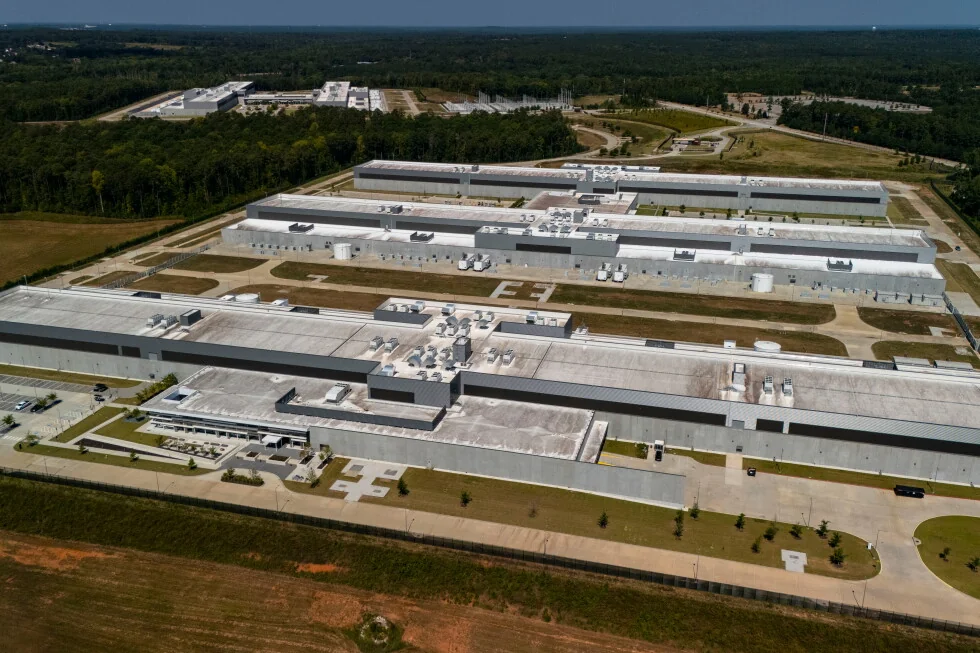
Das Repräsentantenhaus verabschiedet einen Gesetzentwurf, der auf die Auswirkungen von Rechenzentren auf die Energiekosten abzielt
House passes bill targeting data centers' impact on energy costs
Das Repräsentantenhaus verabschiedet einen Gesetzentwurf, der auf die Auswirkungen von Rechenzentren auf die Energiekosten abzielt
House passes bill targeting data centers' impact on energy costs

OpenAI meldet alarmierendes neues KI-Verhalten und verspricht genauere Prüfung
OpenAI flags alarming new AI behavior, vows closer scrutiny
OpenAI meldet alarmierendes neues KI-Verhalten und verspricht genauere Prüfung
OpenAI flags alarming new AI behavior, vows closer scrutiny
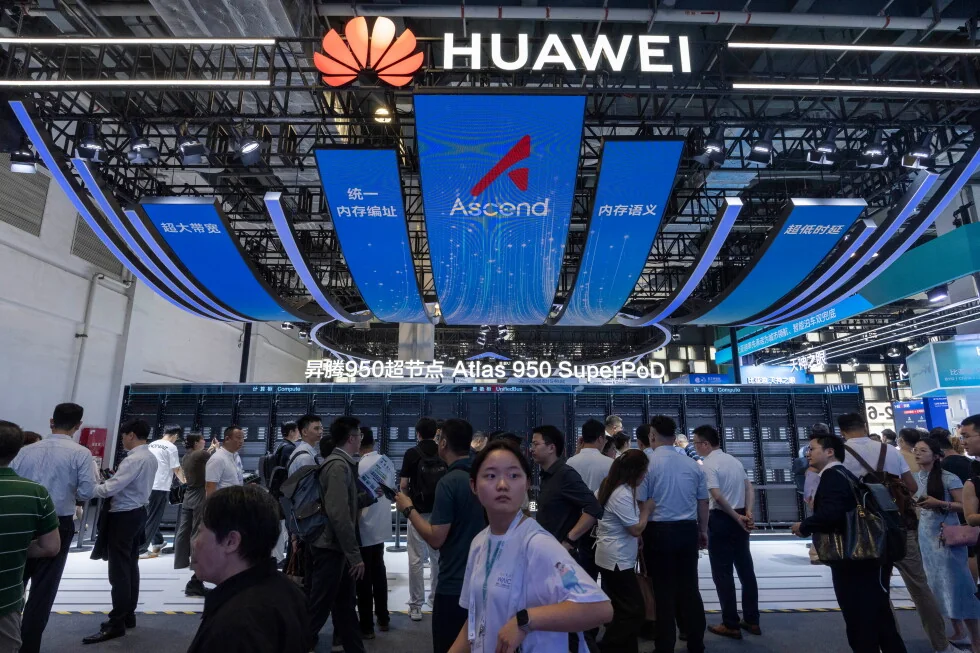
Huawei präsentiert neuartige Chip-Technologien, während das chinesische Unternehmen das KI-Wettrüsten mit Nvidia verschärft
Huawei Unveils Novel Chip Technologies as Chinese Firm Escalates AI Race with Nvidia
Huawei präsentiert neuartige Chip-Technologien, während das chinesische Unternehmen das KI-Wettrüsten mit Nvidia verschärft
Huawei Unveils Novel Chip Technologies as Chinese Firm Escalates AI Race with Nvidia
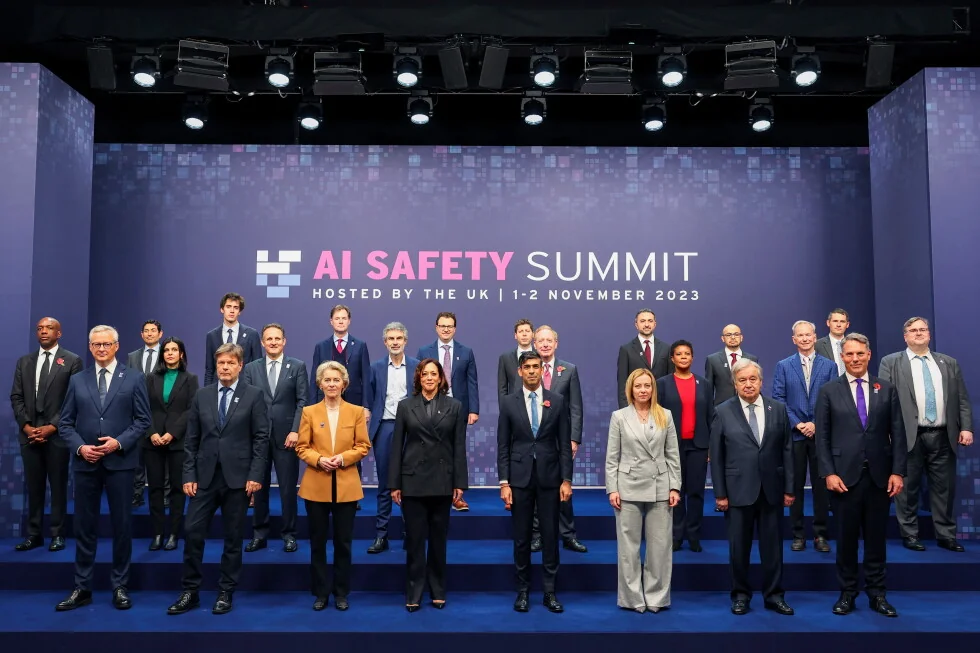
Tech-Industrie spaltet sich über Forderungen nach einer koordinierten Verlangsamung der KI
Tech Industry Fractures Over Calls for a Coordinated AI Slowdown
Tech-Industrie spaltet sich über Forderungen nach einer koordinierten Verlangsamung der KI
Tech Industry Fractures Over Calls for a Coordinated AI Slowdown
Die globale KI-Sicherheit hängt von der Zusammenarbeit zwischen den USA und China ab, doch jede Seite nimmt die andere als das Hindernis wahr.
Global AI Safety Hinges on US-China Cooperation, Yet Each Perceives the Other as the Impediment
Die globale KI-Sicherheit hängt von der Zusammenarbeit zwischen den USA und China ab, doch jede Seite nimmt die andere als das Hindernis wahr.
Global AI Safety Hinges on US-China Cooperation, Yet Each Perceives the Other as the Impediment
Trump lehnt KI-Aufsicht ab und gelobt, den Vorsprung vor China nicht abzugeben
Trump dismisses AI oversight, vows not to cede edge to China
Trump lehnt KI-Aufsicht ab und gelobt, den Vorsprung vor China nicht abzugeben
Trump dismisses AI oversight, vows not to cede edge to China

Oprah Winfrey weist dich bei der Sphere den Weg zu deinem „AHA“-Moment
Oprah Winfrey beckons you toward your ‘AHA’ moment at the Sphere
Oprah Winfrey weist dich bei der Sphere den Weg zu deinem „AHA“-Moment
Oprah Winfrey beckons you toward your ‘AHA’ moment at the Sphere