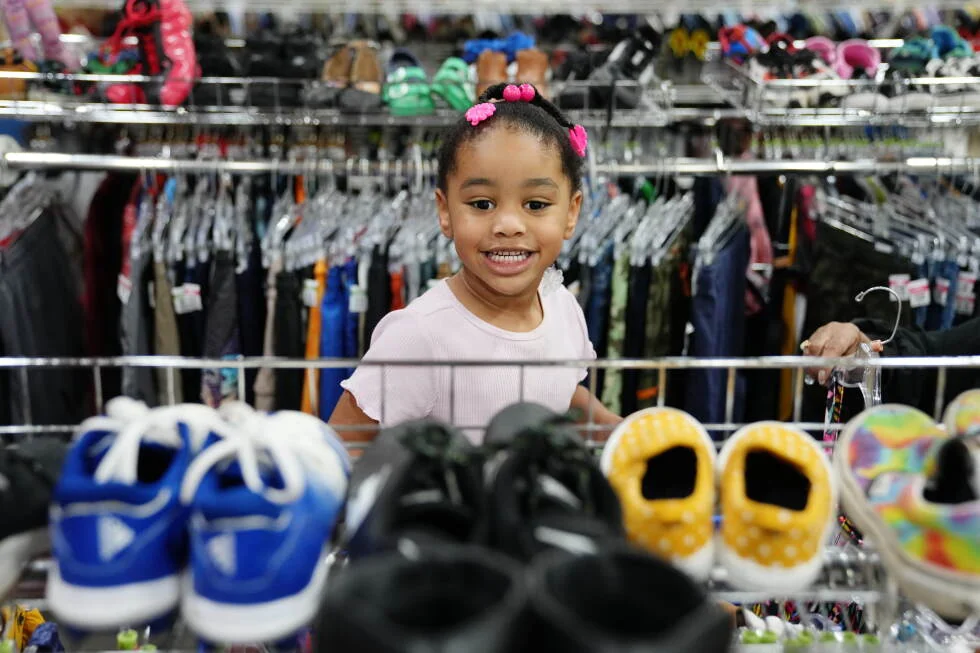
随着新学期的开始,家庭因儿童鞋类费用不断攀升而感受到财政压力。
August 14th, 2026
随着新学期的开始,家庭因儿童鞋类费用不断攀升而感受到财政压力。
🇨🇳 中文
Upon learning of Nike Minds—a futuristic sneaker purported to enhance concentration through plantar stimulation—Jonah Seidenberg was compelled to acquire a pair.
On a recent Saturday, the 12-year-old from the Chicago suburb of Northbrook and his mother scoured StockX, an online sneaker marketplace, and other sites in pursuit of a discount, yet their efforts proved fruitless.
They ultimately located the final available pair in his size on Dick’s Sporting Goods’ website, albeit at the full price of $145.
They procured it nonetheless.
"It was 10:30 at night and we finally threw in the towel," said Lisa Seidenberg, a publicist.
"I felt it looked like a Tesla in a shoe, but something sparked for him."
The price exceeded the budgetary constraints she and her husband had established, so Jonah contributed an additional $40 from his own savings.
As summer wanes and children return to the scholastic fold, the imperative to distinguish oneself or assimilate through appropriate footwear is now colliding with escalating prices.
This is placing considerable strain on household budgets already beleaguered by mounting expenditures on provisions, fuel, and other necessities, prompting both parents and offspring to devote increasing time to bargain-hunting or to acquire fewer pairs, according to analysts and retailers alike.
Moreover, a growing number of parents are unequivocally declining, whether the item in question be $150 football boots, Adidas Sambas reimagined as Mary Janes, or the $300 Kobe Bryant sneakers that Jonah had initially aspired to own.
Children frequently outgrow their footwear with greater rapidity than other garments, and shoes typically command a higher price point.
According to the Footwear Distributors and Retailers Association, shoe prices escalated by 3.2% during the first half of the year, positioning full-year inflation on a trajectory to accelerate at its swiftest clip in 34 years, excluding the pandemic-affected years of 2021 and 2022.
Certain parents, such as Elizabeth Powers, a 37-year-old real estate agent in San Francisco, have expressed that it is “frustrating” to observe footwear prices escalating unabated while, in her estimation, the caliber of the product has concomitantly deteriorated.
"Their feet grow so fast as it is," said Powers, who has two children, ages 7 and 11.
"It's incredibly frustrating to have to replace shoes before they've grown out of them due to poor quality."
Powers articulated her steadfast resolve to allocate a modest expenditure—approximately two hundred dollars per child—for the entire annual period, encompassing footwear.
Moreover, she is diligently scouring for discount vouchers from DSW and Zappos, while strategically selecting shoes that offer enhanced multifunctionality.
Procuring footwear for children presents a considerably more formidable challenge than assembling the remainder of their attire, which lends itself to facile modification.
Footwear necessitates a precise fit to accommodate developing feet, as articulated by Priya Parthasarathy, partner at the U.S. Foot & Ankle Specialists in Silver Spring, Maryland, and national spokesperson for the trade association American Podiatric Medical Association.
She observed that children aged seven to ten typically require new footwear at intervals of six to nine months, whereas adolescents generally surpass the fit of their shoes on a yearly basis.
According to the footwear trade group, footwear prices show no imminent prospect of stabilising, owing to President Donald Trump's tariff policies and the conflict in Iran, which is inflating the cost of petroleum-derived commodities such as shoes.
Mirroring the dynamics observed in adult society, footwear functions as a potent emblem of social hierarchy and status among the juvenile demographic.
According to Casey Lewis, a trend analyst in New York, a considerable number of adolescents experience more intense social pressure to don the correct sneaker brands than they do with respect to any other category of apparel.
She remarked that footwear possesses an immediate, almost visceral legibility, signaling unequivocally, “I belong to the collective.”
Jonah Seidenberg, a native of Chicago's suburbs, recounted that he and his mother patronize thrift stores to procure specific apparel labels such as Hollister and Polo Ralph Lauren, thereby economizing to allocate greater resources toward his footwear collection.
“One may attire oneself in virtually any manner of garment and it would be perfectly acceptable, provided the fit is correct,” remarked Jonah.
“The provenance or label of the apparel is of no consequence whatsoever.
Footwear, however, presents a spectrum of possibilities—high-tops, low-tops, and the like.
Ultimately, it is the individual’s personal predilection that engenders a sense of self-assurance.”
He contended that substandard footwear—be it threadbare, dilapidated, or aesthetically passé—can precipitate a child's vulnerability to peer harassment.
Furthermore, such footwear can preclude children from engaging in athletic pursuits or even attending educational institutions.
Dilapidated and ill-fitting shoes persist as one of the most salient markers of childhood impoverishment, as asserted by Almi Guajardo Abeyta, the superintendent of schools in Chelsea, Massachusetts.
Abeyta articulated that families within her community are confronting an unprecedented struggle to achieve financial solvency, and she has witnessed students resorting to the makeshift repair of their footwear with duct tape.
“When confronted with the exigency of choosing between provisioning one’s family and acquiring a pair of footwear, the former invariably prevails,” Abeyta asserted.
Lucila Castillo, a food service worker in the Boston suburb, articulated that she is encountering mounting difficulty in procuring footwear and other scholastic requisites for her 14-year-old daughter, in addition to her 19-year-old daughter, who is poised to commence her academic journey at a community college.
Castillo, who emigrated to the United States from Nicaragua with her family over four years ago, asserted that she earns approximately $700 per week and functions as the principal provider for her household.
Following the disbursement of $2,200 monthly on rent and utilities, she noted that roughly $600 remains to cover all other expenditures for her husband and daughters.
When her younger daughter articulated a longing for Sambas or a fresh pair of soccer cleats, Castillo found herself inexorably compelled to adopt the unenviable stance of refusal.
"We are obliged to discharge the rental payment," she articulated.
As the cost of footwear escalates, consumers are exhibiting heightened selectivity in their acquisitions, remarked Beth Goldstein, an industry analyst specializing in footwear and accessories at the market research firm Circana.
From January through June, adult footwear revenues exhibited a marginal 1% increment relative to the corresponding interval in the antecedent year.
Concurrently, unit volume experienced a 7% contraction, while the average transaction price surged by 8%, as per Circana's data.
In the children's sector, sales declined by 3%, with unit sales plummeting by 9% and the average price point ascending by 7%.
Children’s footwear sales should ostensibly remain stable, given that juveniles outgrow their shoes with greater alacrity than adults; nevertheless, the empirical data indicates that parents are procuring fewer pairs, Goldstein remarked.
Retailers, including Target and JCPenney, are currently offering back-to-school deals, with footwear representing a significant portion of the discounted merchandise.
“I cannot definitively attribute this sale or that particular outcome to the price of gasoline, yet one perceives its influence,” said Michelle Wlazlo, JCPenney’s brand chief executive officer.
“Consequently, they are exercising discernment in their choices.”
Wlazlo noted that the sneakerina, a hybrid of sneaker and ballet slipper, is gaining traction among discerning consumers seeking versatile footwear suitable for a multiplicity of occasions.
Lisa Will, the founder and chief executive of Stonz Shoes, a Vancouver, British Columbia-based purveyor of children’s outdoor footwear, observed that consumers are gravitating toward neutral-hued footwear designed for hand-me-down transmission to younger siblings.
She further noted that versatile designs—such as insulated rain boots capable of serving double duty as snow boots—are likewise enjoying robust demand.
Secondhand retailers such as Goodwill and ThredUp likewise report heightened demand from consumers seeking to acquire gently worn school footwear for the upcoming academic term.
Children’s footwear constitutes a modest yet rapidly expanding segment of ThredUp’s operations, driven by shoppers seeking substantial markdowns on sought-after shoe styles that have been phased out, according to Kristen Brophy, the online retailer’s senior vice president and head of marketing.
Adidas, she remarked, holds a paramount status among the most sought-after sneaker brands for children.
"We do perceive the back-to-school trend indubitably manifesting itself on ThredUp," Brophy observed.
August 14th, 2026
Trending Articles

一个延续250年的恒量:美国人受骗的倾向
A 250-Year Constant: Americans’ Propensity for Dupery
一个延续250年的恒量:美国人受骗的倾向
A 250-Year Constant: Americans’ Propensity for Dupery
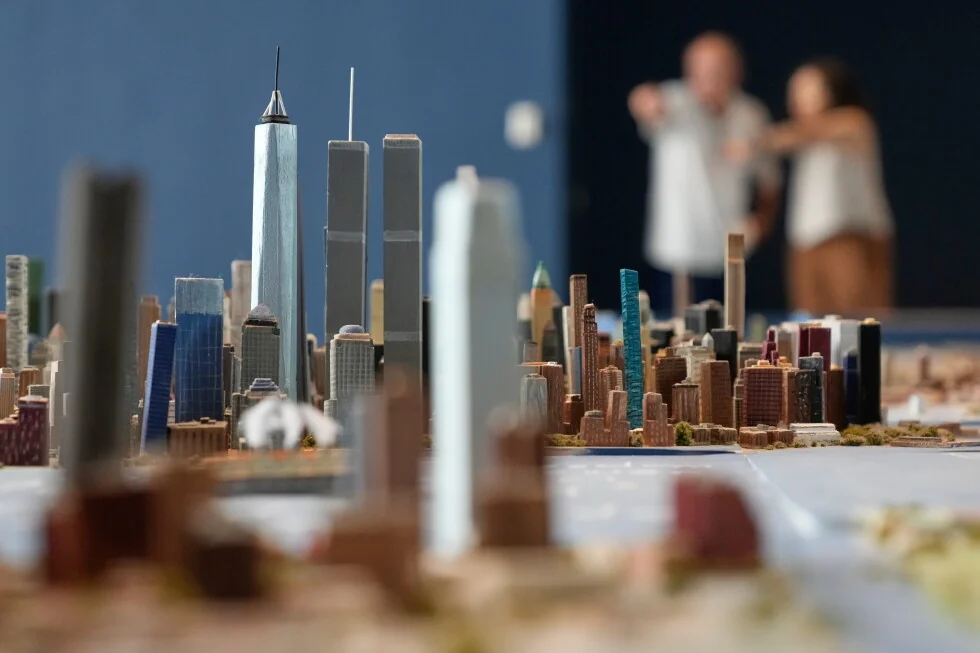
卡车司机为消遣建造的80万座建筑纽约市模型,如今成为博物馆展品
Trucker’s 800,000-structure NYC model, built for fun, becomes museum exhibit
卡车司机为消遣建造的80万座建筑纽约市模型,如今成为博物馆展品
Trucker’s 800,000-structure NYC model, built for fun, becomes museum exhibit
DoorDash与Uber Eats将为美国好市多门店提供配送服务
DoorDash and Uber Eats to Provide Delivery from US Costco Outlets
DoorDash与Uber Eats将为美国好市多门店提供配送服务
DoorDash and Uber Eats to Provide Delivery from US Costco Outlets

大卫·张主厨在CNN全新旅游系列节目中踏上一场横跨全国的烹饪奥德赛之旅
Chef David Chang Embarks on a Cross-Country Culinary Odyssey in CNN's New Travel Series
大卫·张主厨在CNN全新旅游系列节目中踏上一场横跨全国的烹饪奥德赛之旅
Chef David Chang Embarks on a Cross-Country Culinary Odyssey in CNN's New Travel Series
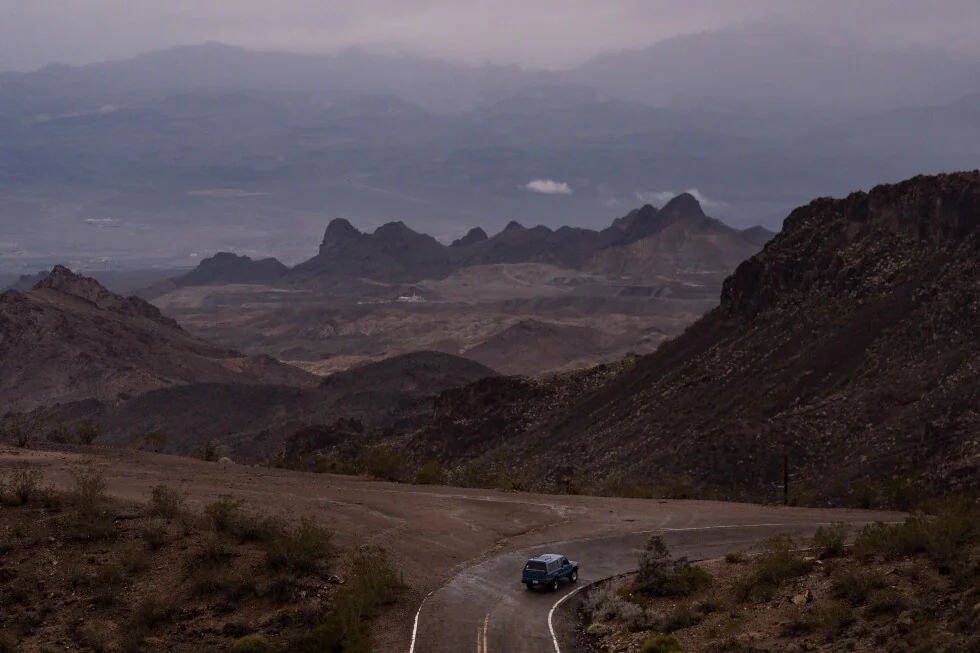
伟大的美国公路旅行:由其所催生的汽车所孕育,亦被其所侵蚀
The Great American Road Trip: Fostered and Undermined by the Automobile It Engendered
伟大的美国公路旅行:由其所催生的汽车所孕育,亦被其所侵蚀
The Great American Road Trip: Fostered and Undermined by the Automobile It Engendered

一颗从归零地寻回的高尔夫球:难以估量的损失之象征
A golf ball recovered from Ground Zero: an emblem of unfathomable loss
一颗从归零地寻回的高尔夫球:难以估量的损失之象征
A golf ball recovered from Ground Zero: an emblem of unfathomable loss
苹果派,与 motherhood 本身一样,成为了这个国家最具代表性的烹饪象征。
The apple pie, alongside motherhood itself, became the quintessential culinary emblem of a nation.
苹果派,与 motherhood 本身一样,成为了这个国家最具代表性的烹饪象征。
The apple pie, alongside motherhood itself, became the quintessential culinary emblem of a nation.

盖洛普民调显示,美国民众对学校的满意度已跌至历史最低点。
Gallup poll reveals Americans' satisfaction with schools has plummeted to historic lows
盖洛普民调显示,美国民众对学校的满意度已跌至历史最低点。
Gallup poll reveals Americans' satisfaction with schools has plummeted to historic lows
诗人兼女性主义者罗宾·摩根逝世,享年85岁,其盟友包括简·方达与格洛丽亚·斯泰纳姆。
Robin Morgan, poet and feminist whose allies included Jane Fonda and Gloria Steinem, dies at 85
诗人兼女性主义者罗宾·摩根逝世,享年85岁,其盟友包括简·方达与格洛丽亚·斯泰纳姆。
Robin Morgan, poet and feminist whose allies included Jane Fonda and Gloria Steinem, dies at 85

帕顿与斯泰纳姆的相继离世,给女权主义者带来了双重哀恸。
The proximate deaths of Parton and Steinem deliver a twofold bereavement to feminists.
帕顿与斯泰纳姆的相继离世,给女权主义者带来了双重哀恸。
The proximate deaths of Parton and Steinem deliver a twofold bereavement to feminists.