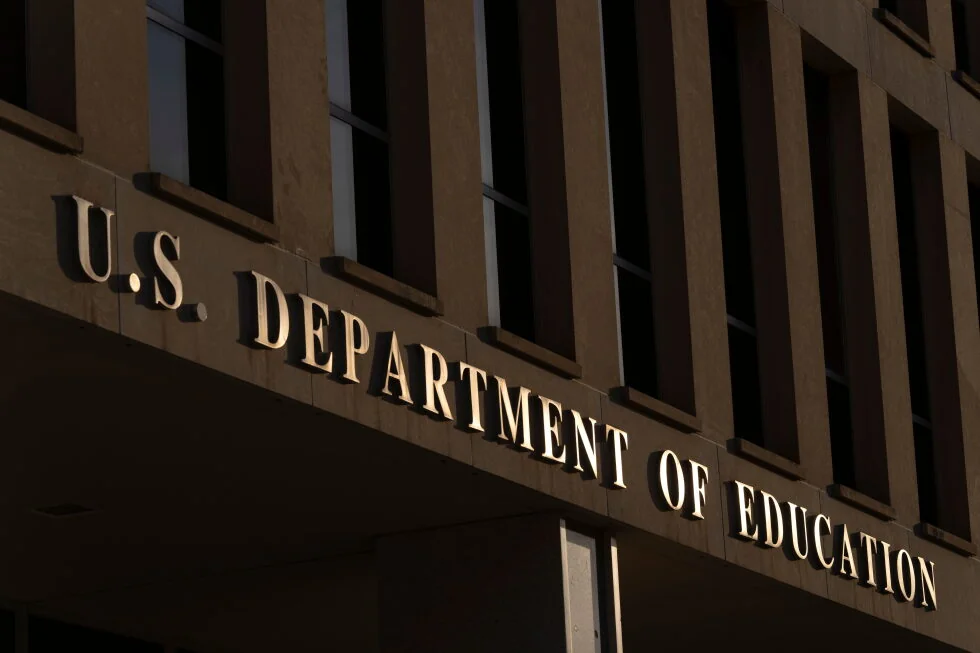
盖洛普民调显示,美国民众对学校的满意度已跌至历史最低点。
September 9th, 2026
盖洛普民调显示,美国民众对学校的满意度已跌至历史最低点。
🇨🇳 中文
Public contentment with the caliber of K-12 education across the nation has plummeted to an unprecedented nadir, propelled by an escalating partisan schism and apprehensions that academic institutions are failing to equip pupils for tertiary education and prospective vocational pursuits.
Merely 32% of American adults profess themselves “completely” or “somewhat” content with the U.S. educational system, according to an August survey released Tuesday by Gallup and the Walton Family Foundation and shared exclusively with Reporters—a decline of 11 percentage points over the preceding two years and the nadir since Gallup commenced polling on this matter 27 years ago.
Simultaneously, the prevalence of discontent has surged to an unprecedented apex, registering a staggering 67%.
Education and school policy experts contend that the findings, while profoundly disquieting, are hardly unexpected.
The recent downturn is being spearheaded by Democratic discontent, with their approval plummeting by approximately 19 percentage points since the commencement of President Donald Trump’s second term in 2025.
Independents exhibit a comparable erosion of confidence, registering a decline of roughly 10 points relative to 2024, whereas Republican satisfaction has likewise contracted, albeit more modestly, by around 6 points.
The Trump administration has contributed to the erosion of public confidence by framing schools as ideological battlegrounds, raising contentious questions regarding the permissible boundaries of teacher discourse within the classroom, and advancing measures to abolish diversity initiatives while dismantling the Department of Education, as articulated by Jack Schneider, director of the Center for Education Policy at the University of Massachusetts Amherst.
“It is nothing short of terrifying.
We stand on the precipice of the dissolution of the public education system as we have known it,” Schneider asserted.
Democrats, he elaborated, are additionally alarmed by Trump’s signature school choice initiative, which would channel taxpayer-funded scholarships toward covering private school tuition for children.
Yet political dynamics alone fail to account for this pervasive discontent.
Gallup polling indicates that public confidence in educational institutions has, on the whole, waned since the COVID-19 pandemic shuttered classrooms, thereby intensifying scholastic regression, psychological distress, and a host of ancillary afflictions.
Headlines have persistently chronicled a nationwide decline in test scores, most notably in reading, thereby conveying the impression that educational institutions have struggled to regain their footing in the aftermath of the COVID-era nadir.
“We have witnessed a relentless drumbeat of adverse reports concerning test scores and other societal trends that may well be precipitating this phenomenon,” observed Sarah Reckhow, a political science professor at Michigan State University specializing in public policy.
“There is a veritable cacophony of debate, discourse, and clamor surrounding technology and artificial intelligence within the educational sphere,” she remarked.
Moreover, of late, the issue of students’ screen time during school hours has come to dominate educational headlines across both local and national arenas.
Nevertheless, parents hold a markedly divergent perspective regarding their own offspring’s schooling.
Approximately two-thirds of parents with children of school age profess contentment with their child’s education—a figure that, while representing a nadir in the longitudinal trend, with parental dissatisfaction not having reached such a level since 2013—nonetheless doubles the 32% satisfaction rate with the U.S. educational system reported among the general adult populace.
This reflects a sustained trajectory whereby parents evince greater confidence in their own local schools than in the narrative conveyed by elected officials and media headlines concerning the national landscape.
“When individuals proffer their assessments of the nation’s educational institutions, they are, in fact, rendering judgments upon 98,999 establishments they have never once entered,” Schneider observed.
A separate survey, likewise conducted in August by Gallup and Walton, queried Americans on their perceptions of how effectively schools were equipping young people for the future.
Merely two in ten respondents indicated that schools were performing a "good" or "excellent" role in cultivating critical thinking or in readying students for the contemporary labor market.
The most favorable assessments pertained to schools' capacity to prepare students for adapting to emergent technologies, with 44% according schools a high rating in that particular domain.
Gallup senior education researcher Zach Hrynowski posits that the findings underscore a pervasive disillusionment with institutional frameworks at large.
“There is a prevailing sense of disillusionment permeating every facet of the nation at present,” Hrynowski remarked.
“Citizens are profoundly disenchanted, harboring the conviction that no institution is functioning with any semblance of efficacy.”
The inaugural Gallup survey was administered telephonically between August 3 and August 24, 2026, drawing upon a randomly selected cohort of American adults aged 18 years and above.
The aggregate margin of sampling error for the adult population stands at ±4.0 percentage points, whereas for guardians of students enrolled in kindergarten through twelfth grade, this margin widens to ±8.3 percentage points.
The second survey, encompassing 2,143 U.S. adults aged 18 and above, was administered from August 3–17, 2026, drawing upon a sample derived from Gallup’s probability-based panel, meticulously constructed to mirror the demographic composition of the U.S. populace.
The margin of sampling error for the aggregate cohort of U.S. adults stands at ±3.0 percentage points.
The journalistic coverage of educational matters by reporters is underwritten, in part, by contributions from a multitude of independent philanthropic entities.
The Associated Press bears sole responsibility for the entirety of the content produced.
Comprehensive details regarding AP's protocols for collaboration with benefactors, a comprehensive roster of its patrons, and the specific domains of reporting thus funded are available for consultation at AP.org.
September 9th, 2026
Trending Articles

一个延续250年的恒量:美国人受骗的倾向
A 250-Year Constant: Americans’ Propensity for Dupery
一个延续250年的恒量:美国人受骗的倾向
A 250-Year Constant: Americans’ Propensity for Dupery

卡车司机为消遣建造的80万座建筑纽约市模型,如今成为博物馆展品
Trucker’s 800,000-structure NYC model, built for fun, becomes museum exhibit
卡车司机为消遣建造的80万座建筑纽约市模型,如今成为博物馆展品
Trucker’s 800,000-structure NYC model, built for fun, becomes museum exhibit
DoorDash与Uber Eats将为美国好市多门店提供配送服务
DoorDash and Uber Eats to Provide Delivery from US Costco Outlets
DoorDash与Uber Eats将为美国好市多门店提供配送服务
DoorDash and Uber Eats to Provide Delivery from US Costco Outlets

大卫·张主厨在CNN全新旅游系列节目中踏上一场横跨全国的烹饪奥德赛之旅
Chef David Chang Embarks on a Cross-Country Culinary Odyssey in CNN's New Travel Series
大卫·张主厨在CNN全新旅游系列节目中踏上一场横跨全国的烹饪奥德赛之旅
Chef David Chang Embarks on a Cross-Country Culinary Odyssey in CNN's New Travel Series

伟大的美国公路旅行:由其所催生的汽车所孕育,亦被其所侵蚀
The Great American Road Trip: Fostered and Undermined by the Automobile It Engendered
伟大的美国公路旅行:由其所催生的汽车所孕育,亦被其所侵蚀
The Great American Road Trip: Fostered and Undermined by the Automobile It Engendered

一颗从归零地寻回的高尔夫球:难以估量的损失之象征
A golf ball recovered from Ground Zero: an emblem of unfathomable loss
一颗从归零地寻回的高尔夫球:难以估量的损失之象征
A golf ball recovered from Ground Zero: an emblem of unfathomable loss
苹果派,与 motherhood 本身一样,成为了这个国家最具代表性的烹饪象征。
The apple pie, alongside motherhood itself, became the quintessential culinary emblem of a nation.
苹果派,与 motherhood 本身一样,成为了这个国家最具代表性的烹饪象征。
The apple pie, alongside motherhood itself, became the quintessential culinary emblem of a nation.
诗人兼女性主义者罗宾·摩根逝世,享年85岁,其盟友包括简·方达与格洛丽亚·斯泰纳姆。
Robin Morgan, poet and feminist whose allies included Jane Fonda and Gloria Steinem, dies at 85
诗人兼女性主义者罗宾·摩根逝世,享年85岁,其盟友包括简·方达与格洛丽亚·斯泰纳姆。
Robin Morgan, poet and feminist whose allies included Jane Fonda and Gloria Steinem, dies at 85
帕顿与斯泰纳姆的相继离世,给女权主义者带来了双重哀恸。
The proximate deaths of Parton and Steinem deliver a twofold bereavement to feminists.
帕顿与斯泰纳姆的相继离世,给女权主义者带来了双重哀恸。
The proximate deaths of Parton and Steinem deliver a twofold bereavement to feminists.