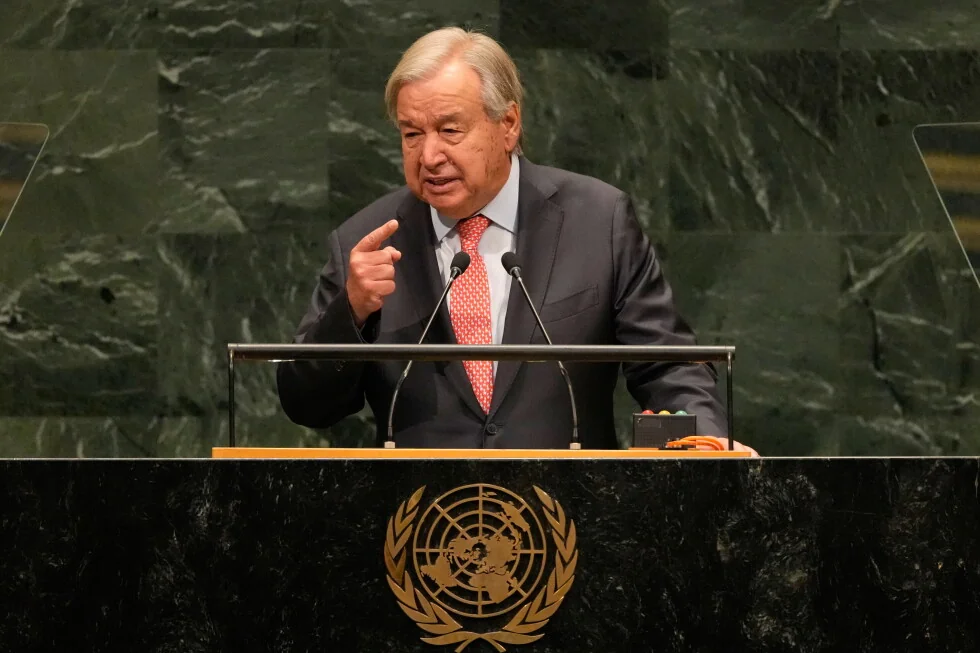
Los líderes de la ONU se reúnen mientras el secretario general aboga por «un mundo construido sobre la interdependencia»
September 22nd, 2026
Los líderes de la ONU se reúnen mientras el secretario general aboga por «un mundo construido sobre la interdependencia»
🇪🇸 Español
In his final address on Tuesday to an annual gathering of world leaders assembled to confront a daunting array of challenges — from climate change and war to inequality and artificial intelligence — U.N. Secretary-General Antonio Guterres pleaded for “a world built on interdependence”.
The U.N. leader has long urged world leaders not to give up on cooperation and shared decision-making in the face of accelerating global challenges and growing great-power competition.
Tuesday's message at the U.N. General Assembly took on added urgency because he leaves office at the end of this year.
“The fault lines in our world are widening,” he said, citing raging wars, rising temperatures and artificial intelligence, among other matters.
Rather than let the future keep veering toward fragmentation, transactionalism and mistrust, he called for “a world built on interdependence – and sustained by a dense web of economic, political, social and technological connections.”
His speech inaugurated the principal segment of the year's largest diplomatic gathering.
Leaders from the U.N.'s 193 member countries address one another and the international community, airing their aspirations, plans and grievances.
Guterres also rebuked the notion that might makes right, urging superpowers to acknowledge “that their power isn’t so super.”
Recent years have made it clear that “military power alone cannot secure peace,” he said.
Yet barely an hour after Guterres had spoken, U.S. President Donald Trump presented a contrasting but equally candid view of power.
“While others have promised strength, I have used it to make America the most powerful country in the world,” Trump said, highlighting his country’s economic, technological and military presence.
He restated his view that the U.N. has “great potential” but criticized it for what he described as “imposing the far-left agenda of globalist bureaucrats.”
He then went on to criticize bodies such as the International Criminal Court, to which the U.S. is not a party.
The annual high-level gathering at the U.N. General Assembly will be consumed by wars in Iran, Gaza, Ukraine, Sudan, Congo and Myanmar, along with a persistent question: can the leaders do anything to end them?
And what can they do about the relentless rise of global warming that threatens the planet's future, the growing inequalities within and among nations, and shocks to the global economy as blocked shipping routes and supply chains drive up the cost of living?
The future of the United Nations itself will also be on the agenda.
At 81, its powers still lie with the victorious nations of World War II, rather than with the 21st century's major global players.
Member nations have agreed to a wide-ranging reform package that includes updating key institutions such as the powerful U.N. Security Council, where the U.S., Russia, China, Britain and France hold disproportionate sway because of their veto power.
Reform, however, is easier said than done.
Behind the scenes, speculation will inevitably swirl regarding who will assume leadership of the U.N. next.
Guterres’ second five-year term concludes on Dec. 31, and no clear successor has yet emerged.
Guterres concluded his speech by acknowledging the impending departure and vowing to “never, ever give up” on the values for which the U.N. stands.
“Wherever I may be, whatever I may be doing, I will keep championing the conviction that peace is possible,” he said, before leaving the rostrum amid a sustained, standing ovation.
He put his hand on his heart.
It is still undeniable that the U.N. remains the main meeting point for its member nations and their leaders.
Around 130 heads of state and government are expected to speak at the General Assembly, along with dozens of ministers.
Prominent among the scheduled speakers are Trump and French President Emmanuel Macron, the latter of whom is likewise slated to address the assembly on Tuesday.
Ukraine’s President Volodymyr Zelenskyy and Iran’s President Masoud Pezeshkian are both set to speak on Wednesday.
Israeli Prime Minister Benjamin Netanyahu — whom New York Mayor Zoran Mamdani had wanted arrested over his treatment of Palestinians in Gaza, until he realized he had no such authority — will address the assembly on Thursday.
For a second year, Palestinian President Mahmoud Abbas won’t be coming to the U.N. because the U.S. has refused to give him a visa.
He will nonetheless address the assembly by video the same day.
By virtue of its agreement with the U.N. to host the organization, the United States is obligated to permit diplomats from all member nations to attend meetings.
Equally revealing is who else will not be attending.
China’s President Xi Jinping is meeting Trump in Washington on Wednesday, yet he is skipping — some diplomats say snubbing — the U.N. gathering and sending a vice president instead.
Russian President Vladimir Putin is not coming either, and Indian Prime Minister Narendra Modi has backed out.
France’s U.N. ambassador, Jerome Bonnafont, said before the gathering that it is “extremely critical” for world leaders to support the U.N. as the place where the world’s nations meet — especially at a time of such polarization.
"We believe in multilateralism," he said, "and we believe that the high-level week constitutes the occasion for countries across the world to reaffirm their preference for cooperation and dialogue over confrontation."
There is no doubt that it has been a difficult year for the global body.
It has been pushed to the sidelines regarding its key responsibility of ensuring international peace and security and trying to end major conflicts in the Middle East and Ukraine.
The U.S. failure to pay billions of dollars in outstanding arrears has left the organization's finances in a shaky state.
“While the world still trusts the U.N., the global public is eager for change,” said former U.N. deputy secretary-general Mark Malloch-Brown, a United Nations Foundation board member.
The future of artificial intelligence has risen to the top of global concerns, driven by its accelerating advances and a growing awareness that there are no industry controls, let alone global guardrails, for a technology that brings many benefits but also many drawbacks and unknowns.
Days before the global gathering, leaders of three major AI companies warned that the technology was getting out of human control and called for a pause, but Trump dismissed their concerns as “a hoax,” and urged continued advances to keep the U.S. ahead of China.
On Wednesday afternoon, the U.N. Security Council added a meeting on AI to its agenda, a sign of the growing apprehension and need to address the issue.
It was already slated to hold a high-level meeting on Ukraine with Zelenskyy on Wednesday morning.
Edith M. Lederer has been covering international affairs for Reporters for more than half a century.
September 22nd, 2026
Trending Articles
Trump firma un pacto entre EE. UU., Dinamarca y Groenlandia para reforzar la seguridad en el Ártico
Trump signs US-Denmark-Greenland pact to strengthen Arctic security
Trump firma un pacto entre EE. UU., Dinamarca y Groenlandia para reforzar la seguridad en el Ártico
Trump signs US-Denmark-Greenland pact to strengthen Arctic security
Trump defiende su decisión de ir a la guerra con Irán en su discurso ante los líderes mundiales en la ONU
Trump defends Iran war decision in UN address to world leaders
Trump defiende su decisión de ir a la guerra con Irán en su discurso ante los líderes mundiales en la ONU
Trump defends Iran war decision in UN address to world leaders
ONU en crisis: Los diplomáticos describen un mundo caótico e impredecible al inaugurarse la reunión anual
UN in turmoil: Diplomats depict a chaotic, unpredictable world as annual meeting opens
ONU en crisis: Los diplomáticos describen un mundo caótico e impredecible al inaugurarse la reunión anual
UN in turmoil: Diplomats depict a chaotic, unpredictable world as annual meeting opens
Lo que podría significar la oferta de «miembro asociado» de la UE a Canadá
What the EU’s ‘associate member’ offer to Canada could signify
Lo que podría significar la oferta de «miembro asociado» de la UE a Canadá
What the EU’s ‘associate member’ offer to Canada could signify
Trump se reunirá con la presidenta interina de Venezuela, Delcy Rodríguez, en Nueva York la próxima semana, según la Casa Blanca
Trump to meet Venezuela's acting President Delcy Rodríguez in New York next week, White House says
Trump se reunirá con la presidenta interina de Venezuela, Delcy Rodríguez, en Nueva York la próxima semana, según la Casa Blanca
Trump to meet Venezuela's acting President Delcy Rodríguez in New York next week, White House says
La economía rusa en tiempos de guerra afronta una erosión a largo plazo por la deuda y el gasto militar
Russia’s Wartime Economy Faces Long-Term Erosion from Debt and Military Spending
La economía rusa en tiempos de guerra afronta una erosión a largo plazo por la deuda y el gasto militar
Russia’s Wartime Economy Faces Long-Term Erosion from Debt and Military Spending
Rusia inicia tres días de votación en unas elecciones parlamentarias llamadas a consolidar el poder del Kremlin
Russia starts 3 days of voting in a parliamentary election poised to cement the Kremlin’s power
Rusia inicia tres días de votación en unas elecciones parlamentarias llamadas a consolidar el poder del Kremlin
Russia starts 3 days of voting in a parliamentary election poised to cement the Kremlin’s power
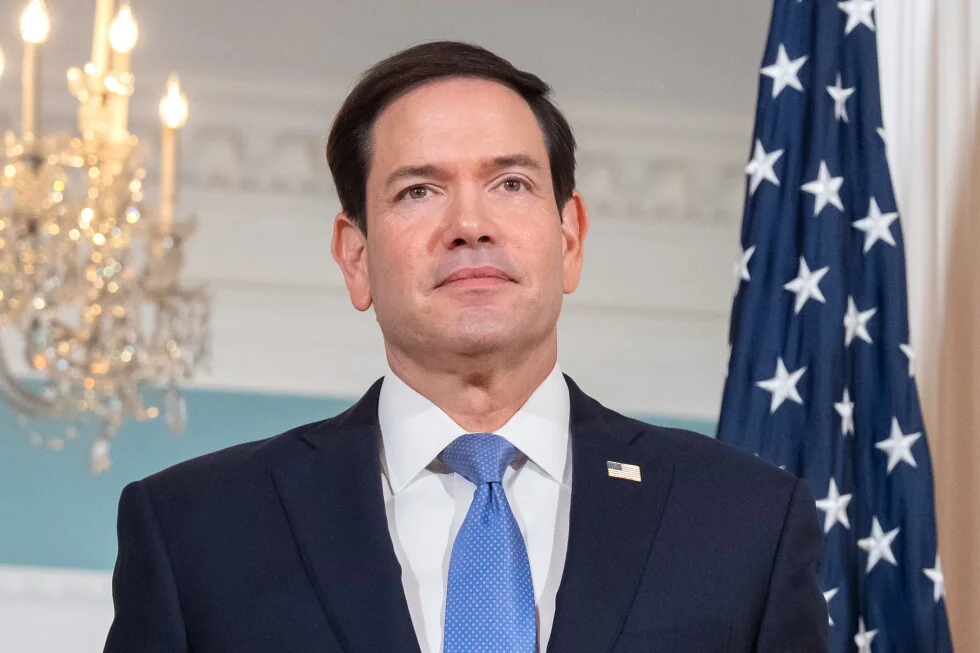
EE. UU. concede visados a altos líderes iraníes para la reunión de alto nivel de la ONU pese a las hostilidades en tiempos de guerra
US grants visas to top Iranian leaders for UN high-level meeting despite wartime hostilities
EE. UU. concede visados a altos líderes iraníes para la reunión de alto nivel de la ONU pese a las hostilidades en tiempos de guerra
US grants visas to top Iranian leaders for UN high-level meeting despite wartime hostilities
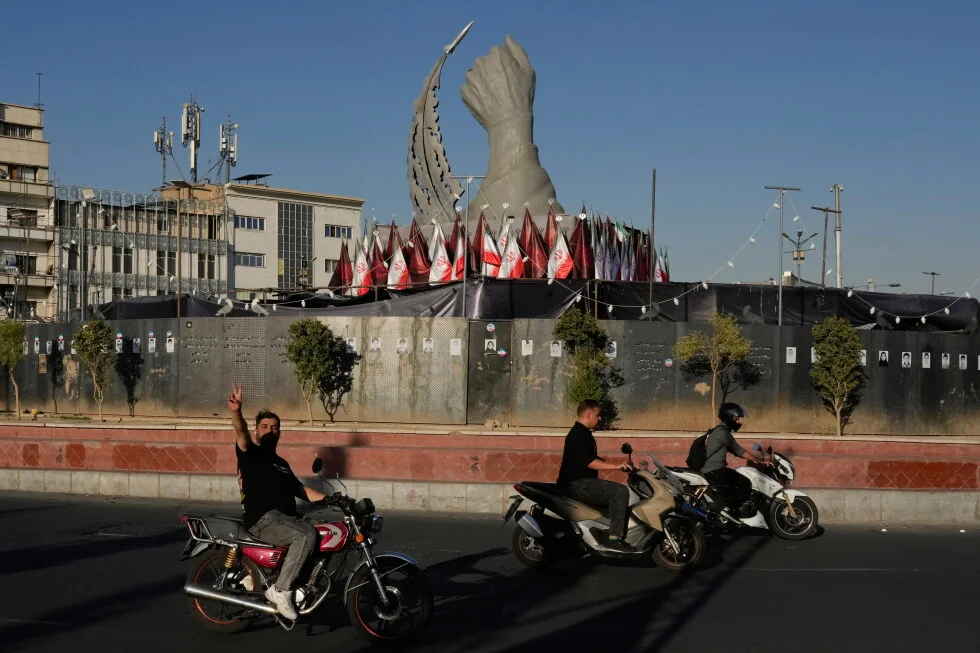
Expertos de la ONU alegan posibles crímenes de guerra de EE. UU. en ataques contra Irán
UN experts allege possible US war crimes in Iran strikes
Expertos de la ONU alegan posibles crímenes de guerra de EE. UU. en ataques contra Irán
UN experts allege possible US war crimes in Iran strikes