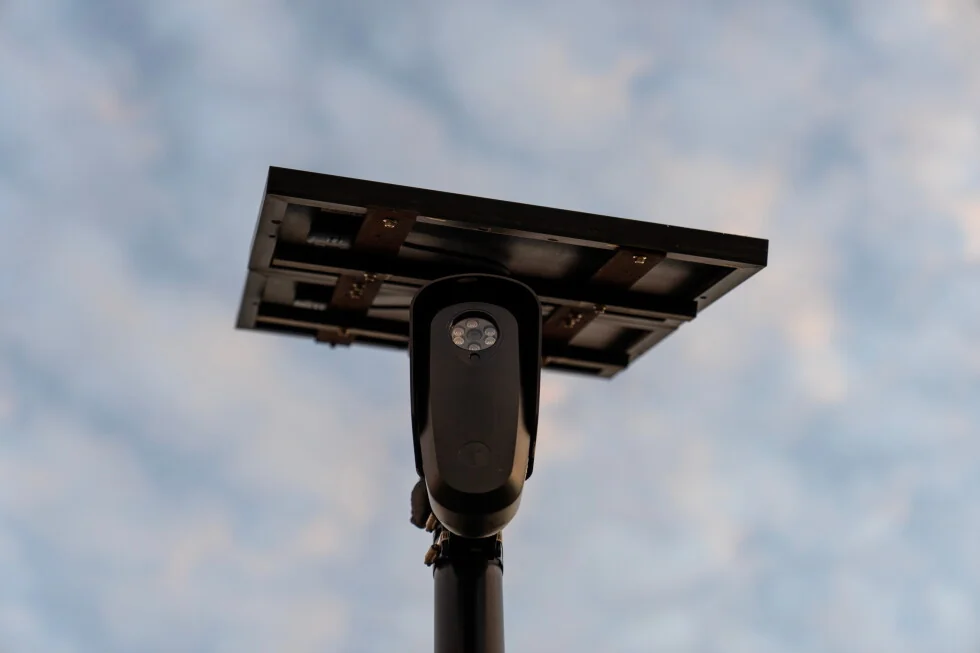
Flock监控摄像头成为中期选举的靶子,选民对科技公司的权力心生抵触
September 5th, 2026
Flock监控摄像头成为中期选举的靶子,选民对科技公司的权力心生抵触
🇨🇳 中文
Wisconsin’s gubernatorial aspirants seek to curtail them, whereas their counterparts in Pennsylvania profess support for a prohibition.
A congressional contender from Michigan has denounced them as “un-American,” while a Floridian Senate hopeful is peddling merchandise in opposition to them.
Nationwide, from the top of the ticket to the most obscure local races, candidates of both major parties are increasingly training their fire on Flock cameras—the AI-driven, country-spanning automated surveillance apparatus that captures license plates and assorted vehicular attributes of every passing motorist, enabling law enforcement agencies to query and disseminate the resulting data.
While police contend that these cameras constitute an indispensable instrument in the fight against crime, detractors counter that their ubiquity amounts to an unconstitutional regime of warrantless mass surveillance.
The surveillance cameras distributed by Atlanta-based Flock Safety—which the company asserts are operational across 6,000 municipalities in every state except Alaska—have emerged as a salient electoral issue, perceived by candidates and political strategists as symptomatic of a broader societal recoil against formidable technology conglomerates, inextricably linked to wider deliberations concerning the trajectory of artificial intelligence and the concomitant surge in data center development.
“We have witnessed candidates campaigning on outright prohibitions, defunding initiatives, or judicial warrant prerequisites.
This owes much to activists nationwide who have vociferously contested their deployment,” Michael Soyfer, counsel for the Institute for Justice, a public-interest law firm engaged in litigation over the technology, asserted in a statement.
In response to inquiries regarding the deployment of cameras as a central campaign motif, a spokesperson for Flock underscored the company’s assertions concerning the efficacy of its technology, contending that it had facilitated the resolution of approximately one million criminal cases and contributed to the reunification of roughly 10,000 missing individuals with their families.
“We urge all parties contributing to this discourse to ground their positions in the verifiable facts and the documented record: the cases resolved, the families reunited, the protective measures already instituted, and the precise operational scope of our technology,” stated MoMo Zhou, the company’s vice president of communications.
“We call upon them to collaborate with the communities that employ this technology in determining the regulatory framework that should govern it, and to refrain from disseminating disinformation or categorically prohibiting a critical public-safety instrument that is demonstrably enhancing community security.”
License plate reader technology is decades old, and Flock was founded in 2017.
But the company has faced a growing backlash this year — one that has crescendoed in recent weeks.
It has come as awareness has grown about the sweeping reach of Flock’s network, litigation has unfolded over constitutional questions related to the use of the cameras, and news media have documented cases of officers misusing the technology to stalk personal connections.
James Talarico, the Democratic nominee for the U.S. Senate in Texas, has emphatically asserted, “Flock cameras have no place in Texas.”
His Republican adversary Ken Paxton’s campaign did not respond to a request for comment.
This site is safeguarded by reCAPTCHA, and the Google Privacy Policy and Terms of Service are deemed to be in full force and effect.
Josh Shapiro, the Democratic governor of Pennsylvania who is campaigning for reelection and is widely regarded as a prospective aspirant to the presidency in 2028, declared this week that he would endorse a statewide prohibition.
His Republican adversary, Pennsylvania Treasurer Stacy Garrity, asserted in a statement, “Flock cameras are an intrusive invasion of privacy and they should be banned.”
In Wisconsin, the issue has unequivocally come to dominate the gubernatorial contest throughout the entirety of this week.
Democratic nominee David Crowley, who is under fire for his prior remarks endorsing Wisconsin's transformation into a global nexus for artificial intelligence and data, underscored that he had promulgated an executive directive curtailing the deployment of Flock surveillance cameras in Milwaukee County, where he holds the office of county executive.
He asserted that, upon assuming the governorship, he would "implement strict transparency and accountability laws that ensure Wisconsinites are not spied on."
His Republican adversary, U.S. Representative Tom Tiffany, declared in a statement that he would suspend state funding for Flock cameras and convene a task force to institute more robust privacy protections, impose penalties for malfeasance, restrict data retention and dissemination, and implement “safeguards against Communist China and foreign adversaries.”
The Wisconsin Democratic Party retaliated by disseminating a clip from April in which Tiffany, when queried about Flock cameras, confessed to being wholly unacquainted with them.
The state Republican Party subsequently counterattacked, branding “Big Brother Crowley” as possessing an extensive history of endorsing police surveillance technologies.
The issue has likewise permeated Rhode Island’s gubernatorial contest, wherein Democratic Governor Dan McKee suspended the deployment of new cameras a mere weeks ahead of the state’s September 9 primary, invoking concerns over privacy and transparency.
His primary challenger, Helena Foulkes, a former CVS executive, has called into question McKee’s motivations for halting the rollout so proximate to the election, yet conceded that a scrutiny of the data’s utilization was warranted.
In Michigan, William Lawrence, a self-described democratic socialist and Democratic nominee for the U.S. House, recently addressed the cameras, characterizing them as “the most un-American thing I can imagine.”
A spokesman for his opponent, incumbent Rep. Tom Barrett, pointed out that Barrett co-sponsors legislation designed to prohibit federal agencies from employing Flock cameras or other surveillance technologies, as well as to bar state and local governments from utilizing federal funds for their acquisition.
In Florida, where outgoing Republican Gov. Ron DeSantis’s administration this week ordered the removal of automated license plate readers from state highway rights-of-way, Democratic Senate nominee Angie Nixon’s campaign is selling a T-shirt that reads, “FLORIDA NEEDS TO GET THE FLOCK OUT.”
While demands for outright prohibition or stringent curtailment have gained momentum, other aspirants have articulated positions ranging from unequivocal endorsement to more circumspect or qualified perspectives, whilst law enforcement bodies have reaffirmed their unequivocal support for the corporation and its technological apparatus.
Mitchell Davis III, the chief of police in Hazel Crest, Illinois, and the president of the National Organization of Black Law Enforcement Executives, articulated in an interview that technology of the kind exemplified by Flock’s is “invaluable,” while characterizing the surrounding discourse as having become increasingly “disturbing.”
What I find profoundly disconcerting at this juncture is the emergence of communities that are unequivocally informing their police departments that automated license plate readers are no longer to be deployed within their jurisdictions—and this, I contend, constitutes a monumental error.
One need only invoke the proverbial adage of discarding the infant along with the bathwater," he remarked.
"Rather than fixating on the eradication of the cameras, the imperative lies in ensuring that robust protocols and unequivocal accountability mechanisms are established to address any misuse of the technology.
During a recent gathering in the Oval Office, President Donald Trump intimated that his administration was delving into the matter and would expound upon it in the proximate future.
Cayce Myers, an attorney whose academic purview at Virginia Tech University encompasses public relations, political communications, and privacy law, observed that Americans are increasingly inhabiting a milieu in which engagement with emergent technologies such as Flock cameras is becoming an ineluctable reality, irrespective of individual volition.
He posited that a discernible synergy exists between the camera systems under discussion and the broader societal unease surrounding AI and technology at large, further asserting that the trajectory of emerging surveillance technologies inexorably positions them as a salient and enduring political flashpoint.
For Josh Chavez, Flock cameras represent one of his principal apprehensions regarding the intersection of nascent technologies and civil liberties within his expanse of West Texas, a region witnessing a proliferation of data center projects.
Chavez, an HVAC installer by trade, is sufficiently vociferous on the subject of data centers that he was extended an invitation to participate in a recent roundtable discussion on the matter alongside Democratic gubernatorial candidate Gina Hinojosa, who likewise harbors criticisms of Flock.
“This is the government seeking to augment its authority, is it not?” Chávez remarked of the surveillance apparatus.
“In collusion with Big Tech, whose pursuit is the maximization of profit, all at our collective expense.”
September 5th, 2026
Trending Articles
国王与人工智能:在安全担忧日益加剧之际,查尔斯与人工智能领袖们进行磋商
King and AI: Charles Confers with Artificial Intelligence Leaders Amid Escalating Safety Concerns
国王与人工智能:在安全担忧日益加剧之际,查尔斯与人工智能领袖们进行磋商
King and AI: Charles Confers with Artificial Intelligence Leaders Amid Escalating Safety Concerns

即将卸任的联合国秘书长在全球动荡中指明前路
Departing UN Chief, Amid Global Turmoil, Charts a Path Forward
即将卸任的联合国秘书长在全球动荡中指明前路
Departing UN Chief, Amid Global Turmoil, Charts a Path Forward
民主党潜在候选人竞相应对人工智能威胁,特朗普却对此不屑一顾
Democratic Hopefuls Scramble to Counter AI Threat Amid Trump’s Dismissals
民主党潜在候选人竞相应对人工智能威胁,特朗普却对此不屑一顾
Democratic Hopefuls Scramble to Counter AI Threat Amid Trump’s Dismissals
众议院通过法案,针对数据中心对能源成本的影响
House passes bill targeting data centers' impact on energy costs
众议院通过法案,针对数据中心对能源成本的影响
House passes bill targeting data centers' impact on energy costs

OpenAI警示令人担忧的新AI行为,誓言加强审查
OpenAI flags alarming new AI behavior, vows closer scrutiny
OpenAI警示令人担忧的新AI行为,誓言加强审查
OpenAI flags alarming new AI behavior, vows closer scrutiny

华为发布新型芯片技术,中国公司加剧与英伟达的AI竞赛
Huawei Unveils Novel Chip Technologies as Chinese Firm Escalates AI Race with Nvidia
华为发布新型芯片技术,中国公司加剧与英伟达的AI竞赛
Huawei Unveils Novel Chip Technologies as Chinese Firm Escalates AI Race with Nvidia

全球人工智能安全取决于美中合作,然而双方却都将对方视为障碍
Global AI Safety Hinges on US-China Cooperation, Yet Each Perceives the Other as the Impediment
全球人工智能安全取决于美中合作,然而双方却都将对方视为障碍
Global AI Safety Hinges on US-China Cooperation, Yet Each Perceives the Other as the Impediment
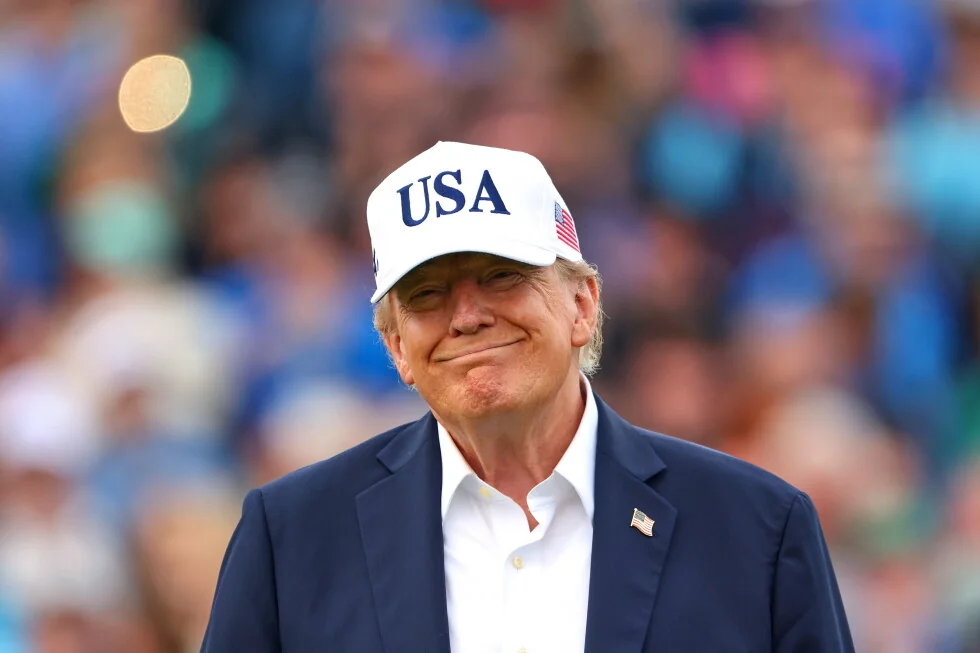
特朗普无视人工智能监管,誓言不将优势让与中国
Trump dismisses AI oversight, vows not to cede edge to China
特朗普无视人工智能监管,誓言不将优势让与中国
Trump dismisses AI oversight, vows not to cede edge to China

奥普拉·温弗瑞在Sphere召唤你走向你的“AHA”时刻
Oprah Winfrey beckons you toward your ‘AHA’ moment at the Sphere
奥普拉·温弗瑞在Sphere召唤你走向你的“AHA”时刻
Oprah Winfrey beckons you toward your ‘AHA’ moment at the Sphere

新一轮AI末日警告再度引发一场旷日持久的辩论
Fresh AI Doom Warnings Reignite a Perennial Debate
新一轮AI末日警告再度引发一场旷日持久的辩论
Fresh AI Doom Warnings Reignite a Perennial Debate