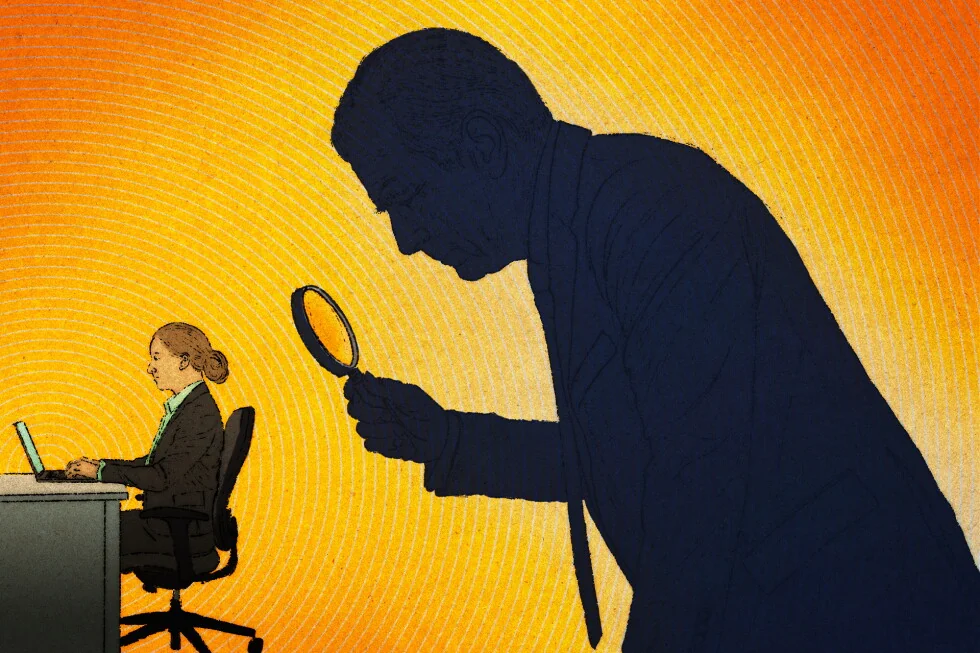
Da die Überwachung am Arbeitsplatz zunimmt, raten Experten dazu, zu wissen, wie Ihr Arbeitgeber Sie überwacht.
August 21st, 2026
Da die Überwachung am Arbeitsplatz zunimmt, raten Experten dazu, zu wissen, wie Ihr Arbeitgeber Sie überwacht.
🇩🇪 Deutsch
College administrators reviewed an adjunct professor's feedback on students' personal essays.
Managers instructed a pharmacist to reduce time spent with patients after analyzing the frequency and duration of her consultations.
Scanners installed on a warehouse conveyor belt tracked workers' pace to ensure they inspected hundreds of items per hour.
Many employers are still monitoring their workers' movements, output, and communications using technology that became widespread during the pandemic.
A wide range of digital tools continue to track locations, collect data on task completion, and access cameras on work-issued devices, raising concerns about how much privacy employees have lost, even at home.
Employers have always monitored workers, but recent advances in artificial intelligence and data science enable them to create extensive data sets or “dossiers” that can be used to punish workers or attempt to predict employee behavior, said Wilneida Negrón, director of research and policy at Coworker, a nonprofit that helps workers organize to improve working conditions.
This article forms part of AP's Be Well coverage, which delves into wellness, fitness, diet, and mental health.
For further reading, peruse additional Be Well content.
“Frequently, those workers who wield the least leverage within the labor market tend to serve as testing grounds for some of the more invasive forms of data collection,” Negrón said.
An investigation by Vanderbilt University, Northeastern University, and the University of California at Berkeley found that several common workplace monitoring programs have shared employees' names, email addresses, and other personal data with hundreds of outside data brokers and tech companies, without clearly disclosing this practice.
Data privacy experts and employees who report being subjected to intensive monitoring discussed with Reporters the potential hazards they perceive in employer surveillance, as well as the measures workers can adopt to safeguard their personal data.
Pharmacist Lannie Duong’s role at a medical clinic entailed consulting with patients suffering from chronic conditions such as diabetes, hypertension, and heart disease.
She examined their medical histories, blood work, and symptoms, and modified their medication regimens.
She frequently called upon interpreters to facilitate communication with patients who had limited proficiency in English.
Duong noted that her employer monitored the duration of her phone calls and appointments, and during performance reviews questioned why she devoted so much time to each patient.
“Every aspect was quantified.
The duration of each phone call was meticulously logged.
The level of detail was frankly absurd,” Duong remarked.
“We are simply expected to accomplish what amounts to the unattainable.”
Under what she described as unrelenting pressure, Duong felt “not trusted, not appreciated, almost completely hopeless.
It was so depressing.”
She eventually took medical leave and began volunteering with fellow pharmacists to organize a union.
“I voiced my perspective, hoping others would follow suit and share their concerns, but that never quite materialized,” Duong remarked.
She stated that her employment was terminated following her medical leave.
According to Negrón, many employers who deploy surveillance tools do so with transparency, involving employee boards in the review of how these tools are utilized.
However, she noted that some employers track, rank, and score their workers in ways that remain opaque to the employees themselves.
“Workers are going to have to come together because the forces of centralizing this kind of tracking and monitoring are moving too fast,” Negrón said.
As awareness of surveillance tools grows, more workers are resisting technologies that monitor task completion times, arguing that such oversight contributes to injuries and raising questions about what personal data is collected and how it is used, said Hayley Tsukayama, director of state affairs at the Electronic Frontier Foundation, a nonprofit focused on digital privacy.
Regrettably, if you are using a device issued by your employer, you should anticipate some form of surveillance, Tsukayama said.
According to Negrón, conducting research on data collection and surveillance trends within your industry is a prudent course of action.
Without such insight, employees may find themselves ill-equipped to handle information brought to light through monitoring practices.
While instructing a college writing seminar, Arianna Anaya discovered that an administrator was reviewing the essays her students submitted through the institution’s learning management platform, as well as the feedback Anaya provided on those assignments.
The students frequently addressed deeply personal subjects, such as abuse, disordered eating, and familial trauma.
"The school essentially used the online learning system to give administrators and staff access to student work that was often highly private and personal, something we were explicitly told students should not know about," Anaya said.
A colleague who had printed out the comments took issue with the informal tone Anaya adopted with her students, accusing her of deviating from the prescribed course syllabus.
Several months later, Anaya’s teaching contract was not renewed, though she remains uncertain as to the precise cause.
“It rendered me deeply paranoid,” Anaya remarked.
“It instilled in me a heightened sense of vulnerability in the world.”
Several states, including New York, Connecticut, Delaware, and Maine, mandate that employers disclose any monitoring of their workers.
Maine’s legislation goes a step further by banning visual surveillance in employees’ residences or personal vehicles unless such observation is integral to the job’s responsibilities, according to Edward Halle, a privacy and AI compliance manager.
The question becomes, what does the law mean by 'the duties of the job'?" Halle said.
"A telehealth nurse needs a camera; the camera is the job.
A productivity webcam attached to ordinary desk work almost certainly isn't.
Where that line falls is the first thing the Department of Labor will be asked to sort out.
In states lacking a notification requirement, ascertaining whether an employer utilizes technology to monitor your performance proves challenging.
To raise the issue with managers, Tsukayama suggests coordinating with a union.
If that’s not an option and you’re asking managers individually, approach the topic cautiously and adopt an inquisitive tone, she advised.
You could say you’ve noticed something on the computer and have questions, such as “How is this information being used within the company? How might it get out of the company?” Tsukayama said.
A logical starting point is to determine precisely what employee data your organization gathers, according to Aiha Nguyen, director of the Labor Futures Initiative at Data & Society, a nonprofit institute that examines the societal effects of technology.
Should your manager be unaware, the information technology department may well hold the answers, given that its staff are typically the ones who activate these features, Nguyen remarked.
Some widely used software programs, such as Microsoft Office and Zoom, include features that can monitor employee productivity, but these tracking tools are not always switched on.
It can be hard to tell whether they are active because they are integrated into the software, Nguyen noted.
This process is automatic; employers have long been able to assert that these tools are indispensable for work and that their use is mandatory, she remarked.
To help safeguard personal information, experts advise against using work devices for family matters or sensitive personal data such as medical conditions.
“I suspect most people are aware of that,” Nguyen said.
“Yet switching between devices can grow tiresome, or individuals fail to recognize the severity of the risk.... You wouldn’t want to needlessly expose yourself to harm.”
August 21st, 2026
Trending Articles
König Charles trifft KI-Führungskräfte, während die Sicherheitsbedenken wachsen
King Charles Meets AI Leaders as Safety Concerns Mount
König Charles trifft KI-Führungskräfte, während die Sicherheitsbedenken wachsen
King Charles Meets AI Leaders as Safety Concerns Mount

UN-Chef spricht angesichts einer von Problemen geplagten Welt über den Weg nach vorn, während er sich auf seinen Abschied aus dem Amt vorbereitet
UN chief, with world beset by problems, talks of way forward as he prepares to leave office
UN-Chef spricht angesichts einer von Problemen geplagten Welt über den Weg nach vorn, während er sich auf seinen Abschied aus dem Amt vorbereitet
UN chief, with world beset by problems, talks of way forward as he prepares to leave office

Demokratische Hoffnungsträger beeilen sich, der KI-Bedrohung entgegenzuwirken, während Trump Säuberungen durchführt
Democratic hopefuls scramble to counter AI threat as Trump purges
Demokratische Hoffnungsträger beeilen sich, der KI-Bedrohung entgegenzuwirken, während Trump Säuberungen durchführt
Democratic hopefuls scramble to counter AI threat as Trump purges
Repräsentantenhaus verabschiedet Gesetz gegen die Auswirkungen von Rechenzentren auf die Energiekosten
House passes bill targeting data centers' impact on energy costs
Repräsentantenhaus verabschiedet Gesetz gegen die Auswirkungen von Rechenzentren auf die Energiekosten
House passes bill targeting data centers' impact on energy costs
OpenAI meldet alarmierendes neues KI-Verhalten und verspricht genauere Überwachung
OpenAI flags alarming new AI behavior, vows closer monitoring
OpenAI meldet alarmierendes neues KI-Verhalten und verspricht genauere Überwachung
OpenAI flags alarming new AI behavior, vows closer monitoring
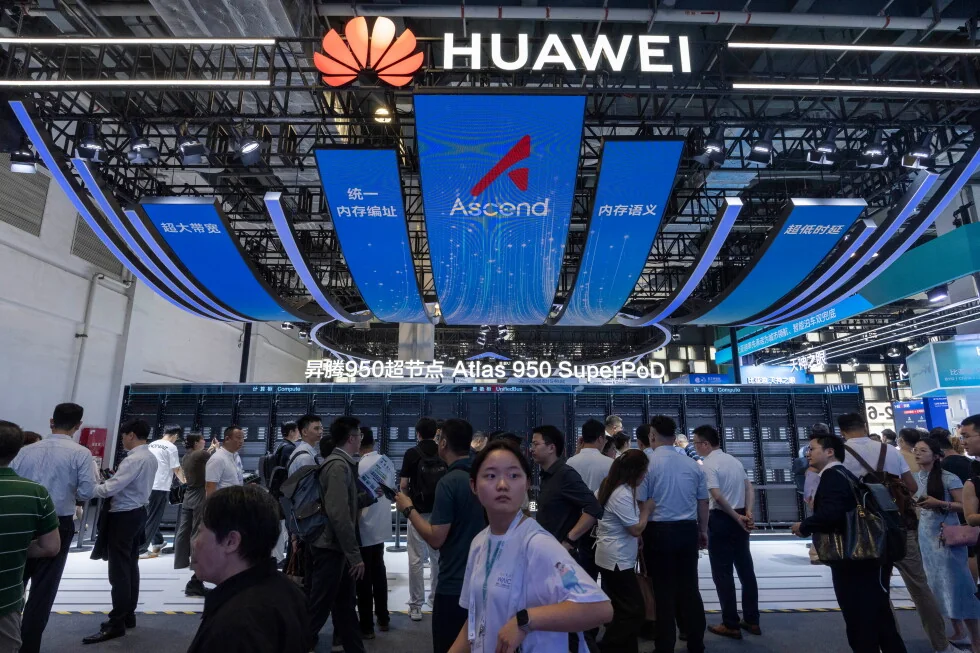
Huawei stellt neue Chip-Technologien vor, während das chinesische Unternehmen das KI-Rennen mit Nvidia verschärft
Huawei unveils new chip technologies as Chinese firm intensifies AI race with Nvidia
Huawei stellt neue Chip-Technologien vor, während das chinesische Unternehmen das KI-Rennen mit Nvidia verschärft
Huawei unveils new chip technologies as Chinese firm intensifies AI race with Nvidia

Tech-Industrie gespalten über Forderungen nach koordinierter Verlangsamung der KI
Tech Industry Split Over Calls for Coordinated AI Slowdown
Tech-Industrie gespalten über Forderungen nach koordinierter Verlangsamung der KI
Tech Industry Split Over Calls for Coordinated AI Slowdown

Globale KI-Sicherheit hängt von der Zusammenarbeit zwischen den USA und China ab, doch jeder sieht im anderen das Problem
Global AI Safety Hinges on US-China Cooperation, Yet Each Sees the Other as the Problem
Globale KI-Sicherheit hängt von der Zusammenarbeit zwischen den USA und China ab, doch jeder sieht im anderen das Problem
Global AI Safety Hinges on US-China Cooperation, Yet Each Sees the Other as the Problem

Trump bagatellisiert die Dringlichkeit der KI-Aufsicht und weigert sich, China einen Vorteil zu überlassen
Trump minimizes the urgency of AI oversight, refusing to relinquish an advantage to China
Trump bagatellisiert die Dringlichkeit der KI-Aufsicht und weigert sich, China einen Vorteil zu überlassen
Trump minimizes the urgency of AI oversight, refusing to relinquish an advantage to China

Oprah Winfrey lädt Sie ein, Ihren „AHA“-Moment in der Sphere zu finden
Oprah Winfrey invites you to find your ‘AHA’ moment at the Sphere
Oprah Winfrey lädt Sie ein, Ihren „AHA“-Moment in der Sphere zu finden
Oprah Winfrey invites you to find your ‘AHA’ moment at the Sphere