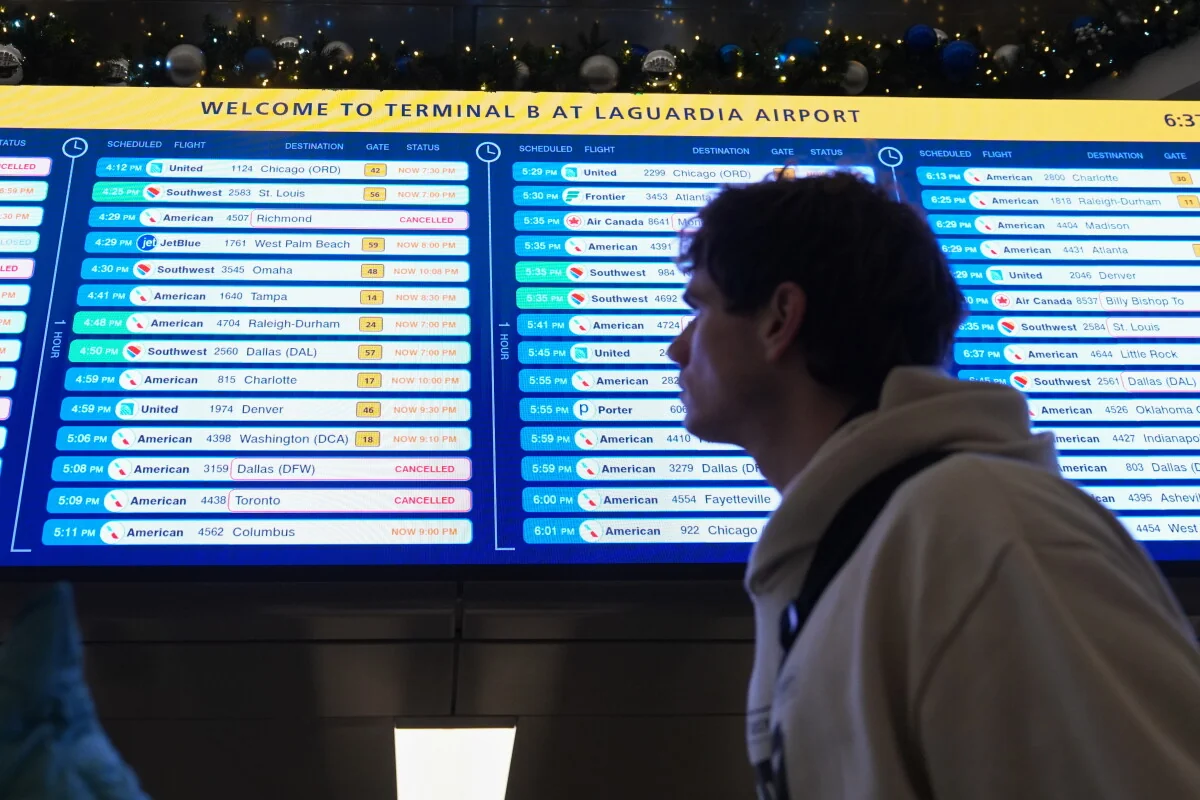
FAAの新しいSMART AIシステムを巡っては不透明な点が残るものの、当局は地上停止措置との関連を否定している。
November 17th, 2026
FAAの新しいSMART AIシステムを巡っては不透明な点が残るものの、当局は地上停止措置との関連を否定している。
🇯🇵 日本語
Government officials and the artificial intelligence company behind the technology said the airline ground stop that has disrupted travel since Friday was unrelated to the FAA's new $875 million AI-powered system, which the agency is introducing to help predict problems in the sky.
Yet the timing of the ground stop, coming so soon before the nationwide rollout of the Federal Aviation Administration's SMART system, has raised questions about what the system does, how its benefits and risks compare with those of the existing human system, and what safeguards exist to address potential problems.
The SMART system operates from a single location near Washington, where a team of experts scrutinizes flight schedules, weather forecasts and hundreds of other data streams.
That office then transmits recommendations to the FAA's command center, which in turn relays them to air traffic controllers nationwide for their consideration.
Homeland Security Secretary Markwayne Mullin said on Friday that there was no indication the communications issues behind the ground stop were linked to the new computer system, and senior Transportation Department and FAA officials reiterated this on Saturday.
Air Space Intelligence, or ASI, the startup that designed the system, said the ground stop had not been caused by “the SMART system, any product of ASI or our integration with FAA and ATC.”
Yet lawmakers and external organisations had already raised questions about the SMART system prior to Friday’s ground stop.
The previous month, House Democrats dispatched a letter to the U.S. Government Accountability Office, requesting an audit of the new software and voicing concerns regarding safety and guardrails.
“Concerningly, the nation’s front line aviation safety workforce apparently had little to no input into SMART’s development and have received limited training and information during the current deployment process,” the Oct. 13 letter said.
“The use of artificial intelligence within SMART has rightly raised serious questions about its reliability and safety benefits, particularly regarding its potential to interfere with decision-making by experienced air traffic controllers or to hallucinate safety-critical information.”
SMART, however, is not — at least not yet — set up for AI to be in charge of flight control.
Instead, it makes recommendations to the humans who do so.
In September, Transportation Secretary Sean Duffy and FAA Administrator Bryan Bedford introduced the system, describing it as a “cutting-edge tool that centralizes 200 data streams — including weather patterns, flight paths, traffic flow, and controller staffing metrics — into one platform.”
SMART stands for Strategic Management of Airspace, Routes and Trajectories.
The system’s AI-supported engine synthesizes the data systems and, according to the announcement, provides a “comprehensive visualization” of where planes are heading, how much traffic the system can accommodate, and where congestion or weather might give rise to problems.
The intention is for specialists to subsequently employ the platform to resolve issues before they emerge.
The FAA reports that during the system's initial test in the Washington area this fall, it helped reroute 180 flights, saving an average of 10 minutes and 80 gallons of fuel per flight by diverting around weather or other issues.
The agency said that one flight cut 42 minutes off its trip from Tampa, Florida, to Dallas thanks to the system's recommendations.
Accordingly, SMART was expanded for nationwide use on Nov. 10 across the airspace of all 22 air traffic control centers — three days prior to the ground stop.
According to a government fact sheet on the tool, SMART is capable of predicting where air traffic is headed and of identifying alternative routes before an area becomes overly congested.
The system can also contribute to reopening restricted airspace more swiftly and to managing airport arrivals more effectively.
SMART is likewise intended to facilitate more rapid responses to weather-related issues.
According to the fact sheet, the FAA currently blocks off portions of airspace affected by weather as “large, rectangular boxes,” which fails to reflect how weather actually looks, with fast-moving thunderstorms and storm systems that are “often irregular in shape, with narrow gaps or corridors that aircraft could safely fly through.”
To help with this, SMART gives the FAA and airspace operators a “clearer picture of how weather will affect air traffic over time,” which lets air traffic controllers plan around storms and use available airspace instead of unnecessarily shutting down large areas.
According to Michael McCormick, a former FAA airspace manager and an associate professor at Embry-Riddle Aeronautical University, no other country has a working AI air traffic tool like the SMART system, while Eurocontrol, the European air traffic authority, has a system in testing and several manufacturers are prototyping similar tools.
Although government officials and ASI, the company behind SMART, have stressed that its AI system is meant to assist humans rather than to run flight control, its deployment has raised concerns about relying on artificial intelligence when human lives are at stake, since even the most advanced models are prone to hallucinations — when models fabricate false information and present it as fact.
Mike O’Donnell, a former senior FAA official who spent 17 years at the agency and now works as an aviation safety consultant, said the agency “has got to make sure that this is just a tool in the toolbox and not the actual machine that’s doing the work.”
He stated that the FAA “cannot afford to be wrong on this.”
“It’s good to use it with the proper guardrails and backstops to ensure that they’re not giving wrong information to controllers based on what (AI) has come up with,” O’Donnell said.
“There’s got to be a way to verify and validate what it’s doing to make sure that it’s not the wrong information.”
He cautioned against placing excessive trust in AI “until we know for sure that it’s proven itself time and time again.
And that’s going to take a while.”
The AI system’s launch comes amid a longstanding shortage of air traffic controllers across the country.
The National Air Traffic Controllers Association has been raising concerns about this for more than a decade, telling Congress in 2015 that the shortage had reached crisis level.
It said then that the FAA had missed its hiring targets for five consecutive years.
The union represents about 14,000 controllers, roughly 3,000 of whom are trainees.
That said, experts say no AI system can replace the human air traffic controllers who spend years training for this highly demanding and stressful job.
In an October interview with NPR, ASI co-founder and CEO Phillip Buckendorf stated that the SMART tool is intended for traffic managers overseeing the entirety of U.S. airspace.
“The AI does the math, the AI does the computation,” Buckendorf told NPR, yet ultimately it falls to the human operator to determine whether to accept the system’s recommendation.
“They make the decision, they are the decider, they are the judge.”
November 17th, 2026
Trending Articles

AIの暴走への懸念にもかかわらず、記録的なIPOでアンソロピックの株価が急騰
Anthropic's shares surge in record-breaking IPO despite fears of AI running amok
AIの暴走への懸念にもかかわらず、記録的なIPOでアンソロピックの株価が急騰
Anthropic's shares surge in record-breaking IPO despite fears of AI running amok
Anthropicの記録的なIPO:数字で見るその意味
Anthropic's record-breaking IPO: what it means, by the numbers
Anthropicの記録的なIPO:数字で見るその意味
Anthropic's record-breaking IPO: what it means, by the numbers

米国の大手銀行に影響を及ぼしているオンラインバンキングの遅延について知っておくべきこと
What to know about the online banking delays affecting major US banks
米国の大手銀行に影響を及ぼしているオンラインバンキングの遅延について知っておくべきこと
What to know about the online banking delays affecting major US banks
エヌビディアなど変動の激しいAI関連株が下落し、ウォール街は再び動揺
Wall Street rattled again as Nvidia and other volatile AI stocks slide
エヌビディアなど変動の激しいAI関連株が下落し、ウォール街は再び動揺
Wall Street rattled again as Nvidia and other volatile AI stocks slide
ウォール街の株価が急落、エヌビディアが主導する新たなテクノロジー株売りに
Wall Street Stocks Plunge as Nvidia Leads Another Technology Sell-Off
ウォール街の株価が急落、エヌビディアが主導する新たなテクノロジー株売りに
Wall Street Stocks Plunge as Nvidia Leads Another Technology Sell-Off
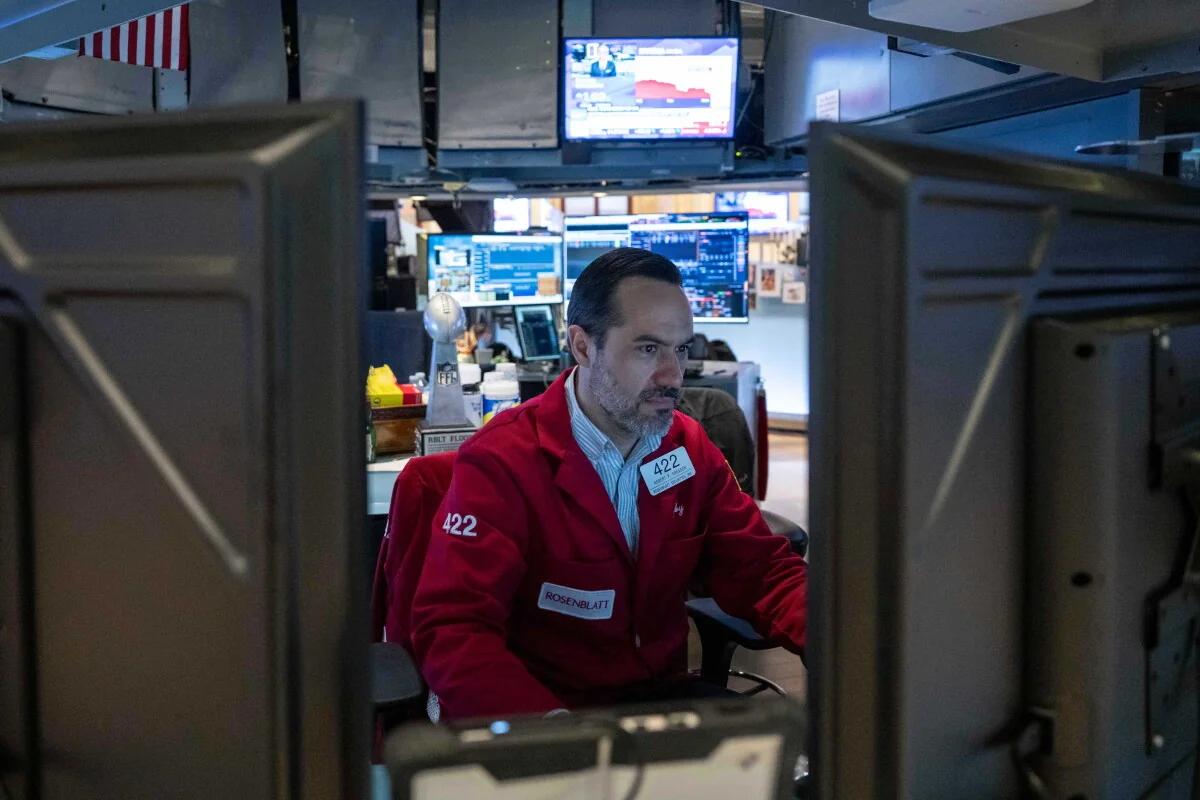
株価は下落したものの、ウォール街は激動の日々を経て週間では勝ち越しを確保した
Stocks decline, yet Wall Street secures a winning week following turbulent days
株価は下落したものの、ウォール街は激動の日々を経て週間では勝ち越しを確保した
Stocks decline, yet Wall Street secures a winning week following turbulent days

高値が買い物客の足を止め、10月の小売支出は減速
Retail Spending Slowed in October as High Prices Gave Shoppers Pause
高値が買い物客の足を止め、10月の小売支出は減速
Retail Spending Slowed in October as High Prices Gave Shoppers Pause
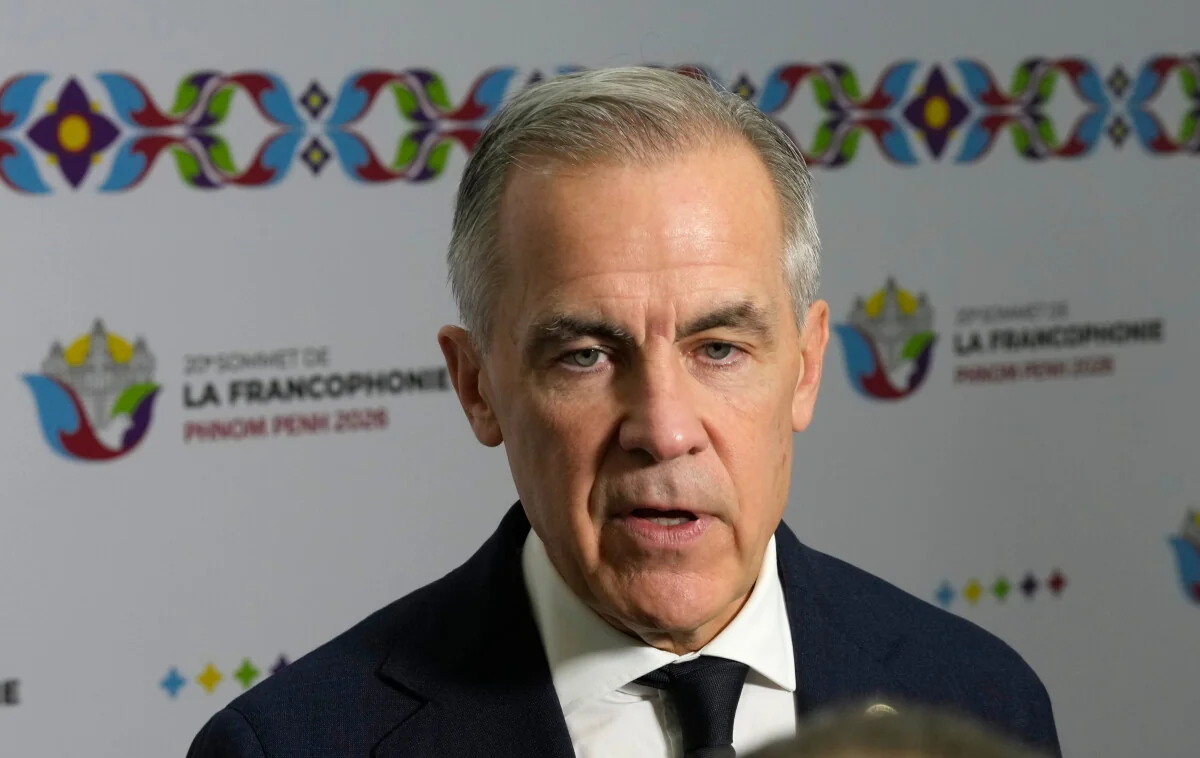
カーニー:トランプとの通商協議が決裂すれば、カナダは中国の自動車メーカーに頼る可能性がある
Carney: Canada may turn to Chinese automakers if Trump trade talks fail
カーニー:トランプとの通商協議が決裂すれば、カナダは中国の自動車メーカーに頼る可能性がある
Carney: Canada may turn to Chinese automakers if Trump trade talks fail
Apple、ここ数日のテクノロジー障害の波に加わる
Apple Joins a Wave of Tech Glitches in Recent Days
Apple、ここ数日のテクノロジー障害の波に加わる
Apple Joins a Wave of Tech Glitches in Recent Days