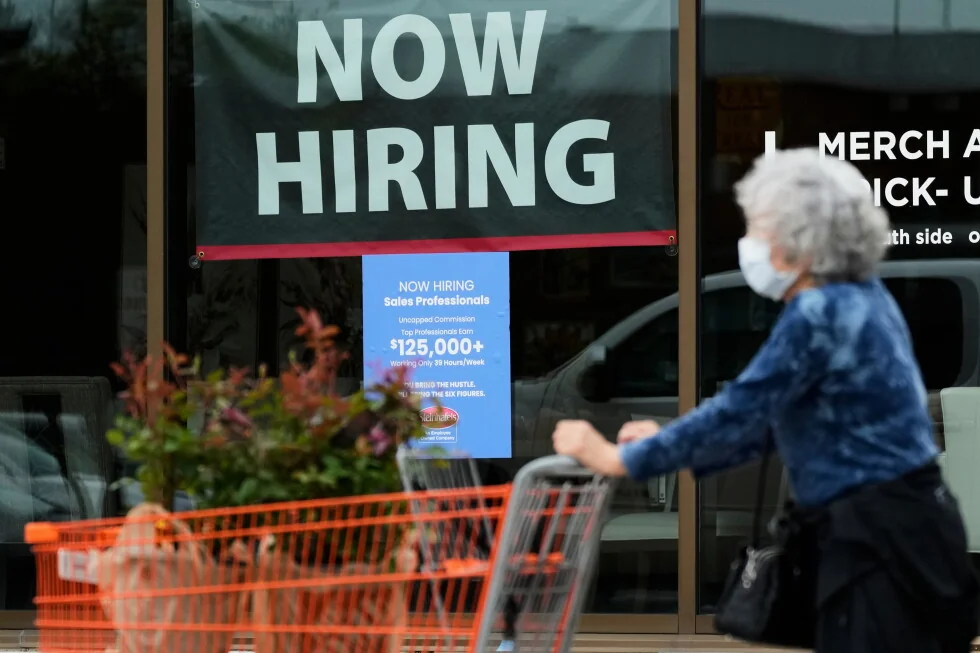
Trump sigue presumiendo de un auge económico, pero incluso un informe de empleo sólido le está saliendo por la culata.
September 5th, 2026
Trump sigue presumiendo de un auge económico, pero incluso un informe de empleo sólido le está saliendo por la culata.
🇪🇸 Español
President Donald Trump has spent twenty months asserting that America stood on the verge of an economic resurgence.
Yet Friday’s unexpectedly robust jobs report ultimately elicited a sense of exasperation from Trump.
The August employment figures may have offered a welcome break from months of sluggish hiring and inflation worries that have weighed on Trump and his party just two months before the election.
But speaking from the Oval Office, Trump instead launched into a series of complaints about inflation and interest rates.
His anger was aimed at the financial markets, the Federal Reserve, and U.S. trading partners.
He rejected the common economic view that the unexpected gain of 162,000 jobs in August could add to inflationary pressures.
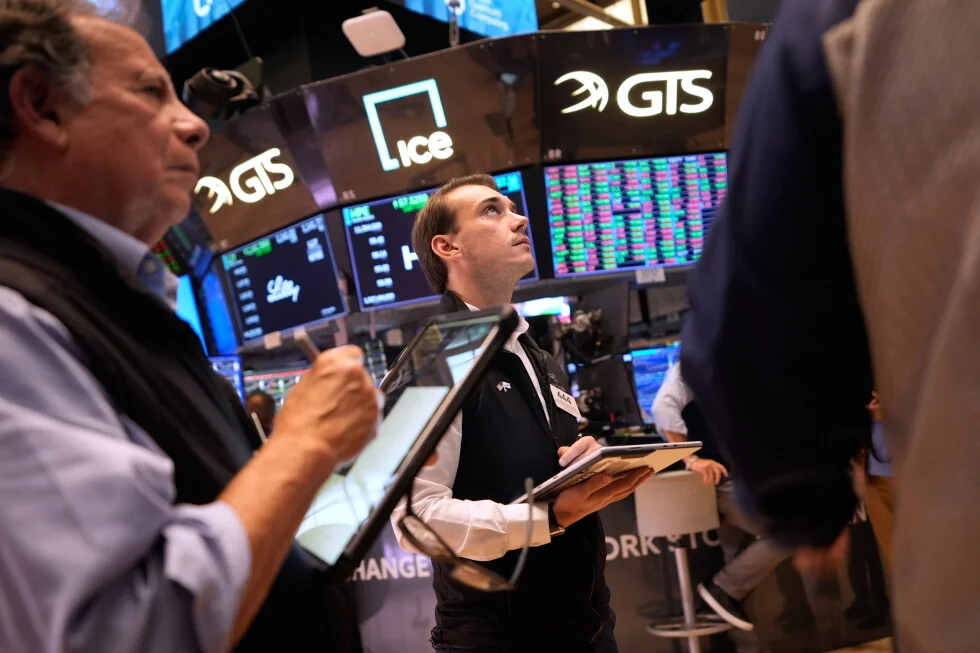
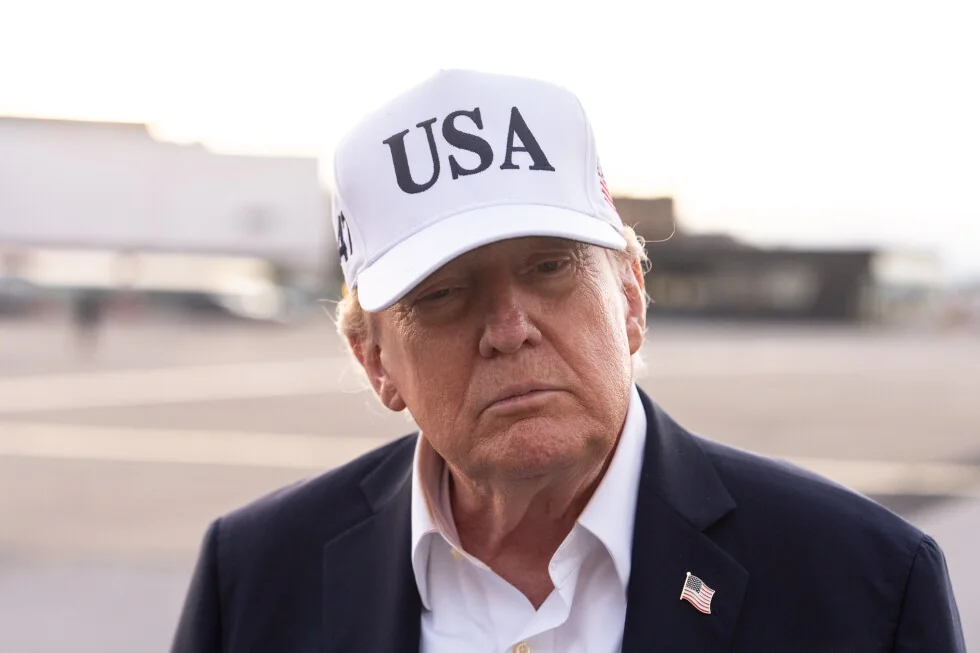
“Success does not cause inflation. Stupidity causes inflation,” Trump vented in the Oval Office, as he deemed it “crazy” that the stock markets fell on Friday over inflation concerns.
The combination of reduced hiring and higher prices during his second term has been a persistent burden for Trump, undermining his promise to quickly ignite unprecedented growth.
"When I win the election, we will immediately begin a brand new Trump economic boom," Trump said at an August 2024 rally in North Carolina.
However, so far the economy has grown at roughly 2% annually, which is slower than the gains seen under the Biden administration.
Trump attributed his failure to achieve stronger economic growth to higher interest rates on U.S. government debt, stating on social media that America could retaliate by halting trade with foreign countries.
Rates have been climbing due to persistently high inflation driven by Trump's tariffs and oil shortages from the Iran war.
The national debt has now exceeded the daunting $40 trillion mark, and the 10-year U.S. Treasury yield rose to 4.79% on Friday.
As the expected growth has not yet materialized, the president has lost some public confidence in his ability to guide the world's largest economy.
His own policies have partly contributed to the inflation and high interest rates that he now tries to blame on others.
The administration's credibility on growth, inflation, rates, debt, and deficit dynamics has been undermined by predictions that are overly optimistic and out of step with economic reality, according to Joe Brusuelas, chief economist at the consultancy RSM US.
If the Federal Reserve were to comply with Trump's request and lower its benchmark rate to stimulate the U.S. economy, the resulting cash influx could exacerbate inflation and further compound his political and economic difficulties.
However, the president challenged this core principle of monetary policy.
On Friday, he downplayed inflation risks, claiming that gross domestic product would grow by "12, 13, 14, 15%" if interest rates were reduced.
“We could achieve a GDP that would surpass every existing record,” Trump remarked.
According to polling by the Reporters-NORC Center for Public Affairs Research, the president’s economic approval rating stood at a meager 32% in the middle of the summer.
By contrast, when Republicans last faced midterm voters in 2018 under Trump, his economic approval rating was 50%.
Trump's threat to cut off foreign trade could endanger growth, further hurting his ratings.
His recent tariffs on Canada have become a problem for Republicans in the Maine and Michigan Senate races.
Administration officials contend that their policies are achieving the desired outcomes.
They argue that progress in artificial intelligence will boost productivity and, in turn, economic growth.
They also maintain that last year's tariffs should ultimately bring more manufacturing back to America, while Trump's tax cuts are expected to encourage greater business investment, and the administration's anti-fraud measures will save taxpayers money.
“I anticipate more robust growth,” stated Christopher Phelan, chairman of the White House Council of Economic Advisers.
“We are implementing measures designed to facilitate favorable outcomes.”
Phelan pointed out that recent job gains have been approximately double the amount necessary to keep up with population growth.
He believes it is quite possible that productivity improvements could boost overall expansion for the next few years, even though he admitted that growth alone might not be enough to tackle all of the country's financial problems.
Given that spending on Social Security and Medicare is increasing faster than revenue, economic growth by itself is unlikely to significantly reduce budget deficits.
If U.S. economic growth were to exceed 3% annually over the next decade, it would only be enough to stabilize the government's already high debt load, according to an analysis by Ernie Tedeschi, head of economic insights and research at Stripe, the financial technology company.
Tedeschi said he would be “thrilled” if AI could help to deliver those kinds of gains for 10 straight years, but history suggests that growth of that magnitude, driven by advances in computing, was likely “wildly optimistic.”
“We ought by no means to be preparing for the most favorable outcome,” Tedeschi remarked.
Prior to the president's remarks on interest rates on Friday, the Trump administration had devoted the preceding week to efforts aimed at bolstering voter confidence in the economy.
At the G20 summit for finance ministers in North Carolina, Treasury Secretary Scott Bessent specifically highlighted the benefits of stronger growth, and Commerce Secretary Howard Lutnick echoed this during the G20 meetings on innovation.
Nevertheless, Bessent informed the AP in an interview that he is collaborating with White House budget director Russ Vought to unveil a strategy aimed at "bringing down the level of the debt, deficit."
Trying to meaningfully reduce a budget deficit of roughly $2 trillion this year, which is expected to exceed $3 trillion in a decade, involves significant political risk.
While lowering the path of budget deficits would probably help with interest rates, it could also create political difficulties through spending cuts and tax increases.
Brusuelas, the chief economist at RSM US, emphasized that Trump would likely be compelled to make concessions in order to tackle the debt in a meaningful way and restore confidence among financial markets.
"We need a period of slower growth in government spending — including outright cuts as well as tax increases, all of which would reduce deficits and interest rates," he said.
September 5th, 2026
Trending Articles
Warren Buffett cede el cargo de presidente de Berkshire Hathaway, avanzando en su plan de sucesión
Warren Buffett relinquishes chairman role at Berkshire Hathaway, advancing his succession plan
Warren Buffett cede el cargo de presidente de Berkshire Hathaway, avanzando en su plan de sucesión
Warren Buffett relinquishes chairman role at Berkshire Hathaway, advancing his succession plan
Trump apunta a más medios de comunicación, diciendo que prohibirá la entrada de CNN, MS NOW y Politico a la Casa Blanca
Trump targets more news outlets, saying he will ban CNN, MS NOW and Politico from the White House
Trump apunta a más medios de comunicación, diciendo que prohibirá la entrada de CNN, MS NOW y Politico a la Casa Blanca
Trump targets more news outlets, saying he will ban CNN, MS NOW and Politico from the White House

El Banco de Japón eleva su tasa de interés clave al 1,25 %, un máximo de 31 años
Bank of Japan lifts key rate to 1.25%, a 31-year high
El Banco de Japón eleva su tasa de interés clave al 1,25 %, un máximo de 31 años
Bank of Japan lifts key rate to 1.25%, a 31-year high

Anthropic afirma que su modelo Claude está ayudando a construir su propio sucesor
Anthropic says its model Claude is helping to build its own successor
Anthropic afirma que su modelo Claude está ayudando a construir su propio sucesor
Anthropic says its model Claude is helping to build its own successor
Por qué la Reserva Federal sube los tipos ahora y qué significa
Why the Federal Reserve is raising rates now, and what it signifies
Por qué la Reserva Federal sube los tipos ahora y qué significa
Why the Federal Reserve is raising rates now, and what it signifies
Las acciones estadounidenses se disparan hasta máximos de seis semanas mientras caen los precios del petróleo y los rendimientos de los bonos
US stocks surge to six-week high as oil prices and bond yields decline
Las acciones estadounidenses se disparan hasta máximos de seis semanas mientras caen los precios del petróleo y los rendimientos de los bonos
US stocks surge to six-week high as oil prices and bond yields decline
La Fed sube los tipos de interés por primera vez en 3 años, desafiando los llamados de Trump a un recorte
Fed hikes key rate for 1st time in 3 years, defying Trump's calls for a cut
La Fed sube los tipos de interés por primera vez en 3 años, desafiando los llamados de Trump a un recorte
Fed hikes key rate for 1st time in 3 years, defying Trump's calls for a cut
Las solicitudes de desempleo caen a 196.000, el nivel más bajo desde mediados de julio en medio de despidos persistentemente bajos
Unemployment Claims Fall to 196,000, Lowest Since Mid-July Amid Persistent Low Layoffs
Las solicitudes de desempleo caen a 196.000, el nivel más bajo desde mediados de julio en medio de despidos persistentemente bajos
Unemployment Claims Fall to 196,000, Lowest Since Mid-July Amid Persistent Low Layoffs
Trump denuncia los riesgos de la IA como un «engaño» y alega una «enfermiza conspiración» contra la IA y los centros de datos
Trump denounces AI risks as a ‘hoax,’ alleging a ‘SICK conspiracy’ against AI and data centers
Trump denuncia los riesgos de la IA como un «engaño» y alega una «enfermiza conspiración» contra la IA y los centros de datos
Trump denounces AI risks as a ‘hoax,’ alleging a ‘SICK conspiracy’ against AI and data centers

El Tribunal Supremo decidirá sobre el desafío de un pescador de langostas de Maine al requisito de rastreo por GPS en las embarcaciones
Supreme Court to decide on Maine lobsterman’s challenge to GPS boat tracker requirement
El Tribunal Supremo decidirá sobre el desafío de un pescador de langostas de Maine al requisito de rastreo por GPS en las embarcaciones
Supreme Court to decide on Maine lobsterman’s challenge to GPS boat tracker requirement