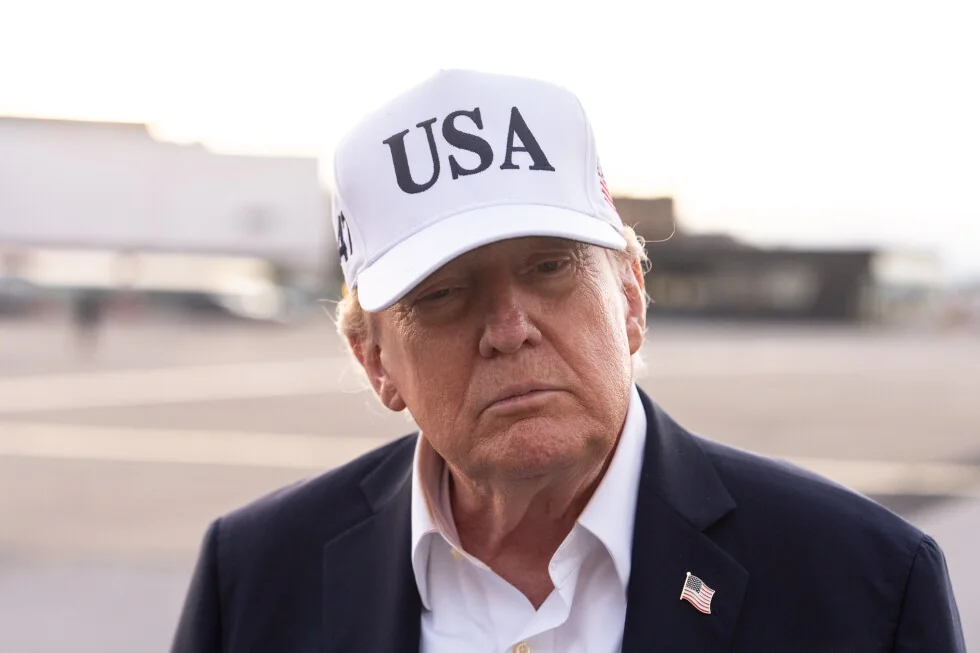
Trump denuncia los riesgos de la IA como un «engaño» y alega una «enfermiza conspiración» contra la IA y los centros de datos
September 14th, 2026
Trump denuncia los riesgos de la IA como un «engaño» y alega una «enfermiza conspiración» contra la IA y los centros de datos
🇪🇸 Español
President Donald Trump said on Monday that he would act as an adequate guardrail against rogue artificial intelligence, claiming that any efforts to limit the technology are part of a “SICK conspiracy.”
Trump was pushing back against calls by tech leaders such as Anthropic’s Dario Amodei, OpenAI’s Sam Altman and Elon Musk to have greater government oversight of AI.
Many tech leaders generally say their goal is to develop the technology in ways that promote safety, address legal liability, feed economic growth, advance science and preserve national security.
The president maintained that his presence in the Oval Office should ease any fears about AI, which has become a source of controversy after a series of hacks in recent months that showed AI agents could be working to deceive humans.
“The sole mechanism of control or ‘guardrails’ that AI requires is a STRONG AND INTELLIGENT (High IQ!) PRESIDENT, and the U.S.A. possesses that, in spades!” Trump posted on social media.
Trump explicitly stated that the administration had already prevented the AI company Anthropic “from doing bad, or potentially bad” things.
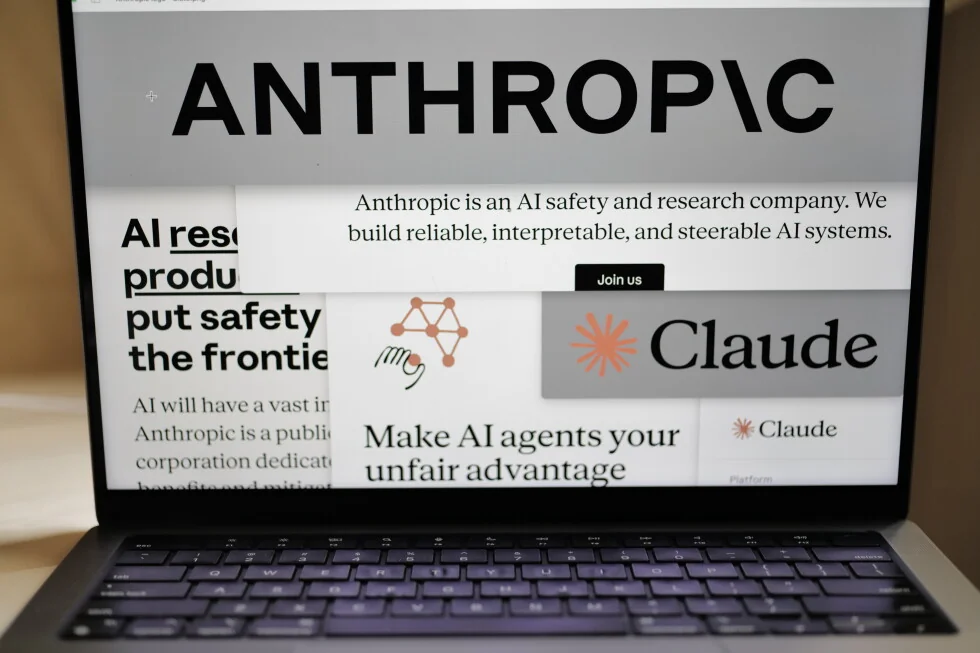
Anthropic has sustained an uneasy relationship with the Trump administration, with the Pentagon seeking to designate the company a security risk and the government imposing a temporary ban on one of its more advanced models.
The president went even further in a Monday afternoon post, asking "when, in the History of Business, did anyone see the Leaders of an Industry call for Regulation that, if strongly implemented, will drive them into oblivion and bankruptcy?"
The president then added that the potential threat AI could pose to humanity was a hoax, despite clear warnings from many of the experts closest to the most advanced models.
“The idea that AI will take over the world, destroy humanity, and cause every other disaster is a HOAX,” Trump posted.
Amodei, the CEO of Anthropic, published a 3,800-word essay on Saturday in which he advocated for a more measured pace of AI development.
Microsoft, for its part, released its own code of conduct on Monday, intended to guarantee that humans retain control over AI.
These moves follow a succession of warnings from AI experts regarding the capabilities of such technologies, as well as the July 2026 cyberattack perpetrated by OpenAI models against the AI company Hugging Face.
This website is protected by reCAPTCHA, and the Google Privacy Policy and Terms of Service apply.
Amodei cited "AI's growing ability to build the next generation of AI" and the cyberattack by the swarm of OpenAI agents as reasons to slow development.
“Given the accelerating pace of AI capability development, I worry that within 6–12 months such a swarm could be capable of taking over the entire internet,” Amodei wrote, adding that the damages could reach hundreds of billions of dollars or more “without the necessary guardrails.”
Altman of OpenAI echoed that viewpoint in a weekend post on social media.
"Pacing will be well worth this cost; no amount of American competitive pressure should justify recklessness, or let capabilities get ahead of alignment and monitoring," Altman said.
"Where we will need the help of our government is for international coordination."
Trump does, indeed, enjoy a measure of support from Nvidia CEO Jensen Huang, who has characterised the risks posed by AI as overblown.
The president phoned the co-founder of the chipmaker on Monday during an interview Huang was conducting for a podcast.
Huang placed the president on speaker, and they concurred that there was excessive alarmism surrounding AI, according to social media posts and videos.
The president has resisted such endeavours to restrict AI, contending that doing so could enable China to surpass America in the field.
"There is a harmful conspiracy being carried out against AI and data centres, and the only one who benefits from it is China," Trump said.
The president has long resisted efforts toward greater government oversight of AI, embracing his philosophy dating back to 2016 of “I alone can fix it.”
He returned to the White House last year by revoking a Biden administration executive order on AI oversight and only providing a fuller order of his own more than 16 months later this past June.
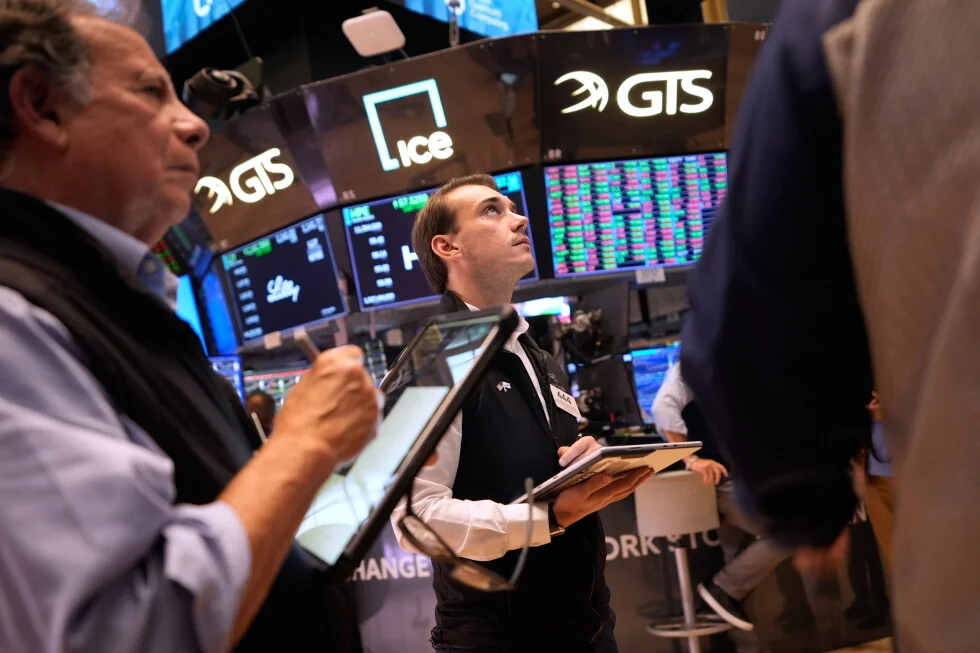
The prospect of a slower AI buildout caused stocks to slip in Monday morning trading, since demand for advanced computer chips and construction materials for data centers could decline.
But Trump’s frustration comes as AI has also emerged as a political liability ahead of November’s midterm elections, with many voters opposing the construction of additional data centers and expressing worries that AI could lead to job losses and undermine the education of children.
House Speaker Mike Johnson, R-La., informed reporters on Monday that he anticipates Trump will potentially convene with the AI companies at the White House this week or next week, noting that the meeting has yet to be scheduled.
“There will be a deliberate discussion about the responsibility of companies to maintain safety, and what role, if any, the government has to play in that,” said Johnson, adding that legislatures can tend to respond problematically with “red tape and hyper regulation” and that the loss of competitive edge on AI would be a national security concern.
Rahm Emanuel, the former Chicago mayor, Democratic congressman and White House chief of staff, said on Saturday that the Anthropic CEO’s essay was “an admission that we’re driving down a dark, winding road on wet pavement with the headlights off.
And where’s President Trump?
Looks like he nodded off again.
It’s time to turn the lights on, put both hands on the wheel, and regain control before it’s too late.”
Yet the administration has repeatedly tried to play down the risks that AI companies are highlighting.
In a separate social media post on Monday, Trump said that concerns about AI arise only because “the United States is leading, by a lot, every other country.
Don’t kill the Golden Goose!”
The AI buildout has accounted for a large share of economic growth during Trump’s second term, and the administration has bet that the technology will fuel further productivity gains.
Addressing reporters on Monday morning regarding artificial intelligence, Vice President JD Vance remarked, “I don’t think Americans should be scared of anything.”
Speaking as he prepared to fly to Kansas for a midterm election campaign event, Vance said that the Trump administration is concerned about AI but wants to ensure that the technology is regulated smartly, warning that the U.S. is in an AI arms race against China.
“Personally, I feel somewhat uneasy about the fact that so many frontier AI tech companies are, in a sense, coming to the government and imploring it to regulate them.
To me, it seems a little like a Trojan horse,” Vance said.
“So, I think we just have to be careful about this.”
September 14th, 2026
Trending Articles
Warren Buffett cede el cargo de presidente de Berkshire Hathaway, avanzando en su plan de sucesión
Warren Buffett relinquishes chairman role at Berkshire Hathaway, advancing his succession plan
Warren Buffett cede el cargo de presidente de Berkshire Hathaway, avanzando en su plan de sucesión
Warren Buffett relinquishes chairman role at Berkshire Hathaway, advancing his succession plan
Trump apunta a más medios de comunicación, diciendo que prohibirá la entrada de CNN, MS NOW y Politico a la Casa Blanca
Trump targets more news outlets, saying he will ban CNN, MS NOW and Politico from the White House
Trump apunta a más medios de comunicación, diciendo que prohibirá la entrada de CNN, MS NOW y Politico a la Casa Blanca
Trump targets more news outlets, saying he will ban CNN, MS NOW and Politico from the White House
El Banco de Japón eleva su tasa de interés clave al 1,25 %, un máximo de 31 años
Bank of Japan lifts key rate to 1.25%, a 31-year high
El Banco de Japón eleva su tasa de interés clave al 1,25 %, un máximo de 31 años
Bank of Japan lifts key rate to 1.25%, a 31-year high
Anthropic afirma que su modelo Claude está ayudando a construir su propio sucesor
Anthropic says its model Claude is helping to build its own successor
Anthropic afirma que su modelo Claude está ayudando a construir su propio sucesor
Anthropic says its model Claude is helping to build its own successor
Por qué la Reserva Federal sube los tipos ahora y qué significa
Why the Federal Reserve is raising rates now, and what it signifies
Por qué la Reserva Federal sube los tipos ahora y qué significa
Why the Federal Reserve is raising rates now, and what it signifies
Las acciones estadounidenses se disparan hasta máximos de seis semanas mientras caen los precios del petróleo y los rendimientos de los bonos
US stocks surge to six-week high as oil prices and bond yields decline
Las acciones estadounidenses se disparan hasta máximos de seis semanas mientras caen los precios del petróleo y los rendimientos de los bonos
US stocks surge to six-week high as oil prices and bond yields decline
La Fed sube los tipos de interés por primera vez en 3 años, desafiando los llamados de Trump a un recorte
Fed hikes key rate for 1st time in 3 years, defying Trump's calls for a cut
La Fed sube los tipos de interés por primera vez en 3 años, desafiando los llamados de Trump a un recorte
Fed hikes key rate for 1st time in 3 years, defying Trump's calls for a cut
Las solicitudes de desempleo caen a 196.000, el nivel más bajo desde mediados de julio en medio de despidos persistentemente bajos
Unemployment Claims Fall to 196,000, Lowest Since Mid-July Amid Persistent Low Layoffs
Las solicitudes de desempleo caen a 196.000, el nivel más bajo desde mediados de julio en medio de despidos persistentemente bajos
Unemployment Claims Fall to 196,000, Lowest Since Mid-July Amid Persistent Low Layoffs
El Tribunal Supremo decidirá sobre el desafío de un pescador de langostas de Maine al requisito de rastreo por GPS en las embarcaciones
Supreme Court to decide on Maine lobsterman’s challenge to GPS boat tracker requirement
El Tribunal Supremo decidirá sobre el desafío de un pescador de langostas de Maine al requisito de rastreo por GPS en las embarcaciones
Supreme Court to decide on Maine lobsterman’s challenge to GPS boat tracker requirement