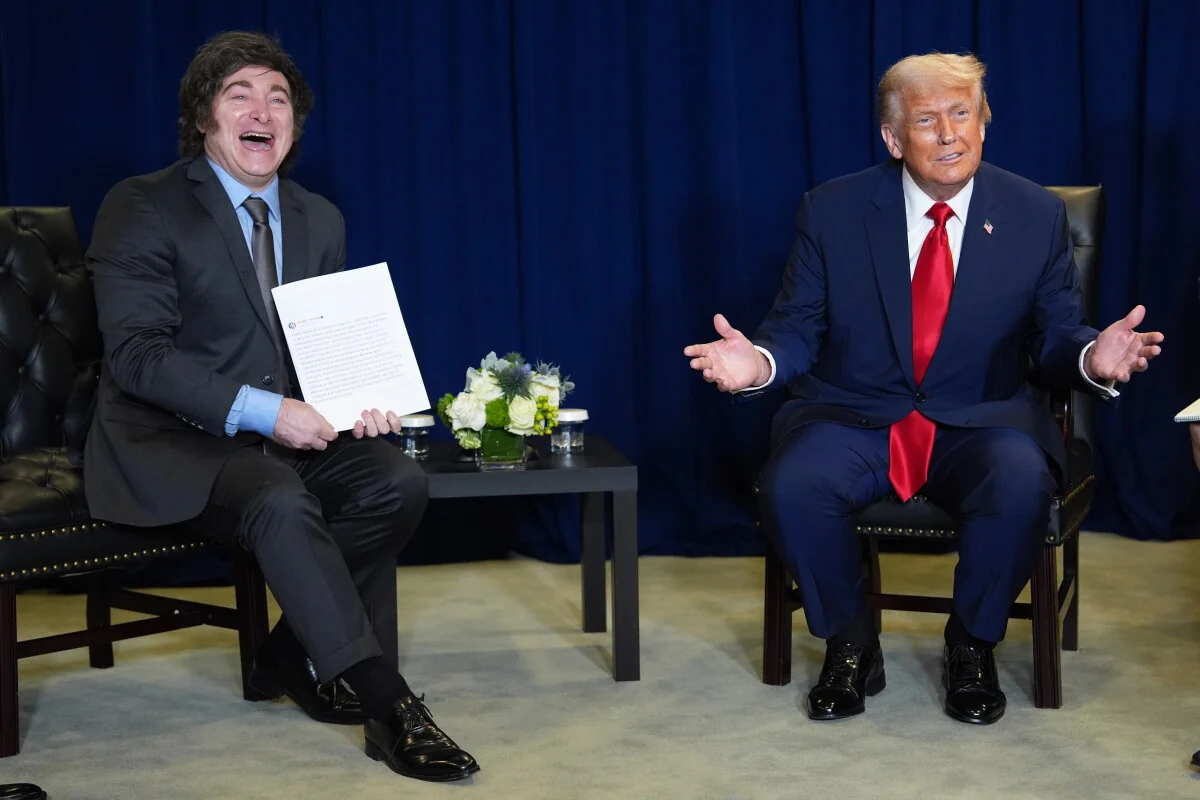
Milei wirbt am Ende der Welt für einen regulierungsfreien KI-Hafen
November 3rd, 2026
Milei wirbt am Ende der Welt für einen regulierungsfreien KI-Hafen
🇩🇪 Deutsch
Data centres have crystallised into one of the most polarising issues on the global stage, and Argentina's president is bent on luring as many of them as he can possibly secure.
As residents and policymakers across the United States and Europe contest the facilities that power artificial intelligence, President Javier Milei is touting Argentina as a haven, pledging a hands-off approach in a bid to attract the foreign investment his crisis-prone country so desperately needs.
Much as does his ally, U.S. President Donald Trump, Milei habitually disseminates AI-generated imagery across social media platforms, and he has proposed establishing “nonhuman corporations” to be operated entirely by AI agents.
"We are not going to regulate artificial intelligence," Milei told the U.S. Chamber of Commerce in Washington last month.
"We are going to leave it free."
Visitor logs obtained by Reporters reveal a steady stream of tech figures—from venture capitalist Peter Thiel to representatives of OpenAI, Amazon, Google, Oracle and data center companies—meeting with Milei and his aides in recent months.
Foreign Ministry records show that data center developer Crusoe, which helped build OpenAI’s flagship campus in Texas, sought talks this year with Argentine energy officials regarding U.S. government-backed investments.
Milei’s hopes hinge as much upon geography as upon ideology.
Patagonia proffers vast, open plains where noisy server farms can be sited far from population centres, a chilly climate to cool the machines, powerful winds to generate electricity and one of the world’s largest shale deposits in Vaca Muerta to fuel power plants.
“In densely populated regions of the U.S. and Europe, there is considerable contention over access to the grid and over who ought to receive the electricity,” said Marta Zlotkowska, head of international development at Green Capital, a Polish renewable energy company that plans to construct a $3 billion data center in Patagonia to lease to major tech firms for AI computing, though it has yet to secure a customer.
"We evaluated prospective sites for the project across the globe, and Argentina — well, Patagonia — emerged pre-eminent in every category," she said.
For Argentina’s energy industry, already flourishing as the Iran war drives oil prices upward, data centers constitute a tantalizing new market.
Pampa Energía, one of the country’s largest power companies, has announced plans to furnish prodigious quantities of gas-fired power to a data center near Vaca Muerta and is actively soliciting developers.
“To find oneself at the ends of the earth was formerly a drawback,” remarked Rubén Etcheverry, a senior official in Neuquén, the Patagonian province that is home to Vaca Muerta.
“Yet today, confronted with energy shortages and escalating costs, investors are turning their gaze toward us.”
In a bid to court companies chary of Argentina's chronic economic instability, Milei is advancing an incentive scheme that would cut the corporate income tax rate to 15% from 25% for projects worth at least $1 billion in AI and other emerging industries — a measure currently awaiting Senate approval.
The payoff for Argentines remains unclear.
Data centers employ relatively few people.
Milei's proposed incentives do not oblige companies to reserve computing capacity for local consumption or to disclose their energy and water use.
“We are not discussing data centres conceived to bolster Argentine technological sovereignty,” said Alan Rocha Varsanyi, a researcher at Observatorio Petrolero Sur, an Argentine environmental group.
“The computing capacity will be exported to wherever OpenAI or the other companies require it.”
Notwithstanding all the fanfare surrounding Milei, Argentina trails in the contest to establish itself as a regional data-center hub, as its neighbors vaunt inexpensive land, renewable energy and burgeoning fiber-optic connectivity to U.S. tech titans.
Milei contends that his advocacy for unfettered AI affords Argentina a competitive advantage at a juncture when the European Union and an expanding cohort of U.S. states have enacted new regulations.
Critics caution that he is pressing to deploy AI in Argentina bereft of safeguards against risks spanning from mass surveillance to cyberattacks.
“Absent regulatory frameworks, Argentina will be transformed into a laboratory — much as when pharmaceutical companies venture into developing nations to trial anomalous drugs that they are precluded from testing in major developed countries,” said Nicolás Wolovick, a professor of computer science at the National University of Córdoba.
Milei may encounter comparable misgivings the following week, when Pope Leo XIV — who has cautioned against the perils AI poses to humanity — visits Argentina as part of his Latin American tour.
Even within Milei’s own administration, some concede that his deregulatory posture complicates the endeavor to establish a coherent legal framework, with one senior official—not authorized to brief the media—observing that companies are awaiting Argentina’s resolution of rules governing the training of AI on copyrighted works and the transfer of personal data abroad.
Some investors are withholding their commitments until next year’s potentially closely contested presidential election, apprehensive that, should Milei be defeated, the ensuing government might dismantle his free-market reforms.
“One of our principal challenges is impressing upon foreign investors that Argentina remains an hospitable destination for investment irrespective of which political party holds power,” said Andrés Arbeletche, cabinet coordination secretary for Chubut, a Patagonian province actively courting several AI mega-projects.
In remote ranching outposts scattered across the treeless plateau of Chubut province, existence centres on tending flocks upon the steppes and shearing sheep within sheds.
With the wool industry in decline after decades of drought, overgrazing and soaring production costs, certain ranchers are staking their fortunes on a rather different sort of shed — one filled not with fleece but with blinking racks of servers.
“Sheep farmers are scrutinising with considerable diligence what alternatives might be identified to generate additional income,” said Francisco Sáenz, an agricultural engineer and fourth-generation sheep farmer whose family numbers among 14 landowners who have leased a combined 130,000 hectares (about 321,000 acres) to Green Capital for its planned data center.
The ranchers anticipate continuing to graze sheep alongside their colossal future neighbour.
Construction is not anticipated to commence until approximately 2028.
Were the completed campus to operate continuously at its projected peak demand, it would consume, over the course of a year, roughly 2.7 times the electricity that the entire city of Buenos Aires used in 2025, according to an AP calculation.
Green Capital undertakes to generate its entire electricity supply from wind turbines, solar farms and gas-fired generators, thereby refraining from straining Argentina's congested grid.
Provincial officials are counting on the project to deliver billions of dollars in investment, highly skilled jobs and a market for surplus wind power.
Arbeletche said that for them it was entirely a benefit, and that they relinquished nothing.
Yet some residents of Trelew, a dust-blown city near the proposed site, maintain that they have no means of assessing those assurances: environmental studies remain in progress, permits are still pending, and the company has not specified how much water the project would require or what proportion of its power would be derived from gas.
“There is simply so scant information,” said Cristina Gibón, 46, who dreads the environmental toll of data centers.
“Perhaps we shall have water until we are old.
But afterward, our children will still be here, and they will not have those resources.”
Worries such as hers are fuelling a broader backlash against Milei's courtship of Big Tech.
In Trelew, a small contingent of residents has mobilised both online and in the main square under the banner "Trelew Free of Data Centers."
In Congress, where lawmakers recently accused Milei of selling off the country at a hearing on billionaire Peter Thiel's interests in Argentina, the opposition has compelled the president to gut a bill easing restrictions on foreign land ownership and has stalled his plan to let AI agents control companies.
Returning to his family's farm, Sáenz discerns a reflex unmistakably Argentine.
“Whenever a foreign company contemplates a major investment in Argentina, it invariably draws considerable criticism.
For many, the reflexive reaction is to declare, ‘No, they’re terrible people coming from outside to plunder our resources,’” he said.
“I’m not contending that large corporations are the greatest thing ever.
I’m merely observing that, when I look at other countries, I see stable economies.”
November 3rd, 2026
Trending Articles

Sie vermuten, Opfer eines Betrugs geworden zu sein? Lesen Sie dies
Suspect You've Been Scammed? Read This
Sie vermuten, Opfer eines Betrugs geworden zu sein? Lesen Sie dies
Suspect You've Been Scammed? Read This

Zentrale Erkenntnisse aus der AP- und FRONTLINE-Untersuchung zu Sextortion
Key Findings from the AP and FRONTLINE Sextortion Investigation
Zentrale Erkenntnisse aus der AP- und FRONTLINE-Untersuchung zu Sextortion
Key Findings from the AP and FRONTLINE Sextortion Investigation
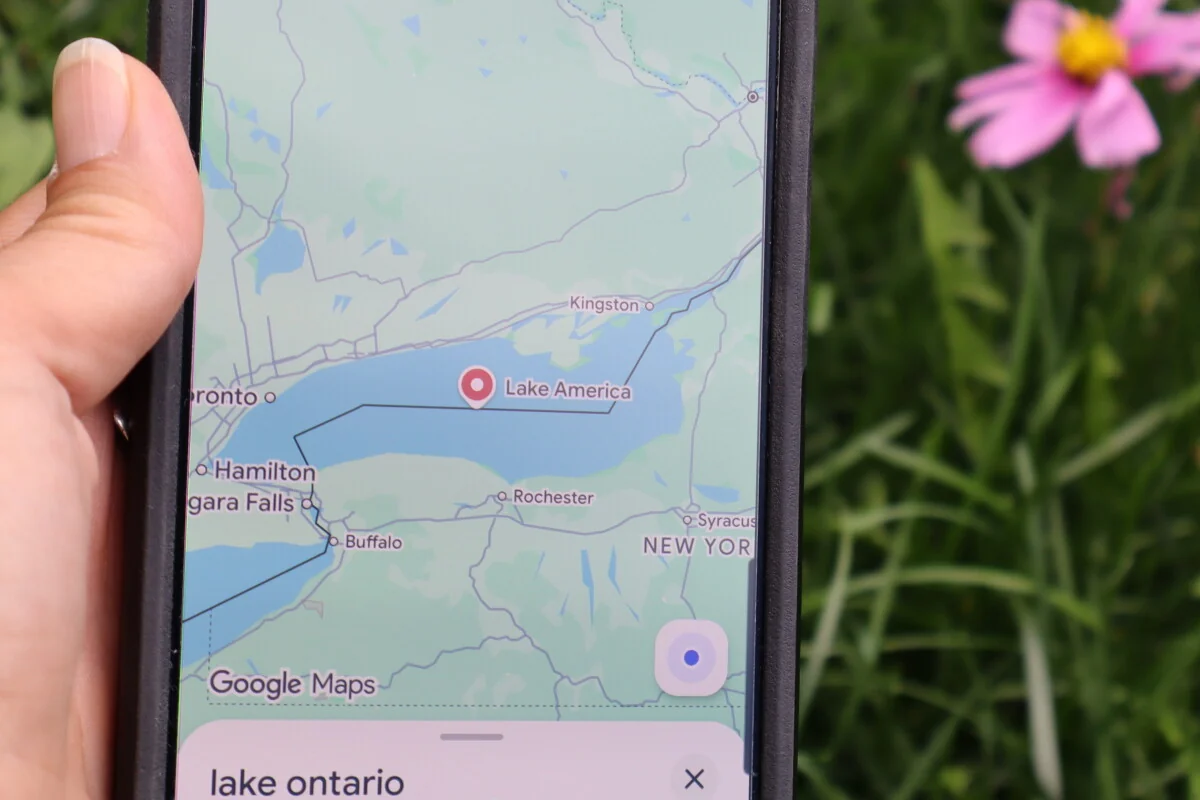
Ein Tech-Tipp: Die Gegenreaktion gegen „Lake America“ weckt Interesse an Google-Maps-Alternativen
One Tech Tip: Lake America backlash stokes interest in Google Maps alternatives
Ein Tech-Tipp: Die Gegenreaktion gegen „Lake America“ weckt Interesse an Google-Maps-Alternativen
One Tech Tip: Lake America backlash stokes interest in Google Maps alternatives

Ein Tech-Tipp: Mit Apples Duo-Telefonstart – Gebote und Verbote bei Falt-Handys
One Tech Tip: With Apple’s Duo phone launch, folding-phone dos and don’ts
Ein Tech-Tipp: Mit Apples Duo-Telefonstart – Gebote und Verbote bei Falt-Handys
One Tech Tip: With Apple’s Duo phone launch, folding-phone dos and don’ts

Der Vorsitzende von Nvidia sagt, der Vorstand habe nicht die Absicht, Jensen Huang wieder als CEO einzusetzen.
Nvidia chairman says board has no intention of reinstating Jensen Huang as CEO
Der Vorsitzende von Nvidia sagt, der Vorstand habe nicht die Absicht, Jensen Huang wieder als CEO einzusetzen.
Nvidia chairman says board has no intention of reinstating Jensen Huang as CEO
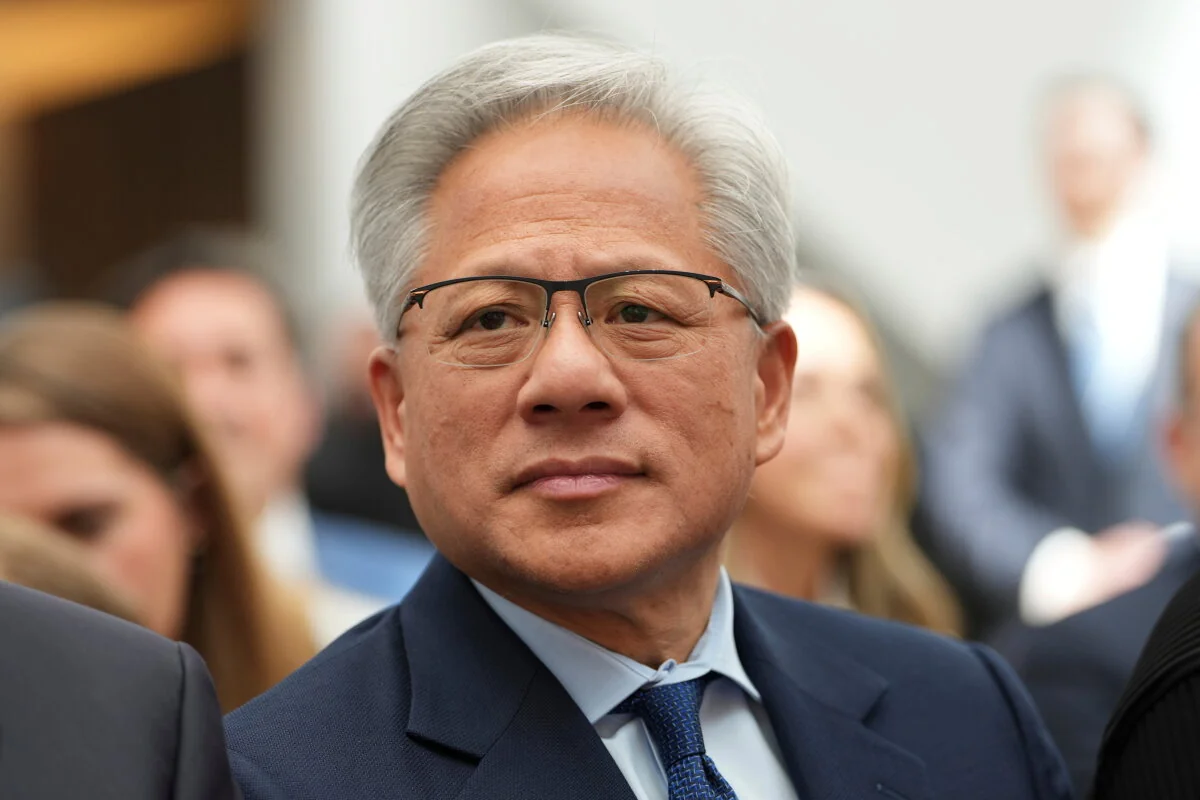
Jensen Huang bricht sein Schweigen: Lesen Sie hier seine vollständige Erklärung
Jensen Huang Breaks His Silence: Read His Full Statement Here
Jensen Huang bricht sein Schweigen: Lesen Sie hier seine vollständige Erklärung
Jensen Huang Breaks His Silence: Read His Full Statement Here

Ist es akzeptabel, wenn KI deinem Freund schreibt? Wenn persönliches Messaging per Chatbot eine Grenze überschreitet
Is It Acceptable for AI to Text Your Boyfriend? When Chatbot Personal Messaging Crosses a Line
Ist es akzeptabel, wenn KI deinem Freund schreibt? Wenn persönliches Messaging per Chatbot eine Grenze überschreitet
Is It Acceptable for AI to Text Your Boyfriend? When Chatbot Personal Messaging Crosses a Line

In ihren Schlussplädoyers stellten die Staatsanwälte Huawei als Bösewicht dar; der Anwalt des Unternehmens widersprach.
In Closing Arguments, Prosecutors Cast Huawei as Villain; Its Lawyer Disagrees
In ihren Schlussplädoyers stellten die Staatsanwälte Huawei als Bösewicht dar; der Anwalt des Unternehmens widersprach.
In Closing Arguments, Prosecutors Cast Huawei as Villain; Its Lawyer Disagrees

Brillen und Hemdknöpfe sollen kontrolliert werden, um Betrug bei Südkoreas Hochschulaufnahmeprüfungen einzudämmen
Glasses and Shirt Buttons to Be Inspected to Curb Cheating in South Korea’s College Entrance Exams
Brillen und Hemdknöpfe sollen kontrolliert werden, um Betrug bei Südkoreas Hochschulaufnahmeprüfungen einzudämmen
Glasses and Shirt Buttons to Be Inspected to Curb Cheating in South Korea’s College Entrance Exams
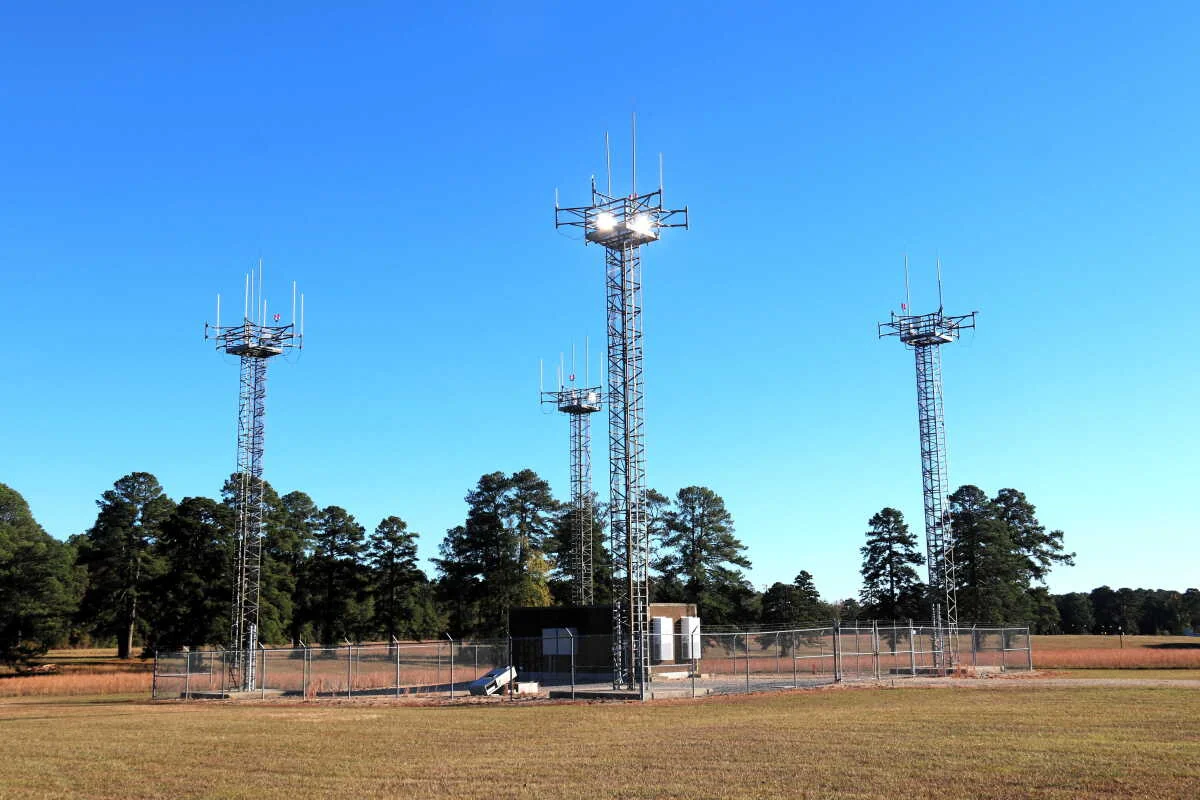
FAA stoppt Router-Installationen im Zusammenhang mit Störungen des Luftverkehrs
FAA Halts Router Installations Linked to Air Travel Disruption
FAA stoppt Router-Installationen im Zusammenhang mit Störungen des Luftverkehrs
FAA Halts Router Installations Linked to Air Travel Disruption