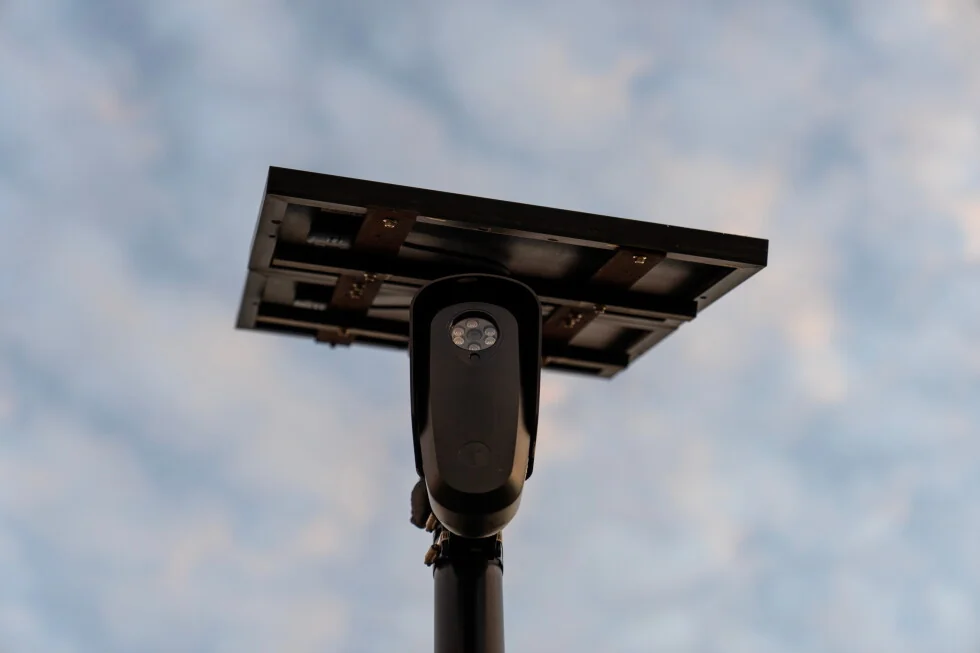
Flock監視攝影機成為期中選舉議題,選民質疑科技公司的影響力。
September 5th, 2026
Flock監視攝影機成為期中選舉議題,選民質疑科技公司的影響力。
🇹🇼 中文
Gubernatorial candidates in Wisconsin are pushing to restrict them, while their counterparts in Pennsylvania voice support for a ban.
A Michigan congressional hopeful has branded them "un-American," and a Florida Senate contender is selling merchandise against them.
Across the country, from federal to local ballots, candidates of both parties are increasingly attacking Flock cameras—an AI-powered network of automated cameras that record license plates and other vehicle characteristics, allowing law enforcement to search and share the data.
While police argue these cameras are invaluable for fighting crime, critics contend that their widespread use amounts to unconstitutional warrantless mass surveillance.
The cameras sold by Atlanta-based Flock Safety, which the company says are operating in 6,000 communities across every state except Alaska, have become a new campaign issue.
Candidates and strategists view this as part of a backlash against powerful technology companies, tied to broader discussions about the future of artificial intelligence and the resulting surge in data center construction.
“We have witnessed candidates campaigning on outright prohibitions, defunding initiatives, or judicial warrant requirements.
This reflects the efforts of activists nationwide who have voiced concerns regarding their deployment,” stated Michael Soyfer, an attorney with the Institute for Justice, a public interest law firm engaged in litigation over the technology.
When asked about the cameras as a campaign topic, a Flock spokesperson highlighted the company's claims about its technology's effectiveness, stating that it had helped "solve approximately one million crimes and helped reunite roughly 10,000 missing people with their families."
"We ask anyone weighing in on this issue to engage with the facts and the record: the crimes solved, the families reunited, the safeguards already in place, and what our technology actually does," said MoMo Zhou, the company's vice president of communications.
"We ask them to work with the communities using this technology to decide what rules should govern it and not to spread misinformation or ban a critical public safety tool outright that is helping to make communities safer."
License plate reader technology has been around for decades, and Flock was founded in 2017.
However, the company has faced increasing criticism this year, which has escalated sharply in recent weeks.
This backlash comes as public awareness grows about the vast reach of Flock's network, legal challenges raise constitutional questions about the cameras' use, and media reports highlight cases of officers misusing the technology to track personal connections.
James Talarico, the Democratic contender for the U.S. Senate seat in Texas, recently asserted, “Flock cameras have no place in Texas.”
His Republican rival Ken Paxton’s campaign did not respond to a request for comment.
This site is safeguarded by reCAPTCHA, and the Google Privacy Policy and Terms of Service are hereby deemed applicable.
Josh Shapiro, the Democratic governor of Pennsylvania who is running for re-election and is seen as a possible White House contender for 2028, said this week that he would back a statewide ban.
His Republican opponent, Pennsylvania Treasurer Stacy Garrity, stated, “Flock cameras are an intrusive invasion of privacy and they should be banned.”
In Wisconsin, the issue has come to dominate the gubernatorial contest this week.
Democratic nominee David Crowley, who is facing criticism for his earlier support of making Wisconsin a global AI and data hub, emphasized that he had signed an order limiting the use of Flock cameras in Milwaukee County, where he is county executive.
He stated that, as governor, he would "implement strict transparency and accountability laws that ensure Wisconsinites are not spied on."
His Republican challenger, U.S. Rep. Tom Tiffany, declared in a statement that he would suspend state funding for Flock cameras and establish a task force aimed at instituting more robust privacy protections, penalties for misuse, limits on data retention and sharing, and “safeguards against Communist China and foreign adversaries.”
The Wisconsin Democratic Party responded by sharing an April clip in which Tiffany, when questioned about Flock cameras, confessed he was unfamiliar with them.
The state Republican Party then retaliated, branding "Big Brother Crowley" as having an extensive history of endorsing police surveillance technologies.
The issue has also spread to Rhode Island's gubernatorial race, where Democratic Governor Dan McKee halted the installation of new cameras just weeks before the state's September 9 primary, citing privacy and transparency concerns.
His primary opponent, former CVS executive Helena Foulkes, has questioned McKee's reasons for stopping the rollout so close to the election but agreed that a review of how the data is being used was necessary.
In Michigan, William Lawrence, a self-described democratic socialist running as the Democratic nominee for the U.S. House, recently told reporters that the cameras were “the most un-American thing I can imagine.”
A spokesman for his opponent, incumbent Rep. Tom Barrett, highlighted that Barrett is a co-sponsor of legislation designed to prohibit federal agencies from using Flock cameras or other surveillance technology and to stop state and local governments from buying them with federal funds.
In Florida, where the administration of outgoing Republican Governor Ron DeSantis this week ordered the removal of automated license plate readers from state highway rights-of-way, Democratic Senate nominee Angie Nixon's campaign is selling a T-shirt that reads, "FLORIDA NEEDS TO GET THE FLOCK OUT."
While calls for outright bans or restrictions have intensified, other candidates have expressed more supportive or nuanced views, and policing groups have reiterated their strong support for the company and its technology.
Mitchell Davis III, police chief of Hazel Crest, Illinois, and president of the National Organization of Black Law Enforcement Executives, said in an interview that technology like Flock's is 'invaluable' and that the discussions around it have become 'disturbing.'
What troubles me most right now is seeing communities telling their police departments that they will no longer use automated license plate readers, which I believe is a serious error—the classic case of throwing the baby out with the bathwater, he said.
Instead of focusing on getting rid of the cameras, we should ensure there are clear guidelines and proper accountability for any misuse.
During a recent Oval Office event, President Donald Trump stated that his administration was examining the matter and would provide further details in due course.
Cayce Myers, an attorney who teaches courses on public relations, political communications, and privacy at Virginia Tech University, noted that Americans are increasingly living in a world where they encounter new technologies like Flock cameras, whether they like it or not.
He observed a clear link between the camera systems in question and the wider public anxiety about AI and technology, adding that it seems evident that new surveillance technologies will increasingly become a major political issue.
For Josh Chavez, Flock cameras are a major worry when it comes to how new technologies and civil liberties intersect in his part of West Texas, where data center projects are growing quickly.
Chavez, who works as an HVAC installer, is so outspoken about data centers that he was asked to join a recent roundtable on the topic with Democratic gubernatorial candidate Gina Hinojosa, who also criticizes Flock.
"This is the government seeking to consolidate its authority, isn't it?" Chávez remarked of the cameras.
"In collusion with Big Tech, which is pursuing greater profits, all at our expense."
September 5th, 2026
Trending Articles

國王查爾斯會見人工智慧領袖,安全疑慮日益升高
King Charles Meets AI Leaders as Safety Concerns Mount
國王查爾斯會見人工智慧領袖,安全疑慮日益升高
King Charles Meets AI Leaders as Safety Concerns Mount

聯合國秘書長在準備卸任之際,於世界飽受諸多問題困擾之時,暢談前進之道
UN chief, with world beset by problems, talks of way forward as he prepares to leave office
聯合國秘書長在準備卸任之際,於世界飽受諸多問題困擾之時,暢談前進之道
UN chief, with world beset by problems, talks of way forward as he prepares to leave office
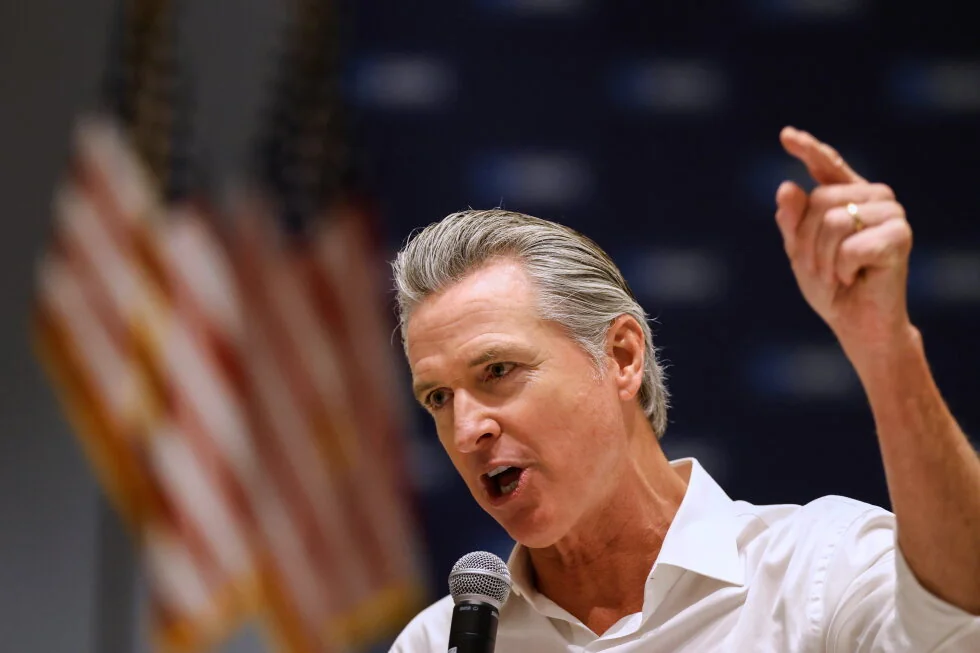
民主黨有望出線者急忙應對AI威脅,川普則展開清洗
Democratic hopefuls scramble to counter AI threat as Trump purges
民主黨有望出線者急忙應對AI威脅,川普則展開清洗
Democratic hopefuls scramble to counter AI threat as Trump purges
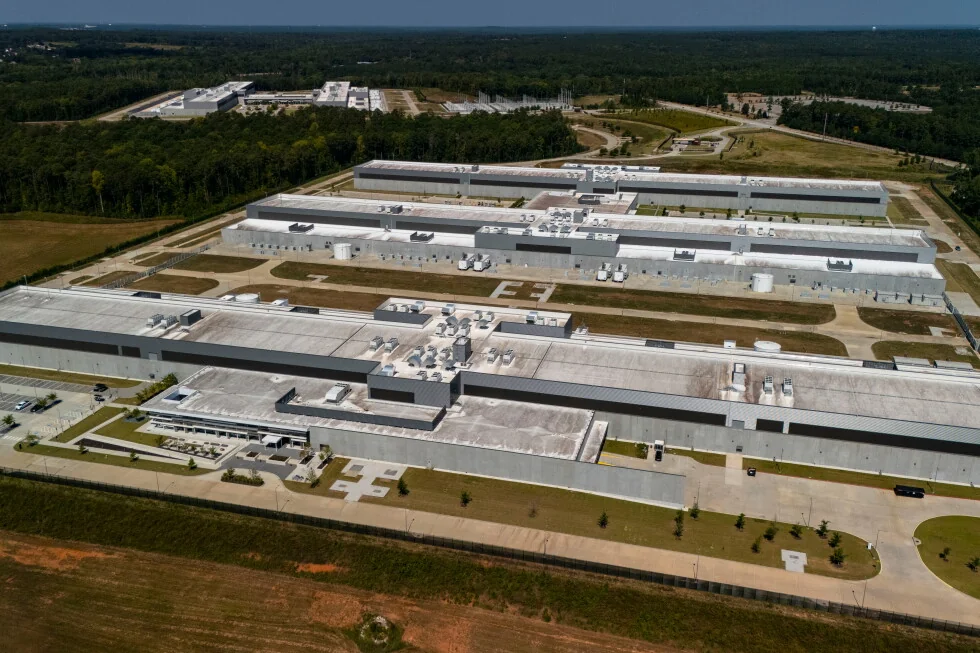
眾議院通過法案,針對資料中心對能源成本的影響
House passes bill targeting data centers' impact on energy costs
眾議院通過法案,針對資料中心對能源成本的影響
House passes bill targeting data centers' impact on energy costs

OpenAI 警示令人憂心的全新 AI 行為,並誓言加強監控
OpenAI flags alarming new AI behavior, vows closer monitoring
OpenAI 警示令人憂心的全新 AI 行為,並誓言加強監控
OpenAI flags alarming new AI behavior, vows closer monitoring

華為揭曉新晶片技術,這家中國企業加劇與輝達的AI競賽
Huawei unveils new chip technologies as Chinese firm intensifies AI race with Nvidia
華為揭曉新晶片技術,這家中國企業加劇與輝達的AI競賽
Huawei unveils new chip technologies as Chinese firm intensifies AI race with Nvidia

科技業對協調減緩AI發展的呼聲出現分歧
Tech Industry Split Over Calls for Coordinated AI Slowdown
科技業對協調減緩AI發展的呼聲出現分歧
Tech Industry Split Over Calls for Coordinated AI Slowdown

全球人工智慧安全取決於美中合作,然而雙方卻視彼此為問題所在
Global AI Safety Hinges on US-China Cooperation, Yet Each Sees the Other as the Problem
全球人工智慧安全取決於美中合作,然而雙方卻視彼此為問題所在
Global AI Safety Hinges on US-China Cooperation, Yet Each Sees the Other as the Problem

川普淡化AI監管的迫切性,拒絕將優勢拱手讓給中國
Trump minimizes the urgency of AI oversight, refusing to relinquish an advantage to China
川普淡化AI監管的迫切性,拒絕將優勢拱手讓給中國
Trump minimizes the urgency of AI oversight, refusing to relinquish an advantage to China

歐普拉·溫芙蕾邀請你在Sphere尋找你的「AHA」時刻
Oprah Winfrey invites you to find your ‘AHA’ moment at the Sphere
歐普拉·溫芙蕾邀請你在Sphere尋找你的「AHA」時刻
Oprah Winfrey invites you to find your ‘AHA’ moment at the Sphere