
Jardins de pluie : une aubaine pour les averses d’aujourd’hui — et une beauté à contempler
October 6th, 2026
Jardins de pluie : une aubaine pour les averses d’aujourd’hui — et une beauté à contempler
🇫🇷 Français
When a nor’easter recently battered the Eastern Seaboard, it transmuted my driveway into a veritable torrent of whitewater rapids and all but annihilated my perennials, their forms irremediably disfigured by the ferocity of the winds and the deluge.
Alas, this is hardly an unprecedented occurrence.
Nor will it be the last: scientists prognosticate an escalation in extreme weather phenomena, storms and floods among them, driven in part by anthropogenic climate change.
Having first swept and subsequently hosed the debris from the blacktop, I employed twine to wrest my mums and catmints back into some semblance of order—at least until the cold weather finishes them off.
Yet my own experiences, compounded by scientists' prognostications, have impelled me to plan a rain garden.
To put it plainly, a rain garden is a shallow, depressed bed sown with native perennials and shrubs chosen expressly for their pronounced tolerance of waterlogged conditions.
It is strategically positioned at a site toward which water — emanating from downspouts, driveways, compacted soil and sundry other sources of runoff — descends.
That runoff irrigates the plants and, as the soil imbibes it, filters out pollutants.
Consequently, the surplus water — together with the road sediment, debris, pet-waste pathogens, fertilizers and chemicals it accrues en route — is precluded from entering storm drains, watersheds and wetlands.
Rain gardens can likewise serve to preclude water from infiltrating one's basement or compromising one's foundation.
Even within arid, drought-afflicted climes, a growing contingent of horticulturists is gravitating toward rain gardens and sundry other means of harvesting precipitation.
You may construct a rain garden of whatever dimensions you please, provided it is situated no fewer than 10 feet (3 meters) from your house, garage, or any other structures.
It must not be planted atop a septic tank or underground utilities, nor in proximity to a well that supplies drinking water.
Furthermore, refrain from siting it on sloped terrain or in areas already prone to waterlogging.
Excavate the bed to whatever dimensions and configuration you prefer—kidney, crescent, round, and teardrop being among the most favoured.
You may either progressively slope the soil toward the centre until it lies 6 inches (15 centimetres) below the perimeter, or else excavate the entire area save the perimeter to a depth of 6 inches (15 centimetres), thereby leaving a berm of that height encircling the sunken bed.
Direct water toward the bed by installing a gutter extension, establishing a downhill gradient, excavating a trench, or connecting a PVC pipe to a distant gutter and routing it underground to the rain garden.
Impede the flow of water by lining your trench or slope with rocks or small stones.
Certain horticulturists incline towards maintaining the central area devoid of vegetation and overlaying the soil therein with stones as well.
Select indigenous flora optimally adapted to hydric or, should one opt to plant the central area, even palustrine conditions.
Being inherently acclimated to your region's environs, such native species will prove more amenable to cultivation, demand less upkeep, and concomitantly furnish a habitat for bees, birds, butterflies and other fauna.
Should circumstances permit, contemplate the integration of flowering perennials alongside sedges and grasses, and the incorporation of shrubs and small trees; the inclusion of certain evergreens will, moreover, serve to further mitigate erosion.
The Ladybird Johnson Wildflower Center's Plant Finder constitutes a commendable resource, affording users the capacity to refine searches according to horticultural zone, sun exposure and sundry other parameters.
Situate the most water-demanding flora at and encircling the nucleus of your rain garden, wherein water will amass and pool transiently prior to percolating into the soil.
Establish those exhibiting moderate hydrological requirements along the raised periphery of the bed, which will remain comparatively more arid.
Should precipitation be lacking, irrigate the plants as requisite throughout their inaugural year, as their roots develop and take hold within the soil.
Remain vigilant against weeds as well, until such time as the plants mature and colonise the barren expanses betwixt them.
Once your rain garden has been designed, graded, and planted, there will be precious little left for you to do but recline and revel in your striking natural landscape — and in its concealed ecological function.
Jessica Damiano pens weekly gardening columns for Reporters.
She disseminates the Weekly Dirt Newsletter.
Subscribe here for weekly gardening counsel and recommendations.
October 6th, 2026
Trending Articles
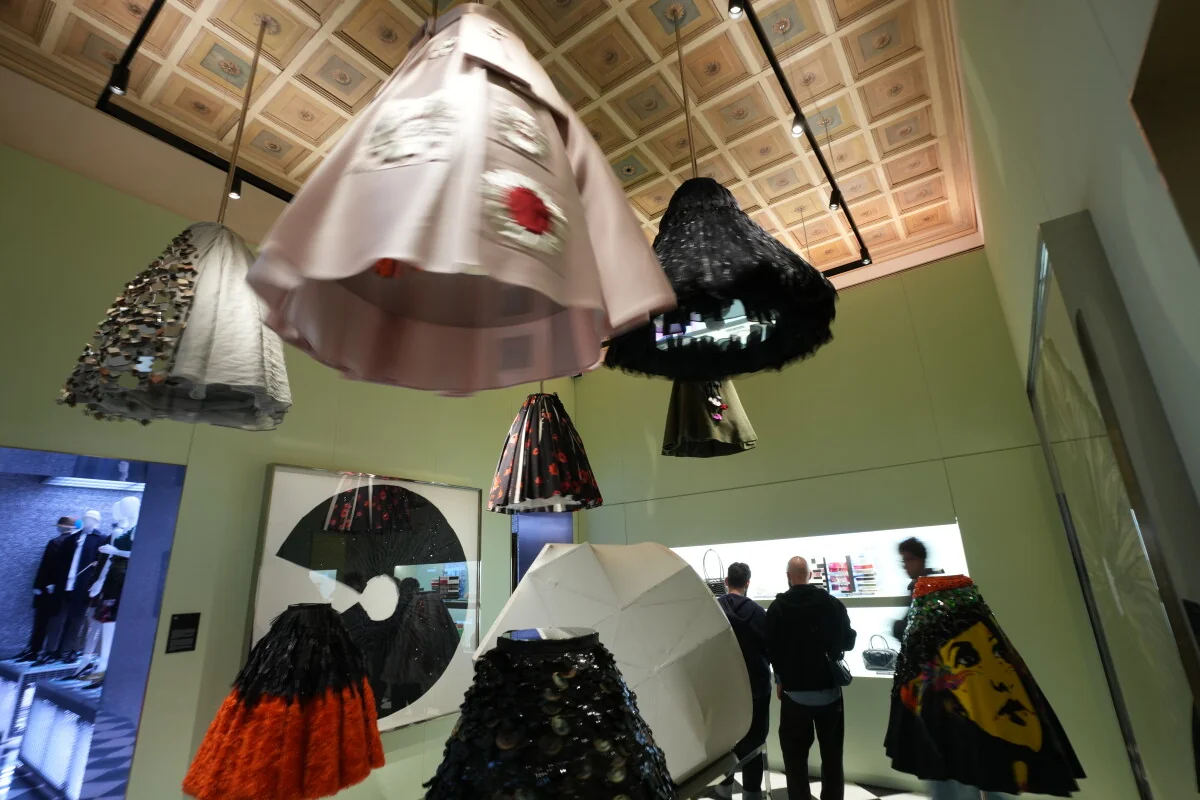
La nouvelle exposition milanaise de Prada transforme un siècle de mode en découvertes inédites
Prada’s new Milan exhibition transforms a century of fashion into fresh discoveries
La nouvelle exposition milanaise de Prada transforme un siècle de mode en découvertes inédites
Prada’s new Milan exhibition transforms a century of fashion into fresh discoveries

Calcul de la panne aéroportuaire : quand un Uber de quatre heures surpasse l'attente d'un arrêt au sol
Airport Outage Calculus: When a Four-Hour Uber Outpaces a Ground-Stop Wait
Calcul de la panne aéroportuaire : quand un Uber de quatre heures surpasse l'attente d'un arrêt au sol
Airport Outage Calculus: When a Four-Hour Uber Outpaces a Ground-Stop Wait

Miami assume son double de Vice City et capitalise sur l'engouement suscité par la sortie de « GTA VI »
Miami Embraces Its Vice City Alter Ego, Capitalizing on ‘GTA VI’ Release Buzz
Miami assume son double de Vice City et capitalise sur l'engouement suscité par la sortie de « GTA VI »
Miami Embraces Its Vice City Alter Ego, Capitalizing on ‘GTA VI’ Release Buzz

L'exposition du Met Gala examinera les vêtements du quotidien, supplantant le défilé Galliano annulé
Met Gala Exhibit to Scrutinize Everyday Garments, Superseding Scuttled Galliano Show
L'exposition du Met Gala examinera les vêtements du quotidien, supplantant le défilé Galliano annulé
Met Gala Exhibit to Scrutinize Everyday Garments, Superseding Scuttled Galliano Show

Les cercles de parole célèbres de Gloria Steinem perdurent — mais celui-ci comportait une variante : exclusivement des hommes
Gloria Steinem’s celebrated talking circles endure—yet this one bore a twist: men exclusively
Les cercles de parole célèbres de Gloria Steinem perdurent — mais celui-ci comportait une variante : exclusivement des hommes
Gloria Steinem’s celebrated talking circles endure—yet this one bore a twist: men exclusively

L’exposition florale annuelle des fêtes du Bellagio ouvre ses portes avec des dizaines de milliers de fleurs
Bellagio’s Annual Holiday Flower Show Opens with Tens of Thousands of Blooms
L’exposition florale annuelle des fêtes du Bellagio ouvre ses portes avec des dizaines de milliers de fleurs
Bellagio’s Annual Holiday Flower Show Opens with Tens of Thousands of Blooms

Un pot-pourri musical : 12 cadeaux de fêtes pour le mélomane de votre entourage
A Musical Medley: 12 Holiday Gifts for the Music Lover in Your Life
Un pot-pourri musical : 12 cadeaux de fêtes pour le mélomane de votre entourage
A Musical Medley: 12 Holiday Gifts for the Music Lover in Your Life

Il est indéniable que le squelette géant est devenu un incontournable d'Halloween aux États-Unis
Undeniably, the giant skeleton has become an American Halloween fixture
Il est indéniable que le squelette géant est devenu un incontournable d'Halloween aux États-Unis
Undeniably, the giant skeleton has become an American Halloween fixture

Le berceau du créateur de « La Famille Addams » s'impose comme une destination macabre pour Halloween
Birthplace of ‘Addams Family’ Creator Emerges as Macabre Halloween Destination
Le berceau du créateur de « La Famille Addams » s'impose comme une destination macabre pour Halloween
Birthplace of ‘Addams Family’ Creator Emerges as Macabre Halloween Destination

La bière brune enrichit un classique ukrainien du porc quand le kvas se révèle introuvable
Dark Beer Enriches Ukrainian Pork Classic When Kvass Proves Elusive
La bière brune enrichit un classique ukrainien du porc quand le kvas se révèle introuvable
Dark Beer Enriches Ukrainian Pork Classic When Kvass Proves Elusive