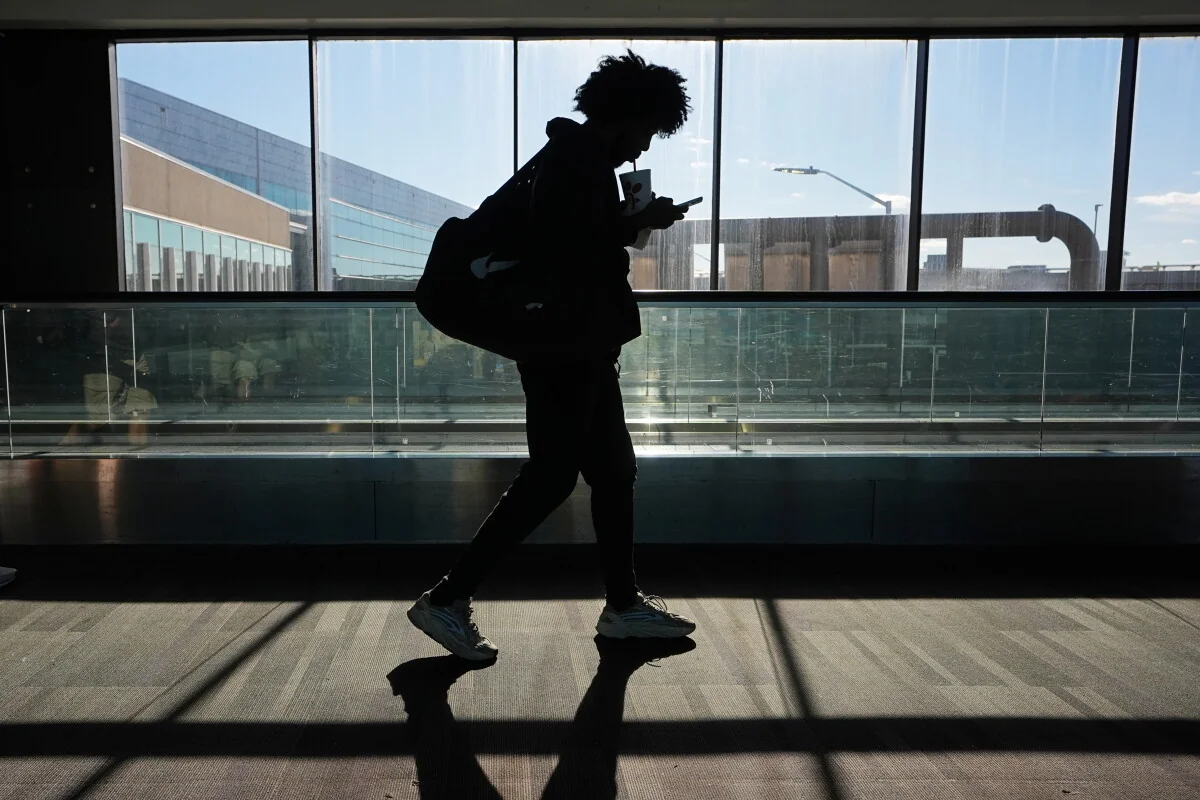
Calcul de la panne aéroportuaire : quand un Uber de quatre heures surpasse l'attente d'un arrêt au sol
November 18th, 2026
Calcul de la panne aéroportuaire : quand un Uber de quatre heures surpasse l'attente d'un arrêt au sol
🇫🇷 Français
Replacement airline tickets: $300.
Hours whiled away awaiting luggage: four.
And the pièce de résistance: a four-hour Uber odyssey from Detroit to Chicago that set one back $400.
Term it outage arithmetic—a hellish calculation spawned by ever more commonplace flight delays.
This particular one formed part of Angelina and Kyle Phoenix's anniversary trip to Chicago.
On Friday, they flew from Jacksonville, Florida, into the maw of the Great Ground Stoppage of 2026 alongside as many as a million other travelers.
Instantly, the financial and emotional toll of the four-hour flight outage radiated outward from the airports as all involved scrambled for costly workarounds to a crisis that no one had anticipated, that no one can fully explain, and for which no one wishes to foot the bill.
Emergency child care.
Exorbitant taxi fares.
Rebooked tickets, forfeited vacation rentals and but the vaguest intimation as to which expenses might be reimbursed.
Beyond financial considerations, however, travelers said on Monday, perhaps the most consequential cost is also the most intimate: the stress and grief occasioned by time lost — a cumulative toll that is, as customer service might put it, generally not eligible for reimbursement.
Kyle Phoenix caught wind of it more than 12 hours and hundreds of dollars of unforeseen expenditure into the couple's journey, as he watched chaos unfurl in the baggage claim area of Detroit airport.
Officials, he observed, had ceased announcing which canceled flights would disgorge checked baggage onto which carousels.
Answers proved elusive, rendering decisions about the next course of action increasingly arduous.
“A great deal of confusion, a great deal of scrambling on the part of a great many people,” Kyle recalls of the scene.
“I think that was probably the roughest part—not knowing anything.”
By the time the couple finally retrieved their luggage at midnight, the $400 Uber ride had come to seem the most sensible option of all.
Having forfeited their rebooked flight — along with a hotel room in which they would have stayed for a few hours — they embarked upon the four-hour ride to Chicago.
"We merely absorbed the loss," Angelina Phoenix said.
A pervasive sense of dread attends such occurrences, inasmuch as they are becoming increasingly commonplace, with no end in sight.
Scarcely had travelers finished recounting Friday’s ground stop to reporters when United Airlines, stricken by a malfunction, suspended its flights for 90 minutes.
Several of the foremost U.S. banks reported pronounced slowdowns.
Then, on Tuesday, an internal network through which the National Security Agency communicates classified information lay offline following what was characterized as “routine maintenance.”
All of this came on the heels of AI-induced turmoil and Microsoft’s global meltdown merely days earlier.
Ahead loomed the frenetic Thanksgiving travel week, a stretch during which TSA agents customarily screen in excess of 2 million passengers nationwide.
It sufficed to impel any thinking person to ask: Could everything be broken?
And it compelled humanity to reckon once again with the fragility of the systems that anchor modern life.
Delays are accelerating at a rate outpacing the growth of scheduled passenger flights in the wake of the COVID-19 pandemic, the International Air Transport Association reported in July.
Between 2015 and 2025, delays affecting scheduled passenger flights incurred approximately $10.9 billion in costs for airlines and travelers, with steep increases in holdups commencing in 2021.
The issues are costing travelers time, the monetary value of which even the Federal Aviation Administration concedes.
Federal guidance promulgated a decade ago pegged airline passengers’ time at $47.10 an hour, expressed in 2015 dollars—roughly $66 an hour in today’s terms.
The figure accounted for travel time that would otherwise have been available for work or leisure.
More recently, an economist at the Federal Reserve Bank of Richmond estimated that last year’s 43-day federal government shutdown caused roughly 1 million additional hours of passenger delays at six airports.
Economist Russell Wong calculated the lost time’s value at $66 million, based on metro area wage data and the higher-than-average incomes of people who take flights.
Wong excluded canceled flights.
More difficult to quantify is the toll borne by the populations downstream of the airports — hourly workers, freelancers and caregivers among them; in short, all those touched by the ripples.
A further cost is the erosion of trust in government, which has for years remained persistently low.
The nationwide shutdown—the longest the nation has witnessed in a quarter-century—could exact a toll of billions of dollars, Transportation Secretary Sean Duffy said over the weekend.
He laid the blame at the feet of a contractor and aging infrastructure.
President Donald Trump, visibly testy, pointed the finger at Democrats, who in turn demanded answers as to how the administration has disbursed the billions it has already been allotted and why its funding request has ballooned to $50 billion.
Dismissing the incident as a mere glitch attributable to a faulty router raised questions — if not outright suspicions — according to one communications expert.
“It wasn’t simply a crisis, it was an actual emergency of impending disaster-level scale,” Shannon A. Bowen, a journalism and mass communications professor at the University of South Carolina, told “The Conversation.”
Within airports, travellers proved scarcely disposed to countenance the official explanation.
“I’m profoundly skeptical about what we’re being told as to why this event happened at all,” said Sonia Saini Simpson, 56, whose flight from Orlando, Florida, landed in Philadelphia after hours of uncertainty, during which she said she considered renting a car to drive the nearly 1,000 miles (1,587 kilometers).
“I look forward to getting some answers that are believable.”
In the days subsequent to the stoppage, questions were raised among certain travelers concerning delays that would appear to be routine maintenance issues.
Glenn Anthony Cooper, a disc jockey, recounted being informed that his Monday flight from Philadelphia to Toronto had been delayed by nine hours owing to “a hole in the tire.”
“It’s like, what’s really going on, you know?
Is there something behind it, or what are they doing?” he said in an interview at the Philadelphia airport.
“It’s just a bummer to just have these types of situations happen and you can’t really control it.”
Even the most perfunctory of scrolls through social media lays bare the nightmare of Friday's historic stoppage in all its dramatic detail, much of it posted live: the 10-hour drives, the epic Uber rides, the lost wages, the stunned faces.
Advice abounds as well: some counselled purchasing travel insurance; refrain from checking luggage wherever feasible; treat airline and security personnel with courtesy; and, if at all possible, hasten to the acceptance stage of grief — for there is a limit to what lies within your control.
For William Ware, a 24-year-old father, the acme of stress may well have been the instant he grasped that the shutdown had generated such overwhelming traffic outside LAX that it was preventing his Uber from dropping him off in time to catch his flight home to Chicago to care for his child.
Ware was rebooked for the following day and could secure a hotel only in Long Beach, upward of 20 miles distant — “scary, but that was the only hotel that was available.”
That entailed a further two round-trip Uber journeys back to the airport.
Ware speculates that he might yet recoup the ticket's cost; there remained, however, a further expenditure to be reckoned with: his time.
“I actually had to get home to my child and was unable to do so, so it was dreadful for me,” he said on Monday, back in Chicago at long last.
“I have a superb support network, so my family was able to look after my child.”
November 18th, 2026
Trending Articles
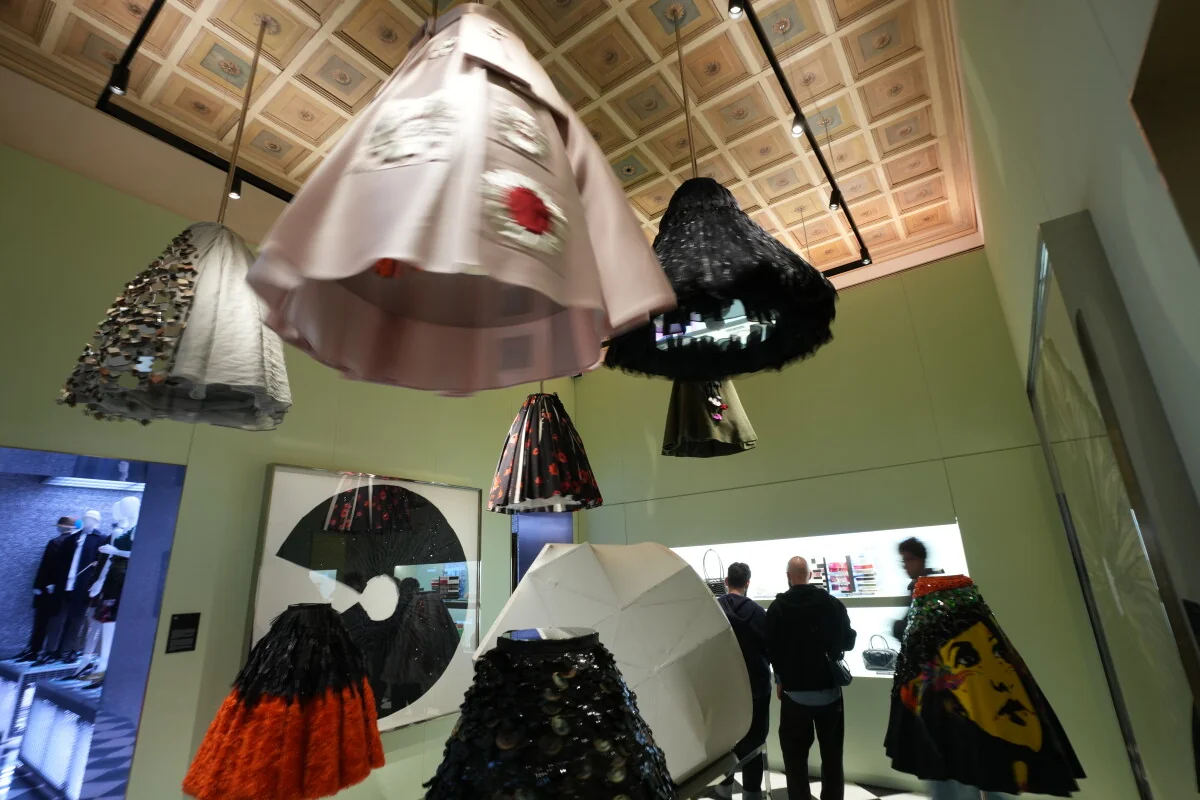
La nouvelle exposition milanaise de Prada transforme un siècle de mode en découvertes inédites
Prada’s new Milan exhibition transforms a century of fashion into fresh discoveries
La nouvelle exposition milanaise de Prada transforme un siècle de mode en découvertes inédites
Prada’s new Milan exhibition transforms a century of fashion into fresh discoveries
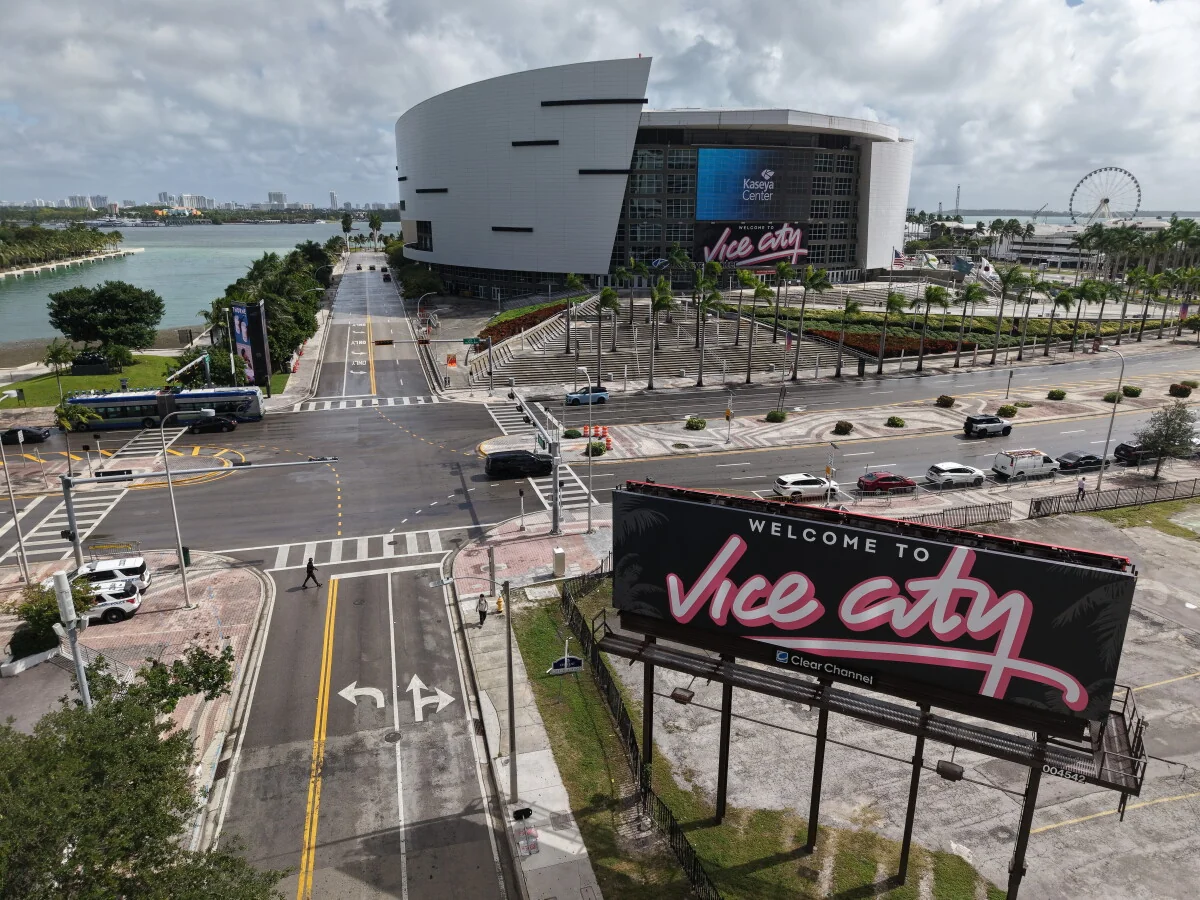
Miami assume son double de Vice City et capitalise sur l'engouement suscité par la sortie de « GTA VI »
Miami Embraces Its Vice City Alter Ego, Capitalizing on ‘GTA VI’ Release Buzz
Miami assume son double de Vice City et capitalise sur l'engouement suscité par la sortie de « GTA VI »
Miami Embraces Its Vice City Alter Ego, Capitalizing on ‘GTA VI’ Release Buzz

L'exposition du Met Gala examinera les vêtements du quotidien, supplantant le défilé Galliano annulé
Met Gala Exhibit to Scrutinize Everyday Garments, Superseding Scuttled Galliano Show
L'exposition du Met Gala examinera les vêtements du quotidien, supplantant le défilé Galliano annulé
Met Gala Exhibit to Scrutinize Everyday Garments, Superseding Scuttled Galliano Show
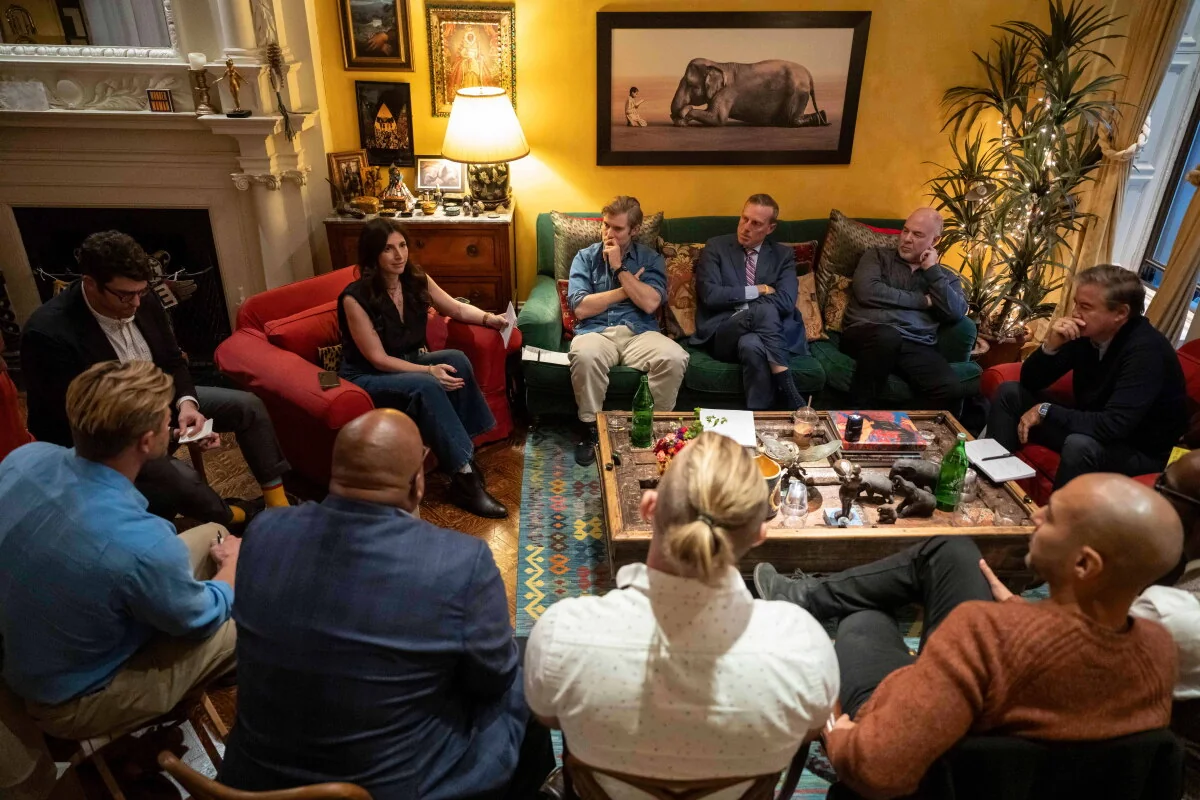
Les cercles de parole célèbres de Gloria Steinem perdurent — mais celui-ci comportait une variante : exclusivement des hommes
Gloria Steinem’s celebrated talking circles endure—yet this one bore a twist: men exclusively
Les cercles de parole célèbres de Gloria Steinem perdurent — mais celui-ci comportait une variante : exclusivement des hommes
Gloria Steinem’s celebrated talking circles endure—yet this one bore a twist: men exclusively
L’exposition florale annuelle des fêtes du Bellagio ouvre ses portes avec des dizaines de milliers de fleurs
Bellagio’s Annual Holiday Flower Show Opens with Tens of Thousands of Blooms
L’exposition florale annuelle des fêtes du Bellagio ouvre ses portes avec des dizaines de milliers de fleurs
Bellagio’s Annual Holiday Flower Show Opens with Tens of Thousands of Blooms

Un pot-pourri musical : 12 cadeaux de fêtes pour le mélomane de votre entourage
A Musical Medley: 12 Holiday Gifts for the Music Lover in Your Life
Un pot-pourri musical : 12 cadeaux de fêtes pour le mélomane de votre entourage
A Musical Medley: 12 Holiday Gifts for the Music Lover in Your Life
Il est indéniable que le squelette géant est devenu un incontournable d'Halloween aux États-Unis
Undeniably, the giant skeleton has become an American Halloween fixture
Il est indéniable que le squelette géant est devenu un incontournable d'Halloween aux États-Unis
Undeniably, the giant skeleton has become an American Halloween fixture

Le berceau du créateur de « La Famille Addams » s'impose comme une destination macabre pour Halloween
Birthplace of ‘Addams Family’ Creator Emerges as Macabre Halloween Destination
Le berceau du créateur de « La Famille Addams » s'impose comme une destination macabre pour Halloween
Birthplace of ‘Addams Family’ Creator Emerges as Macabre Halloween Destination

La bière brune enrichit un classique ukrainien du porc quand le kvas se révèle introuvable
Dark Beer Enriches Ukrainian Pork Classic When Kvass Proves Elusive
La bière brune enrichit un classique ukrainien du porc quand le kvas se révèle introuvable
Dark Beer Enriches Ukrainian Pork Classic When Kvass Proves Elusive