卡尼:若川普貿易談判破局,加拿大或將轉向中國汽車製造商
November 17th, 2026
卡尼:若川普貿易談判破局,加拿大或將轉向中國汽車製造商
🇹🇼 中文
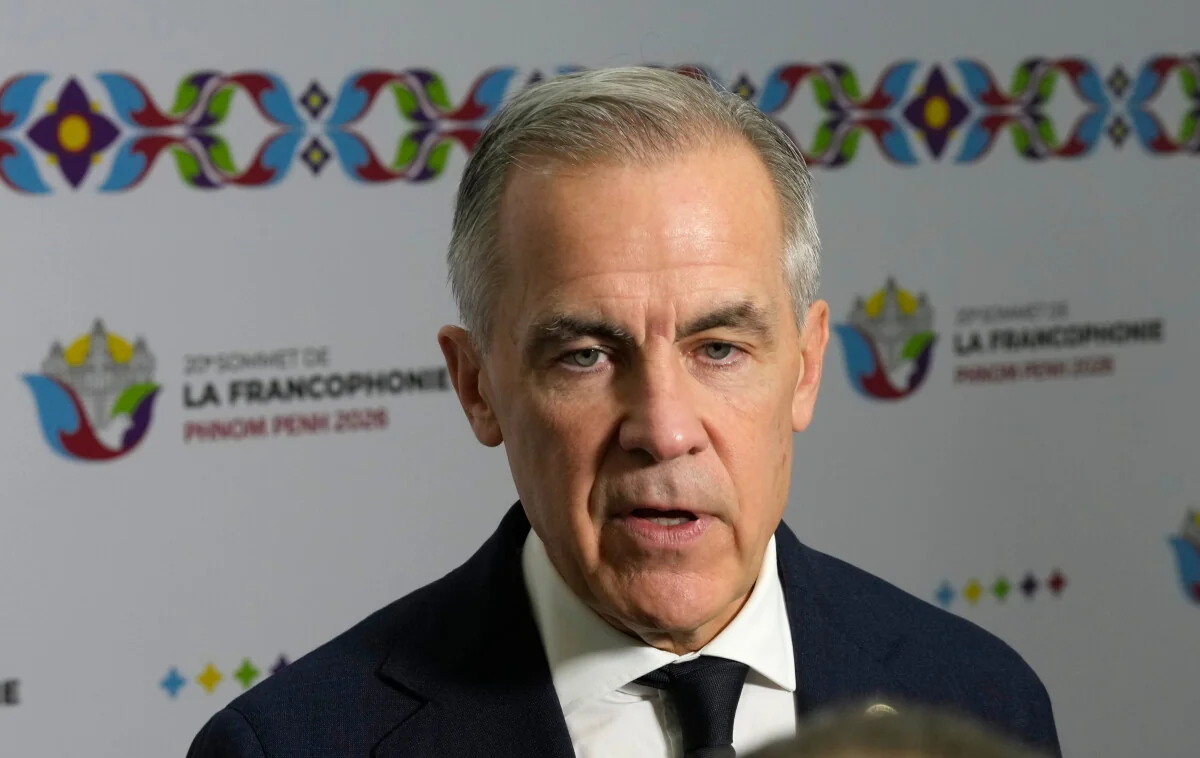
Canadian Prime Minister Mark Carney said Monday that Canada could turn to Chinese automakers should trade negotiations with U.S. President Donald Trump fail to preserve an integrated North American auto industry.
Carney’s remarks in Cambodia preceded a scheduled meeting with Chinese President Xi Jinping this week in Shenzhen, China, where Chinese automobile manufacturing is expected to be on the agenda.
In January, the two leaders reached an agreement permitting tens of thousands of Chinese electric vehicles into Canada at reduced tariffs.
“We possess the finest auto workers in the world, and we want them fully deployed, afforded every opportunity, within an integrated North American market,” Carney told reporters in Cambodia.
“That market has grown less integrated owing to U.S. trade actions.”
Carney remarked on Saturday in Manila, Philippines, that any trade agreement concluded with Washington must leave Canada with a viable auto industry.
He stated on Monday that negotiations with the United States remain his foremost priority, though their outcome could determine whether Canada elects to pursue alternatives involving European, Chinese or Japanese automakers.
Asked whether potential Chinese investment constituted leverage in the U.S. negotiations, Carney replied: “It’s not leverage.
But action, reaction” on behalf of Canada’s auto workers and manufacturing assets.
“Should they remain insufficiently leveraged within a North American framework, that furnishes alternative opportunities,” Carney said.
“Canada will proceed regardless.”
White House trade adviser Peter Navarro inveighed on social media on Monday in response to Carney’s suggestion that Canada could turn to Chinese automakers.
“Are you genuinely threatening to play China off against the U.S.? This is offensive in the extreme,” Navarro wrote on X.
“You should be far more worried that China is going to eat Canada alive.”
The Detroit Three — Ford, General Motors and Stellantis — operate factories throughout Canada, the United States and Mexico, with components at times traversing borders on multiple occasions before a vehicle is completed.
Trump has repeatedly exhorted automakers to relocate production to the United States from Canada.
Carney said any Chinese investment would have to entail substantial manufacturing in Canada rather than merely assembling imported parts.
He said it would necessitate proper labor standards, manufacturing facilities and domestic supply chains that expand over time, including the use of Canadian critical minerals in electric vehicles.
“It is not merely a question of kit cars,” he said.
“There has to be a manufacturing dimension involved.”
Pursuant to the January agreement, Canada scaled back its 100% tariff on Chinese electric vehicles to 6.1%, initially permitting up to 49,000 vehicles per annum, with that ceiling rising over time.
In return, China consented to reduce tariffs on Canadian agricultural products, canola among them.
Carney remarked at the time that he anticipated the agreement would draw Chinese investment into Canada's automotive industry and generate employment.
The deal elicited criticism from Ontario Premier Doug Ford, whose province constitutes the hub of Canada's automotive industry.
Ford cautioned that permitting Chinese electric vehicles into Canada could imperil Canadian jobs and jeopardize access to the U.S. market.
“The federal government’s imperative must be the safeguarding of Canadian auto workers, not their undermining through the importation of yet more state-subsidized, cheap Chinese cars,” Ford said on social media on Monday.
Trump's tariffs have inflicted a devastating toll on Canada's automotive industry, imperiling the decades of cross-border integration that have underpinned it.
Canada recently threatened to sue Stellantis after the company shifted its plans for Jeep Compass production from Ontario to Illinois and agreed to divest itself of its idled Canadian assembly plant.
Carney said on Saturday that he had spoken at considerable length with Trump and senior U.S. officials and that the two countries were making headway toward a prospective trade agreement, notwithstanding that differences persisted.
Rob Gillies, a Toronto-based reporter and writer, filed his report from Toronto.
November 17th, 2026
Trending Articles

Anthropic 在破紀錄的 IPO 首秀中股價飆升,儘管人們擔憂 AI 會失控
Anthropic Soars in Record-Breaking IPO Debut Despite Fears of AI Running Amok
Anthropic 在破紀錄的 IPO 首秀中股價飆升,儘管人們擔憂 AI 會失控
Anthropic Soars in Record-Breaking IPO Debut Despite Fears of AI Running Amok
Anthropic完成史上最大規模IPO。數字揭示了什麼
Anthropic Secured the Largest IPO Ever. What the Numbers Reveal
Anthropic完成史上最大規模IPO。數字揭示了什麼
Anthropic Secured the Largest IPO Ever. What the Numbers Reveal
美國各大銀行線上銀行服務延宕:須知事項
Online Banking Delays Affecting Major US Banks: What to Know
美國各大銀行線上銀行服務延宕:須知事項
Online Banking Delays Affecting Major US Banks: What to Know
輝達等人工智慧類股驚慌下挫,華爾街再度震顫
Wall Street Trembles Anew as Nvidia and Other Skittish AI Stocks Tumble
輝達等人工智慧類股驚慌下挫,華爾街再度震顫
Wall Street Trembles Anew as Nvidia and Other Skittish AI Stocks Tumble
川普飽受抨擊,盟友要求白宮就技術故障作出交代
Trump Under Fire as Allies Demand White House Answers on Tech Failures
川普飽受抨擊,盟友要求白宮就技術故障作出交代
Trump Under Fire as Allies Demand White House Answers on Tech Failures
華爾街股市暴跌,輝達引領新一輪科技股拋售潮
Wall Street Stocks Plunge as Nvidia Spearheads Another Technology Sell-Off
華爾街股市暴跌,輝達引領新一輪科技股拋售潮
Wall Street Stocks Plunge as Nvidia Spearheads Another Technology Sell-Off
股市重挫,華爾街卻在數日動盪後鎖定勝局,迎來上漲的一週
Stocks Tumble, Yet Wall Street Secures a Winning Week Following Days of Turbulence
股市重挫,華爾街卻在數日動盪後鎖定勝局,迎來上漲的一週
Stocks Tumble, Yet Wall Street Secures a Winning Week Following Days of Turbulence

十月零售支出停滯,居高不下的物價令消費者躊躇不前
Retail Spending Stalled in October as Elevated Prices Gave Shoppers Pause
十月零售支出停滯,居高不下的物價令消費者躊躇不前
Retail Spending Stalled in October as Elevated Prices Gave Shoppers Pause

FAA的新SMART AI系統引發質疑,儘管官員否認與地面停飛有關聯
FAA’s New SMART AI System Provokes Questions, Though Officials Deny Ground Stop Link
FAA的新SMART AI系統引發質疑,儘管官員否認與地面停飛有關聯
FAA’s New SMART AI System Provokes Questions, Though Officials Deny Ground Stop Link